Moroccan Fashion Intelligence
Caftan, djellaba, babouche, takchita — six core garments, three embroidery schools
The caftan is the formal garment. A long, flowing robe — typically silk, brocade, or chiffon — worn by women for weddings, religious holidays, and formal gatherings. The Moroccan caftan was inscribed on Morocco's national heritage list and is regularly proposed for UNESCO recognition. It is not a relic. Young Moroccan women commission new caftans for every major event.
The djellaba is the everyday robe. Worn by both men and women, it is a hooded, long-sleeved garment that covers the body from neck to ankle. Men's djellabas are typically wool in winter (brown, grey, navy) and cotton in summer (white, cream). Women's djellabas are more varied — embroidered, coloured, sometimes elaborate. The hood — the qob — is functional in the Atlas and decorative in the cities.
The takchita is the caftan's elaborate cousin — two pieces instead of one, with a fitted under-dress and an open over-dress secured by a broad belt (mdamma). The takchita is wedding attire. The negafa — the wedding stylist — typically presents the bride in multiple takchitas throughout the ceremony.
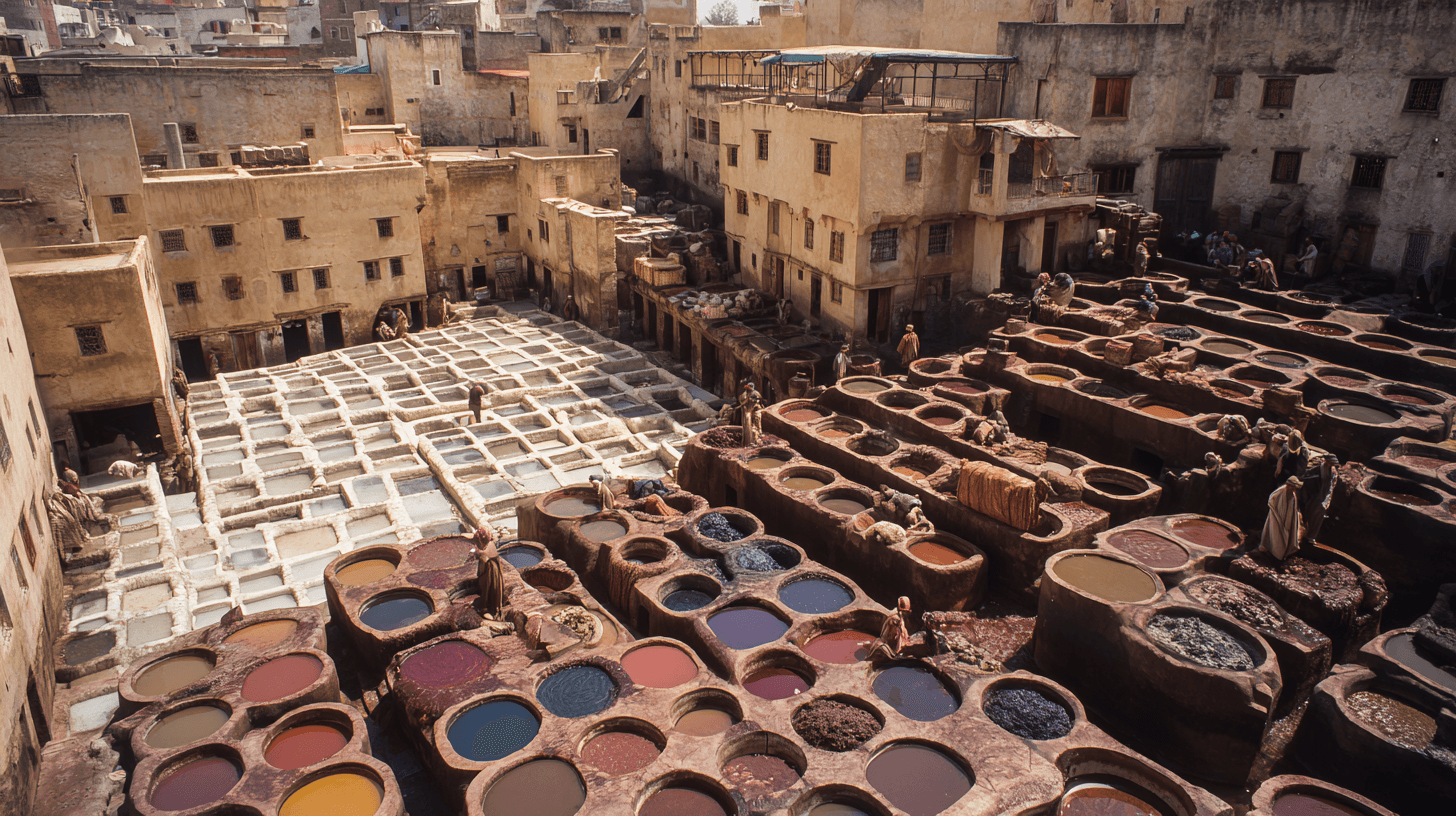
Babouches are the pointed leather slippers found in every souk. Yellow is the classic — associated with Fes. White for formal occasions. Embroidered for women. Plain for men. The leather comes from the tanneries. The stitching is done by hand. A pair can cost 30 dirhams in the medina or 3,000 in a designer boutique.
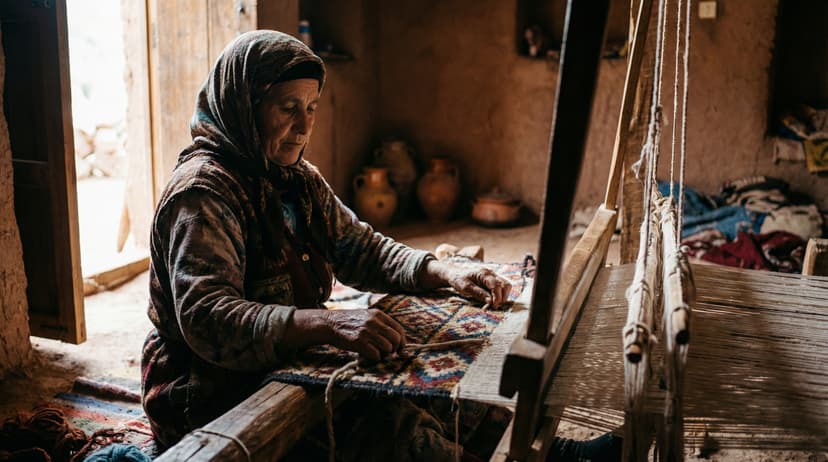
Three embroidery schools define Moroccan textile identity. Fes produces tarz fassi — dense geometric patterns on silk, using gold and silver thread. Rabat produces tarz rbati — cross-stitch motifs on linen, historically passed from mother to daughter. Tetouan produces Andalusian-influenced floral embroidery with roots in the 15th-century exodus from Spain.
The textile industry employs hundreds of thousands. Morocco exports $4.25 billion in garments and textiles annually — much of it fast fashion manufactured for European brands. The tension between traditional craft and industrial production defines the sector.
Explore the full interactive module — with garment typologies, embroidery schools, and the economic data of Morocco's textile industry — at Dancing with Lions: https://www.dancingwiththelions.com/data/moroccan-fashion
Interactive Module
Data and visualisation by Dancing with Lions