7 Days
Morocco Arts & Crafts
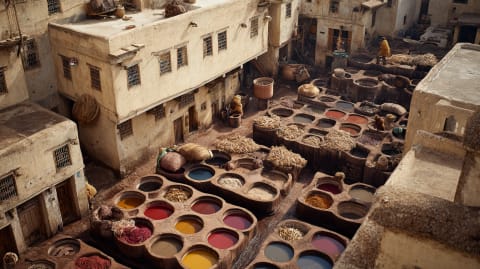
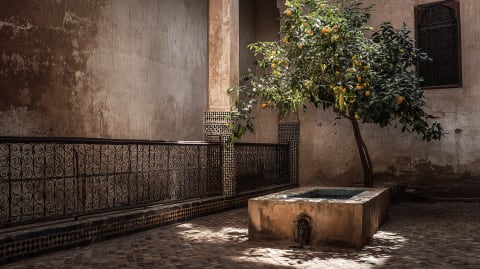
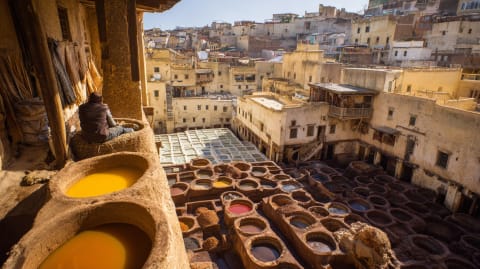
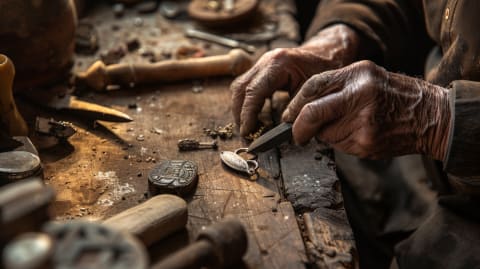
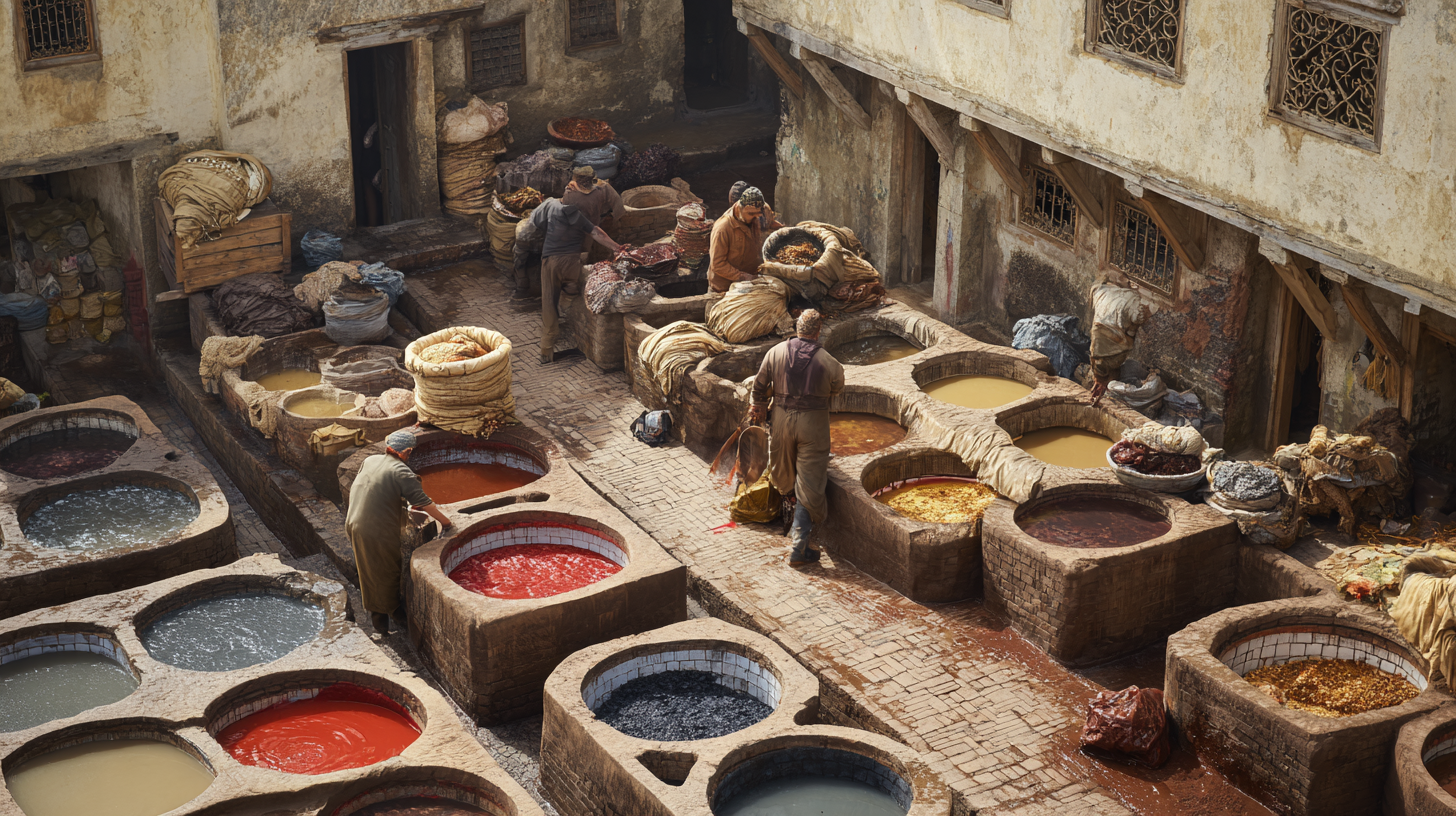
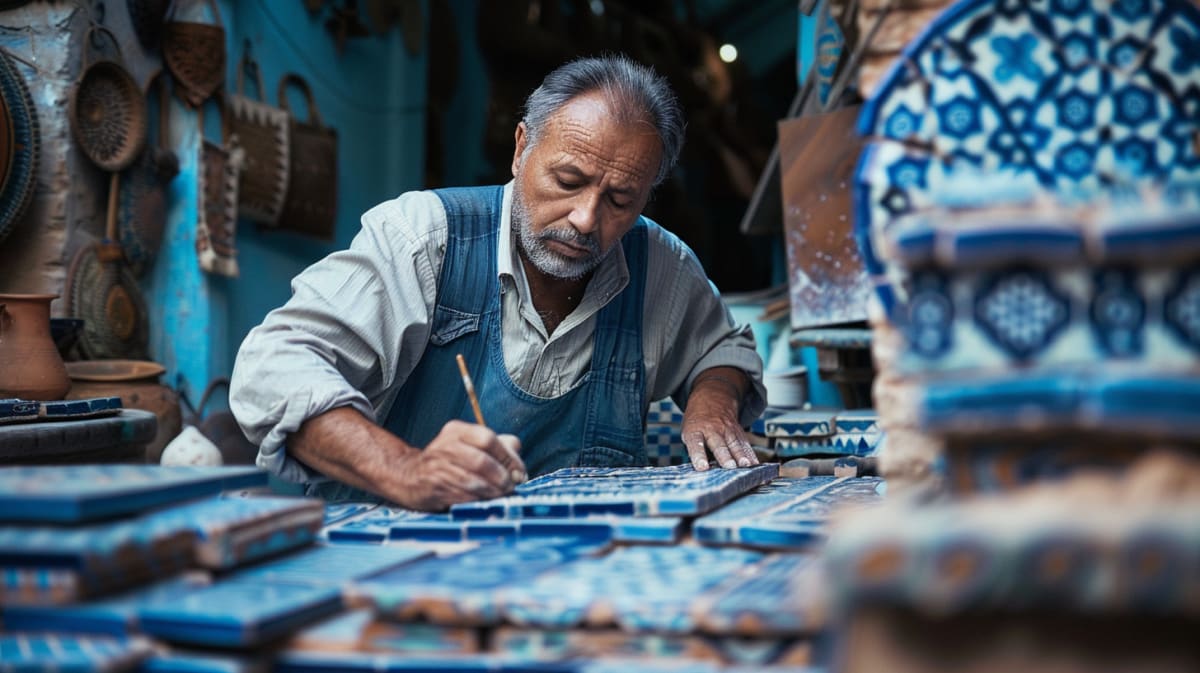
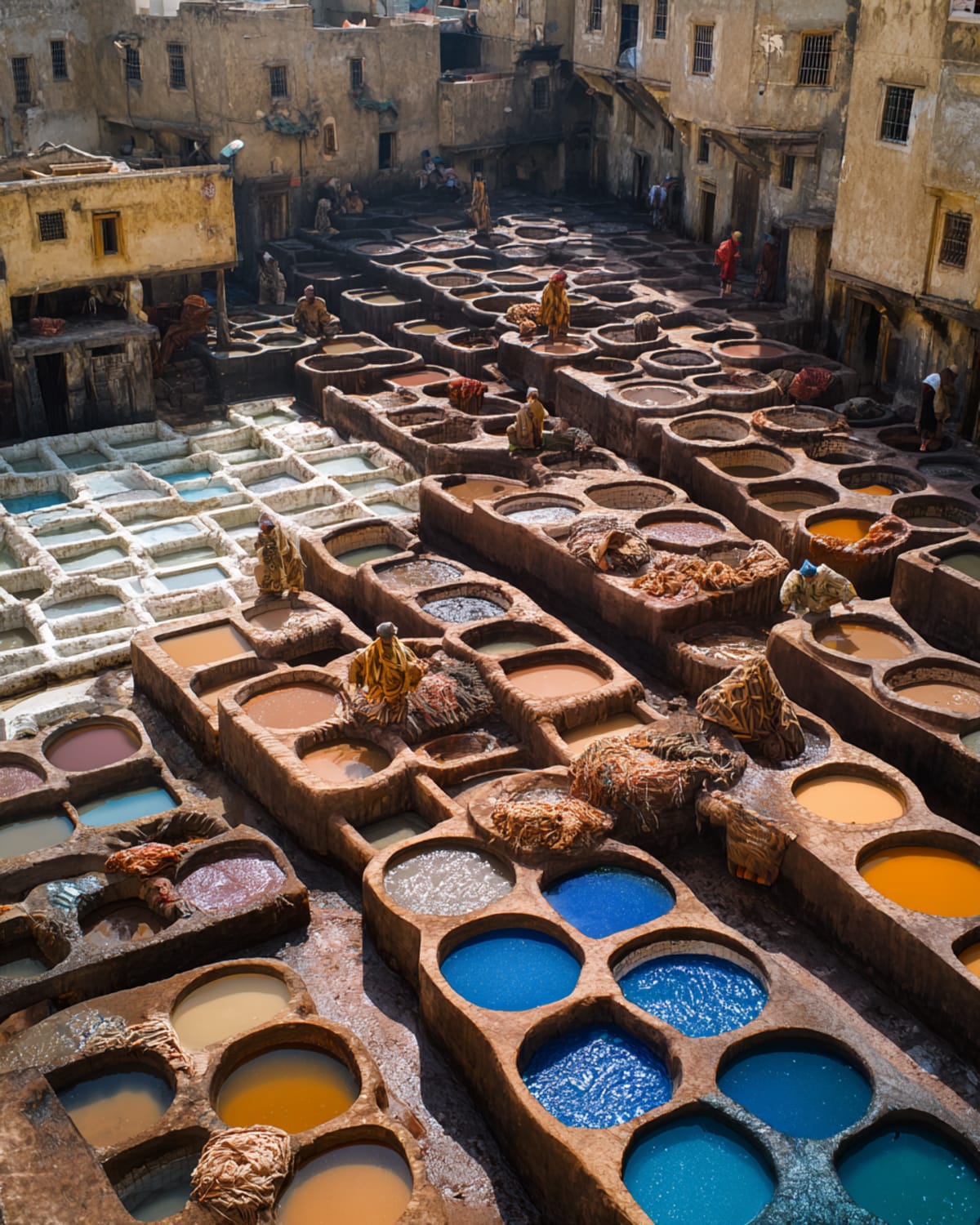
Morocco's crafts aren't souvenirs. They are living traditions held in living hands — which is a distinction the souk makes every morning and the airport gift shop never will. Fes potters throwing the same shapes their grandfathers threw, the wheel spinning, the clay rising, the glaze mixed from recipes that are family secrets and will remain so regardless of what you offer. Marrakech metalworkers hammering lanterns by hand, the brass ringing with each strike, the pattern emerging from repetition and muscle memory and something that looks a lot like love if you watch long enough. Leather dyed in vats that glow copper and violet. Zellige tiles cut by eye, not machine — each piece chiselled from a glazed square, fitted into geometric patterns that could fill a mathematics lecture or a prayer, and frequently do both. Seven days meeting the makers. Understanding that "handmade" means something different when the hands have been doing this for 400 years.
Day 1
Fes
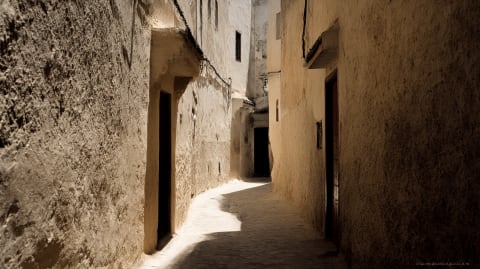
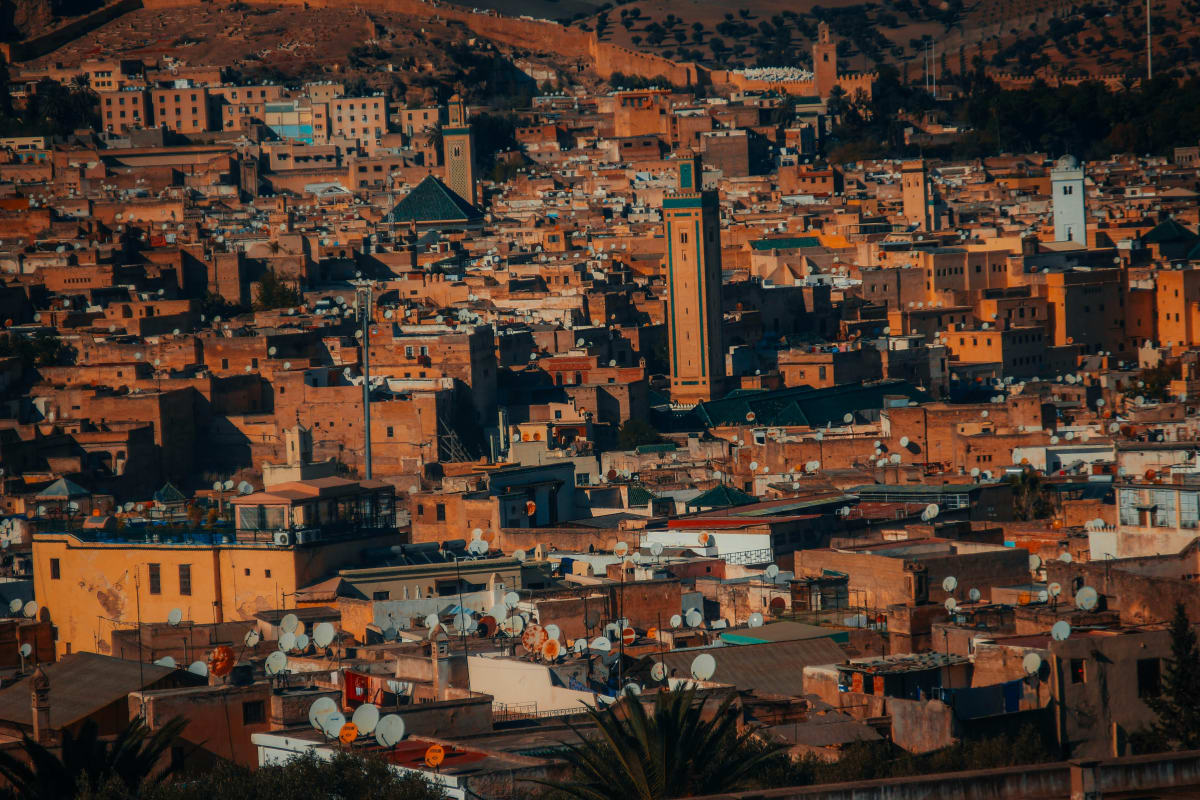
Nine thousand alleys. The medina hasn't changed in a thousand years—same crafts, same quarters, same calls echoing off the walls. The tanneries still use pigeon dung. The brass workers still hammer by hand. You get lost. Everyone does. A boy leads you out for a coin. By evening, you've stopped trying to map it. The labyrinth is the point.
Day 2
Fes
Nine thousand alleys. The medina hasn't changed in a thousand years—same crafts, same quarters, same calls echoing off the walls. The tanneries still use pigeon dung. The brass workers still hammer by hand. You get lost. Everyone does. A boy leads you out for a coin. By evening, you've stopped trying to map it. The labyrinth is the point.
Day 3
Meknes
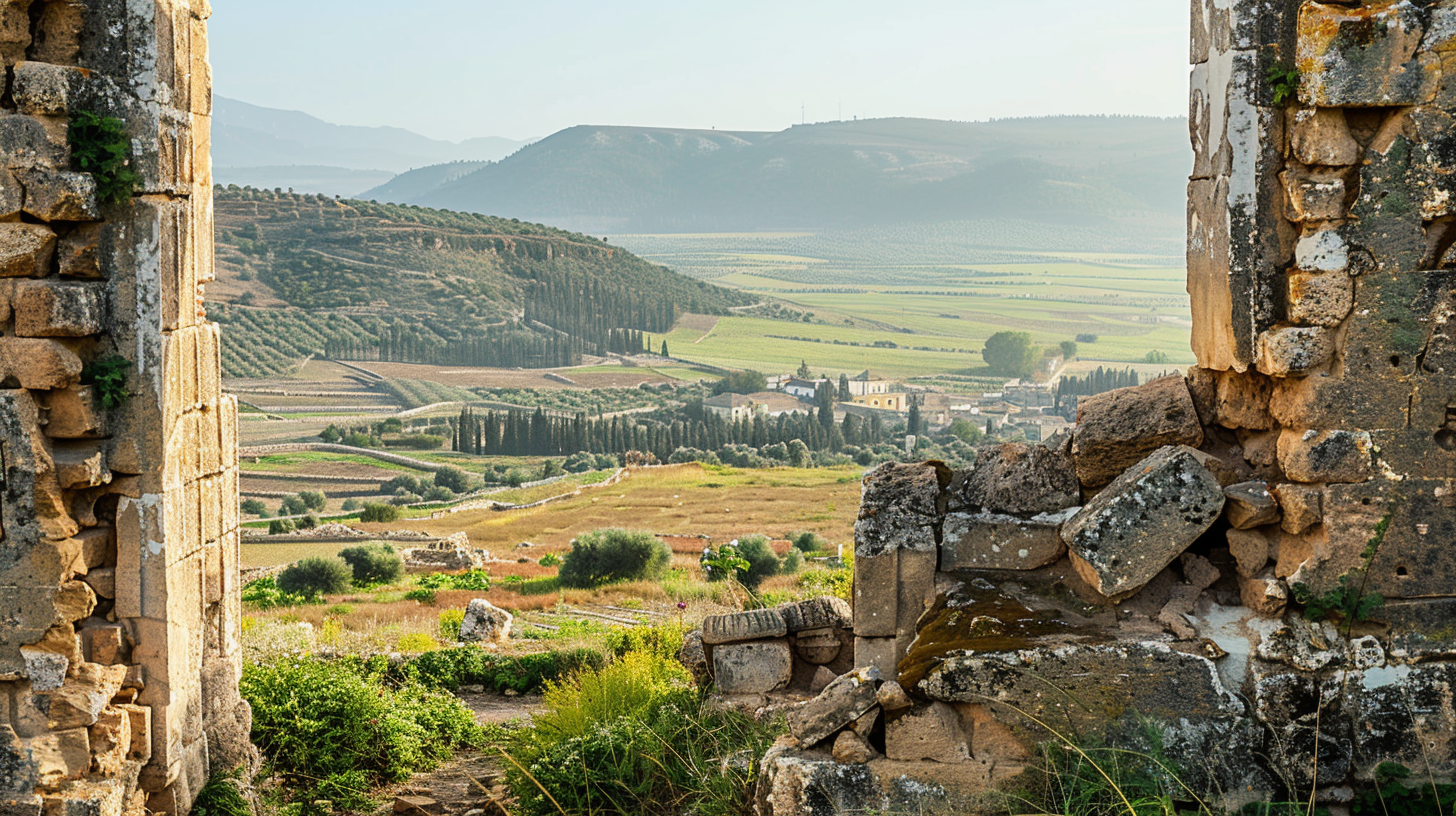
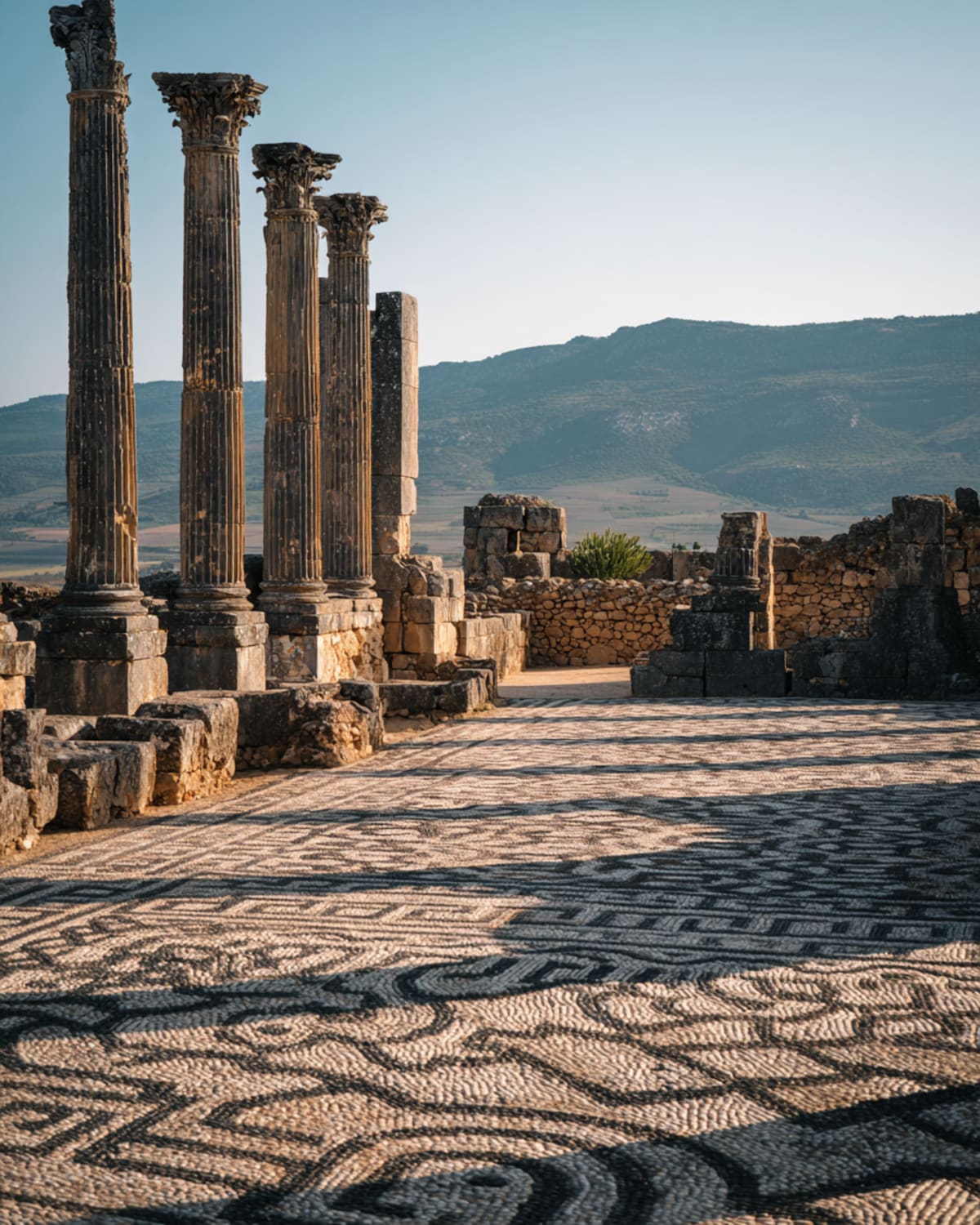
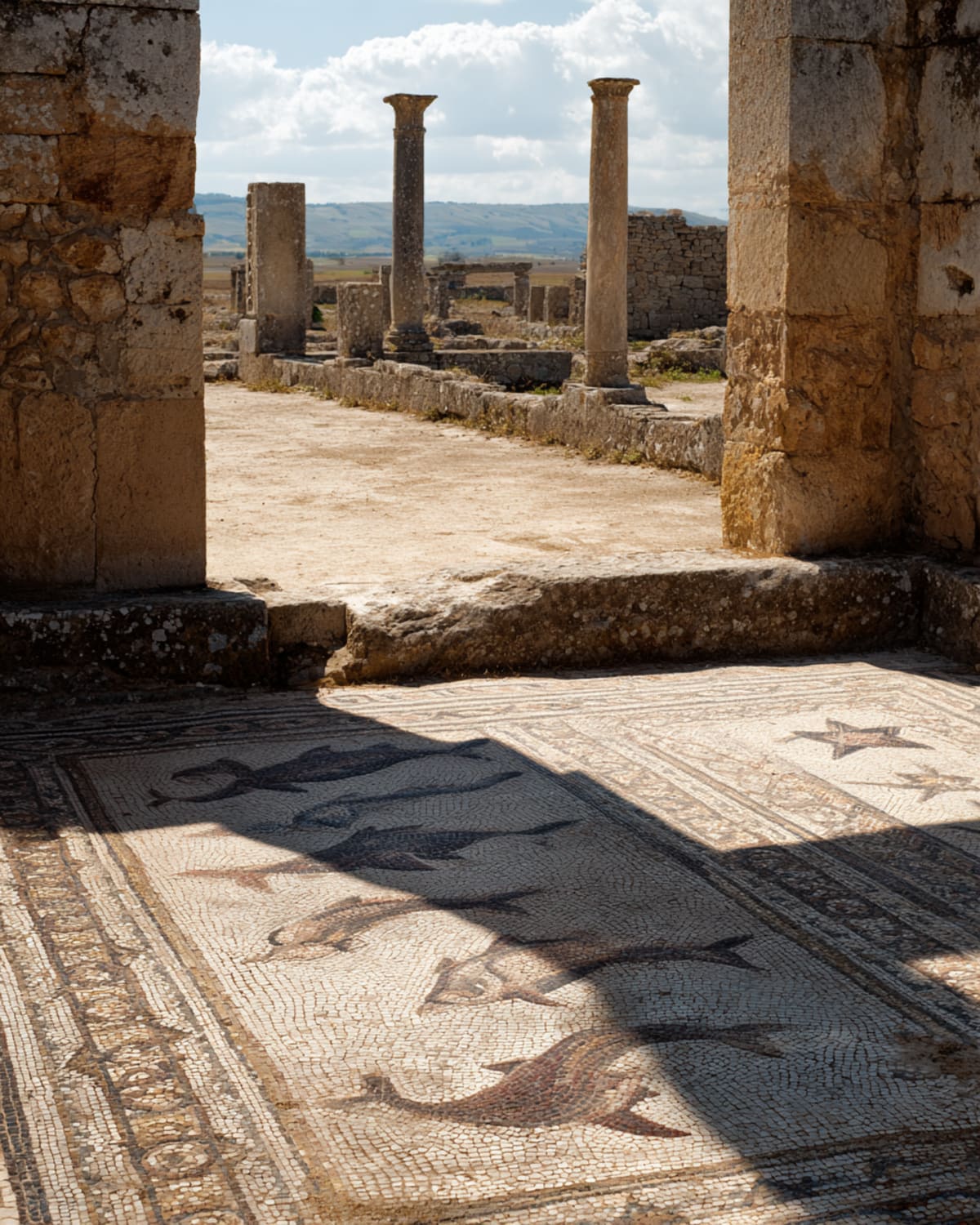
West through the Saïss. The road is short — barely an hour — but the detour changes everything. Volubilis rises from wheat fields like a dream Rome forgot to finish. Columns catch morning light. Mosaic floors lie open to the sky — Orpheus, Bacchus, acrobats and beasts, still vivid after two thousand years. Storks nest on the capitals. The silence is the kind that comes after something enormous has left. Then Meknes — Moulay Ismail's obsession, his answer to Versailles. Bab Mansour's tilework glints. The granaries stretch dark and cool. Two empires in one afternoon.
Day 4
Moulay Idriss
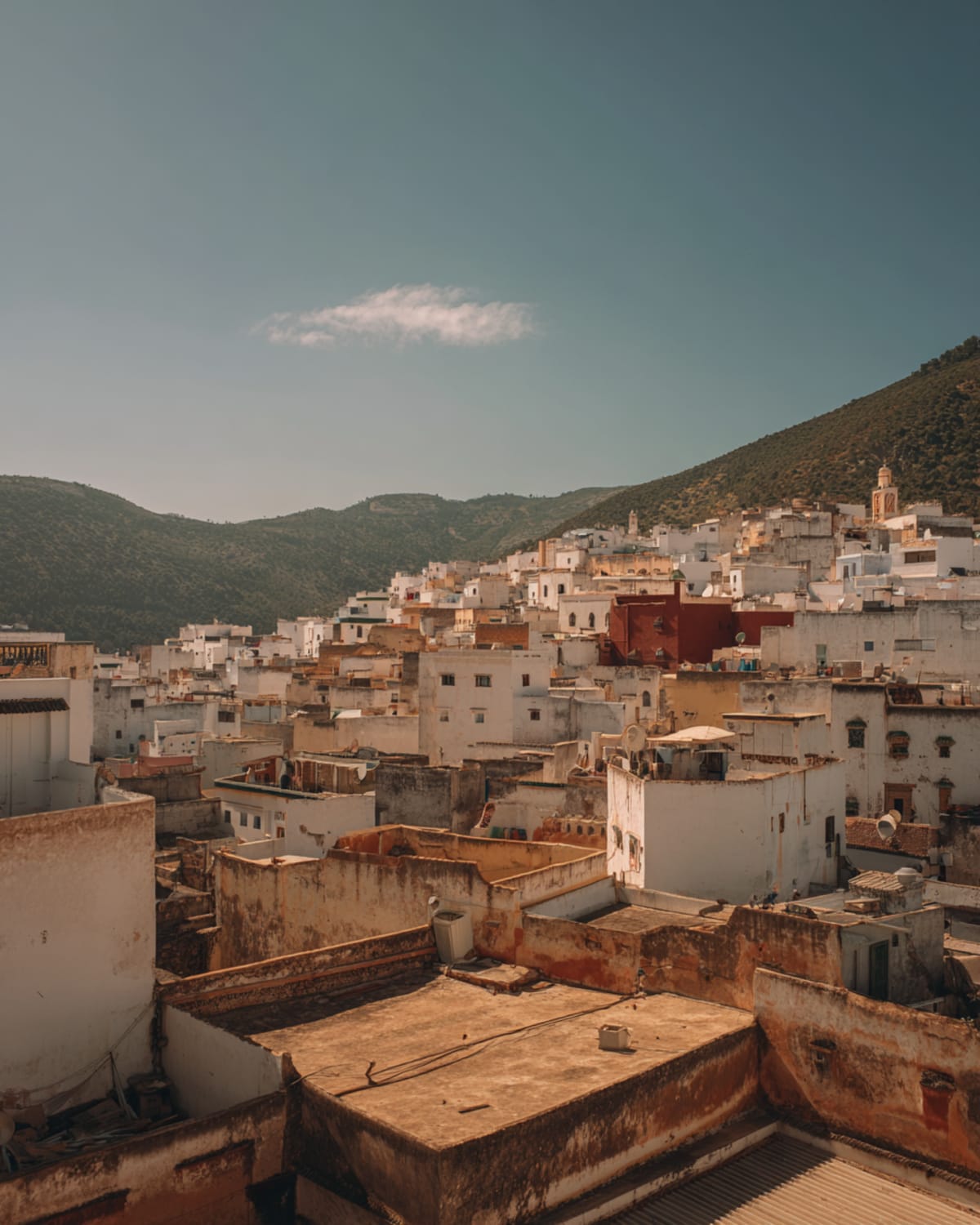
A short drive north through olive groves to the holiest town in Morocco. Moulay Idriss appears clinging to twin hills above the Zerhoun, white houses cascading down slopes so steep the streets become stairways. The man buried here founded Morocco's first dynasty. Pilgrims come year-round. The atmosphere is quieter than Fes, more watchful. The rooftop terraces look down over Volubilis in the valley below — Roman columns rising from wheat, two civilisations separated by a twenty-minute walk and fifteen centuries.
Day 5
Fes
South from the holy town. Moulay Idriss releases you down the hillside, past Volubilis where the Roman columns catch whatever light the sky is giving. The road finds the Saïss plain and straightens. Olive groves line the way. Fes appears in its valley — gradually, then all at once, the medina walls containing a city that has been arguing with itself for twelve centuries. The tanneries steam. The foundouks echo. The mosaic work in Bou Inania makes you forget you were driving an hour ago.
Day 6
Marrakech
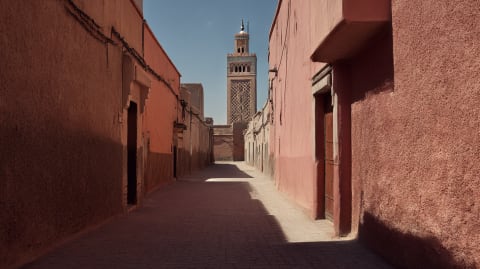
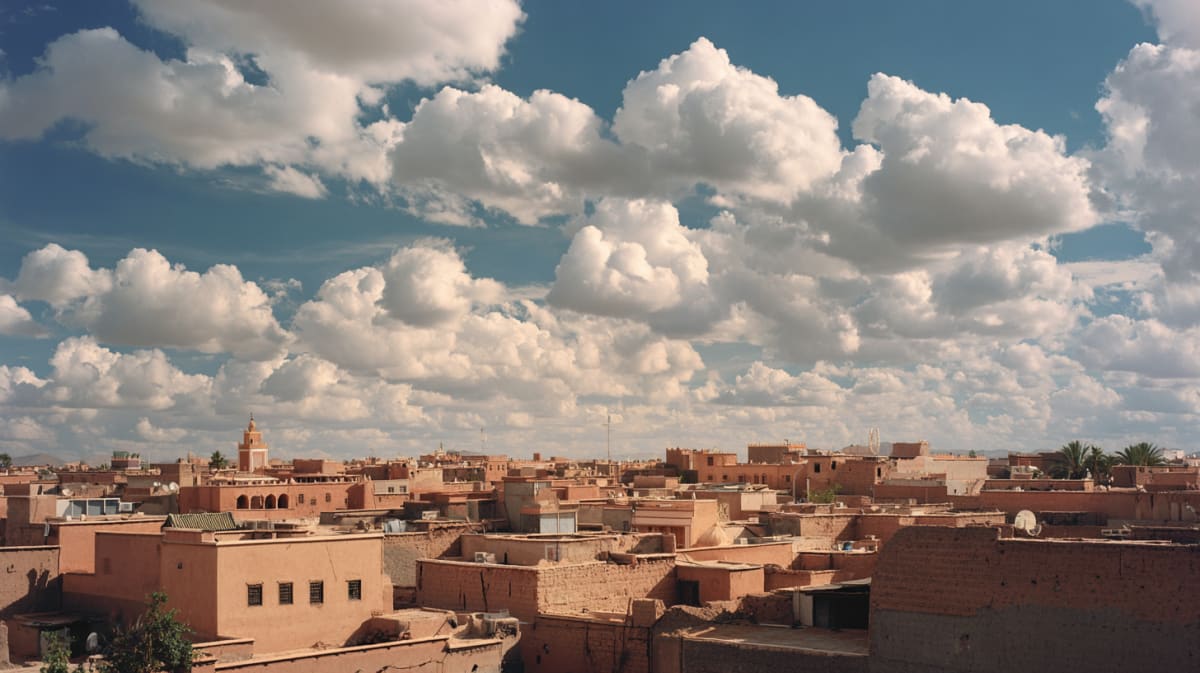
Six hours across the interior. The highway stitches together two cities that have competed for a thousand years — Fes the intellectual, Marrakech the merchant. Between them: the Saïss plain, then the Haouz, flat agricultural land where the sky is enormous and the road dissolves into heat shimmer. You cross the invisible line where the dialect shifts, where couscous changes shape, where the spice blend recalibrates. Marrakech appears under the Atlas — rose-pink walls, the Koutoubia minaret rising above the palms. The square begins to fill. A different city. A different argument about what Morocco is.
Day 7
Marrakech
The souks spiral inward by specialty—leather, brass, carpets, spices. Each turn narrows. Bahia Palace holds its painted ceilings in afternoon shadow. The hammam strips you down to quiet. By evening, Jemaa el-Fna transforms. Smoke rises from a hundred grills. Storytellers gather crowds. The square has done this for centuries. It doesn't need your permission.
Private Journeys
Plan this journey.
This route is private, and shaped around how you want to move through the country. Tell us what you're hoping to find — we'll design the trip around it.
There is more
This is just the shape of the route.
The full story — where the road changes, what the maps don't name, which detours are worth the dust — lives in the Slow Morocco letter. Written from the medina. Sent when it matters.
No frequency promises. Unsubscribe anytime.