
20252 min
The Free People
Never conquered. Never one nation. Here longer than anyone.
Ask her name for her people. Imazighen. The free people. Ask what they call themselves in Arabic and she pauses. 'Berber. It is not our word.'
22 stories
The artisans, nomads, musicians, and farmers who make Morocco what it is. Stories about individuals, not archetypes.
Never conquered. Never one nation. Here longer than anyone.
Ask her name for her people. Imazighen. The free people. Ask what they call themselves in Arabic and she pauses. 'Berber. It is not our word.'

White tents appear overnight. A thousand of them. The tribe has come to honour its saint. The vows are older than the mosque.
The white tents appear overnight, a thousand of them, spreading across the valley like a sudden blooming. The tribe has come to honor its saint.

Jemaa el-Fna's oral tradition is dying. The last performers know it.
The crowd forms a circle. In the center, an old man sits on a wooden stool. He begins to speak, and eight hundred years of stories pour through his mouth.
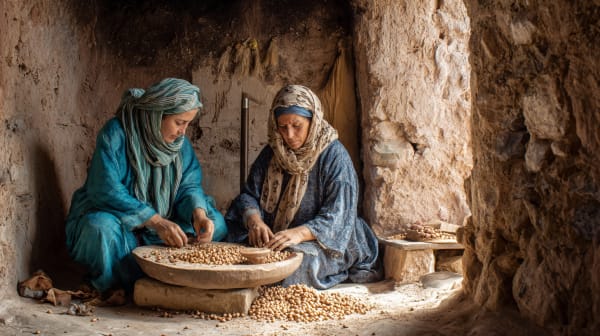
Argan oil, cracked by hand. The cooperatives that changed a country.
Crack, extract, crack, extract. Thirty kilos of fruit for one litre of oil. The cooperatives that turned a village craft into a global industry.

Where the Blue Men still trade. Then vanish until Thursday.
Guelmim's camel market runs on a currency older than money: reputation.

Sufi lodges fed the poor, housed travellers, and quietly shaped the country.
Sufism in Morocco: the zawiya system that shaped history, the Gnawa ceremonies that heal, and the government's modern bet on mystical Islam.

The layout is Roman. The ritual is Islamic. The institution is older than both.
The hammam's layout is Roman, its ritual Islamic. The institution is older than both—thermae adapted to ghusl, cold plunge replaced by running water.

The Arabs called her a witch. Her people called her a war leader. She was the last person standing between the conquest and North Africa.
She united the Berber tribes, defeated the Arab armies, and ruled North Africa for five years. The Arabs called her a sorceress. Her people called her Dihya.
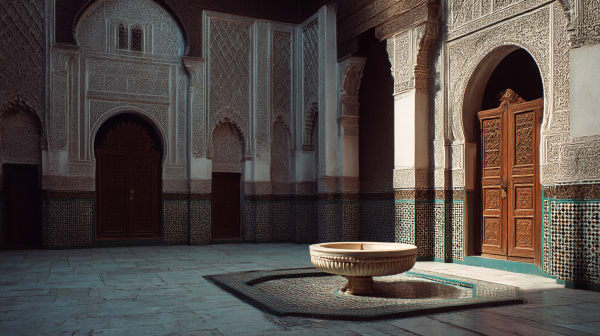
859 CE. Her own money. The oldest university on earth. Oxford came later.
In 859 CE, a woman in Fez began building a mosque. It became the world's oldest continuously operating university. Guinness certified.

Three rulers. Outlived them all. They called her the one in charge.
She married three rulers and outlived them all. The Almoravids conquered from Senegal to Spain, but nothing happened without her consent.

He walked out of Tangier at twenty-one. He came back having covered more of the world than any person alive.
He left Tangier at 21 for the hajj. He returned at 50, having covered 75,000 miles—three times farther than Marco Polo.
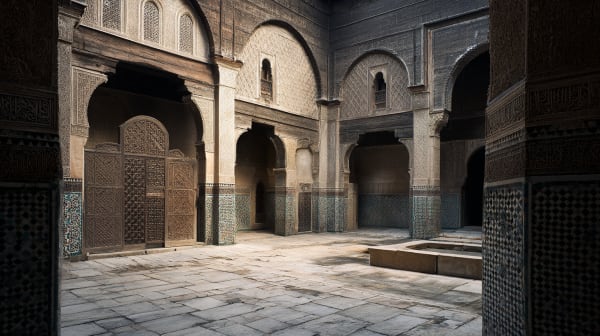
Captured near Djerba. Baptised in St. Peter's. He wrote the book that told Europe what Africa was.
Captured by pirates, gifted to the Pope, baptized Leo—he wrote the book that told Europe what Africa was. Then he vanished.

An English governess married Moroccan royalty. She never went back.
She arrived as a governess. She left as a Shareefa—the wife of a descendant of the Prophet. She spent forty years between two worlds.

The famous photo is everywhere. What it doesn't show is more interesting.
The goats in trees are real. But the photos you've seen? Probably staged. The real story is about women, cooperatives, and 30 hours of labor per liter.
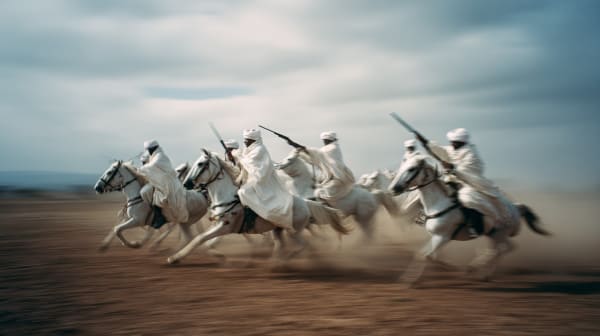
Full gallop. Antique rifles. The goal is a single crack. If they miss, you hear the silence.
Twenty-five riders at full gallop. Antique rifles. One coordinated volley. If the shots don't sound as one, the tribe has failed.
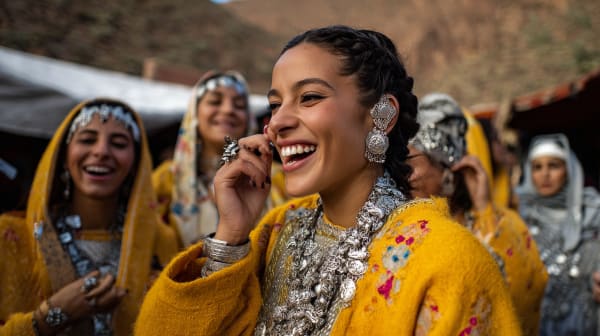
Every September. Thirty thousand people. A tradition traced to two drowned lovers.
High in the Atlas Mountains, two lakes sit on either side of a ridge. The Berbers say they were formed from the tears of star-crossed lovers — a boy from one tribe, a girl from another, forbidden to marry. They wept themselves to death. Now, every September, their descendants gather for a festival where anyone can marry anyone. It's Morocco's Romeo and Juliet, but with a happy ending.
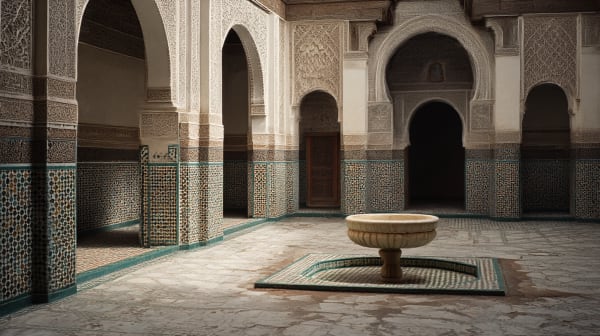
A fortune, a fast, and a library that outlasted the empires that came for it.
She walked into the governor's office with her father's entire fortune and a plan. He said yes. Twelve centuries later, her name is still on the founding inscription.
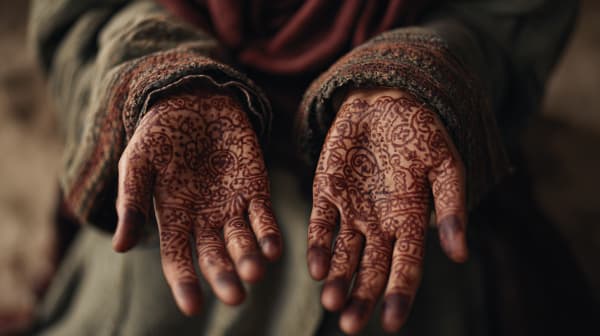
The evening nobody photographs. The older women gather. They have secrets to share.
The night before the wedding, the older women gather around the bride. What they say in that room has been passed down for centuries.

Thirteen centuries. Five women. One country.
A warrior who stopped an empire. A queen who built one. A scholar who invented the university. A pirate who controlled the Mediterranean. A writer who rewrote the rules. Five women across thirteen centuries.
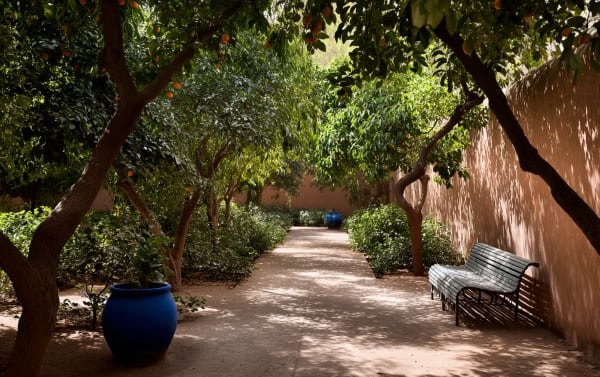
Yves Saint Laurent, the garden he saved, and the museum nobody enters
Saint Laurent took Morocco's colours to Paris and the world applauded. Inside the most visited site in Morocco, a Berber Museum holds six hundred objects of Amazigh heritage. Most visitors walk past it to photograph the blue wall.
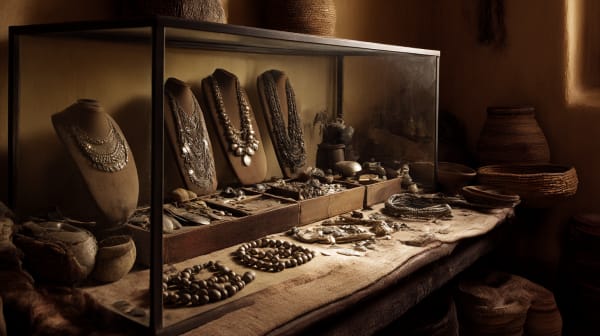
Bert Flint spent fifty years collecting what Morocco was throwing away. The museum is in his living room.
A Dutch anthropologist arrived in 1957 and never left. His house is a museum now — a journey from the Atlas to Timbuktu in seven rooms.
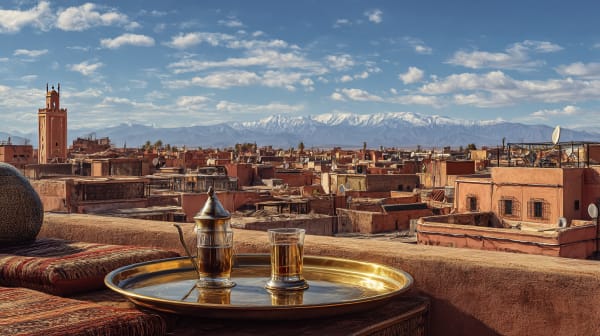
Talitha Getty and the rooftop that invented bohemian Marrakech
One photograph on one rooftop in January 1969. A woman in a kaftan, a man in a djellaba, the Atlas behind them. She was dead two years later. The image outlived them both and created a myth that Marrakech is still selling.
Other categories
Written from the medina. Sent when it matters.