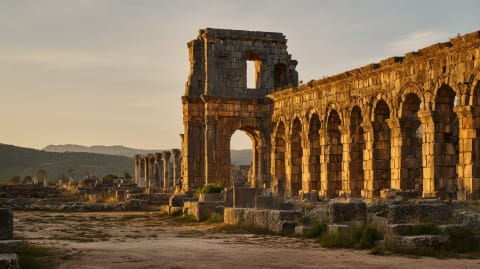
The layout is Roman. The ritual is Islamic. The institution is older than both.
When empires fall, their most intimate technologies are the last to disappear. Roads crack. Aqueducts dry. Libraries burn. But the public bath survives, because the need it serves has nothing to do with who is in charge. Morocco inherited this institution from Rome, filtered it through Islam, and kept it running for a thousand years with almost no modification. The question is why. The plumbing was sophisticated. The social function was essential. Romans bathed not because they were dirty but because the bath was where business happened, friendships were maintained, and the empire held itself together one conversation at a time.
When Islam arrived, the infrastructure remained but the purpose shifted. Ritual purity matters — ghusl cannot be skipped. The cold plunge pool disappeared; standing water was considered unhygienic. Running water replaced it. The sequence compressed. The theology changed. The steam stayed.
The Moroccan hammam follows the old sequence in new clothes. A cool room for undressing. A warm room for adjustment. A hot room where the real work happens — black beldi soap applied and scraped off with a kessa glove by someone who treats your skin as a surface to be renovated rather than a part of your body. The scrubbing is vigorous. The results are undeniable. What comes off your skin is a question you learn not to examine too closely.
Public hammams operate on gender-segregated schedules — women in the mornings and afternoons, men in the evenings, or vice versa. The social function persists in a way that would make a Roman senator feel at home: gossip, marriage negotiations, the exchange of information that only happens when everyone is wearing the same thing, which is nothing. The hammam is the great equaliser. Wealth is invisible in steam.
A bride visits the hammam before her wedding — scrubbed, steamed, anointed, and returned to her family cleaner than she has ever been, which is both a practical preparation and a symbolic one. You enter the hammam as you are. You leave as someone the hot room has decided you should be.
The hammam layout is Roman. The ritual is Islamic. The experience is available every afternoon in the medina of Fes.
Tell us about your trip →The Facts
- —Layout is Roman, ritual is Islamic, institution older than both
- —Roman thermae spread across North Africa with the legions
- —Volubilis had Roman baths
- —Sequence: apodyterium → tepidarium → caldarium → frigidarium
- —Islam replaced cold plunge pool with running water (standing water unhygienic)
- —Scrubbing in hottest chamber: black beldi soap + kessa glove
- —Public hammams gender-segregated
- —Social function: gossip, marriage negotiations
- —Bride visits hammam before wedding
Sources
- Raven, Susan. Rome in Africa. Routledge, 1993
- Sibley, Magda. "The Architecture of Islamic Public Baths of North Africa." Architectural Research Quarterly, 2012
- INSAP. Volubilis archaeological survey reports
Practical questions