
20255 min
The Argan Triangle
The only place on earth these trees grow.
The argan tree grows in one place on earth. A triangle between Essaouira, Agadir, and Taroudant. Nowhere else. Not transplanted. Endemic.
21 stories
Atlas cedar forests, Saharan dunes, Atlantic coastline, endemic species. The landscapes that contain everything else.
The only place on earth these trees grow.
The argan tree grows in one place on earth. A triangle between Essaouira, Agadir, and Taroudant. Nowhere else. Not transplanted. Endemic.

Taghazout to Dakhla. 3,500 kilometres of Atlantic swell before the hotels.
One of the longest, most consistent surf coastlines in the world. Atlantic swells travel uninterrupted from the North American coast.
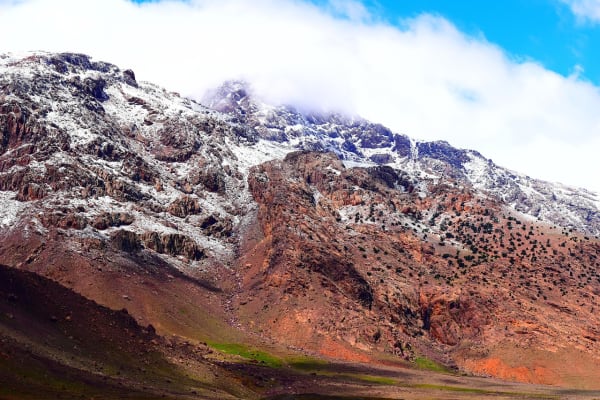
Three ranges. The French couldn't pacify the last one until 1934.
Three mountain ranges cross Morocco like a spine. They create the country's climate, define its cultures, and separate the Mediterranean world from the Sahara.
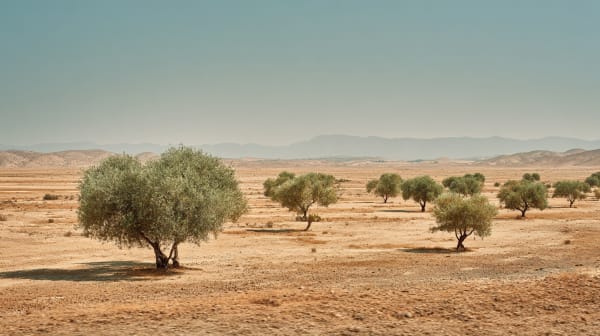
A country built on snow that no longer falls and rain that no longer comes. The new bet is the sea.
Morocco is running out of water. Dam reservoirs that were 75% full a decade ago are now below 30%. The crisis is structural, not seasonal.

Draa. Ziz. Tafilalet. 453 cultivars. An irrigation system older than most countries.
An oasis is not a mirage. It is an engineered ecosystem — a three-tier agricultural system that has sustained life in the desert for millennia.

Morocco tells time in colour.
Morocco runs on light. Prayer times follow the sun. Photographers follow the golden hour. The two clocks are the same clock.

Five hundred species. One migration corridor. Morocco in the middle.
More bird species than most European countries. Morocco sits on the Atlantic flyway between Europe and sub-Saharan Africa.

Phoenician traders, Portuguese forts, Saharan winds, and a fishing fleet that still goes out before dawn.
3,500 kilometres of Atlantic coastline. Morocco's economic spine, its playground, and its weather engine. From the Strait to Mauritania.
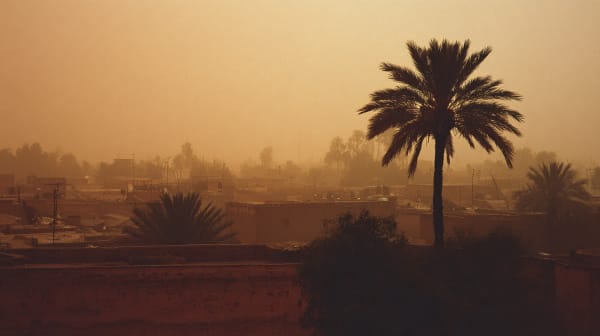
Chergui winds. Atlantic fog. Atlas snow. More climate zones than countries ten times its size.
Five climate zones in one country. Atlantic coast, Mediterranean, mountain highlands, steppe, and desert. Each one a different Morocco.

They nest on minarets, palaces, and ruins. Nobody moves them.
White storks nest on every mosque and ruin in Morocco. Protected by belief, tolerated by tradition, visible from every rooftop.
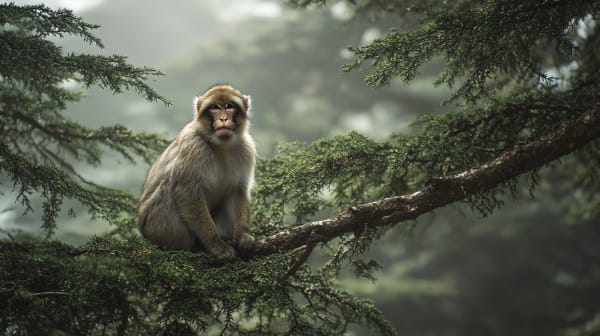
A century ago Morocco had lions, bears, and elephants. The atlas of what remains is also an atlas of what was lost.
A small primate that survives because the cedars do. A desert fox the size of a kitten with ears like a satellite dish. A leopard that may still be hiding somewhere in the High Atlas. The wildlife that lived through the twentieth century.
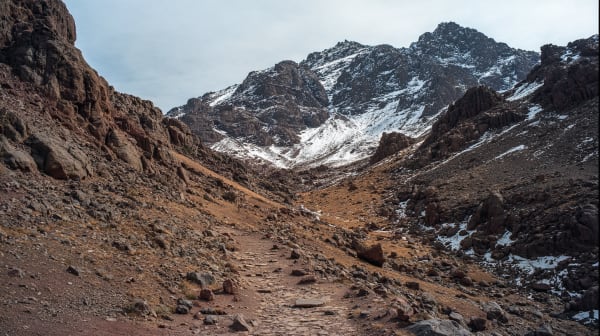
Toubkal. M'Goun. Ayachi. Sirwa. What it takes to reach them.
Four mountains above 4,000 metres. Dozens above 3,000. World-class trekking, basic infrastructure, and landscape unlike anything in Europe.

Desert floor to alpine pass. A hundred kilometres.
Marrakech to the Sahara: four climate zones in 200 kilometres. One of the most dramatic ecological gradients on earth.

Where the Sahara meets the Atlantic. The world's best flat-water kitesurfing. Flamingos at dawn.
Dakhla is closer to Mauritania than to Marrakech. The lagoon there is 40 kilometres long, a few hundred metres wide, and the wind never stops.
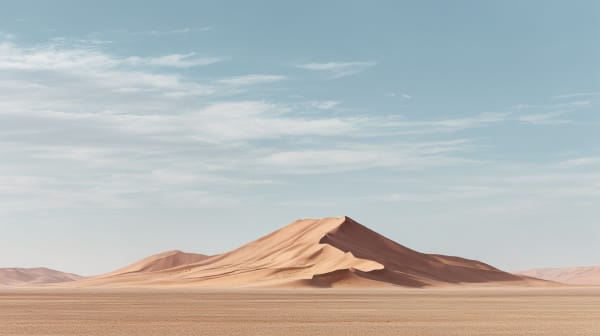
Harder to reach than Merzouga. Almost nobody is there. That is the point.
Everyone goes to Merzouga. The other dunes are a day farther south, and almost nobody is there.

The Paradise Valley was named in the 1960s and the name stuck
The hippies who came to Morocco in the 1960s and '70s named this gorge Paradise Valley.
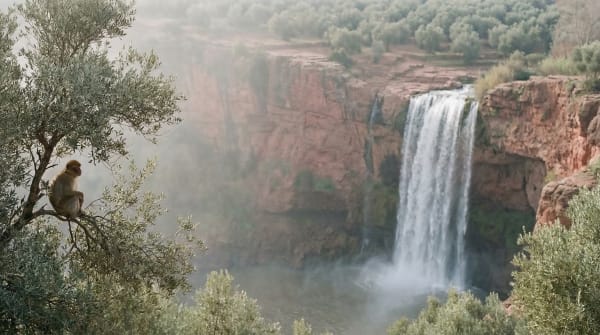
Seven cascades. One hundred and ten metres. Wild Barbary macaques in the olive trees.
The water drops 110 metres in three tiers. The Barbary macaques watch from the olive trees.
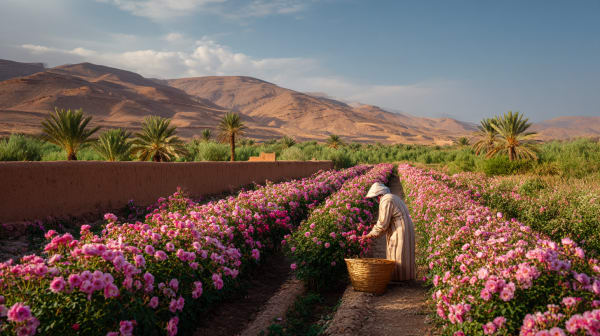
Three weeks in spring, the Dadès Valley turns pink. One hundred and fifty thousand roses make one litre of oil.
Between Kelaat M'Gouna and Boumalne Dadès, the roadside hedgerows bloom pink every May. The roses were planted by pilgrims returning from Mecca. The perfume industry that grew around them turns over millions.

The last wild Barbary macaques live in cedars older than the dynasties that planted them.
The cedar forest south of Azrou is one of the last places in the world where Barbary macaques live wild among trees older than the dynasties that ruled Morocco.
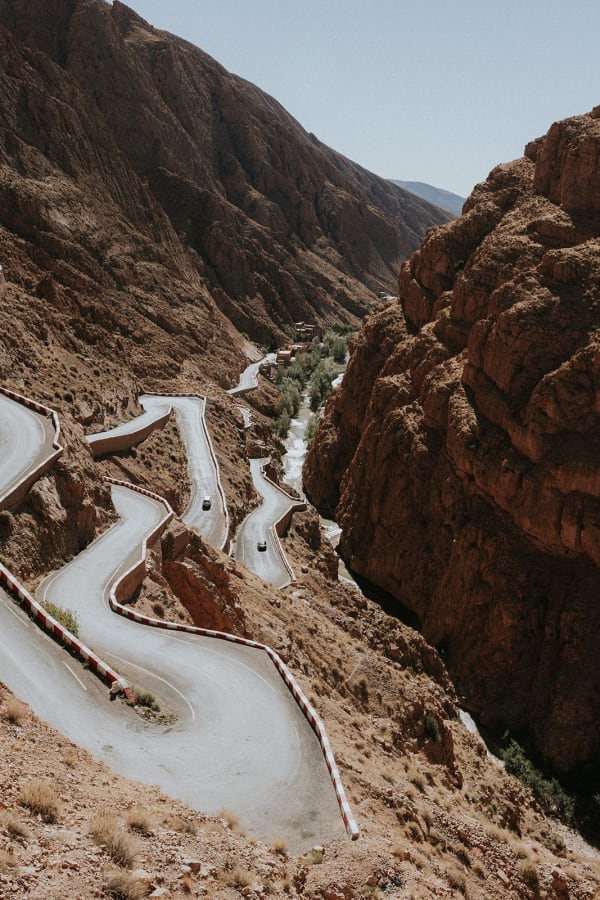
The road has so many hairpin turns the locals stopped counting and the tourists never start.
The road through the Dadès Gorge has so many hairpin turns that the locals stopped counting and the tourists never started.

Limestone walls three hundred metres high. Ten metres apart at the narrowest point.
The walls rise 300 metres on either side. The gap between them narrows to 10 metres.
Other categories
Written from the medina. Sent when it matters.