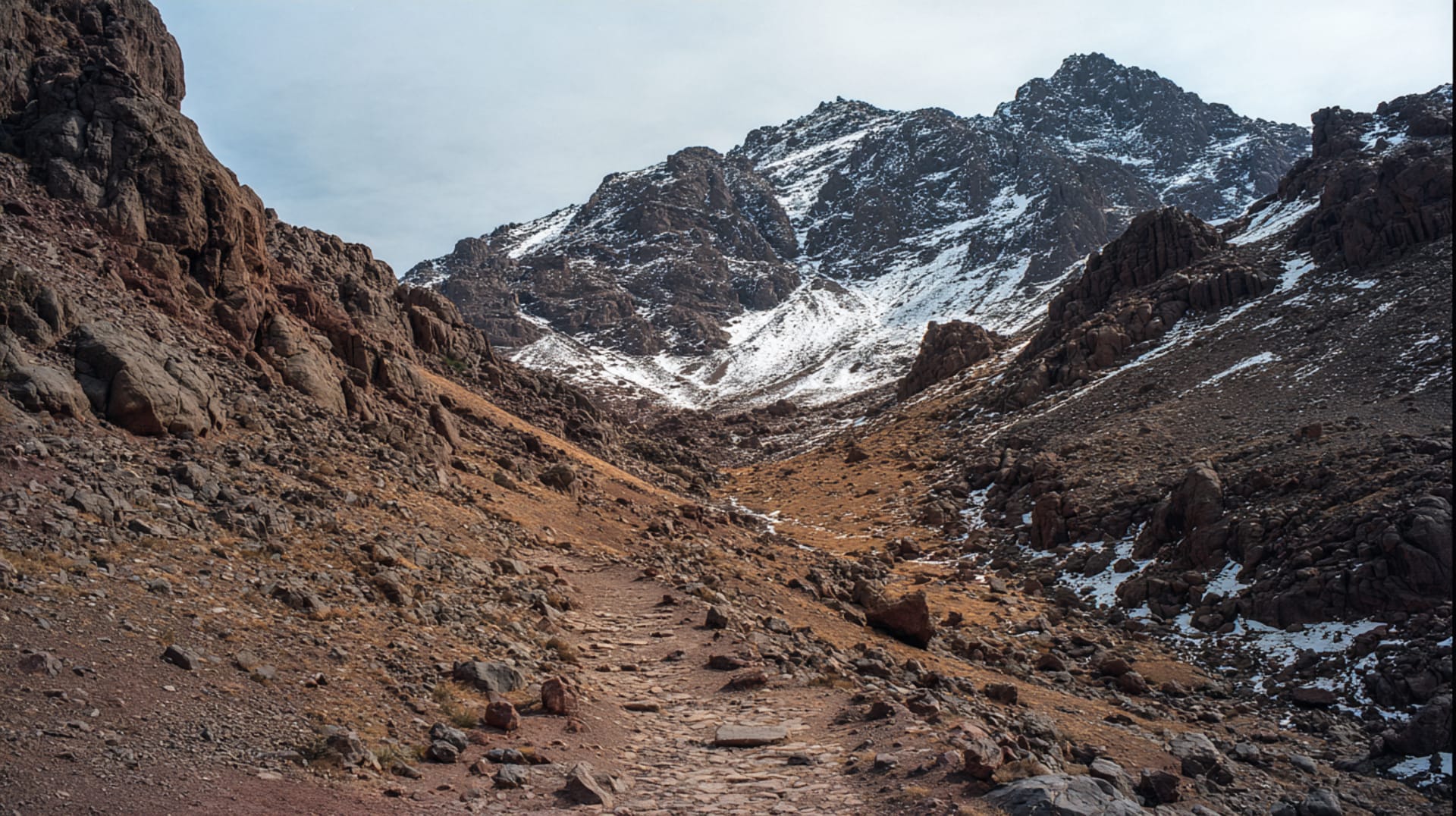
Jebel Toubkal stands at 4,167 metres — the highest peak in North Africa, and the one that most people assume is in Tanzania or Kenya because they have not yet looked at a map of Morocco with sufficient attention. The standard route from Imlil village takes two days: a 5-6 hour trek to the Toubkal Refuge at 3,207 metres, then a 4-5 hour summit push the following morning. The trail is non-technical in summer — steep scree and rock, no ropes required — but the altitude demands respect. At 4,000 metres, the air has opinions about how fast you should be walking, and you should listen.
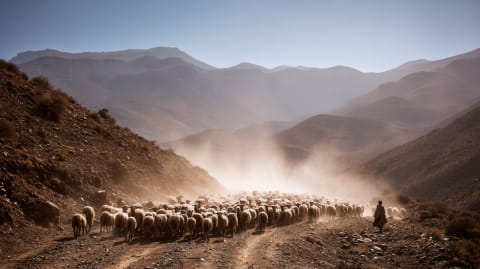
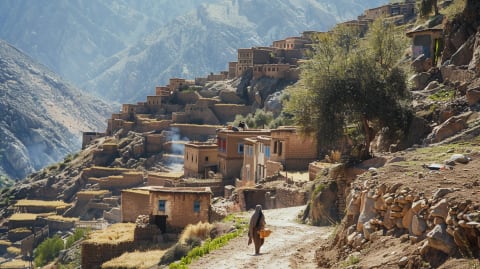
Jebel M'Goun at 4,068 metres is the second highest and arguably the more rewarding trek. Located in the central High Atlas between the Dadès and Aït Bougmez valleys, the approach traverses some of the most spectacular mountain scenery in Morocco. The M'Goun traverse — crossing the summit ridge between the two valleys — is a 5-7 day expedition through remote Amazigh villages with no road access, no phone signal, and no option to change your mind about being there once you've started. This is its appeal.
Jebel Ayachi at 3,737 metres dominates the eastern High Atlas above Midelt. Less visited than Toubkal or M'Goun, it offers something the popular peaks cannot: solitude. The character is different — rolling alpine plateaux rather than dramatic ridges, the kind of landscape where the silence has weight and the horizon keeps its distance.
Jebel Sirwa at 3,304 metres is the volcanic outlier between the High Atlas and the Anti-Atlas. The landscape is lunar — dark basalt, eroded pinnacles, saffron fields in the valleys below. The trek circles the massif through Amazigh farming communities that are connected to the modern world by mobile phone signal and not much else.
Four peaks, four characters. Toubkal is the summit. M'Goun is the traverse. Ayachi is the escape. Sirwa is the surprise. Together they form a mountaineering circuit that most visitors to Morocco do not know exists, in a country they associate with deserts and medinas and flat-roofed cities baking in the sun. The mountains are there. They have always been there. They are waiting for you to look up.
Toubkal, M'Goun, Ayachi, Sirwa — we build trekking itineraries around all four. The season dictates the mountain.
Tell us about your trip →Data and visualisation by Dancing with Lions
The Facts
- —Jebel Toubkal: 4,167m (highest in North Africa)
- —Jebel M'Goun: 4,068m (second highest)
- —Jebel Ayachi: 3,737m (Middle Atlas)
- —Jebel Sirwa: 3,305m (volcanic, Anti-Atlas)
- —Toubkal summit: 2-day trek from Imlil
- —M'Goun traverse: 5-7 day trek
- —Each peak in a different ecological zone
- —Atlas = barrier between Mediterranean and Saharan climate
Sources
- Dresch, Jean. "Le massif du Toubkal." Revue de Géographie Alpine
- Hughes, Robert. "Environmental Change in the Atlas Mountains." The Geographical Journal
- Moroccan Haut-Commissariat aux Eaux et Forêts. Mountain surveys