The Cities Built to Be Invisible
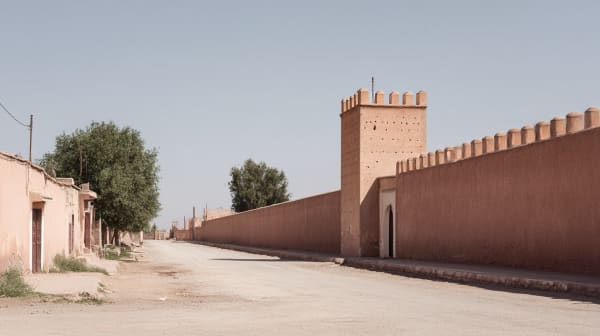
Fortified villages on the edge of the Sahara
One gate. One wall. Two hundred families inside. The ksar was never just a village. It was a statement: we survive together, or we don't survive at all.
23 stories
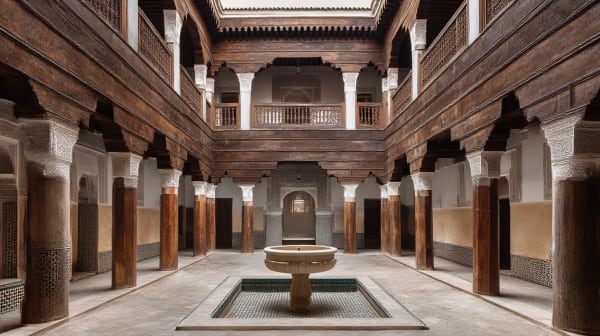
Zellige, pisé, cedar, stucco. The geometry of Moroccan space — from the medina's logic to the kasbah's slow return to earth.

Fortified villages on the edge of the Sahara
One gate. One wall. Two hundred families inside. The ksar was never just a village. It was a statement: we survive together, or we don't survive at all.

Inward architecture, hidden gardens
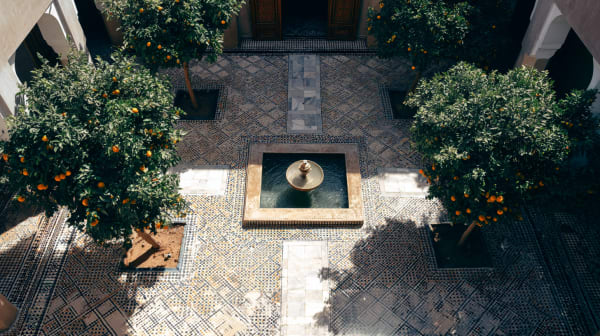
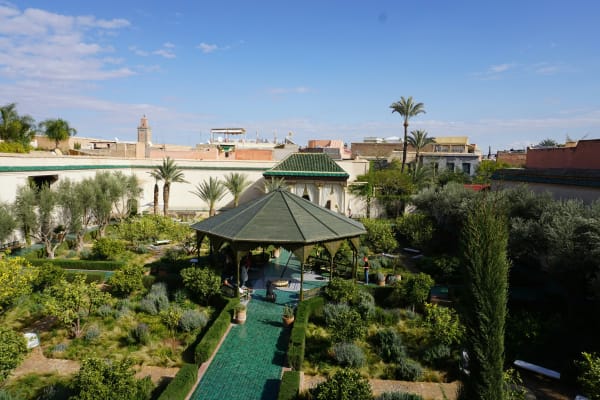
The door in the wall is plain. Ordinary. You would walk past it without looking. Then it opens, and you fall into a garden surrounded by sky.

How earth walls breathe with the seasons
Step through the doorway. The temperature drops fifteen degrees in three seconds. The kasbah walls are two feet thick, made of rammed earth that has been absorbing and releasing heat for four hundred years.

Acoustic architecture in the High Atlas
In the Ait Bouguemez Valley, silence has mass. The stone houses absorb sound the way the kasbahs absorb heat. You hear the wind through walnut leaves. You hear water in the irrigation channels. You hear what cities have made you forget: the texture of quiet.

One man, four wives, twenty-four concubines — and the architecture of managing them
Grand Vizier Ba Hmad had a problem: four wives, twenty-four concubines, and the need to keep them all happy — or at least separate. His solution was architectural. The Palais Bahia is eight acres of courtyards, gardens, and apartments designed so that no woman ever had to see another.

Built to humiliate the Portuguese. Stripped to humiliate its builder.
Ahmad al-Mansur built El Badi to show the Portuguese what they'd lost. Gold, onyx, Irish oak — 360 rooms of excess funded by ransom money. A century later, the Alaouites stripped it bare. What took 25 years to build took 10 years to dismantle. The ruins are the story.

They built the Koutoubia once. Then they realized it didn't point to Mecca.
The Almohads built the Koutoubia Mosque. Then someone realized the mihrab wasn't aligned with Mecca. Rather than adjust the prayers, they rebuilt the entire mosque. The minaret they raised became the template for towers across three continents.

For 500 years, boys memorized the Quran in cells smaller than prison
The Ben Youssef Medersa trained scholars for 500 years. 900 students lived in 130 cells the size of closets, memorizing the Quran by candlelight. The architecture was designed to focus the mind: no windows, no distractions, just text and silence.

Everyone knows Chefchaouen is blue. Nobody agrees why.
Chefchaouen is blue. The walls, the stairs, the doors, the flowerpots — all painted in shades from pale sky to deep cobalt. Everyone who visits wants to know why. The answers are multiple, contradictory, and possibly all wrong.

In the Anti-Atlas, trust was built in stone — one family's compartment at a time
Before banks, before insurance, before written contracts — there were agadirs. The fortified granaries of the Anti-Atlas weren't just storage. They were the architecture of trust, where a family's wealth sat behind a wooden door for generations, guarded by nothing but collective agreement.

The labyrinth that isn't random
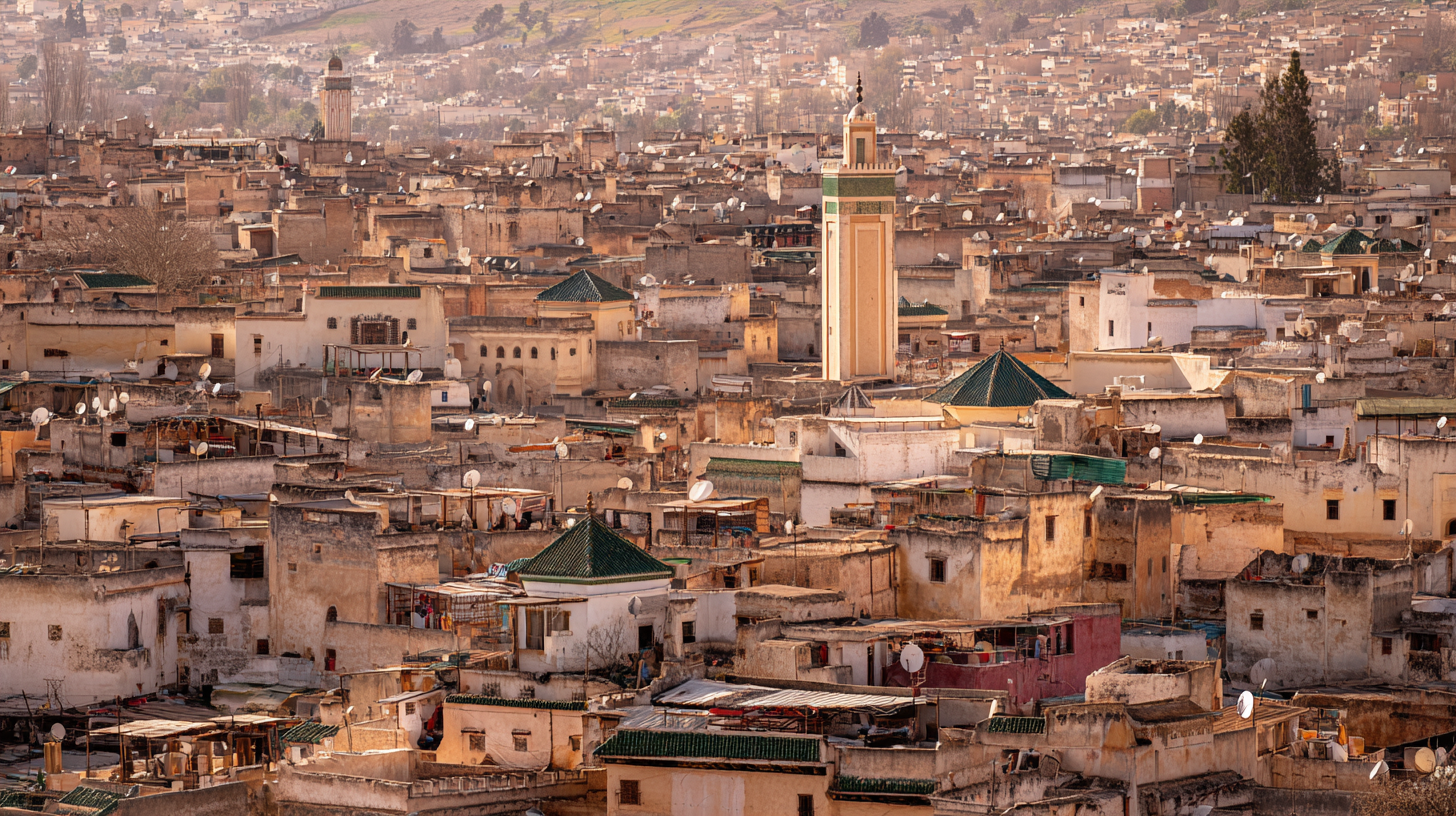
Every tourist gets lost in the medina. They think it's chaos. It isn't. The medina is a machine — organized by trade, tribe, and a logic that predates street addresses by a thousand years.

Casablanca still has thirty synagogues. This is the most beautiful.
The windows glow like Chagall. The building was designed by Algerian Jews.

Three minarets, one architect, 2,000 kilometers
Three minarets. Three cities. One architect. The same proportions repeated across 2,000 kilometers of empire.

The sultan died. The minaret stands exactly half as tall as designed.
The sultan wanted the largest mosque in the world. He died before it was finished. The tower stands at exactly half its intended height.

Gates, fondouks, mosques, hammams, souks — Morocco's historic medinas mapped
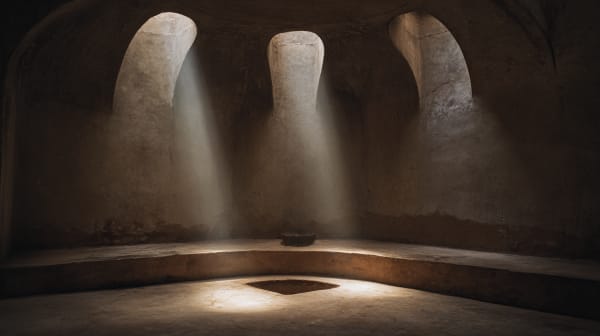
A medina is not a neighbourhood. It is a complete urban operating system — designed before electricity, before cars, before plumbing — and still functioning.

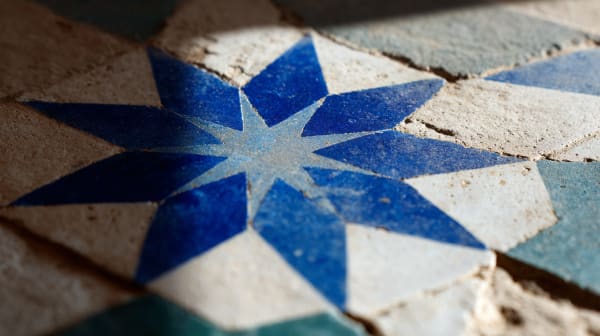
Star patterns, tessellation, 17 wallpaper groups — the mathematics behind Moroccan tilework
Zellige is not decorative tilework. It is applied mathematics — compass and straightedge constructions that encode the 17 possible symmetry groups centuries before European mathematicians classified them.

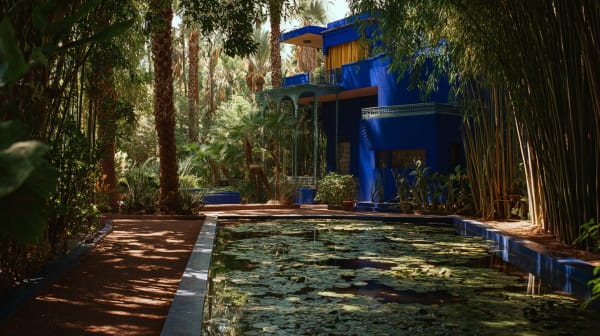
Majorelle, Agdal, Menara, Jnan Sbil — Islamic garden design, khettara water systems, Almohad engineering
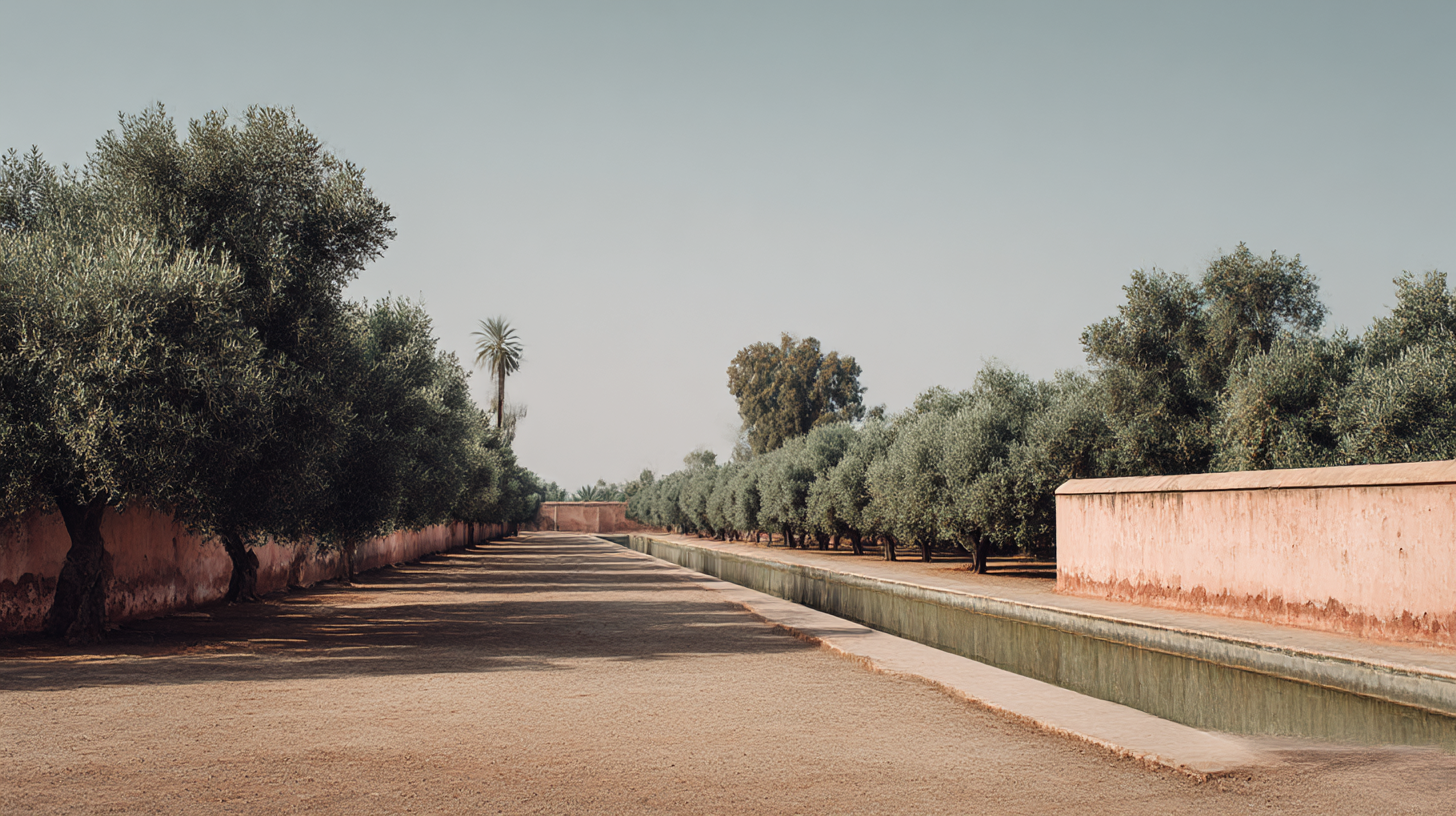
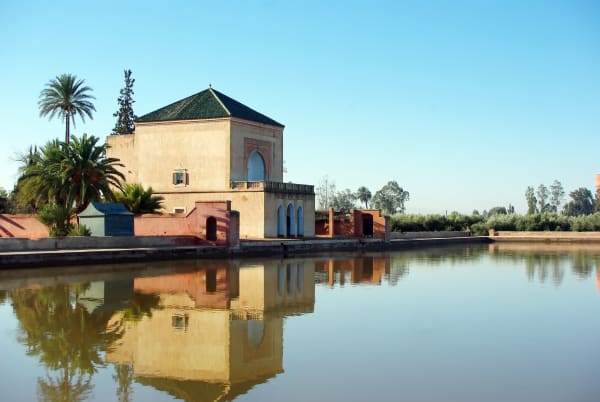
A Moroccan garden is not a landscape. It is a hydraulic engineering project — every tree positioned to shade a channel, every basin calibrated to distribute water by gravity alone.

Aït Benhaddou to Skoura — fortified mud-brick architecture of the Drâa-Tafilalet
The kasbahs of southern Morocco are not ruins. They are a building technology — earth, straw, water, and sun — that created one of the most dramatic architectural landscapes on the planet.

Majorelle blue, saffron yellow, Tamegroute green, henna red — Morocco mapped in pigment
Every colour in Morocco has a source — a plant, a mineral, a place. The colours are not chosen. They are grown, mined, and extracted.

19 bab, 19 kilometres of ramparts — the fortified perimeter of the Red City
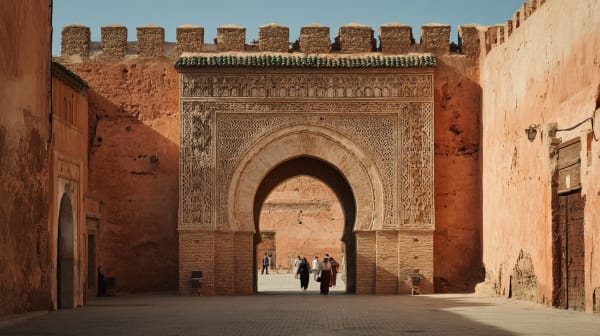
Marrakech has 19 gates. Each one opened to a different road, a different trade route, a different destination. The gates are the city's autobiography.

Lattice screens, light filtration, privacy architecture — the geometry of seeing without being seen
The moucharabieh is a window that looks without being looked at. It filters light, cools air, and enforces a social boundary — all through carved geometry.

Computational geometry meets 700-year-old tessellation — parametric tools for Islamic pattern design
Zellige patterns are mathematical before they are beautiful. The same rules that govern their hand-cut geometry can be expressed as algorithms.

Population density, building height, street width, mosque count — the metrics of Morocco's old cities
A medina is not chaos. It is a system with measurable parameters — density, connectivity, shade coverage, walking distances — that outperform many modern cities.
Other categories