The cells have no windows. That was the point.
The Ben Youssef Medersa — for 500 years one of North Africa's largest Islamic colleges — was designed for one purpose: memorisation. Students came to commit the Quran to heart, word by word, verse by verse, and the architecture was built to help them do it by removing everything that might compete for their attention. Including daylight.
Each cell is approximately 2 metres by 2 metres. Enough room for a sleeping mat, a candle, and the texts. The door leads to a gallery overlooking the central courtyard; the back wall is solid stone. There are 130 cells for what were, at the school's peak, 900 students. They shared. They studied in shifts. They memorised in darkness, which sounds punishing until you consider that darkness is what you get when you remove all distractions, and distraction is the enemy of a text that demands to be carried whole.
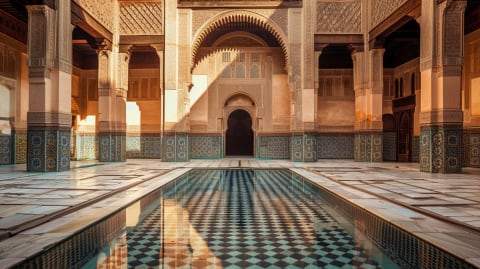
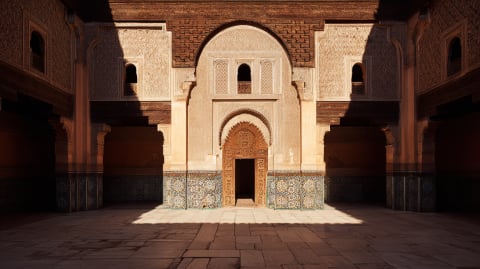
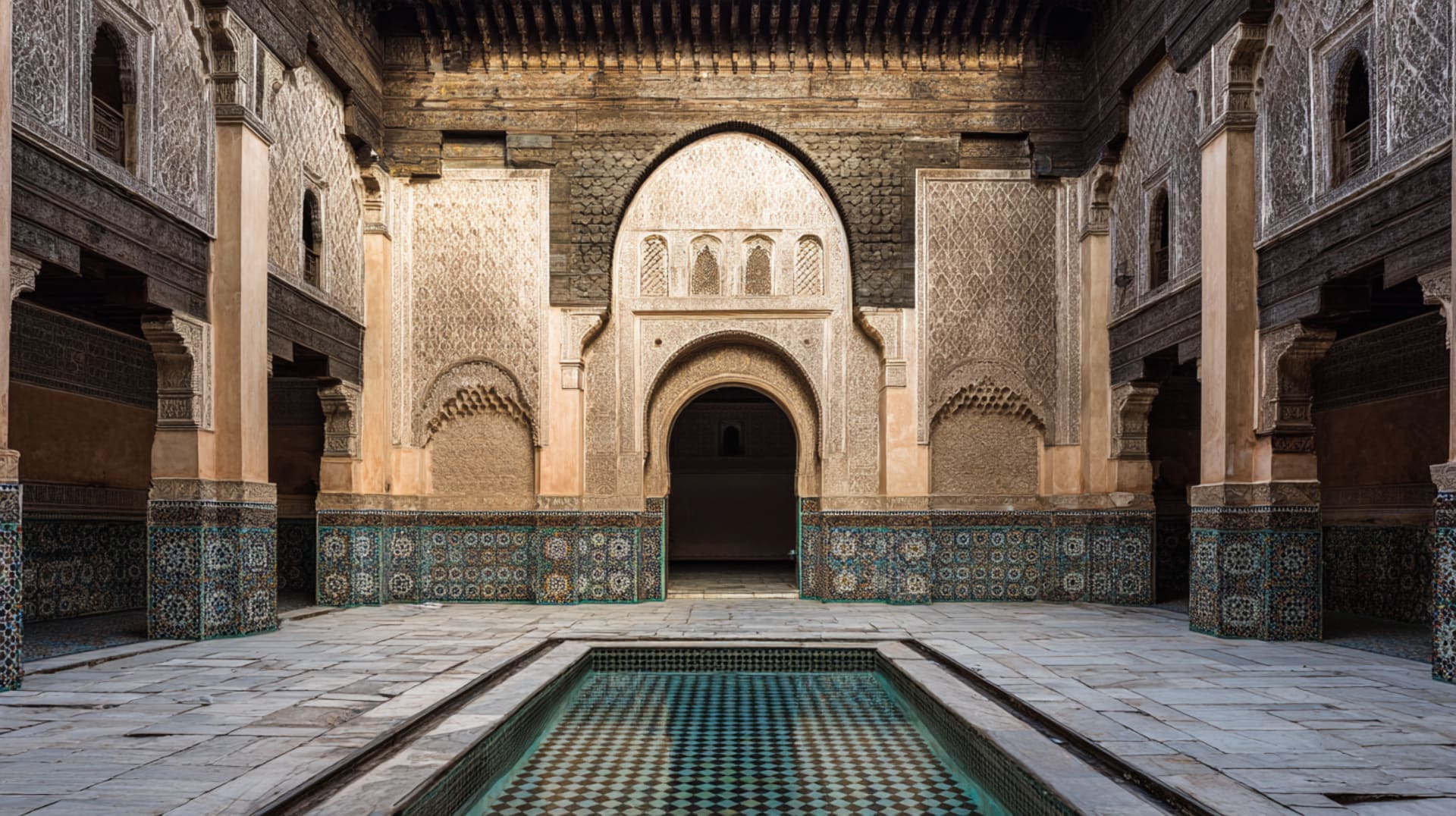
The courtyard, by contrast, is almost hallucinatory in its beauty. Carved stucco walls, zellige tilework in geometric patterns that a mathematician could study for a week, cedar ceilings fragrant with centuries. A marble ablution pool reflects the galleries above. This was where students gathered, prayed, and discussed what they had memorised alone. The architecture creates a rhythm: compression, then release. Darkness, then beauty. The cell, then the courtyard. Silence, then conversation. The building understood pedagogy before pedagogy had a name.
The medersa was founded in the 14th century and rebuilt by the Saadians in 1565. It operated continuously until 1960, when Morocco's new government closed it for restoration. The building you visit today is a museum — emptied of students, filled with tourists photographing the courtyard — but the architecture still works. Stand in one of those cells, close the door, and feel the silence arrive like a physical thing. It is immediate, total, and slightly unsettling, which is exactly how it was designed to feel.
The boys who studied here became judges, scholars, imams. They carried the texts they memorised into every corner of the Islamic world. The method was demanding — rote learning in near-darkness — but it produced hafiz, those who carry the entire Quran in their memory. The cells are empty now. The silence remains, patient, professional, still doing its job after five centuries. It has outlasted every student who ever sat in it.
The silence inside mass is different from the silence outside it. The architecture pilgrimage follows the buildings that prove it.
Tell us about your trip →The Facts
- —Originally founded in the 14th century by Marinid Sultan Abu al-Hassan
- —Rebuilt by Saadian Sultan Abdallah al-Ghalib in 1565
- —At its peak housed approximately 900 students in 130 cells
- —Closed as a functioning school in 1960
- —Reopened as a museum in 1982
- —The prayer hall inscription includes the largest Quranic verse
Sources
- Paccard, André. Traditional Islamic Craft in Moroccan Architecture. Éditions Atelier 74, 1980
- Navarro Palazón, Julio & Jiménez Castillo, Pedro. "La yesería en época almohade." In Los Almohades, Consejo Superior de Investigaciones Científicas
- Deverdun, Gaston. Marrakech: des origines à 1912. 1959
Further Reading
Practical questions