The Gnawa
From Timbuktu to trance
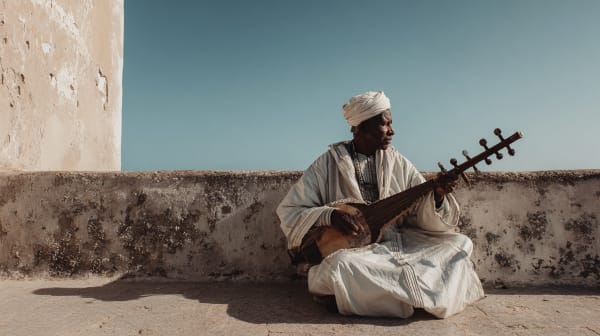
The guembri strikes a note so low you feel it in your spine. The maalem closes his eyes. Somewhere in the room, a woman begins to shake. The healing has begun.
7 stories
Gnawa trance, Andalusian classical, Aita, chaabi. The musical traditions that carry history in their rhythms.

From Timbuktu to trance
The guembri strikes a note so low you feel it in your spine. The maalem closes his eyes. Somewhere in the room, a woman begins to shake. The healing has begun.

An instrument that calls spirits
The body is carved from a single log. The skin comes from a camel that died a natural death. The strings are gut, twisted by hand. The instrument has rules about who may touch it.

All-night ceremonies for healing
Midnight. The candles flicker. Seven colors of cloth laid out on the floor. The maalem strikes the first note and everything outside this room stops existing.

Gnawa and Voodoo share the same roots
The Atlantic slave trade split one tradition across two continents. In Morocco, they call the spirits mlouks. In Haiti, they call them lwa. The drums remember.

Did Jimi really want to buy the castle? Separating fact from legend in Essaouira.
Every café owner in Essaouira has a Hendrix story. He played here. He ate here. He wanted to buy the castle. He inspired 'Castles Made of Sand.' Most of it is myth. The truth is stranger: he was here for about ten days, and the town has never stopped telling the story.

Crosby, Stills & Nash turned a train ride into a hippie anthem
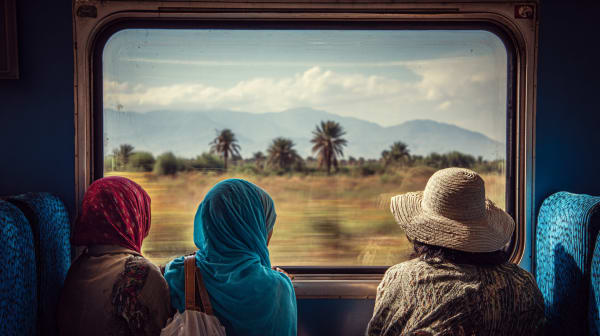
In 1966, Graham Nash rode a train from Casablanca to Marrakech and wrote a song about it. Three years later, 'Marrakech Express' became the anthem of the hippie trail — a two-minute invitation to Morocco that's still playing in every medina café.

The Aïta was protest music before protest music existed. The French banned it. Women kept singing.
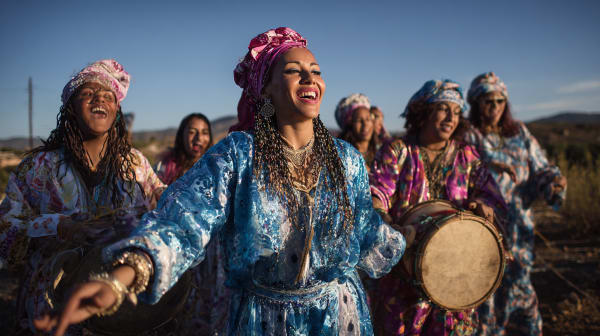
The Aïta is the blues of Morocco — raw, rural, sung by women who had nothing left to lose. The songs protested French occupation, mourned lost love, and said things polite society wouldn't. The French tried to suppress it. The nationalists used it. The women kept singing.
Other categories