The Light That Made Matisse Burn His Palette
How Marrakech taught a couturier to see
In Fes, the zellige masters don't measure angles. They feel them.
9 stories
From the painters who came to Morocco and rewrote European colour theory to the artisans whose geometric patterns encode a worldview.

How Marrakech taught a couturier to see
In Fes, the zellige masters don't measure angles. They feel them.

The American who saved Moroccan craftsmanship
Volubilis was already ancient when the Romans arrived. The mosaic floors held older secrets.

How a prayer error created a masterpiece
The Koutoubia minaret was built twice—the first version demolished for pointing the wrong way toward Mecca. Its design became the template for the Giralda in Seville.

Islamic geometry born from prohibition
Zellige means 'little polished stone'—a name that tells you where this came from (Roman mosaics) and nothing about what it became (Islamic geometry that maps infinity).

Churchill, the Mamounia, and the most expensive British painting ever sold
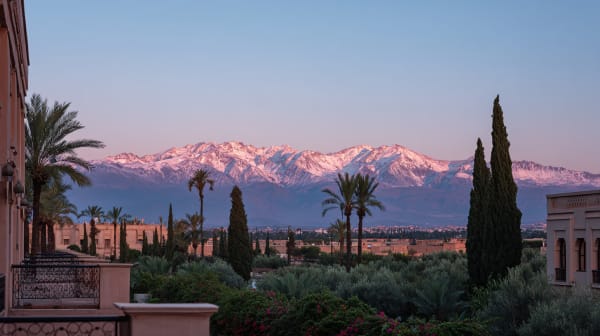
Winston Churchill came to Marrakech to escape the war and found something else: the light. He painted the Atlas Mountains from the Mamounia's tower, gave the canvas to Roosevelt, and started a journey that would end with Angelina Jolie and $11.5 million.

The Berbers have been writing for 3,000 years. Most of it is carved into rock.
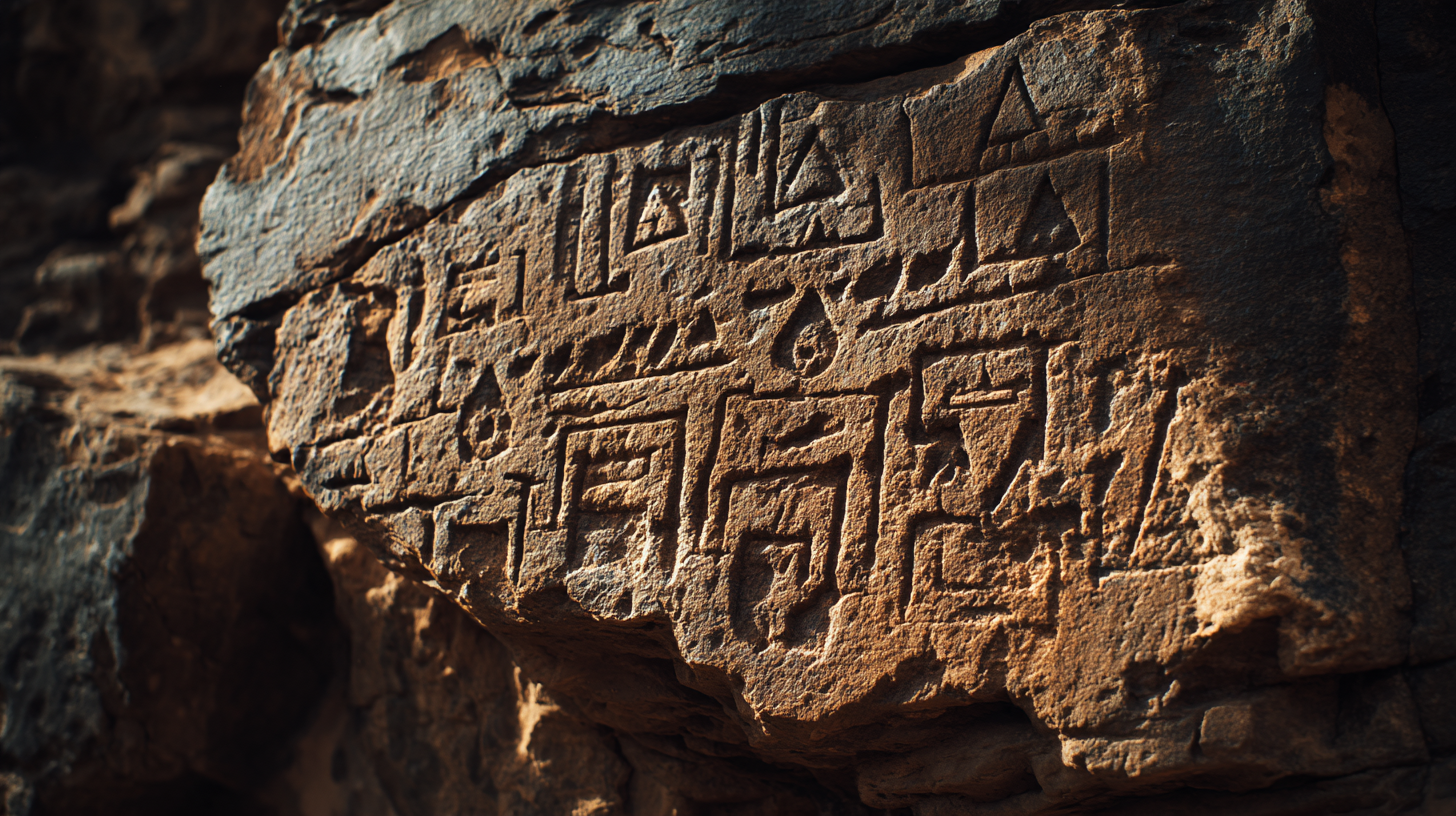
While Europe was still illiterate, the Berbers were carving letters into stone. Tifinagh — the indigenous alphabet of North Africa — has survived 3,000 years of invasion, colonization, and suppression. Today it's on street signs and taught in schools. The oldest letters are still readable in the desert.

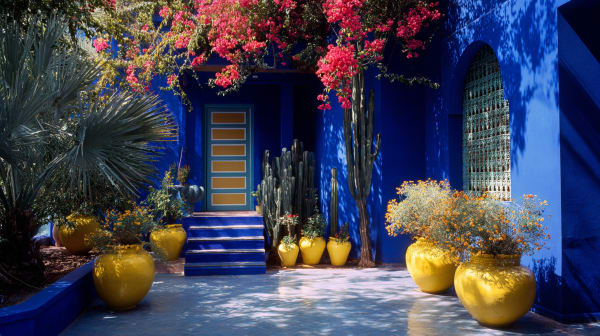
A French painter invented a color. A fashion designer saved it from bulldozers.
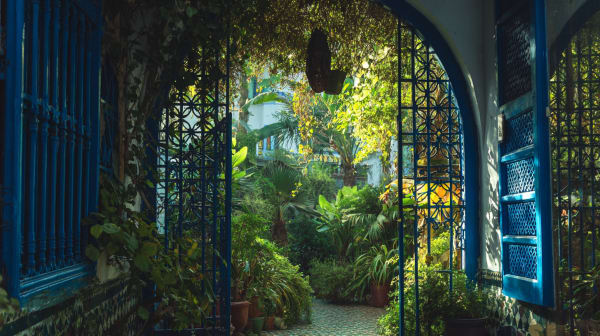
Jacques Majorelle spent forty years building a garden in Marrakech and inventing a shade of blue so specific it bears his name. When he died broke, the garden nearly became a hotel. Then Yves Saint Laurent bought it for the price of an apartment — and turned it into the most visited site in Morocco.

In 1832, Delacroix became the first European to paint a Moroccan harem. He had to sketch in secret.
Eugène Delacroix arrived in Morocco in 1832 on a diplomatic mission and left with notebooks full of forbidden sketches. He'd seen a harem — the first European painter to do so. The images haunted him for thirty years. They changed French art forever.

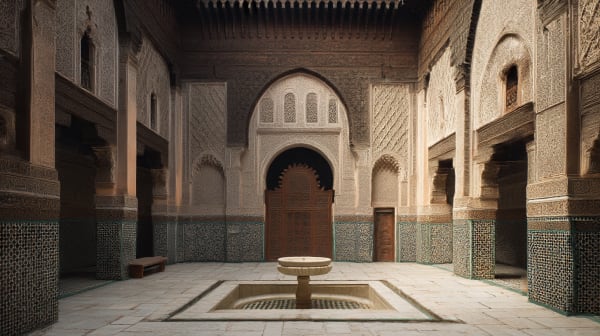
In the fourteenth century, the Marinids filled Fes with theological colleges so beautiful that the students' quarters were the only ugly rooms in the building.
The Marinid dynasty ruled Morocco from roughly 1244 to 1465, and they built their legacy in Fes. Unable to claim descent from the Prophet, they compensated with architecture — a chain of madrasas so lavishly decorated that visitors today forget they were schools.
Other categories