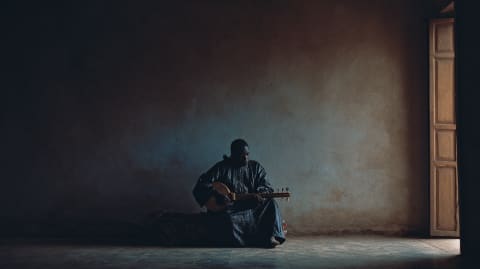
The word "aïta" means "the call" — and the women who sang it were calling out everything that polite society preferred to leave unsaid.
Aïta is the roots music of Morocco's Atlantic plains — Doukkala, Abda, Chaouia, the farmlands between Casablanca and Essaouira. It is sung by women called chikhates, who performed at festivals, weddings, and gatherings where the rules relaxed and the volume increased. The songs were raw: love and loss, sex and death, poverty and injustice. Nothing was off-limits. The chikhates sang what everyone knew and nobody said, which is the job description of every important musician in every country that has ever tried to be quiet about its problems.
When the French arrived, aïta became political. The chikhates sang about occupation. They mocked French soldiers by name. They celebrated resistance fighters. The songs spread news and fury through rural communities where newspapers didn't reach and wouldn't have been read if they had. The French understood the threat — they banned performances, arrested singers, tried to silence the call. The call, being a call, did not cooperate.
It went underground and grew stronger. During the independence movement, nationalist leaders recognised its power. The songs that once scandalised the bourgeoisie became anthems. Chikhates who had been dismissed as disreputable women became symbols of resistance, which is the trajectory of most art that tells the truth: first it is dangerous, then it is celebrated, then it is taught in schools.
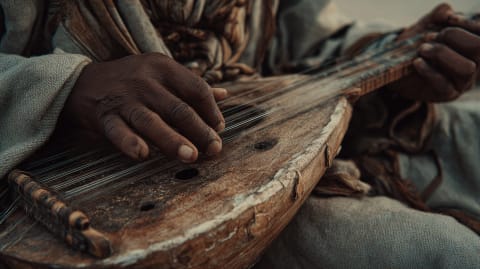
The music itself is unmistakable: a wailing voice over a sparse rhythm, call-and-response with the audience, lyrics that build from sorrow to ecstasy. The melodies are microtonal, bending notes in ways that Western scales cannot capture. The poetry is allusive — a line about a river might mean a river, or a border, or a lover who left, or a country that is drowning. The best chikhates can hold all four meanings in a single phrase and leave the audience to decide which one is breaking their heart.
The music that survived slavery became resistance. The Gnawa Road follows the sound from the desert to the coast.
Tell us about your trip →The Facts
- —Aïta originated in Morocco's Atlantic plains (Doukkala, Abda, Chaouia)
- —Chikhates (female singers) performed at festivals and celebrations
- —The French banned political Aïta performances during the Protectorate
- —The music was used by independence movements in the 1940s-50s
- —Aïta uses microtonal scales uncommon in Western music
- —UNESCO has recognized Aïta as intangible cultural heritage
- —The tradition continues in rural Morocco today
Sources
- Schuyler, Philip. "Music and Tradition in the Moroccan Berber Poetry." Yearbook for Traditional Music
- Kapchan, Deborah. Traveling Spirit Masters. Wesleyan University Press, 2007
- Ciantar, Philip. The Ma'luf in Contemporary Libya. Ashgate, 2012