
Khamlia
Hours
Always open
Entry
Free (donation expected)
Duration
120 minutes
Location
7km south of Merzouga
Descendants of sub-Saharan slaves built a spiritual music from trance rhythms and memory. The guembri starts when someone picks it up. No ticket, no schedule.
01
The Village at the End of the Trade Route
The people of Khamlia are Gnaoua — descendants of sub-Saharan Africans who were brought across the Sahara, some as slaves, some as soldiers, some as traders, between the 8th and 19th centuries. The village sits 7 kilometres south of Merzouga, at the edge of Erg Chebbi, in a landscape so flat and exposed that the dunes on the horizon look like a hallucination.
Khamlia was historically marginalised. The Gnaoua communities of the southeast — Khamlia, Tissardmine, parts of Rissani — occupied the lowest rung of a social hierarchy that placed Arab-identifying families at the top and dark-skinned Saharans at the bottom. That hierarchy is not ancient history. It shapes daily life.
What changed was music. Gnaoua music — the guembri, the qraqeb, the trance rhythms — crossed from ceremony to international stages in the 1990s and 2000s. Khamlia became a stop on the desert tourism circuit precisely because the music was exceptional and the villagers were willing to perform for visitors. The economics are straightforward: tourism income transformed a village that had almost nothing.
02
The Sound
The music is the architecture. Gnaoua is built on the guembri — a three-stringed bass lute carved from a single trunk, covered in camel skin. The sound is deep, repetitive, hypnotic. Over it, the qraqeb (iron castanets) lay a metallic rhythm that locks your pulse. The songs are call-and-response. The language mixes Arabic with Bambara and other sub-Saharan languages that the performers themselves no longer fully understand.
In ceremony — a lila, or healing night — each song corresponds to a colour, a spirit, an incense. The music is not entertainment. It is technology for inducing trance states. Visitors to Khamlia hear a condensed performance, not a lila. The difference matters, and the performers know it. But the sound is still the sound.
Two groups in the village — Pigeons du Sable and Bambara — host visitors in simple rooms with rugs on the floor, serve tea, and play for 30–45 minutes. You sit close enough to feel the guembri vibrate in your sternum.
03
Visiting
Khamlia runs on a donation model. There is no ticket. You arrive, you are welcomed with tea, the music starts. At the end, you leave what you think is fair. The musicians depend on this income — it is not supplementary. A reasonable contribution is 100–200 MAD per person.
The village is 7 km south of Merzouga on a paved road. Most desert camps and guesthouses in Merzouga arrange visits as part of a half-day circuit that includes the dunes and the seasonal salt lake. You can also drive yourself or take a taxi.
Go in the morning. By afternoon, multiple tour groups overlap and the experience becomes a production line. In the morning, you might be the only visitors, and the musicians play as if it matters.
Best Time to Visit
Morning, before the tour groups arrive from Merzouga. The village is exposed desert — summer afternoons are brutal. Spring and autumn are most comfortable.
Getting There
Seven kilometres south of Merzouga on a paved road. Most desert guesthouses and camps arrange visits. You can also drive — the road is clear and flat — or hire a taxi in Merzouga for about 50 MAD round trip.
Local Tip
Gnawa musicians descended from sub-Saharan slaves.
Common Questions
No. The village welcomes visitors throughout the day. But mornings are quieter and the experience is more personal.
Khamlia works on donations, not tickets. 100–200 MAD per person is a fair contribution. This is the musicians' primary income source.
A spiritual music tradition with sub-Saharan African roots, brought to Morocco across the Sahara over centuries. The guembri (bass lute), qraqeb (iron castanets), and call-and-response vocals are its signature elements.
Ask first. Most musicians are comfortable with photos and short recordings. They sell CDs at the end of the performance.
Walking Distance
Nearby
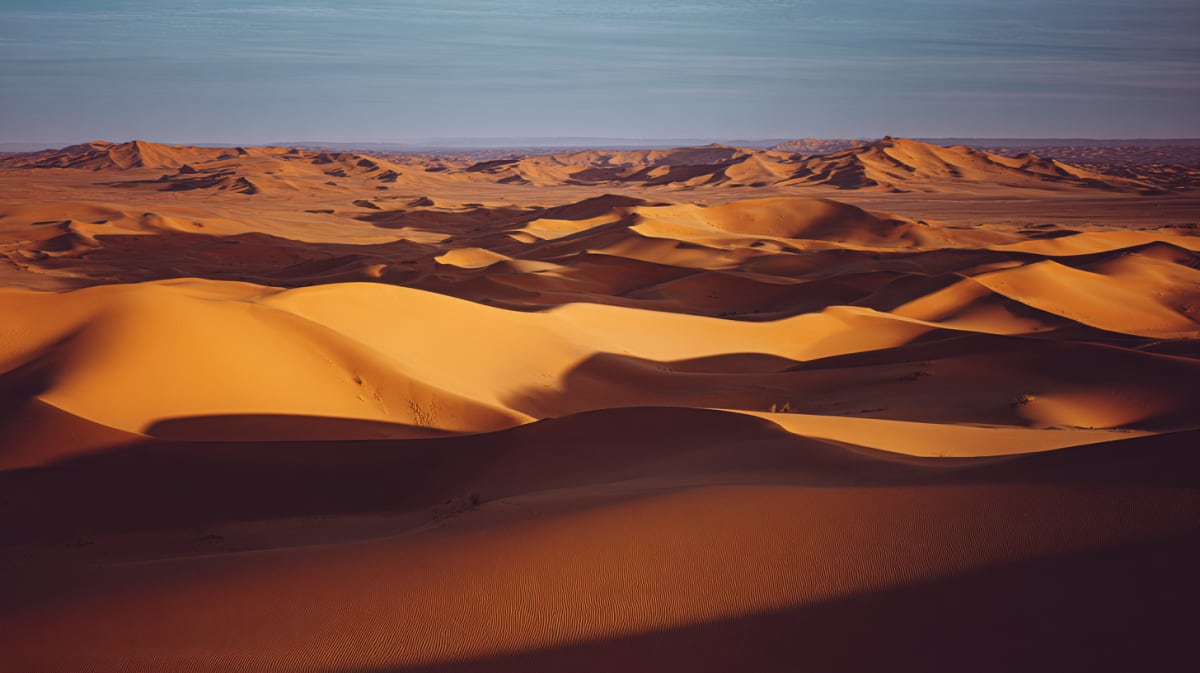
Khamlia is a Gnawa village at the edge of the Sahara. We visit for the music — the musicians play in a small room, not on a stage. The difference is everything.
Plan a private journey →Explore More
Related Stories
Discover the history and culture of Merzouga


Explore More
Multi-day journeys featuring this place
Curated routes that pass through Merzouga
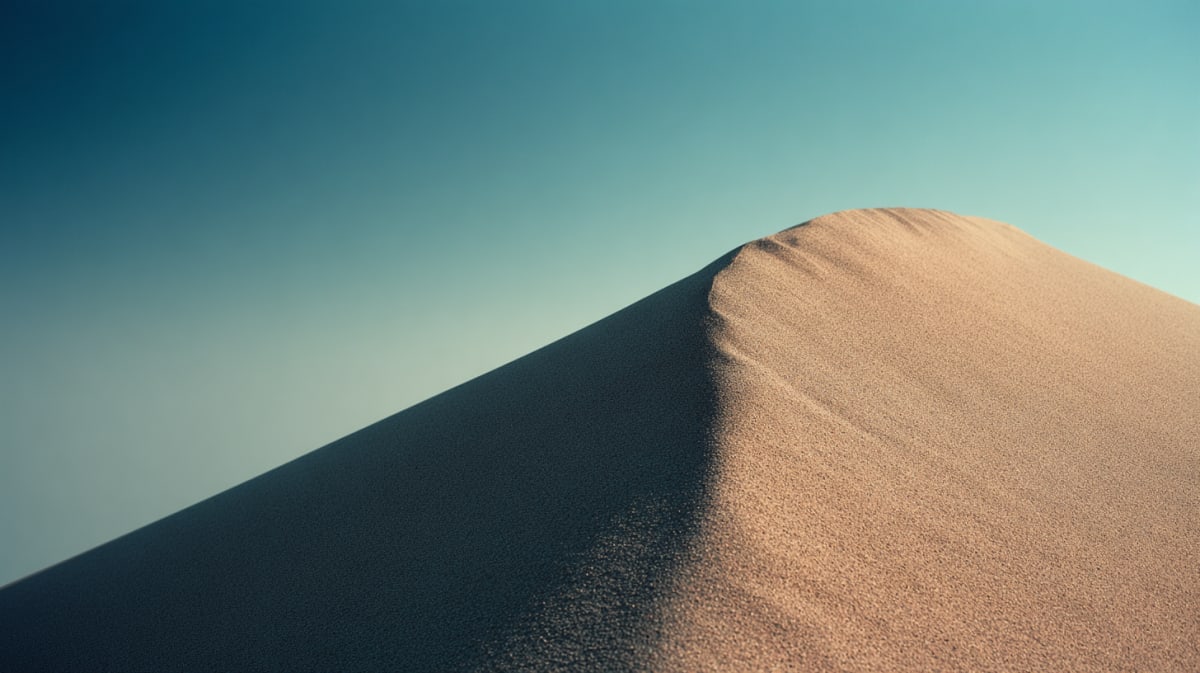
3 Days
3-Day Sahara Circle
Mountains to sand and back. Stars so dense they press against your chest — and a silence that rewrites what you thought quiet meant.
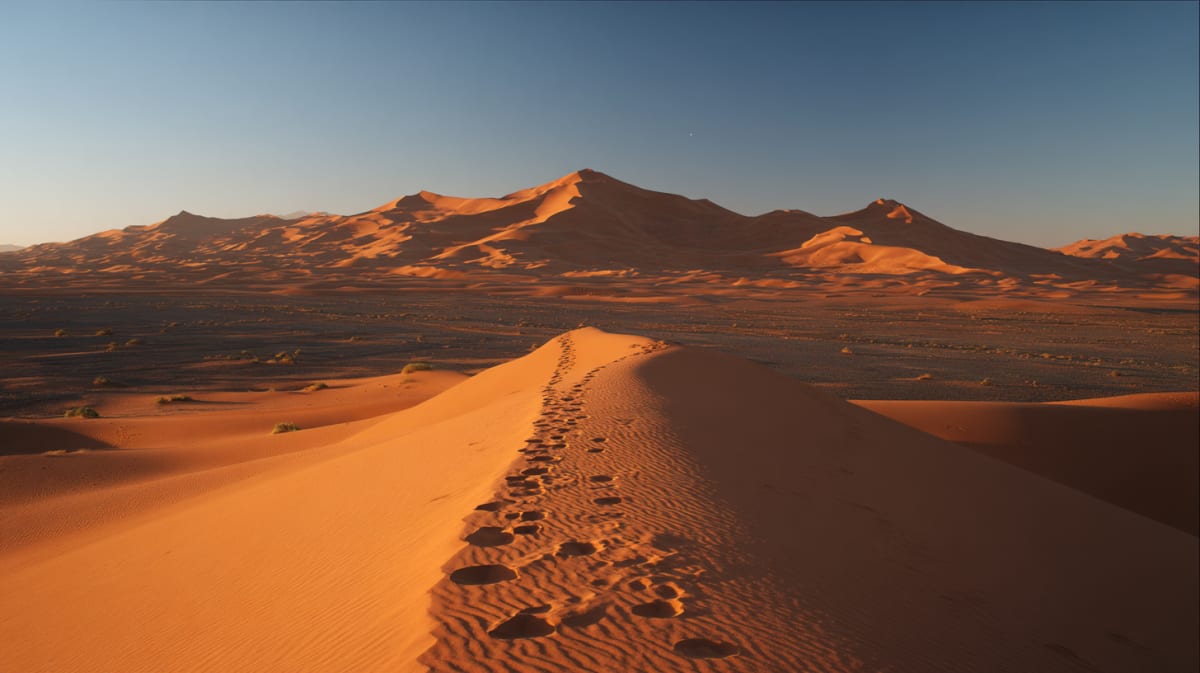
4 Days
Marrakech to Fes
The classic — red city to medieval labyrinth via the Sahara. The corridor that defines Moroccan travel.
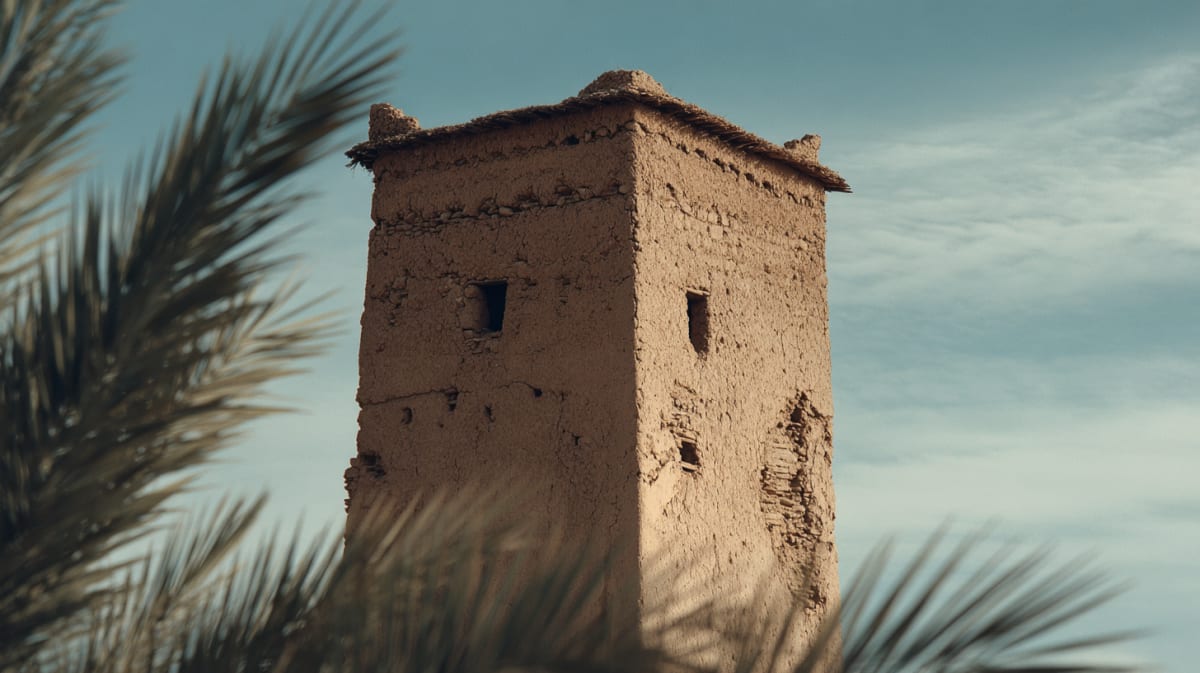
4 Days
4-Day Sahara & Valleys Journey
Descent through ancient rhythms. Return through gorges where the stone remembers everything — and your phone camera remembers nothing accurately.
Sources: Pâques V. (1991) La Religion des Esclaves;;Gnawa Festival of Essaouira documentation