4 Days
Marrakech to Fes
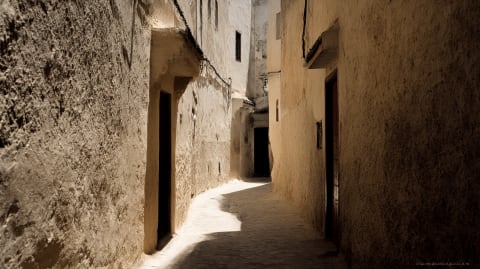
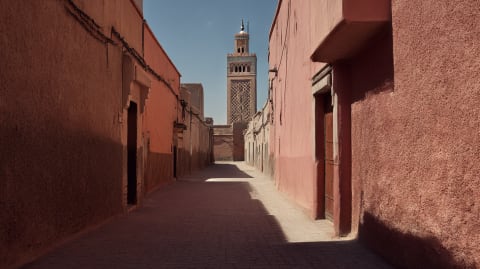
The route every traveller eventually takes — but done slowly, letting each day arrive rather than chasing the next. Four days to cross from the red city to the ancient medina with the Sahara in between. The corridor that defines Moroccan travel because it contains everything: the Atlas crossing where your ears pop and the light changes, the kasbahs rising from red earth like arguments nobody has won, the dunes arriving at sunset like a held breath released, the gorges on the return cutting through rock in colours you didn't know stone could hold. You arrive in Fes and the medina closes around you — narrower, older, denser, smelling of leather and cedar and wet plaster. Morocco put its best argument in a line between its two greatest cities. Four days is enough to hear it. A lifetime is not enough to settle it.

Day 1
Ouarzazate
The road climbs until Marrakech disappears — first the palms, then the minarets, then the haze. Stone villages cling to slopes where the light shifts by the hour, women carrying bundles of firewood along paths that predate the tarmac by centuries. Switchbacks tighten around you like a held breath. Your ears pop at the pass — 2,260 metres, the highest paved road in Morocco. The south side is different. Drier. Warmer. The colour changes from green to ochre in the space of a single bend. By afternoon, the mountains release you into silence. Ouarzazate waits — not as a destination but as a threshold. A glass of tea arrives before you ask. The mint cuts through the dust on your tongue.
Day 2
Merzouga
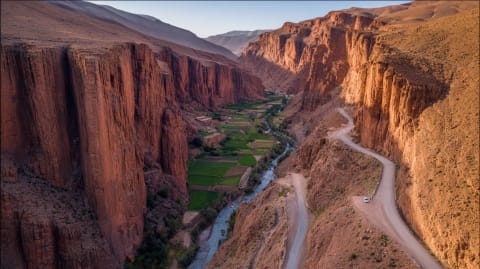
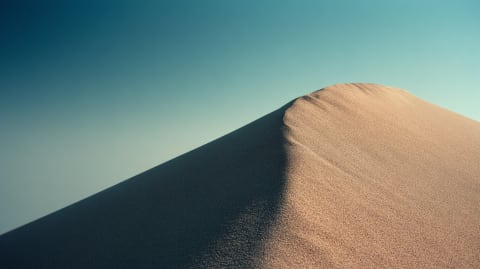
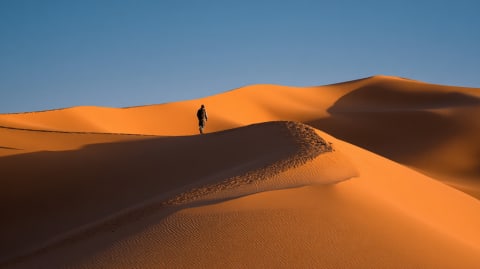
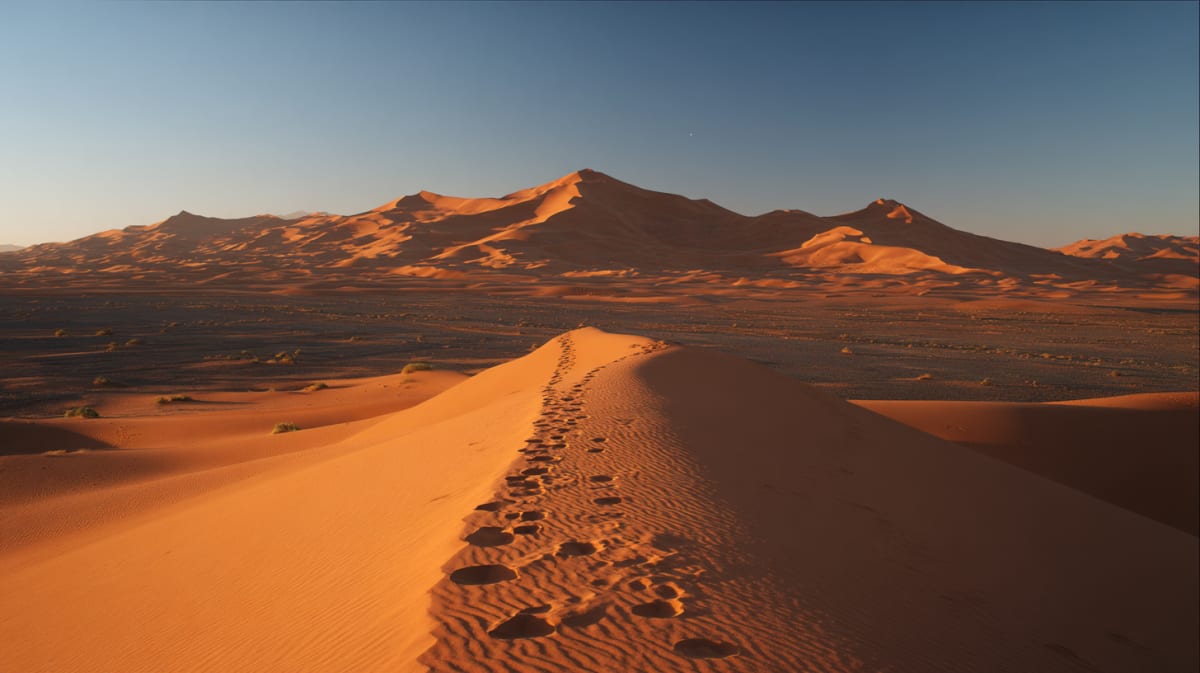
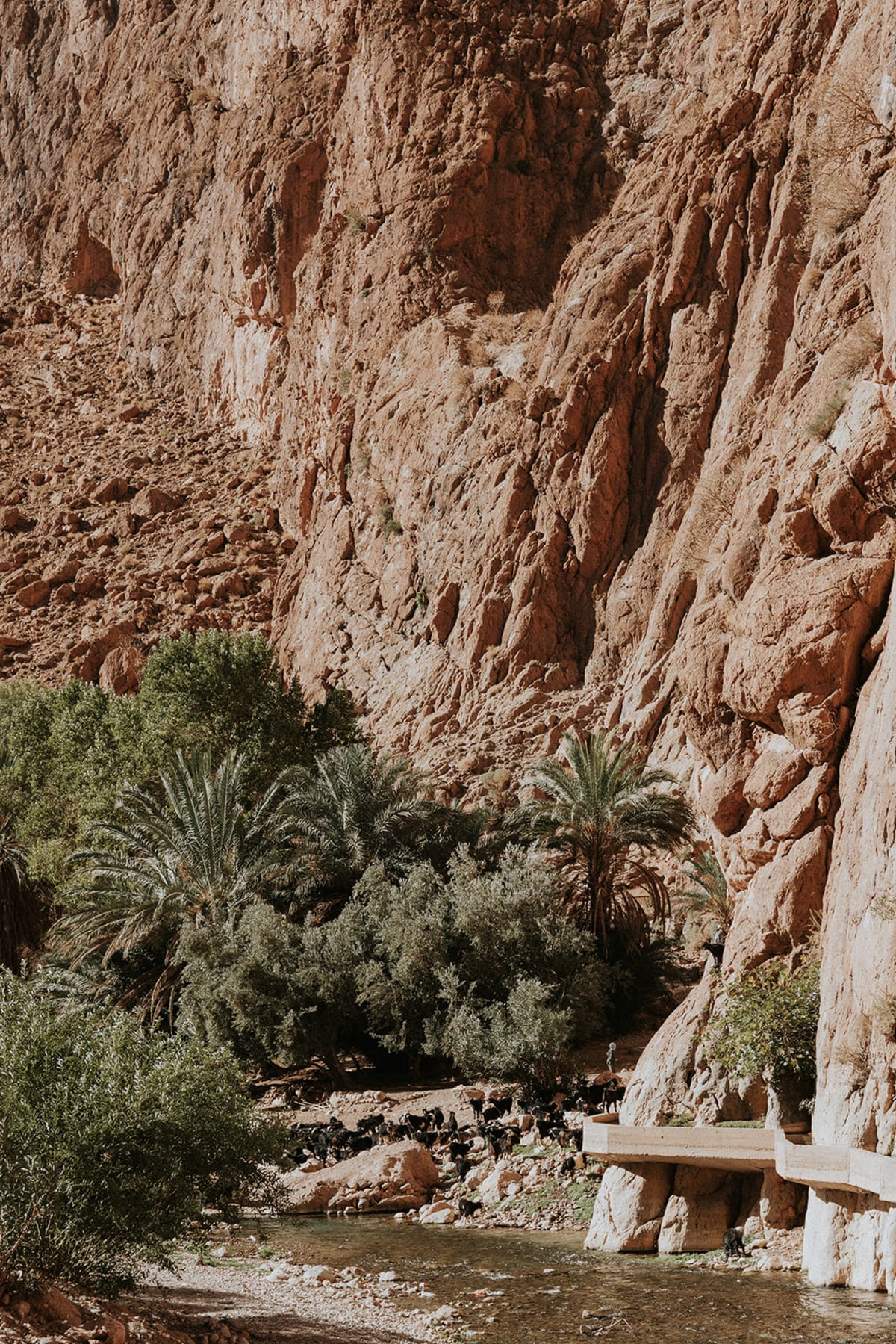
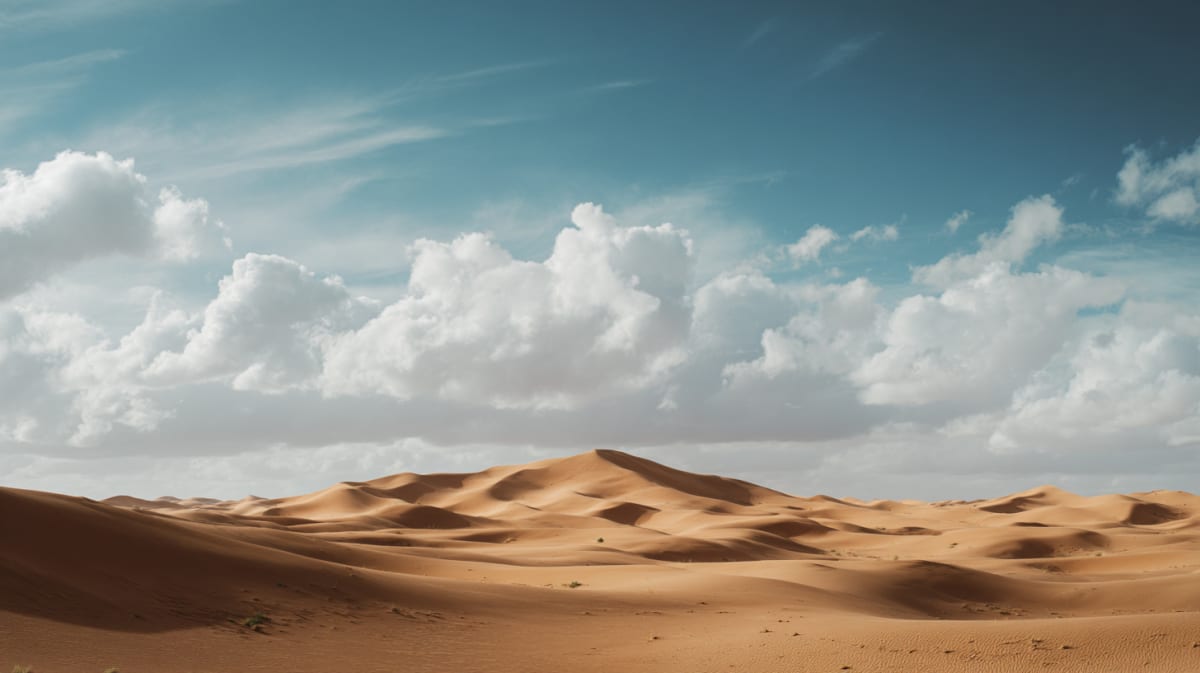
East into the pre-Sahara. The road stretches through country that empties as you go — each town smaller, each valley drier, the horizons widening. Tinghir's palm grove is the last serious green. Then Todra — canyon walls vertical and close, the afternoon shadow pooling at the bottom like spilled ink, the river running cold over your hand when you reach down. Beyond Erfoud the hammada ends. Erg Chebbi rises from the flat earth. The dunes turn gold, then orange, then colours your vocabulary can't reach as the light falls. Camp appears at the base. The sand is warm under your palm. The first stars arrive before you're ready.
Day 3
Merzouga
A day without roads. The dunes shift color as the sun moves—pink at dawn, gold at noon, orange by evening. You can walk to nomad tents where tea is poured without ceremony. Or drive to Khamlia where Gnawa music rises from the sand. Or do nothing. The desert doesn't require your participation. It just asks that you notice.
Day 4
Fes
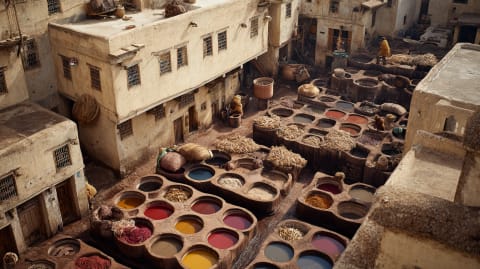
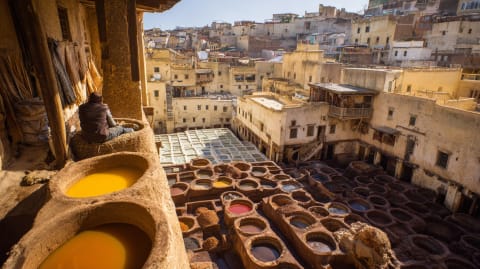
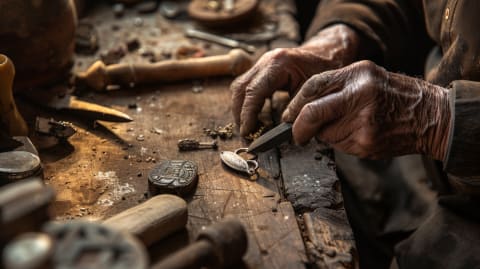
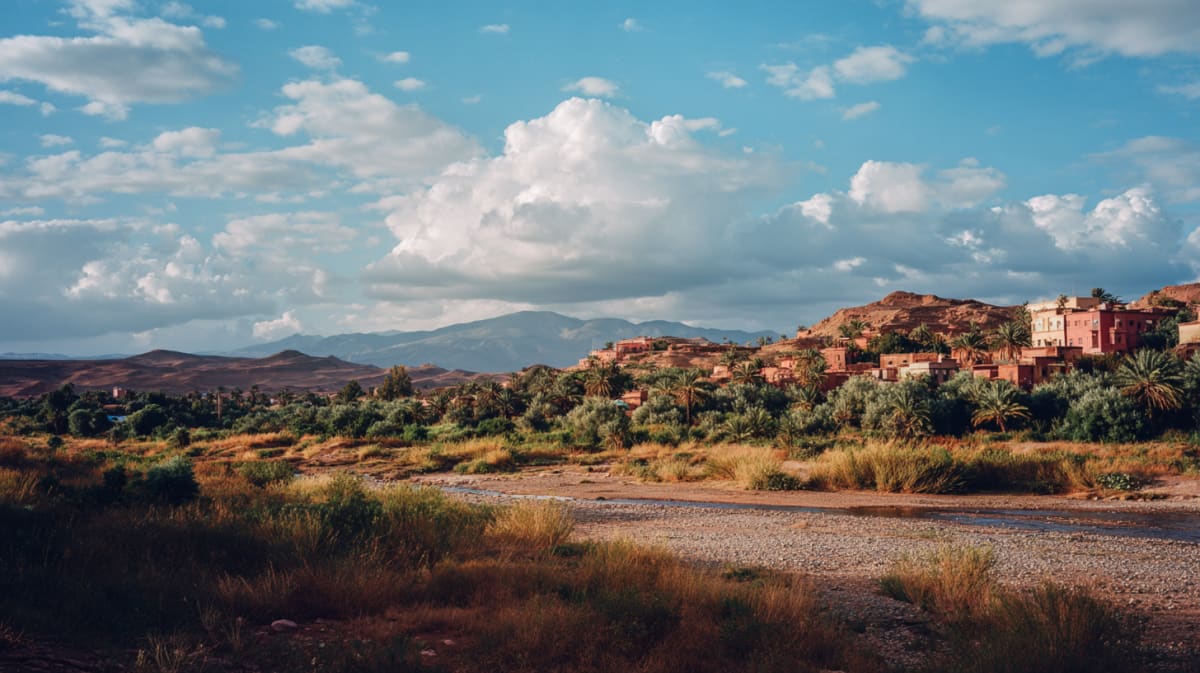
You leave the dunes at dawn. The sand still holds last night's cold under your bare feet. North through the Ziz — palms pressed against red canyon walls, the gorge narrowing and opening like breathing. The Middle Atlas appears in cedar and mist. The air changes — colder, wetter, the smell of pine resin and wet bark. Barbary macaques sit in the branches like philosophers holding court. By evening Fes sprawls below its hills — a thousand years of medina, smoke rising from a hundred hammams, the faint sound of brass being hammered reaching you before you've found the gate. You've crossed from sand to civilisation. The desert hasn't left.
Private Journeys
Plan this journey.
This route is private, and shaped around how you want to move through the country. Tell us what you're hoping to find — we'll design the trip around it.
There is more
This is just the shape of the route.
The full story — where the road changes, what the maps don't name, which detours are worth the dust — lives in the Slow Morocco letter. Written from the medina. Sent when it matters.
No frequency promises. Unsubscribe anytime.