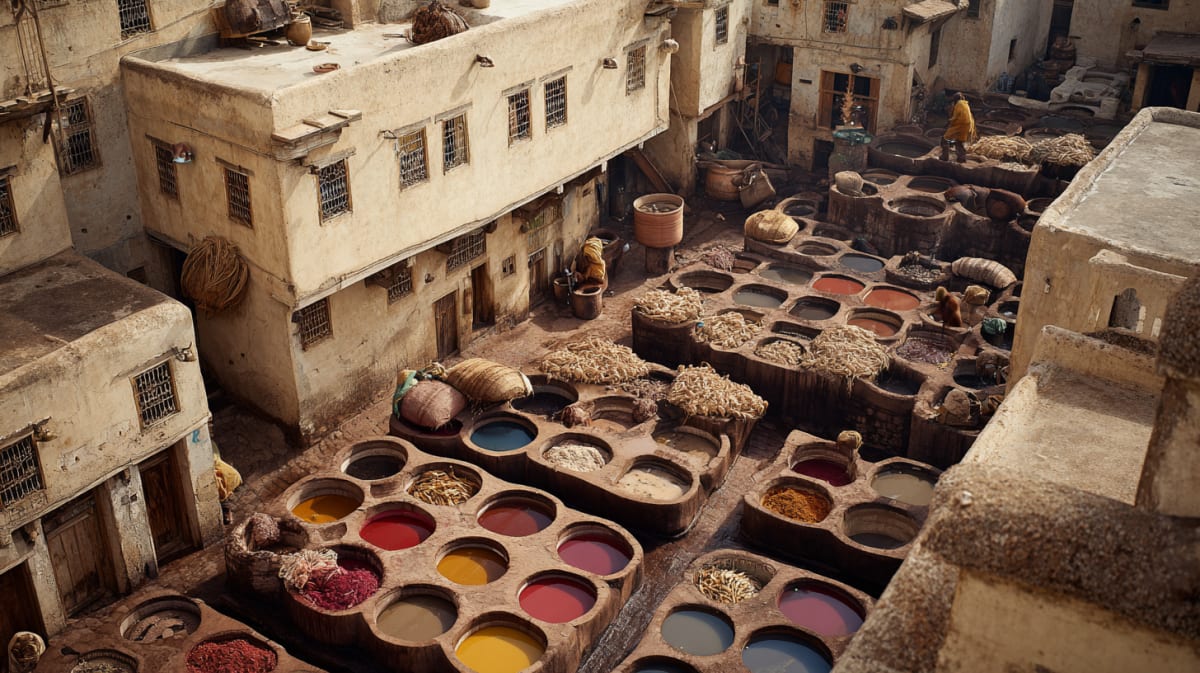
Chouara: The Oldest Tannery in the World
Hours
Daily 8am-6pm
Entry
Free (tip expected)
Duration
30 minutes
Location
Hay Lablida, Fes el-Bali
The smell announces it before you see it — pigeon droppings, quicklime, the chemical reality of medieval leatherwork. Take the mint they offer. The methods haven't changed since the 11th century.
01
A Thousand Years of Stink
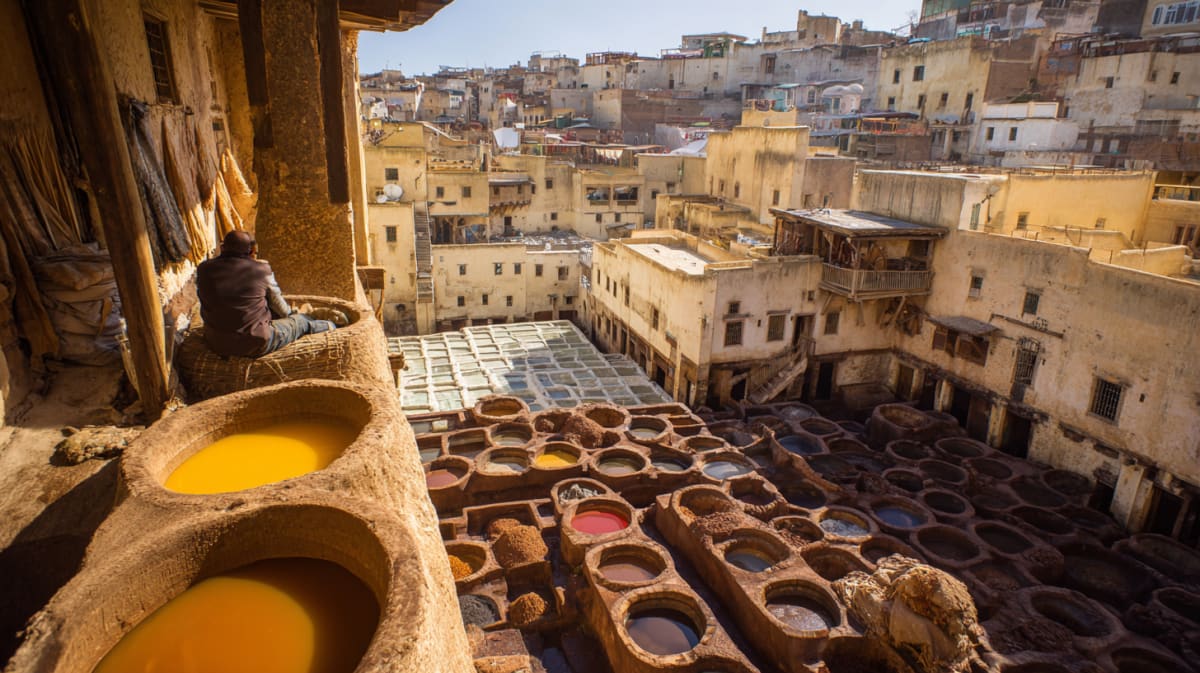
The Chouara tannery has operated on this site since the 11th century. The process has not changed in any fundamental way. Cow, sheep, and goat hides are soaked in quicklime to strip the hair, then washed in pigeon guano (the ammonia softens the leather), then dyed in stone vats using plant-based pigments: saffron for yellow, cedar for brown, poppy for red, indigo for blue, mint for green.
The tannery employs several hundred men. The work is physical, chemical, and relentless. Workers stand thigh-deep in the vats, treading the hides with their feet. The smell — a compound of lime, ammonia, decomposing flesh, and dye — is the thing every visitor mentions first. Guides hand out sprigs of fresh mint to hold under your nose. It helps slightly.
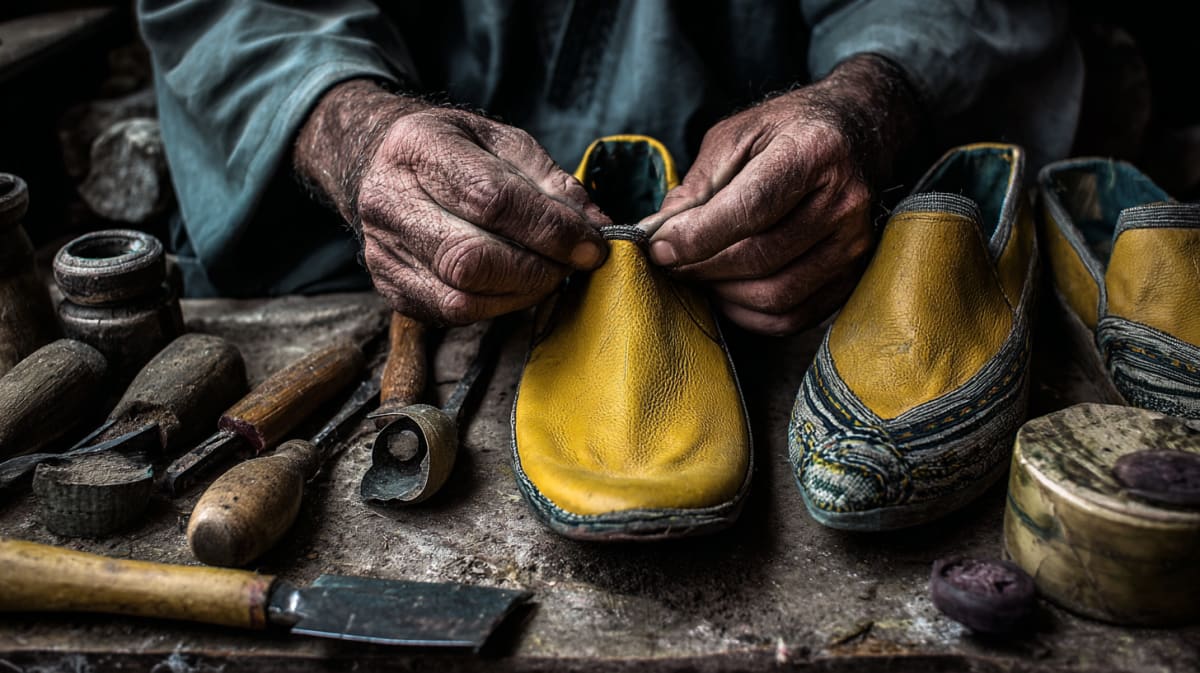
The Fes leather industry was once the city's primary export economy. The English word 'morocco' — meaning a type of fine leather — comes directly from Fes. Moroccan leather meant Fassi leather.
02
The Vats
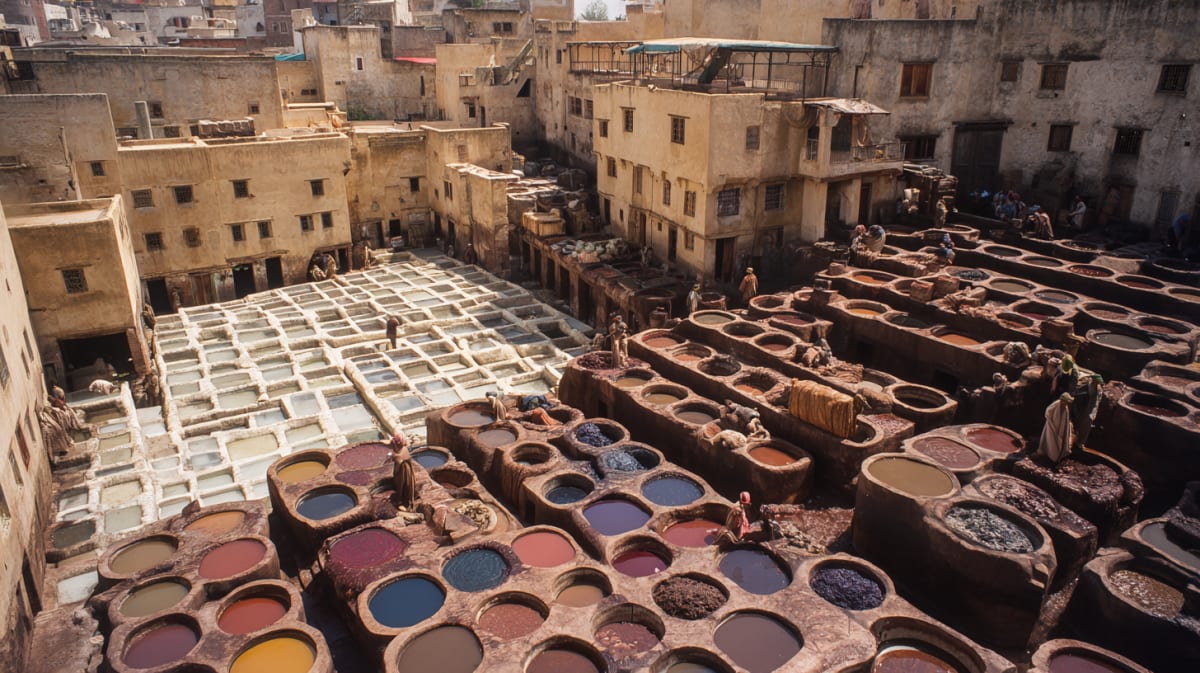
The tannery is an open-air compound of stone vats arranged in a honeycomb pattern. Each vat is roughly circular, about a metre deep, filled with a different solution. The undyed vats are white and grey — the lime and guano stages. The dye vats are vivid: terracotta, amber, cobalt, emerald. From above, the pattern looks like an artist's palette.
The viewing terraces belong to the leather shops that surround the tannery on three sides. Access is technically through these shops, which means you will be guided toward a leather purchase. This is the trade-off and everyone knows it. The best viewing terrace is from the Chouara Tannery Shop on Derb Chouwara — look for the stairs leading up.
03
Visiting
You do not enter the tannery itself — you view it from the surrounding leather shop terraces. Access is free, but the shopkeepers expect you to at least look at their products. Buying is not obligatory. A tip of 20 MAD to the person who leads you upstairs is customary.
The mint sprig they give you is genuine advice, not theatre. Use it.
Morning is best for photography — the vats catch direct sunlight before noon. In the afternoon, the buildings cast shadow across half the compound. The most vivid colours appear when the vats have been freshly filled with dye, which varies by day and season.
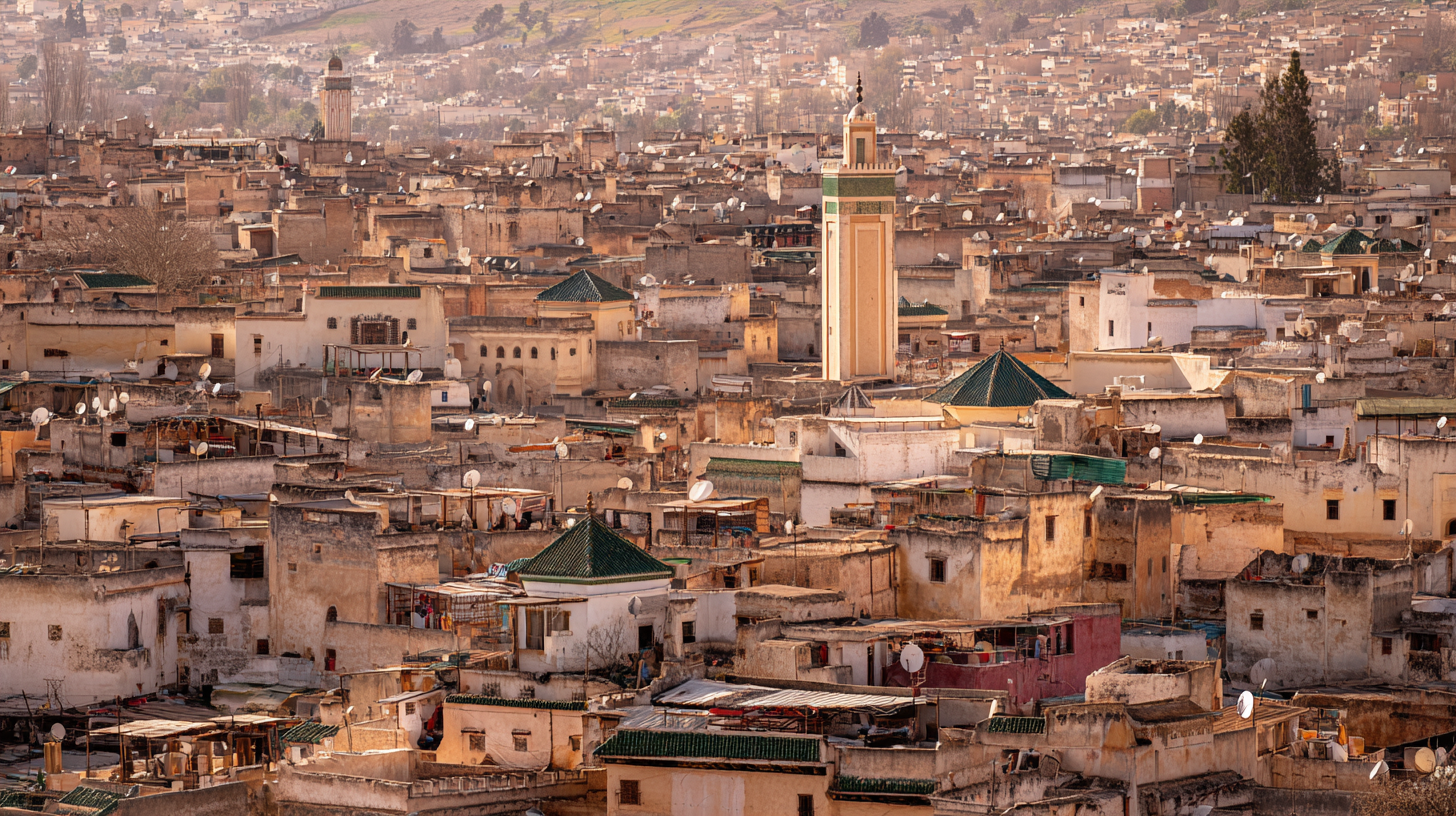
The tannery is deep inside Fes el-Bali, the old medina. Navigation is difficult — consider following signs to Derb Chouwara or asking for 'tanneries.' Everyone in Fes knows where they are.
Best Time to Visit
Morning for the best light on the vats. The dye colours are most vivid when freshly filled. Avoid midday in summer — the smell intensifies with heat.
Getting There
Deep inside Fes el-Bali, near Derb Chouwara. Navigation in the medina is challenging — follow signs for 'tanneries' or ask locally. From Bab Boujloud (the main medina gate), it is a 15-20 minute walk east and downhill.
Local Tip
Take mint to hold under your nose. The smell is intense.
Common Questions
The process uses quicklime, pigeon guano (for ammonia), and organic matter from decomposing flesh. It is an 11th-century industrial process operating in the open air. The mint sprig they hand you at the door is practical, not decorative.
No formal fee. You access viewing terraces through surrounding leather shops. A 20 MAD tip to your guide is customary. The shops will try to sell you leather — buying is not required.
No. You view from above, from the surrounding terraces. Workers access the vats — visitors do not.
From Fes. Fassi leather was Europe's premium import for centuries. The English word for the fine leather — morocco — derives directly from the country, and specifically from this tradition.
Walking Distance
Nearby
We visit Chouara early, before the tour groups arrive and the leather shops start pulling. The dye pits at 8am, when the workers are mixing colour, are the real spectacle.
Plan a private journey →Explore More
Related Stories
Discover the history and culture of Fes
Explore More
Multi-day journeys featuring this place
Curated routes that pass through Fes
3 Days
Volubilis & the Holy City
Roman columns and Morocco's holiest shrine, an hour apart.

3 Days
Fes, Meknes & Wine Country
Imperial cities, Roman mosaics, and a vineyard lunch that quietly dismantles everything you assumed about North African soil.
3 Days
Fes City Break
Three days in the world's largest car-free urban area — tanneries, foundouks, and the sound of hammering brass.
Sources: Le Tourneau R. (1949) Fès avant le Protectorat;;UNESCO Fez nomination file (1981);;Parker R. (1981) A Practical Guide to Islamic Monuments in Morocco