8 Days
Jewish Heritage of Morocco
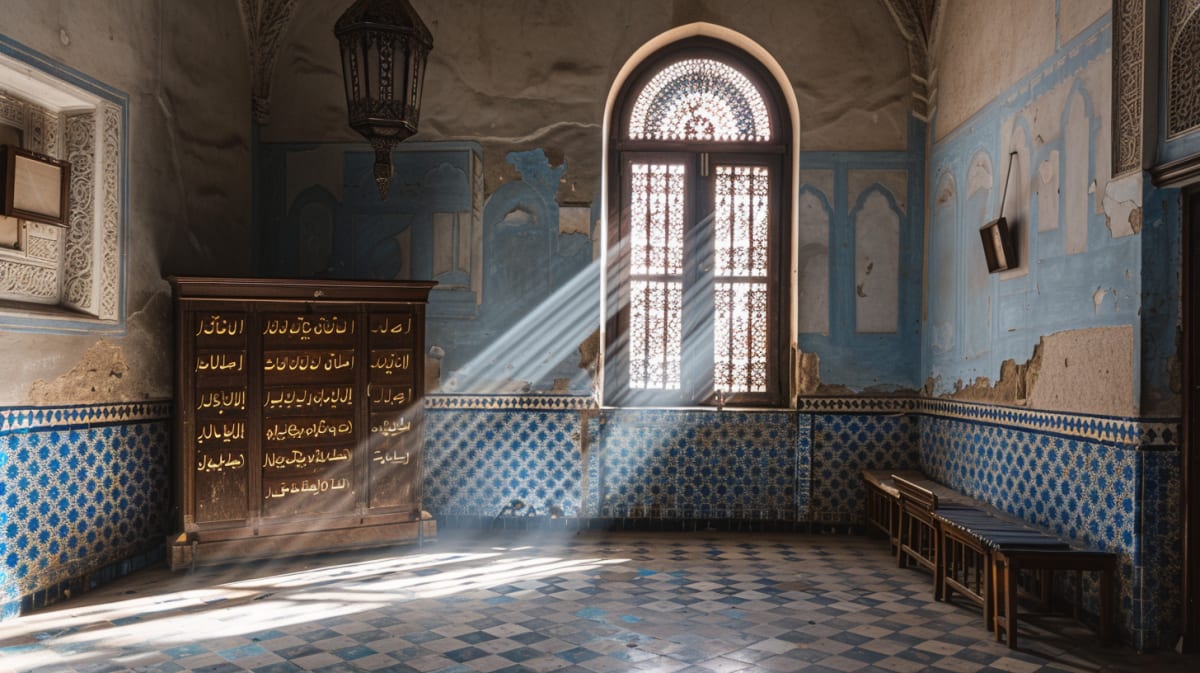
For centuries, Morocco was home to one of the world's great Jewish communities — 275,000 at independence in 1956, woven into every medina, every craft tradition, every diplomatic triumph. The mellahs remain. The synagogues still stand, their painted ceilings peeling toward sky, the Stars of David carved into plaster that held longer than the families who prayed beneath them. Who restored them? Often the Muslim neighbours. Why? Because the buildings belonged to the street, not just to the congregation. The cemeteries tell stories in Hebrew and weathered stone — names that recur in the telephone directories of Haifa and Montréal. Eight days tracing what was built, what was left behind, and what endures. This is not a memorial journey. It is a journey into coexistence — the architecture of a country that chose differently, and the rooms where that choice is still visible.
Day 1
Rabat
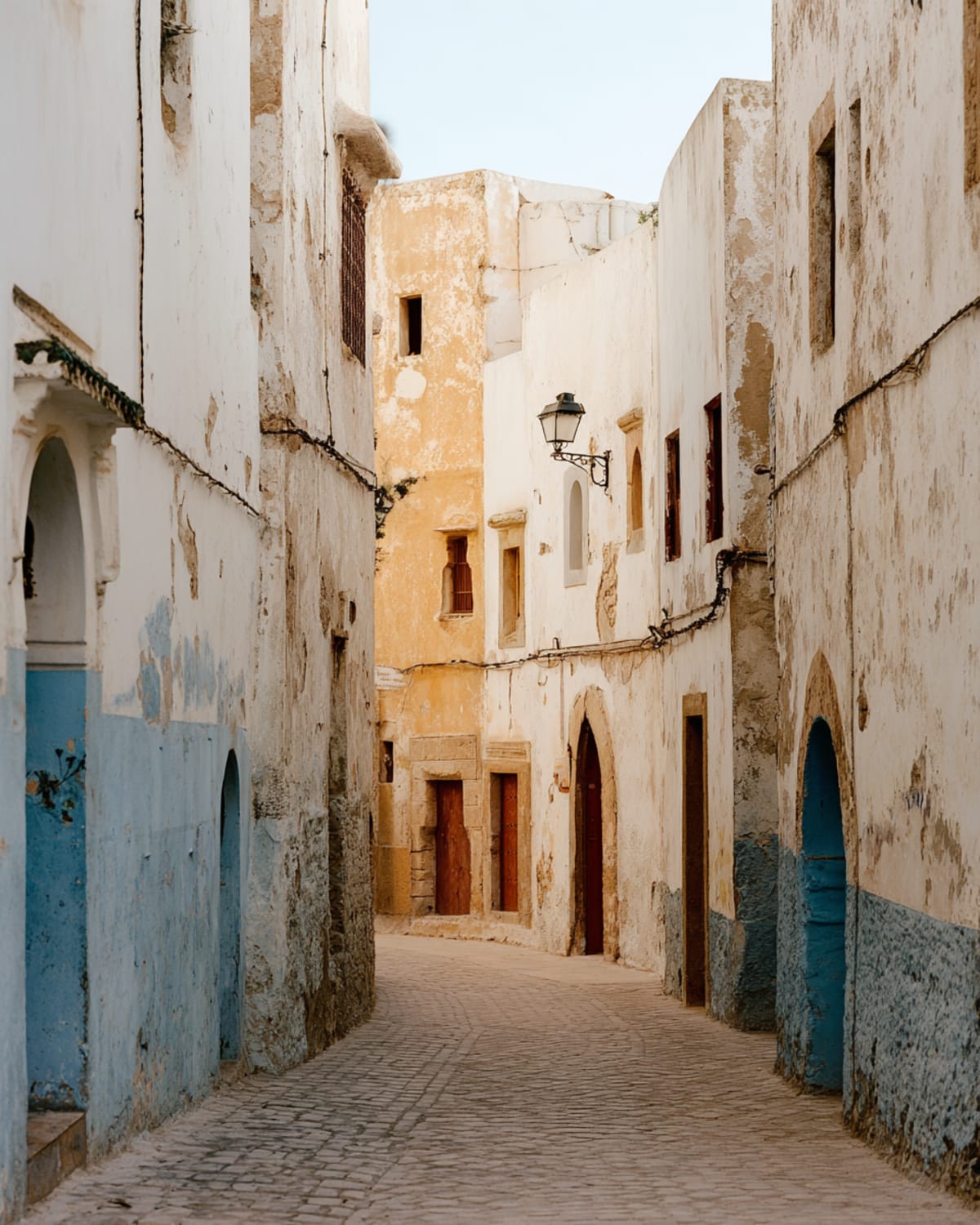
North along the Atlantic motorway — an hour between Morocco's two faces. Casablanca's commercial sprawl gives way to cork oak and eucalyptus. The ocean appears in glimpses. Rabat materialises white and composed on the Bou Regreg river, a capital that whispers where other cities shout. The kasbah overlooks the Atlantic. The medina is calm, carpeted, navigable. The diplomatic quarter smells of jasmine. After Casablanca's urgency, Rabat feels like exhaling.
Day 2
Fes
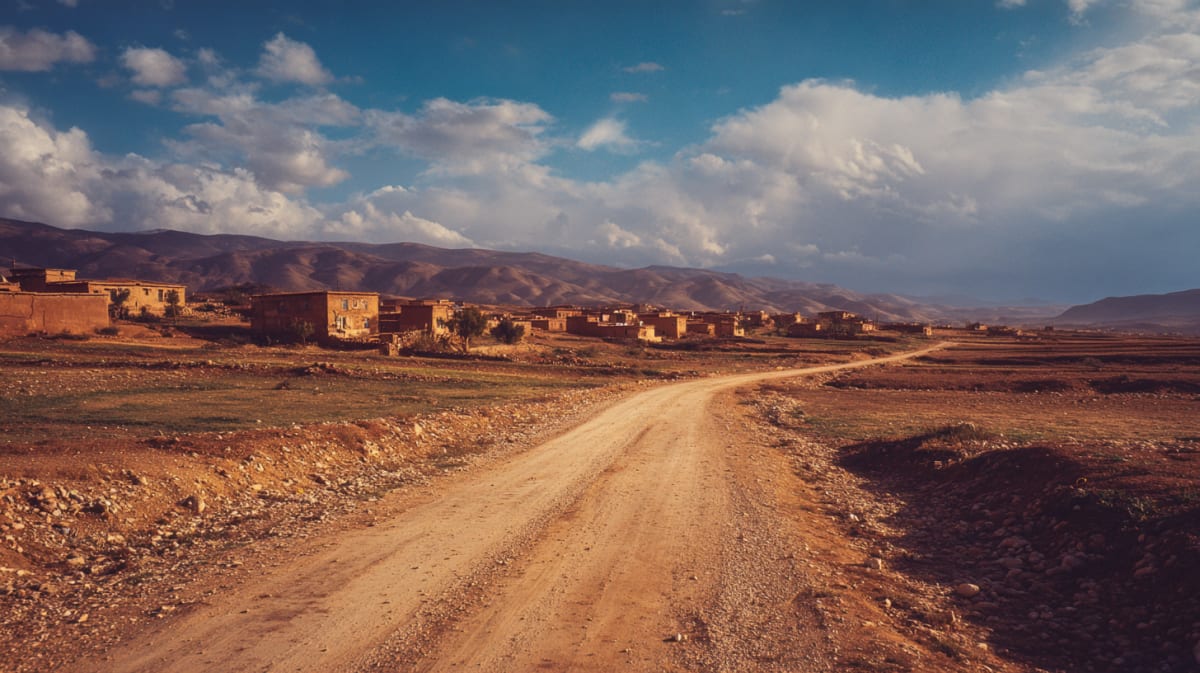
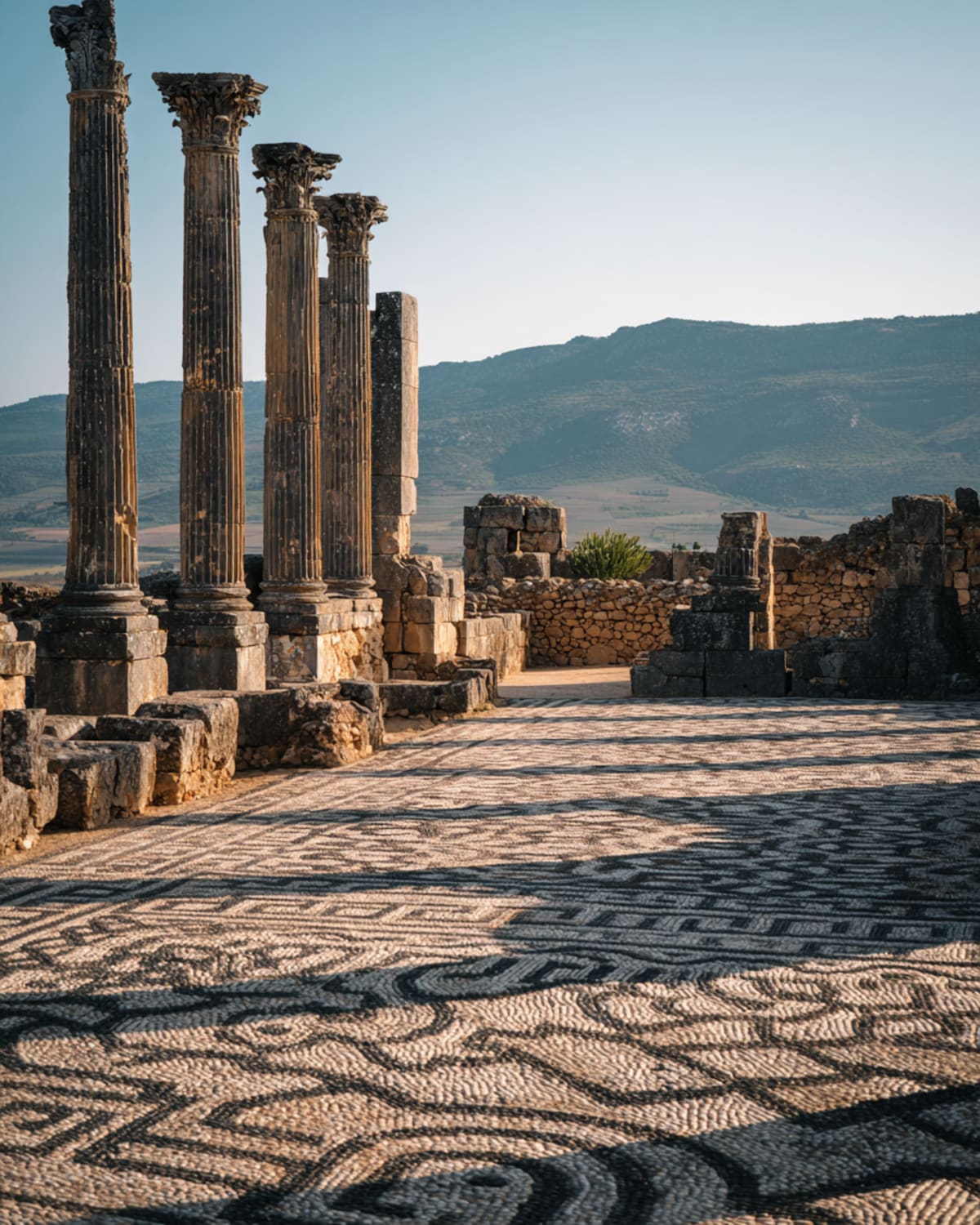
The imperial road east. Rabat's white composure fades into the Gharb plain — flat, agricultural, the kind of landscape that feeds cities but doesn't photograph well. Meknes appears first, Moulay Ismail's obsession, his granaries still standing. Volubilis if you stop — Roman columns rising from wheat fields, storks nesting on stone that held a civilization's weight. Mosaic floors lie open to the weather, still vivid. Then Fes. The medina doesn't introduce itself. You enter through a gate and the century changes. The smell of leather and cedar and something baking reaches you before you see the first souk.
Day 3
Fes
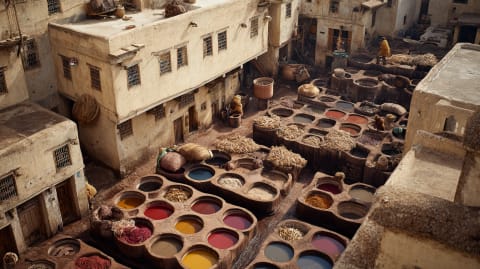
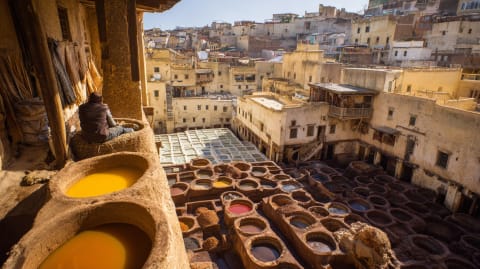
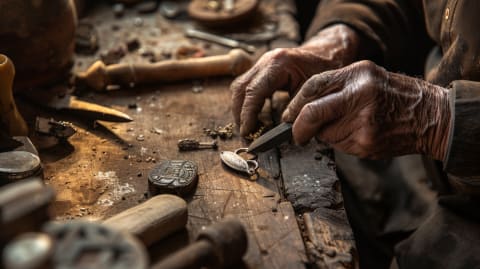
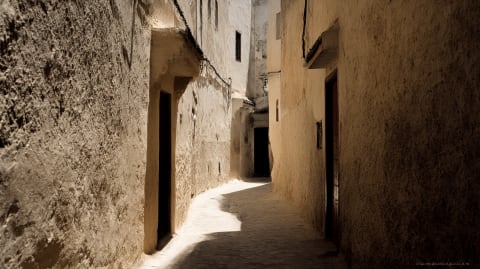
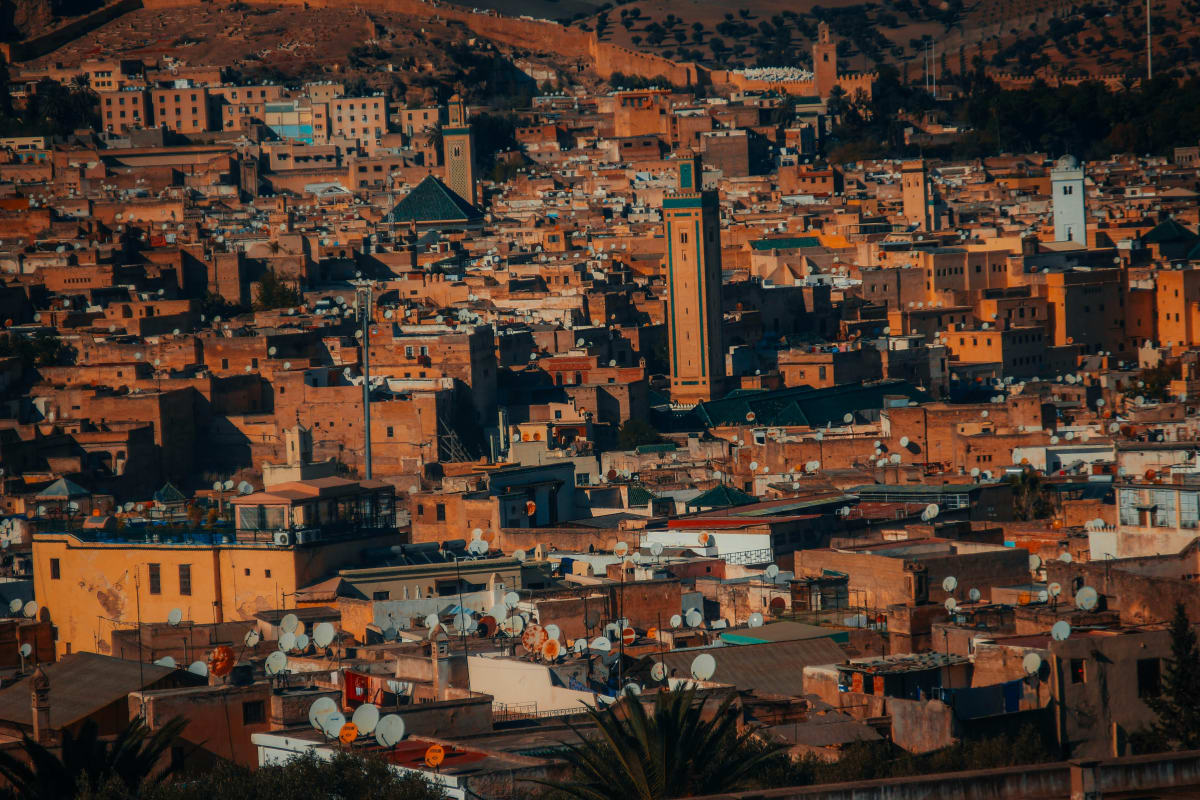
Nine thousand alleys. The medina hasn't changed in a thousand years—same crafts, same quarters, same calls echoing off the walls. The tanneries still use pigeon dung. The brass workers still hammer by hand. You get lost. Everyone does. A boy leads you out for a coin. By evening, you've stopped trying to map it. The labyrinth is the point.
Day 4
Fes
Nine thousand alleys. The medina hasn't changed in a thousand years—same crafts, same quarters, same calls echoing off the walls. The tanneries still use pigeon dung. The brass workers still hammer by hand. You get lost. Everyone does. A boy leads you out for a coin. By evening, you've stopped trying to map it. The labyrinth is the point.
Day 5
Meknes
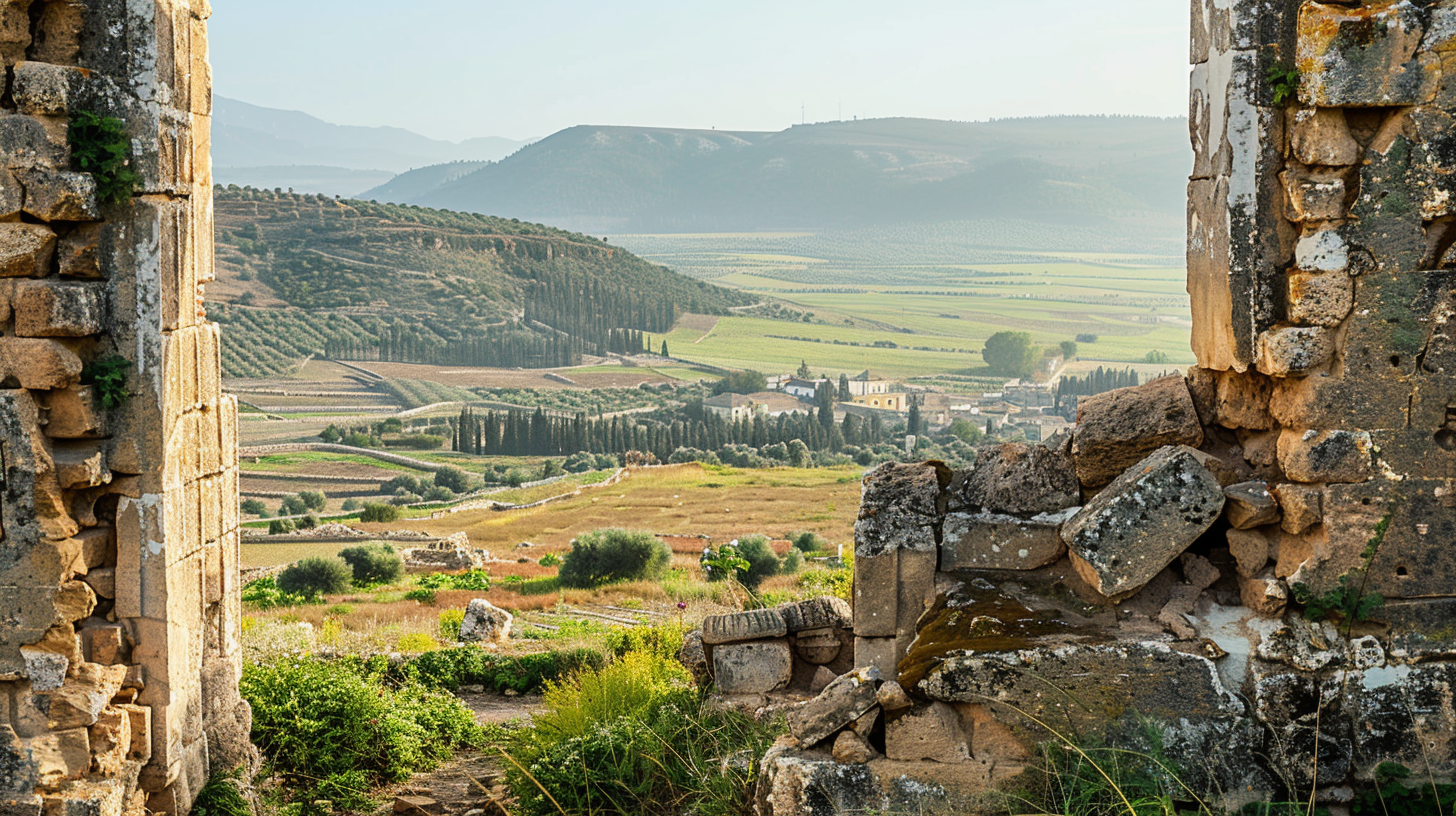
West through the Saïss. The road is short — barely an hour — but the detour changes everything. Volubilis rises from wheat fields like a dream Rome forgot to finish. Columns catch morning light. Mosaic floors lie open to the sky — Orpheus, Bacchus, acrobats and beasts, still vivid after two thousand years. Storks nest on the capitals. The silence is the kind that comes after something enormous has left. Then Meknes — Moulay Ismail's obsession, his answer to Versailles. Bab Mansour's tilework glints. The granaries stretch dark and cool. Two empires in one afternoon.
Day 6
Rabat
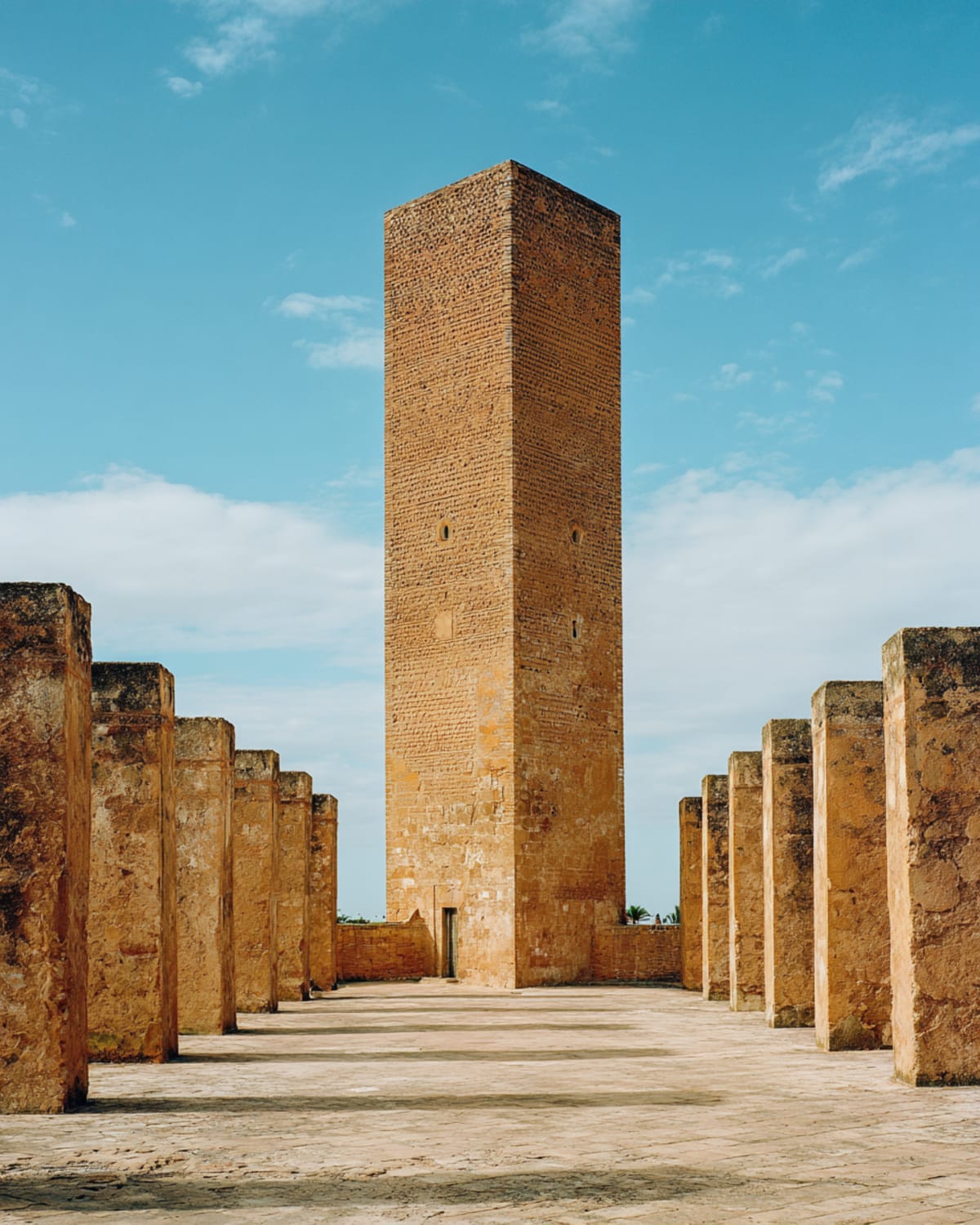
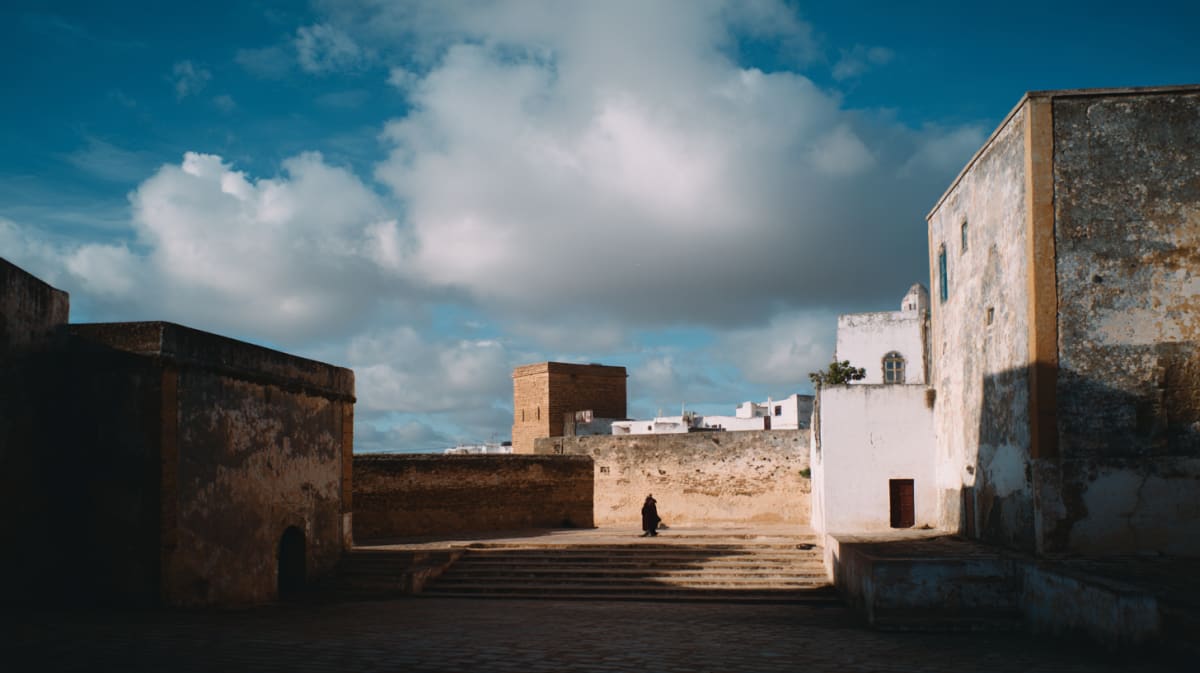
West toward the Atlantic. The Saïss plain stretches under a sky that gets bigger as the land gets flatter. The road cuts through farmland — wheat, sunflowers, the occasional village where a café spills plastic chairs onto the pavement. Rabat appears where the Bou Regreg meets the ocean — white, diplomatic, composed. The kasbah faces the Atlantic from its cliff. The medina is ordered, almost European in its navigability. After Meknes's imperial excess, Rabat feels like the quiet sibling who ended up running the family.
Day 7
Marrakech
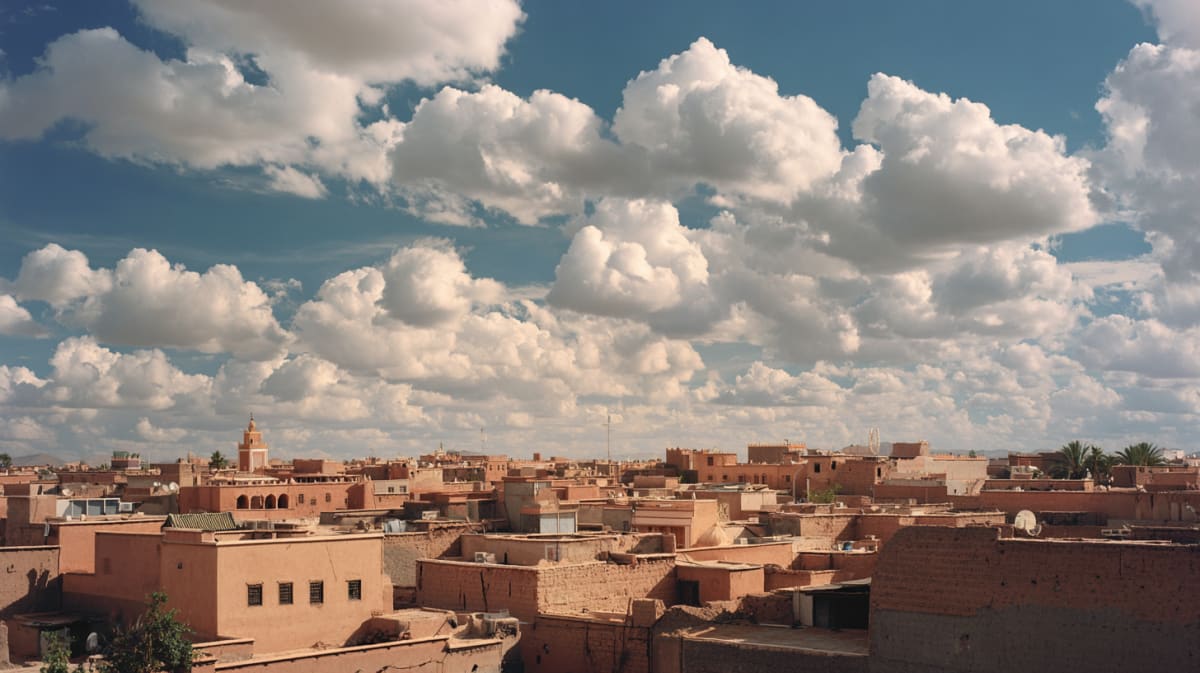
South along the Atlantic corridor. Casablanca passes in concrete and ambition — a city you could spend a week in but today you don't. The Haouz plain opens beyond it, flat and hot, the Atlas growing with each kilometre until the mountains fill the windshield. Snow on peaks. Red city below. Marrakech appears under the Atlas, drawing you in. The medina waits. The souks spiral inward. Jemaa el-Fna begins its evening transformation — smoke from grills, drums from the Gnawa circles, storytellers gathering crowds. The mountain air follows you into the square. The city swallows you whole.
Day 8
Marrakech
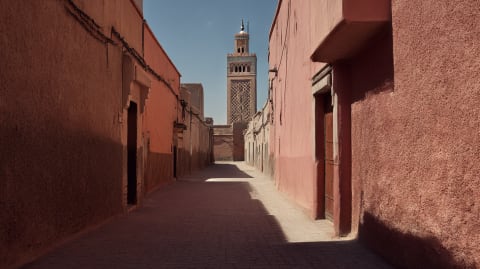
The souks spiral inward by specialty—leather, brass, carpets, spices. Each turn narrows. Bahia Palace holds its painted ceilings in afternoon shadow. The hammam strips you down to quiet. By evening, Jemaa el-Fna transforms. Smoke rises from a hundred grills. Storytellers gather crowds. The square has done this for centuries. It doesn't need your permission.
Private Journeys
Plan this journey.
This route is private, and shaped around how you want to move through the country. Tell us what you're hoping to find — we'll design the trip around it.
There is more
This is just the shape of the route.
The full story — where the road changes, what the maps don't name, which detours are worth the dust — lives in the Slow Morocco letter. Written from the medina. Sent when it matters.
No frequency promises. Unsubscribe anytime.