5 Days
Rose Festival Route
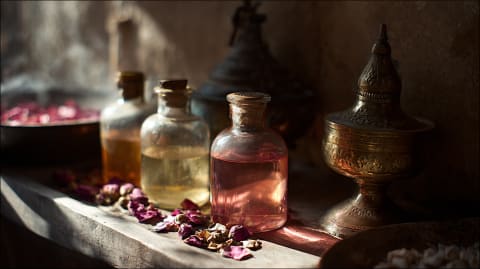
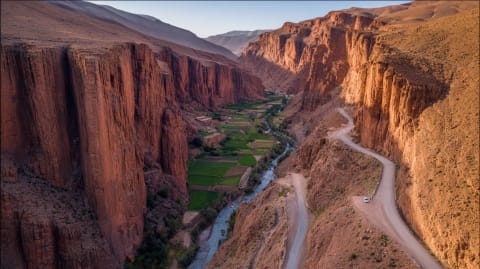
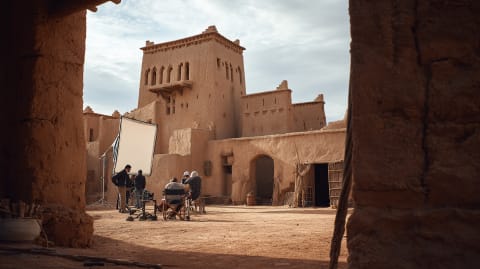
Every May, the Valley of Roses blooms pink. The air doesn't just smell of roses — it tastes of them. Kalaat M'Gouna sits where the Dadès Valley narrows, and every May the world turns pink. Thousands of hectares of damask roses — Rosa damascena, introduced by Arab traders in the 10th century — flower simultaneously for approximately three weeks. The festival marks the harvest. The roses are picked at dawn, before the heat opens the petals and releases the volatile oils. A good picker harvests 20 kilograms in a morning. Ten thousand kilograms of petals yield one kilogram of rose oil — attar of roses, which sells for more per kilo than gold in some years. The cooperatives around Kalaat M'Gouna process the harvest into rosewater, oil, and cosmetics. The town smells of it for a month after the petals are gone. The Dadès Valley runs east from here toward the Sahara, a corridor of kasbahs and almond trees following the river course through the foothills of the High Atlas. The gorge above Boumalne Dadès is the most dramatic section: the road climbs through seven hairpin bends — the locals call them the monkey fingers — to reach plateau villages at 1,800 metres. The view back down the valley in the late afternoon light is the image people come back with. Ouarzazate sits at the western end of this journey — the junction city where trans-Saharan trade routes converged before crossing the Atlas. The Taourirt kasbah in the centre of town is a 19th-century Glaoui fortress, partially restored, still inhabited in its outer sections. The Atlas Film Studios four kilometres west have been the backdrop for films since 1983: Gladiator, The Jewel of the Nile, Kingdom of Heaven. The desert light is the reason. 3,300 hours of sun per year. Marrakech is three hours over the Tizi n'Tichka pass. The mountain crossing takes two hours and crosses the continental watershed: on the southern side, all water flows toward the Sahara; on the northern side, toward the Atlantic. You cross it in a car in twenty minutes and feel nothing. Then you notice the vegetation has changed. Five days. One valley in bloom. The rose harvest happens once a year and exactly on schedule.

Day 1
Ouarzazate
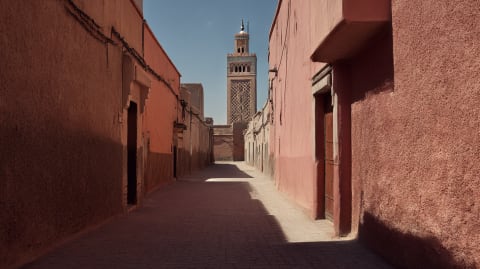
The road climbs until Marrakech disappears — first the palms, then the minarets, then the haze. Stone villages cling to slopes where the light shifts by the hour, women carrying bundles of firewood along paths that predate the tarmac by centuries. Switchbacks tighten around you like a held breath. Your ears pop at the pass — 2,260 metres, the highest paved road in Morocco. The south side is different. Drier. Warmer. The colour changes from green to ochre in the space of a single bend. By afternoon, the mountains release you into silence. Ouarzazate waits — not as a destination but as a threshold. A glass of tea arrives before you ask. The mint cuts through the dust on your tongue.

Day 2
Kalaat M’Gouna
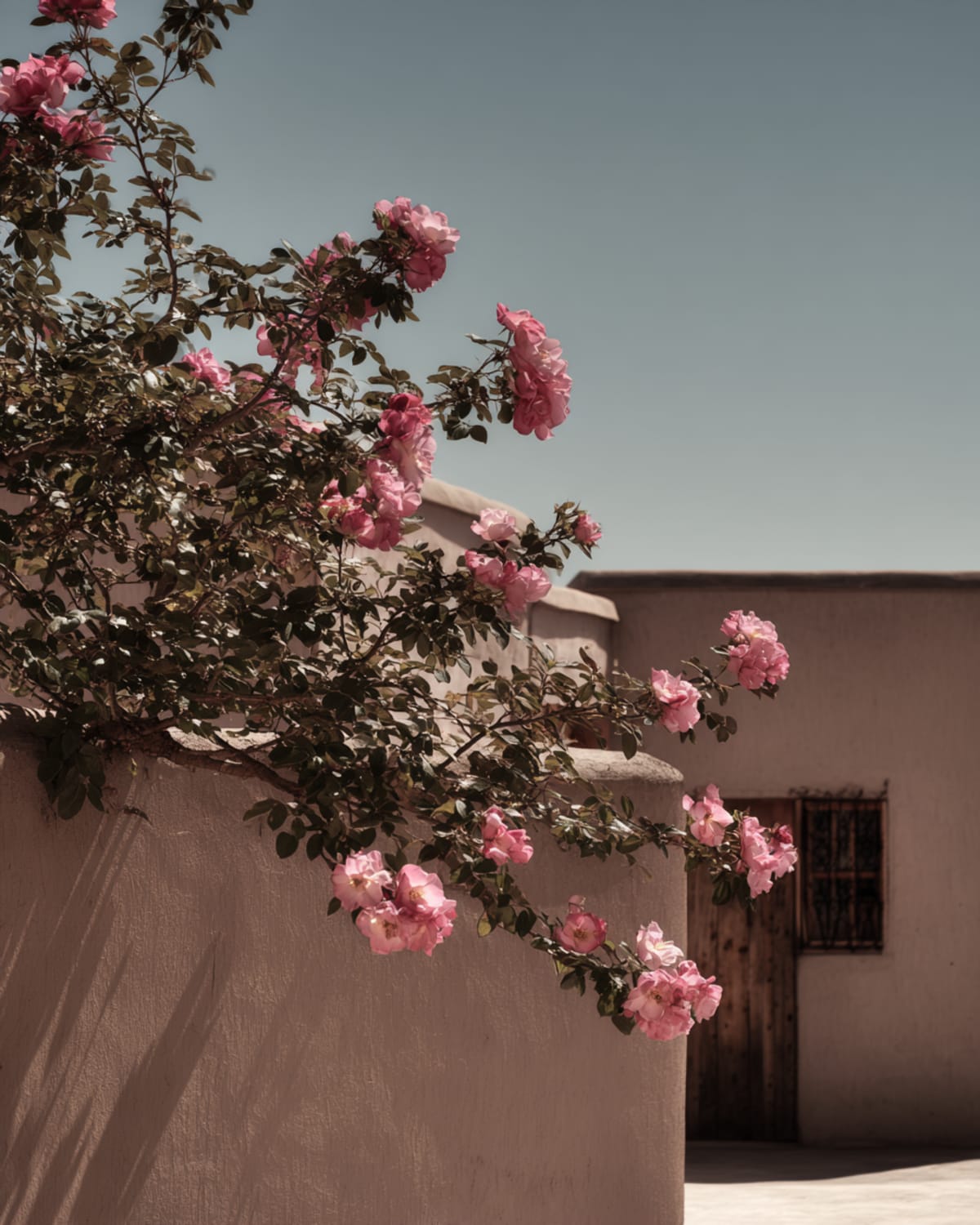
East along the road of a thousand kasbahs. Skoura first — seventeen kilometres of palmeraie, crumbling towers hiding behind date palms, the light filtering through the fronds in patterns that shift all day. The road straightens through the Valley of Roses. Even before Kalaat M'Gouna you catch it — the scent of damask rose, faint at first, then unmistakable. In May the bushes bloom pink along every irrigation channel. Women harvest at dawn, aprons full of petals, the cooperatives distilling oil that sells for more than the gold in the souk next door.
Day 3
Ouarzazate
West through the Valley of Roses. Even if the blooms have passed, the ghost of them stays — rose water in the air, pink petals pressed into the pavement. Skoura's palmeraie stretches for seventeen kilometres, date palms hiding crumbling kasbahs behind every turn. Amridil still stands, still occupied, its tower catching afternoon light. The road straightens. Ouarzazate appears at the crossroads — gateway town, film set, the place where south becomes north and desert becomes mountain. The air here smells of dust and possibility.
Day 4
Marrakech
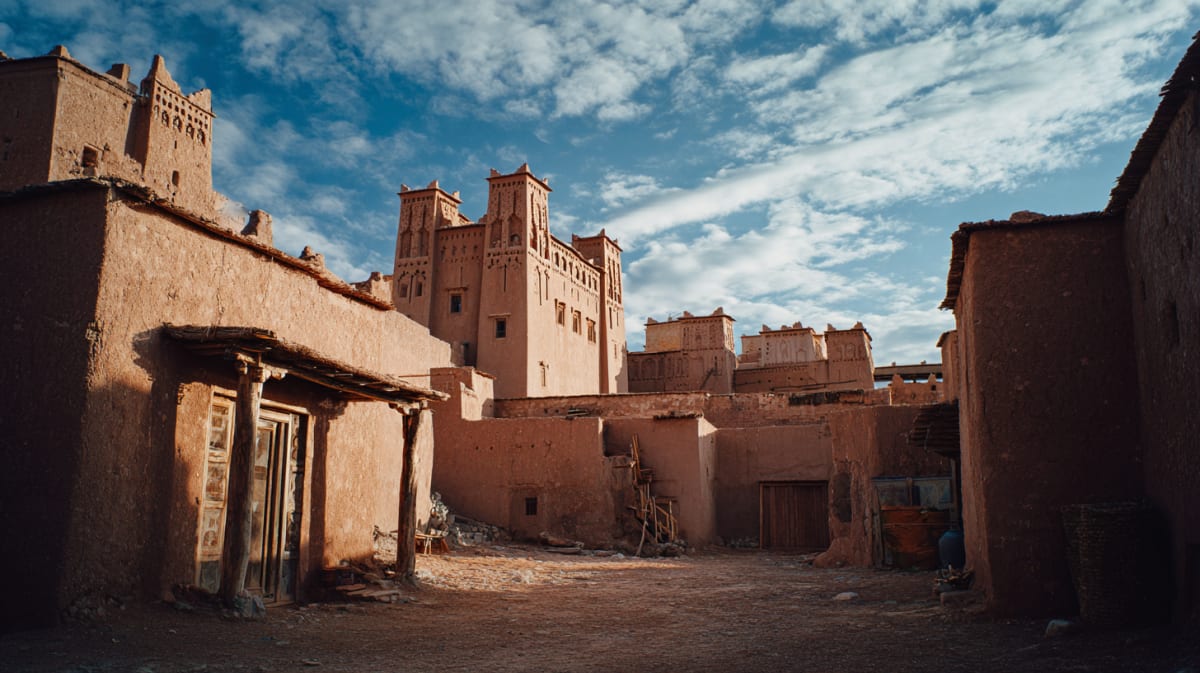
The crossing in reverse. Aït Benhaddou in morning light — the clay glows different at this hour, amber and warm, the ksar casting long shadows across the river. Then the climb. Tizi n'Tichka at 2,260 metres, the road switching back through shepherd country where the air tastes of thyme and cold stone. Your ears pop. The pass holds its breath. The descent reveals the Haouz plain — flat, green, impossibly different from the desert you woke in. Marrakech appears under the Atlas like it's been waiting for you specifically. The first glass of orange juice costs five dirhams and tastes like sunlight.
Private Journeys
Plan this journey.
This route is private, and shaped around how you want to move through the country. Tell us what you're hoping to find — we'll design the trip around it.
There is more
This is just the shape of the route.
The full story — where the road changes, what the maps don't name, which detours are worth the dust — lives in the Slow Morocco letter. Written from the medina. Sent when it matters.
No frequency promises. Unsubscribe anytime.





From the Archive