The cult of the seven saints was formalised in the 17th century by the Sufi master Abu Ali al-Hassan al-Yusi, under the patronage of Sultan Moulay Ismail. The saints themselves lived between the 12th and 16th centuries. The formalisation was political — a way to establish Marrakech as a sacred city to rival Fes, which had the tomb of Moulay Idriss and the spiritual authority that comes with being first. Marrakech needed its own saints. Al-Yusi provided seven.
The seven: Sidi Youssef Ben Ali, the leper saint who healed others while bearing illness himself — the paradox is the point. Sidi Qadi Iyyad, the great jurist. Sidi Bel Abbes, the most beloved, patron of the blind and the poor. Sidi Ben Slimane al-Jazouli, the mystic whose tomb draws thousands. Sidi Abdel Aziz, the scholar. Sidi Abdullah al-Ghazwani, teacher and guide. Sidi Abderrahman al-Suhayli, the Andalusian commentator who brought the intellectual tradition of al-Andalus south.
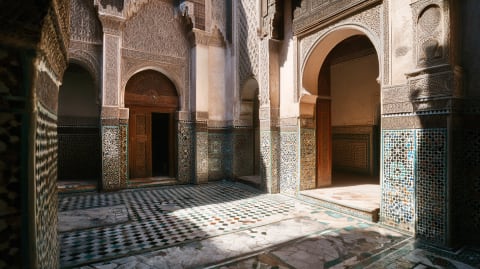
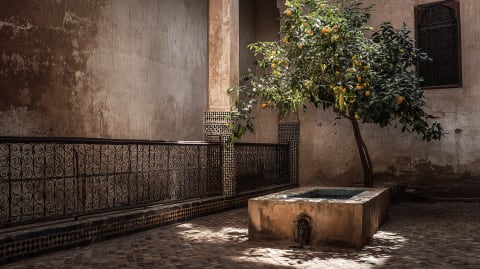
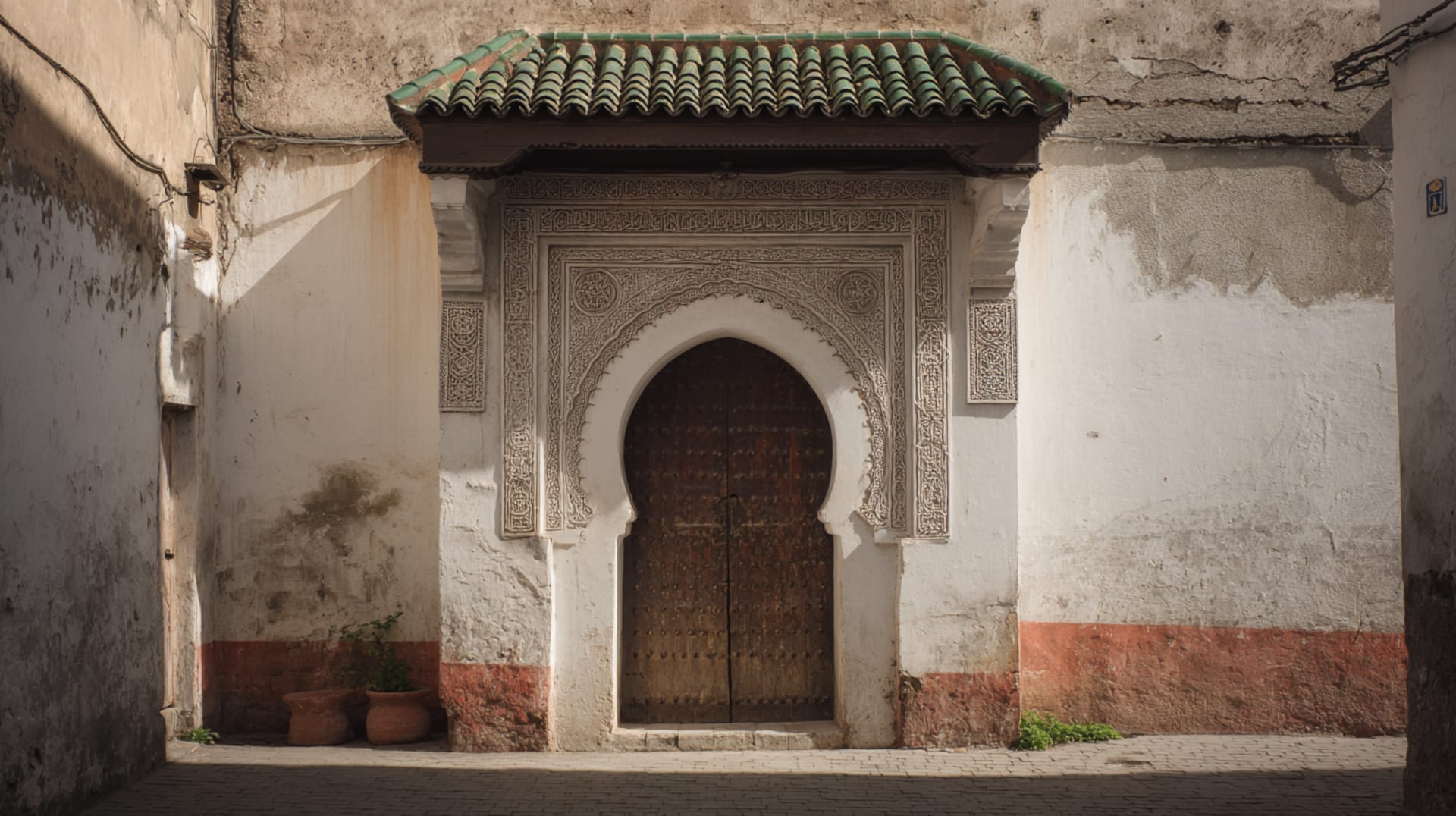
Their tombs are scattered across the medina. The traditional pilgrimage visits all seven in a single day — a circuit that takes roughly six hours on foot, threading through derbs and souks and past doorways that open into courtyards where the living and the dead coexist with the informality of a family that has been sharing a house for five centuries.
Sidi Bel Abbes is the most visited. His zaouia in the north of the medina distributes food daily — a tradition of charity that has continued unbroken since his lifetime. The blind hold special status in his sanctuary. The story says he could see what sighted people could not, which is a quality that saints are expected to possess and that the rest of us are expected to admire without understanding.
The pilgrimage is not a tourist attraction. It is a living practice — Marrakchis visit the saints for blessings, for healing, for the quiet comfort of standing in a room where someone holy once stood and where the holiness, according to the faithful, has not left. Whether you believe this or not, the rooms are calm in a way that the medina outside them is not. Something is happening in there. The saints, if asked, would probably call it prayer.
Seven saints protect Marrakech. Their tombs are scattered across the medina. You can visit all seven in a single afternoon.
Tell us about your trip →Data and visualisation by Dancing with Lions
The Facts
- —Seven patron saints (sab'atou rijal) of Marrakech
- —Pilgrimage circuit formalized by Moulay Ismail era
- —Saints include Sidi Bel Abbes, Sidi Ben Slimane, Cadi Ayyad
- —Zawiyas mark each tomb
- —Sufi tradition of sacred geography
- —Weekly pilgrimage circuit still observed
- —Non-Muslims cannot enter most zawiyas
Sources
- Cornell, Vincent J. Realm of the Saint: Power and Authority in Moroccan Sufism. University of Texas Press, 1998
- Deverdun, Gaston. Marrakech: des origines à 1912. 1959
- Eickelman, Dale F. Moroccan Islam. University of Texas Press, 1976