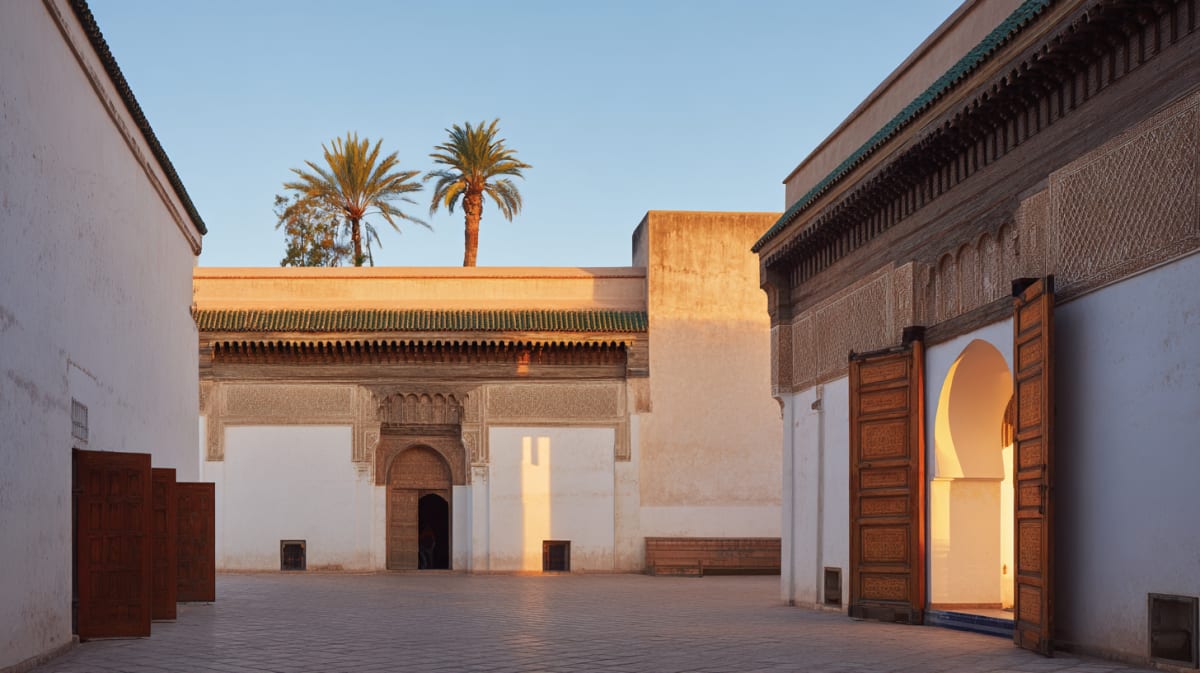
Bahia Palace
Hours
Daily 9:00–17:00. Ramadan: 10:00–16:00. Last admission 30 minutes before closing.
Entry
100 MAD (foreigners). 10 MAD (Moroccan residents). Cash only at the gate — no cards.
Duration
75 minutes
Location
Avenue Imam El Ghazali, Medina
A 19th-century palace built by a grand vizier for his four wives — each apartment calibrated to signal rank without causing war. The painted cedar ceilings alone justify the visit.
01
History
The Bahia Palace was built in two phases across four decades. The first section was completed in 1866–1867 by Si Moussa, grand vizier to Sultan Hassan I. Si Moussa came from a family of black servants who had risen through the ranks of the makhzen (royal government) to the highest offices in Morocco.
His son, Ba Ahmed ibn Moussa, inherited both the position and the ambition. When Sultan Moulay Abdelaziz took the throne in 1894 at the age of sixteen, Ba Ahmed became the de facto ruler of Morocco — and poured the country's resources into expanding his father's house into a palace.
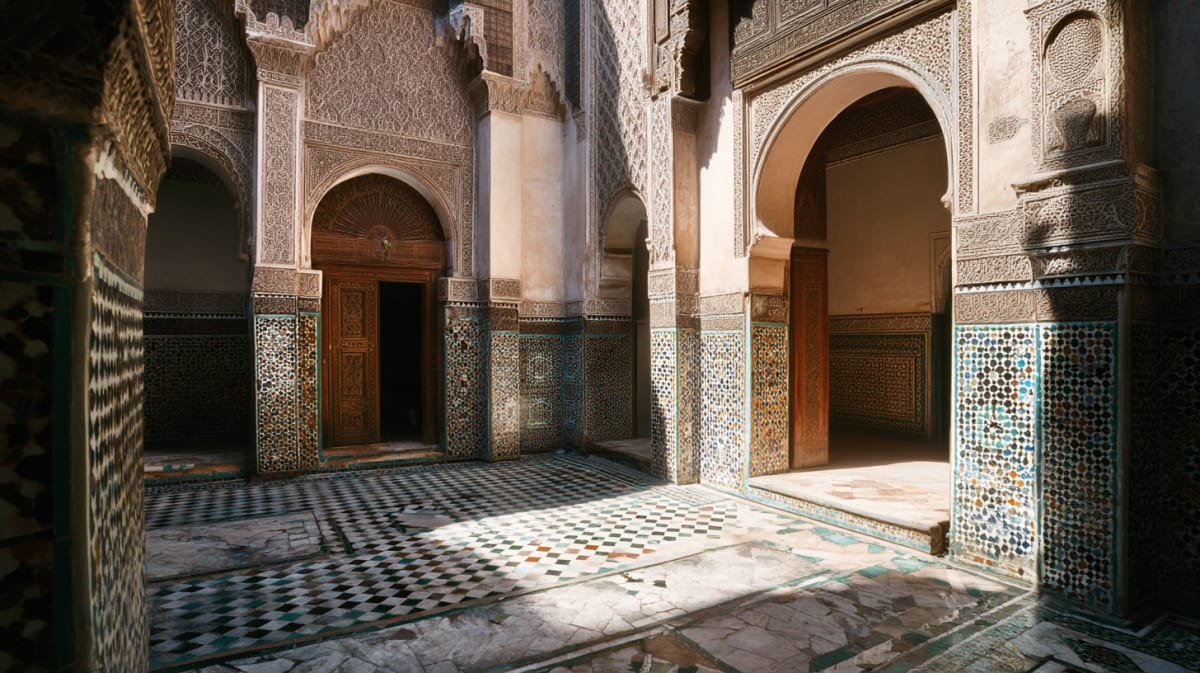
Between 1894 and 1900, Ba Ahmed bought up neighbouring properties one by one, demolishing them and absorbing the land. The architect Muhammad al-Mekki al-Misfiwi, originally from Safi, oversaw the construction. Craftsmen were imported from Fes for the zellige tilework, from Tetouan for the plaster carving, and marble was brought from Meknes — possibly salvaged from earlier royal palaces.
The name 'Bahia' means 'the brilliant' in Arabic. Some say it was the name of Ba Ahmed's favourite wife. Others say it described the palace itself. Ba Ahmed was reportedly so large he could not climb stairs, which is why the entire complex is built on a single level — 8 hectares of rooms, gardens, and courtyards, none of them above the ground floor.
Ba Ahmed died in 1900. Within hours of his death, Sultan Abdelaziz ordered the palace stripped. Furniture, carpets, jewellery — everything movable was carted away. His wives and concubines were expelled. What remains today are the bones: the tilework, the carved plaster, the painted cedar ceilings, and the marble courtyards. The rooms are empty. The decoration is everything.
02
Architecture & Design
The palace covers approximately 8,000 square metres of accessible space (the full grounds originally extended further with parks, stables, and a mosque). It contains around 150 rooms arranged around multiple courtyards and riad gardens — a labyrinth with no grand axis or symmetry.
This is deliberate. Ba Ahmed built by acquisition, buying adjacent houses and incorporating them. The layout reflects the organic growth of the medina itself.
The highlights:
The Grand Riad (Dar Si Moussa) — the oldest section, dating to the 1860s. Two rooms flanking the garden contain inscriptions dating the construction to 1866–1867. The carved wood lintels and zouak (painted wood) ceilings here are among the finest in Marrakech.
The Petit Riad — more intimate, with walls covered in white plaster carved in situ while still wet. The detail is extraordinary — Quranic verses and geometric patterns that look like lacework. All done by hand, all carved before the plaster dried.
The Cour d'Honneur (Court of Honour) — the centrepiece. 1,500 square metres of Italian Carrara marble, completed in 1896–1897. Surrounded by a gallery of painted wood columns and overlooked by the rooms of Ba Ahmed's official quarters. This is the largest single courtyard space in any Marrakech palace.
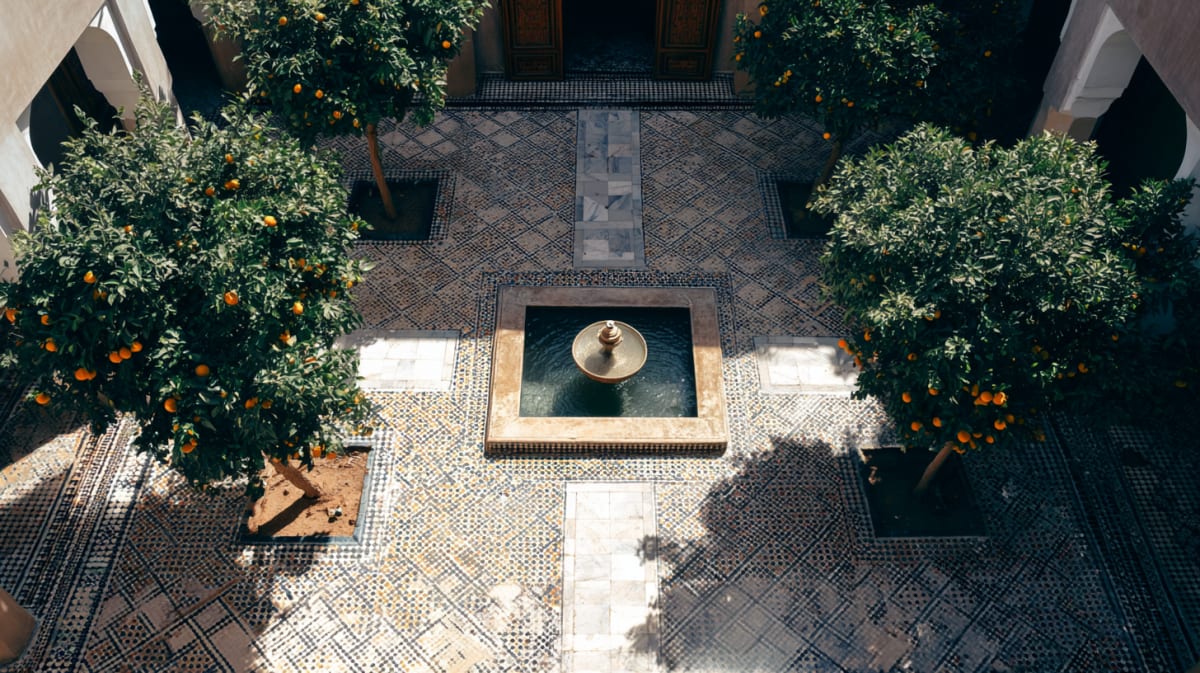
The Harem — the private quarters for Ba Ahmed's four wives and twenty-four concubines. Each wife had her own apartment opening onto a central garden with a marble fountain. The concubines' rooms are smaller, arranged around a separate courtyard.
Bahia Palace was reportedly the first building in North Africa to use stained glass as a decorative feature. The afternoon light through these windows creates coloured patterns on the zellige floors — an effect that was designed, not accidental.
03
Visiting
Allow 60–90 minutes. The palace is entirely on one level with no steps, making it wheelchair accessible throughout.
All rooms are empty — Ba Ahmed's belongings were looted hours after his death in 1900. The interest is the surfaces: ceilings, walls, floors. Look up. The painted cedar ceilings in the Grand Riad are some of the most elaborate surviving examples of zouak artistry in Morocco.
There is almost no signage in English. If you want context, either read before you go or hire a guide at the entrance (150–200 MAD for a 45-minute tour — negotiate before starting).
Photography is permitted throughout. The best light for the Cour d'Honneur is mid-morning. For the stained-glass effects in the Petit Riad, visit after 3pm.
There are no cafes, shops, or toilets inside the palace. The nearest public toilet is at Place des Ferblantiers, 3 minutes' walk. Restaurants line Rue Riad Zitoun el-Jdid.
During the French Protectorate (1912–1956), the palace served as the residence of the French Resident General in Marrakech. After independence, it became a royal residence before King Hassan II transferred it to the Ministry of Culture. The royal family still occasionally uses parts of the palace for private functions — if a section is cordoned off during your visit, this is why.
Best Time to Visit
Arrive at 9am when doors open. By 10:30am tour groups flood the courtyards and the Cour d'Honneur becomes a selfie gauntlet. Late afternoon (after 3pm) is the second window — the light through the stained glass is better then anyway.
Getting There
From Jemaa el-Fna, walk south down Rue Riad Zitoun el-Jdid. The entrance is 900 metres from the square, about 12 minutes on foot. The route passes through the mellah (old Jewish quarter). Taxis cannot enter the medina — they drop you at Bab er-Rob or Place des Ferblantiers, both a 5-minute walk from the palace.
Local Tip
Less crowded early morning or late afternoon
Common Questions
The entrance fee is 100 MAD (approximately €9 / $10 USD) for international visitors. Moroccan residents pay 10 MAD. Tickets are purchased at the gate — cash only, no card payment. There is no online booking for standard entry.
Bahia Palace is open daily from 9:00am to 5:00pm. During Ramadan, hours are reduced to 10:00am to 4:00pm. Last admission is 30 minutes before closing.
Most visitors spend 60 to 90 minutes. The palace is large (8,000 square metres) and entirely on one level. All rooms are empty, so the interest is in the architectural detail — zellige tilework, carved plaster, and painted cedar ceilings.
Yes — it is one of the finest examples of 19th-century Moroccan palatial architecture. The Cour d'Honneur alone (1,500 square metres of Carrara marble) justifies the visit. Go early to avoid crowds.
Walk south down Rue Riad Zitoun el-Jdid from the main square. The entrance is 900 metres away, about 12 minutes on foot. The route passes through the mellah (Jewish quarter). Taxis cannot enter the medina.
Yes, photography is permitted throughout the palace. No tripod restrictions. The best light for photography is mid-morning in the Cour d'Honneur and late afternoon (after 3pm) in the Petit Riad for stained-glass effects.
Walking Distance
Nearby
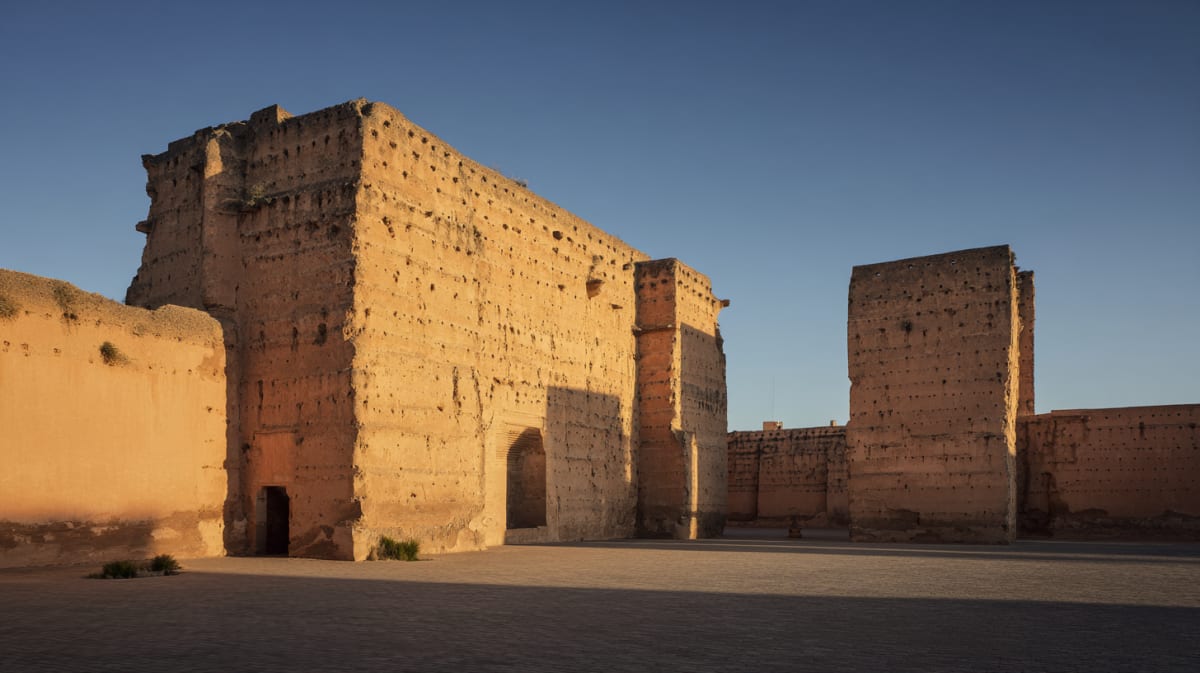
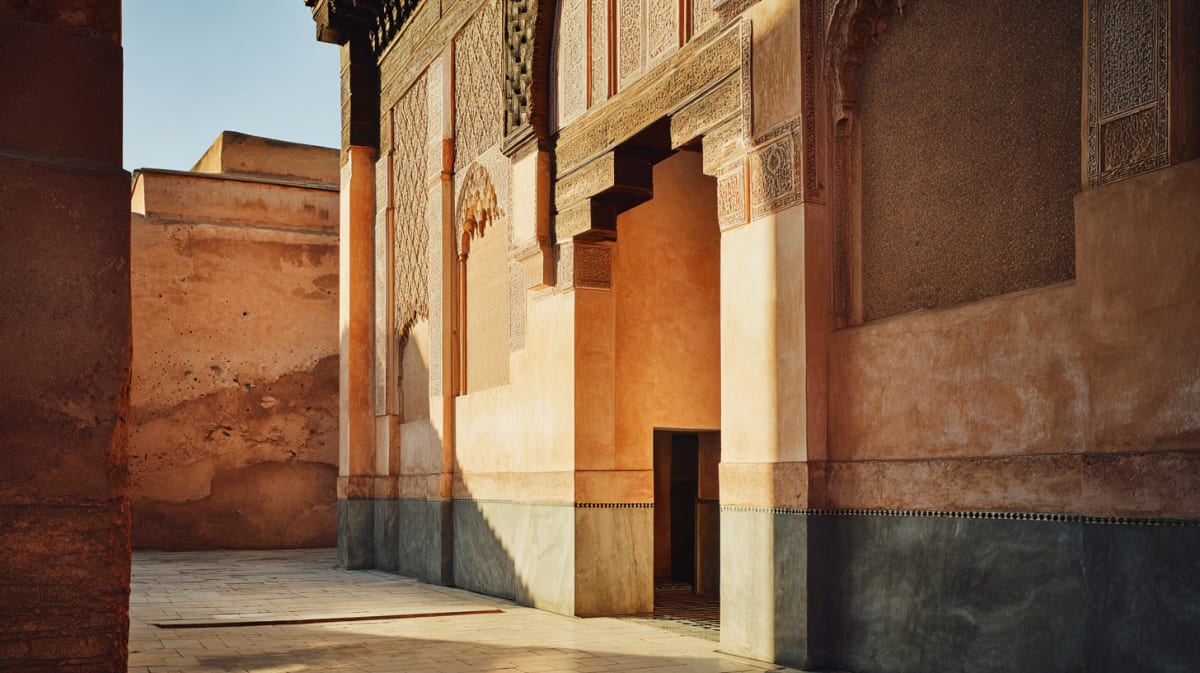
We visit Bahia at 4pm when the harem courtyard holds its silence. The geometry of the rooms tells the story of Ba Ahmed's twenty-eight women.
Plan a private journey →Explore More
Related Stories
Discover the history and culture of Marrakech

Explore More
Multi-day journeys featuring this place
Curated routes that pass through Marrakech
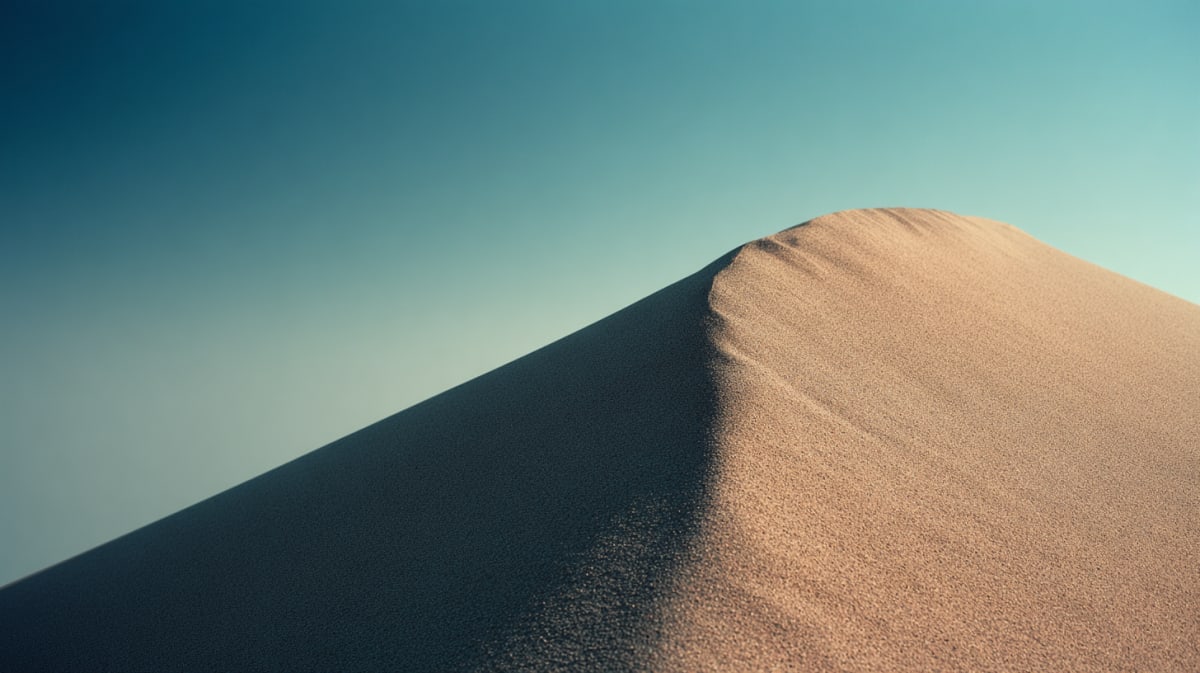
3 Days
3-Day Sahara Circle
Mountains to sand and back. Stars so dense they press against your chest — and a silence that rewrites what you thought quiet meant.
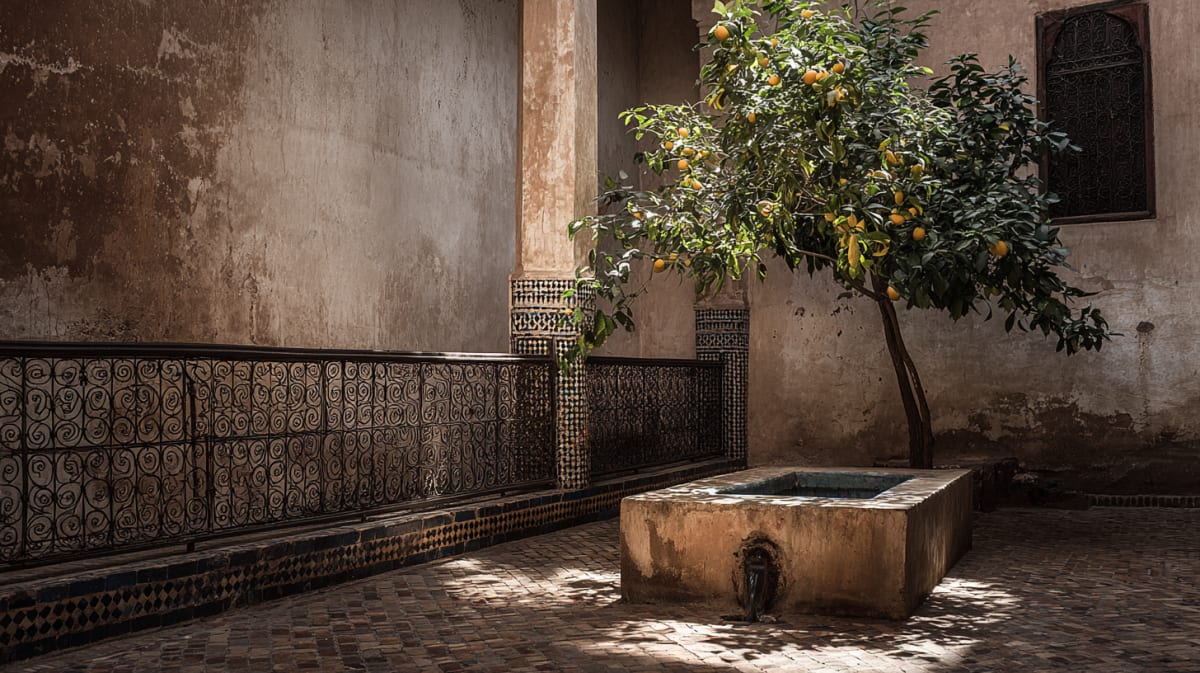
3 Days
Marrakech City Break
Three days to learn a medina's rhythm — souks at dawn, hidden gardens at noon, the square becoming a theatre at dusk.
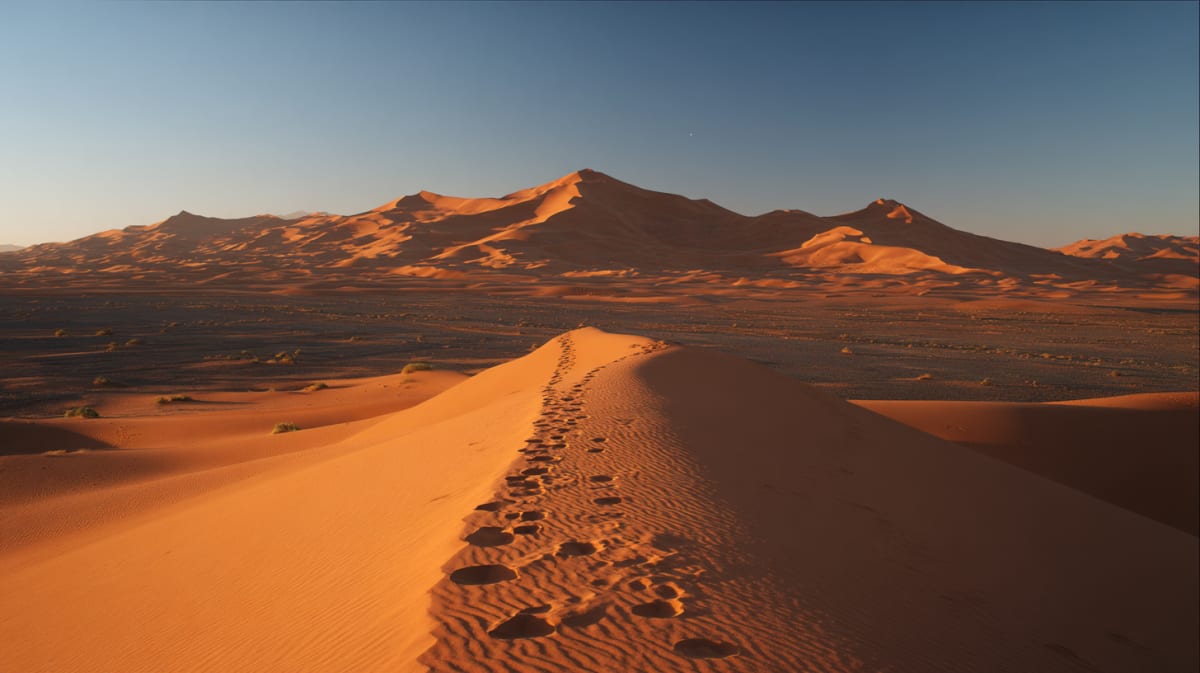
4 Days
Marrakech to Fes
The classic — red city to medieval labyrinth via the Sahara. The corridor that defines Moroccan travel.
Sources: Wilbaux Q. (2001) La Médina de Marrakech;;Deverdun G. (1959) Marrakech des Origines à 1912;;UNESCO Marrakech nomination file (1985)