5 Days
Morocco Stargazing
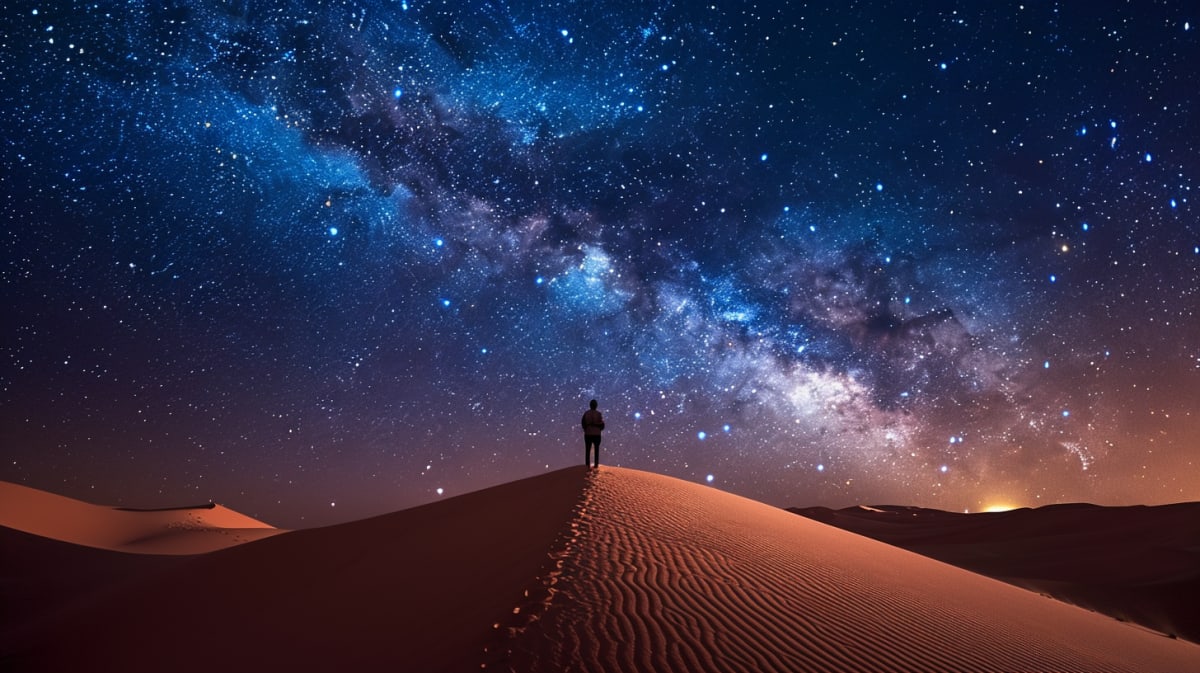
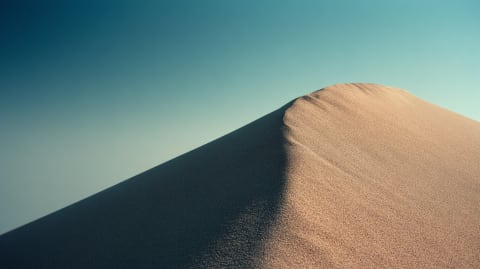
The desert exists for this. Zero light pollution — the nearest city glow is 100 kilometres away. Air so dry the stars don't twinkle, they burn — steady and sharp and so numerous the sky feels crowded, which is not a word you expected to use about emptiness. The Milky Way arcs overhead solid enough to cast a shadow on the sand. Astronomers travel here because the seeing conditions rival the Chilean Atacama at a fraction of the cost and with better food. You lie on a dune, the sand still warm from the day, and the sky presses down with a weight that feels physical. Five days. By the third night you find the planets without the app. By the fifth you understand why every desert civilisation navigated by stars and why they trusted the sky more than the ground. The sky had never lied to them. The ground had.
Day 1
Marrakech
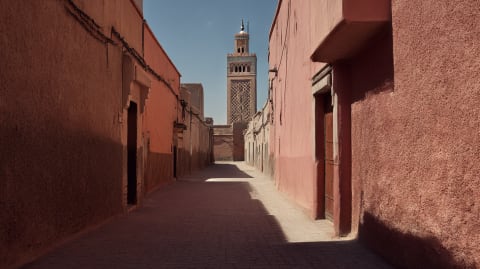
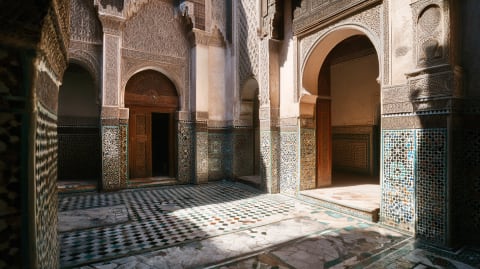
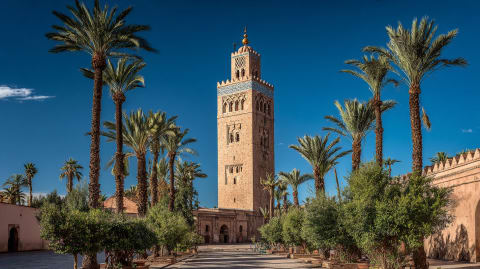
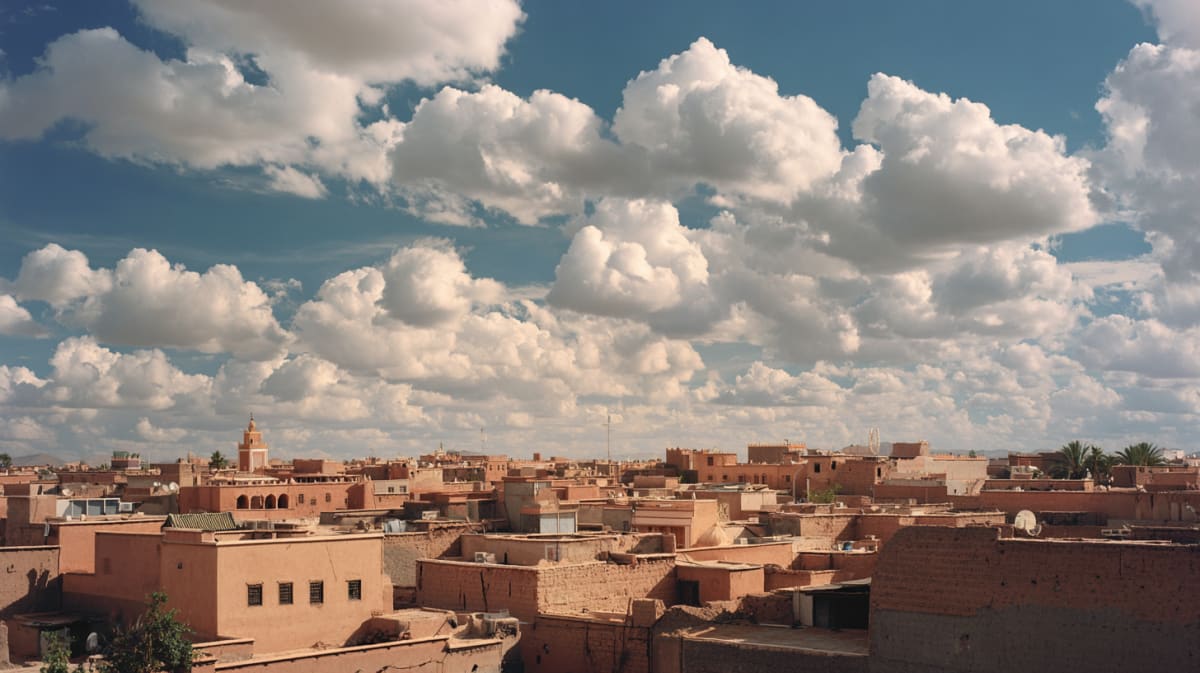
The souks spiral inward by specialty—leather, brass, carpets, spices. Each turn narrows. Bahia Palace holds its painted ceilings in afternoon shadow. The hammam strips you down to quiet. By evening, Jemaa el-Fna transforms. Smoke rises from a hundred grills. Storytellers gather crowds. The square has done this for centuries. It doesn't need your permission.

Day 2
Ouarzazate
The road climbs until Marrakech disappears — first the palms, then the minarets, then the haze. Stone villages cling to slopes where the light shifts by the hour, women carrying bundles of firewood along paths that predate the tarmac by centuries. Switchbacks tighten around you like a held breath. Your ears pop at the pass — 2,260 metres, the highest paved road in Morocco. The south side is different. Drier. Warmer. The colour changes from green to ochre in the space of a single bend. By afternoon, the mountains release you into silence. Ouarzazate waits — not as a destination but as a threshold. A glass of tea arrives before you ask. The mint cuts through the dust on your tongue.
Day 3
Merzouga
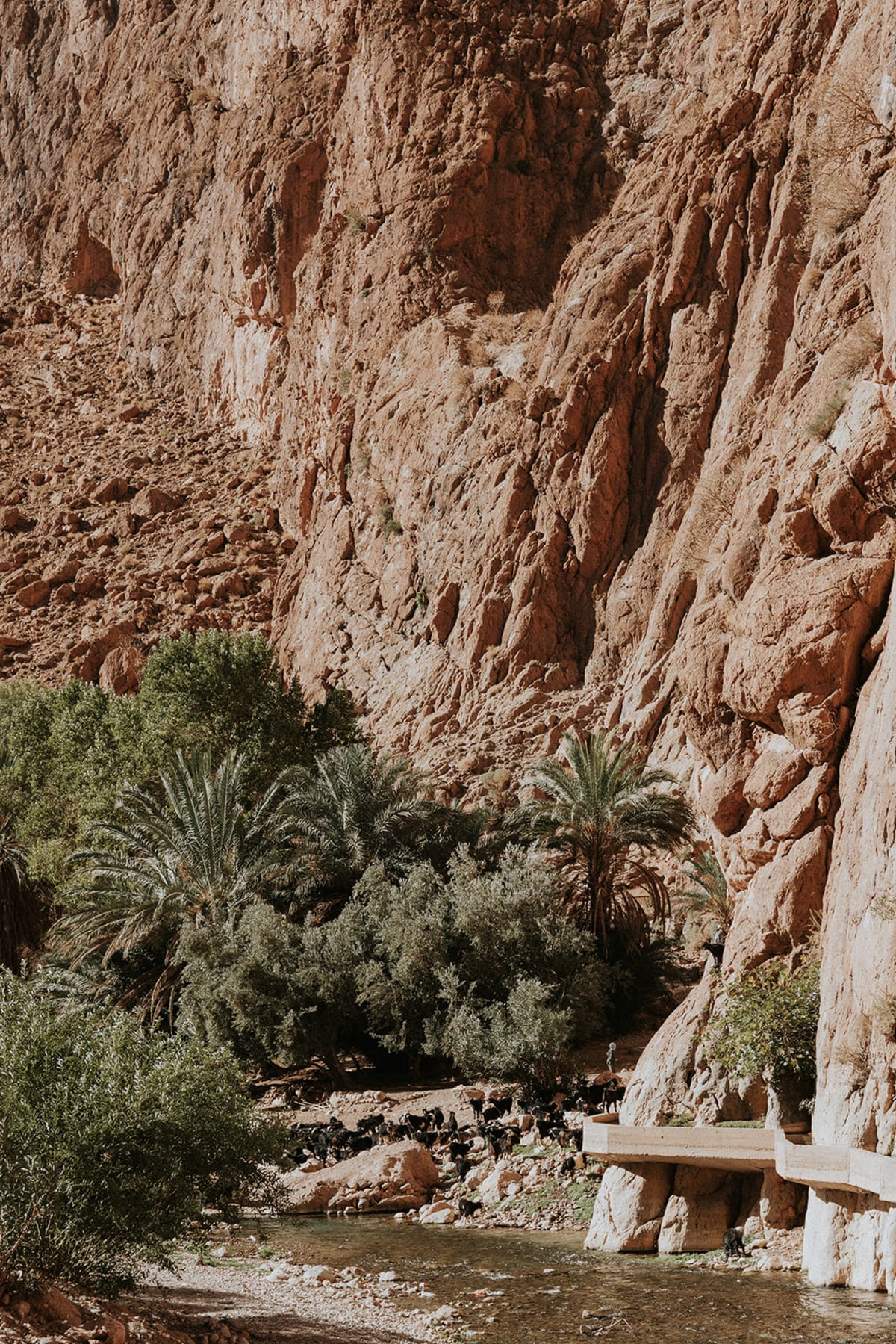
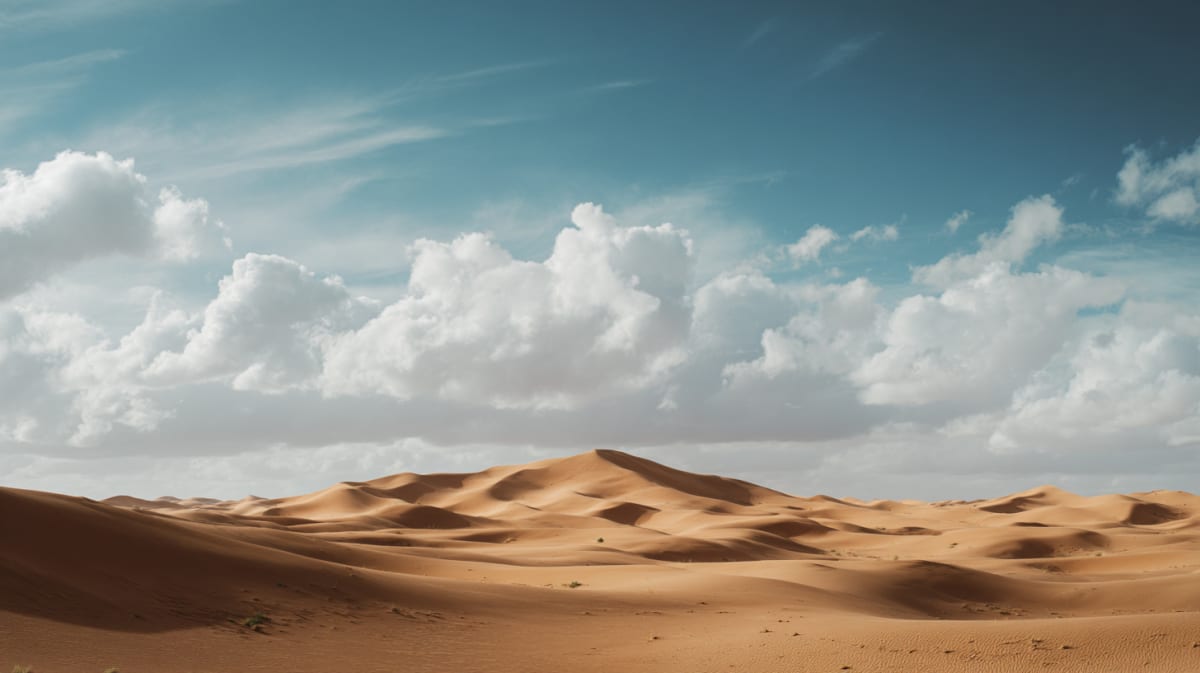
East into the pre-Sahara. The road stretches through country that empties as you go — each town smaller, each valley drier, the horizons widening. Tinghir's palm grove is the last serious green. Then Todra — canyon walls vertical and close, the afternoon shadow pooling at the bottom like spilled ink, the river running cold over your hand when you reach down. Beyond Erfoud the hammada ends. Erg Chebbi rises from the flat earth. The dunes turn gold, then orange, then colours your vocabulary can't reach as the light falls. Camp appears at the base. The sand is warm under your palm. The first stars arrive before you're ready.
Day 4
Merzouga
A day without roads. The dunes shift color as the sun moves—pink at dawn, gold at noon, orange by evening. You can walk to nomad tents where tea is poured without ceremony. Or drive to Khamlia where Gnawa music rises from the sand. Or do nothing. The desert doesn't require your participation. It just asks that you notice.
Day 5
Marrakech
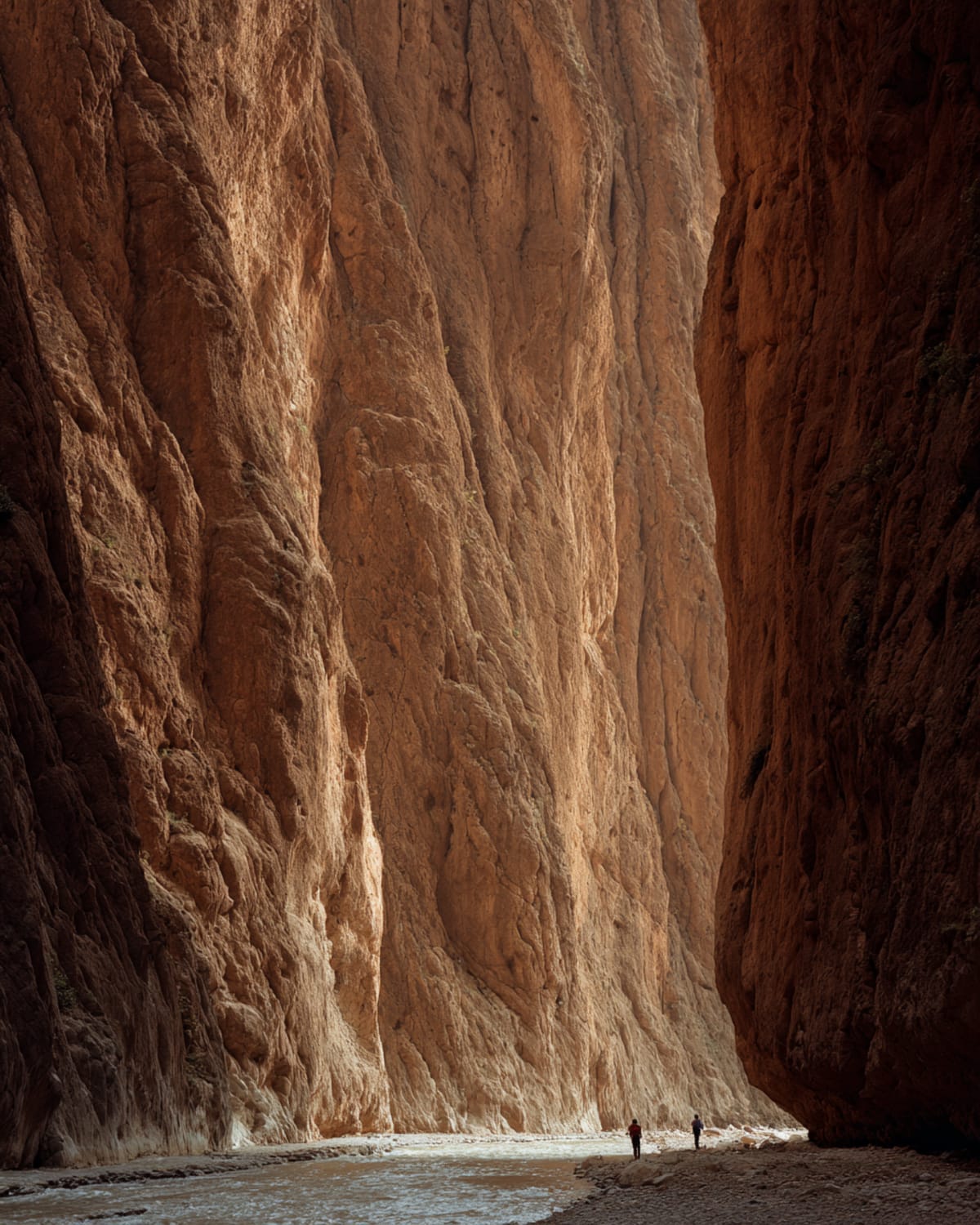
You wake before sunrise. The dunes are purple, the sand under your bare feet still holding yesterday's warmth. Coffee in a tin cup, steam rising fast in the cold air. Then you drive. Nine hours but you won't feel them. The Todra Gorge first — walls of limestone closing in until the road and the river and the light have nowhere to go but up. You stop. The echo of your voice comes back changed. Through the Dades the rock twists into impossible shapes. A roadside stop for almonds roasted in a blackened pan, the shells cracking between your teeth. The Atlas crossing pulls you up — switchbacks, cedar trees, the temperature dropping. By evening Marrakech glows below. You enter and the smell of orange blossom hits you. The noise that overwhelmed you days ago now feels like a rhythm you recognise. The desert did that.
Private Journeys
Plan this journey.
This route is private, and shaped around how you want to move through the country. Tell us what you're hoping to find — we'll design the trip around it.
There is more
This is just the shape of the route.
The full story — where the road changes, what the maps don't name, which detours are worth the dust — lives in the Slow Morocco letter. Written from the medina. Sent when it matters.
No frequency promises. Unsubscribe anytime.




From the Archive