4 Days
Tiznit Silver Trail
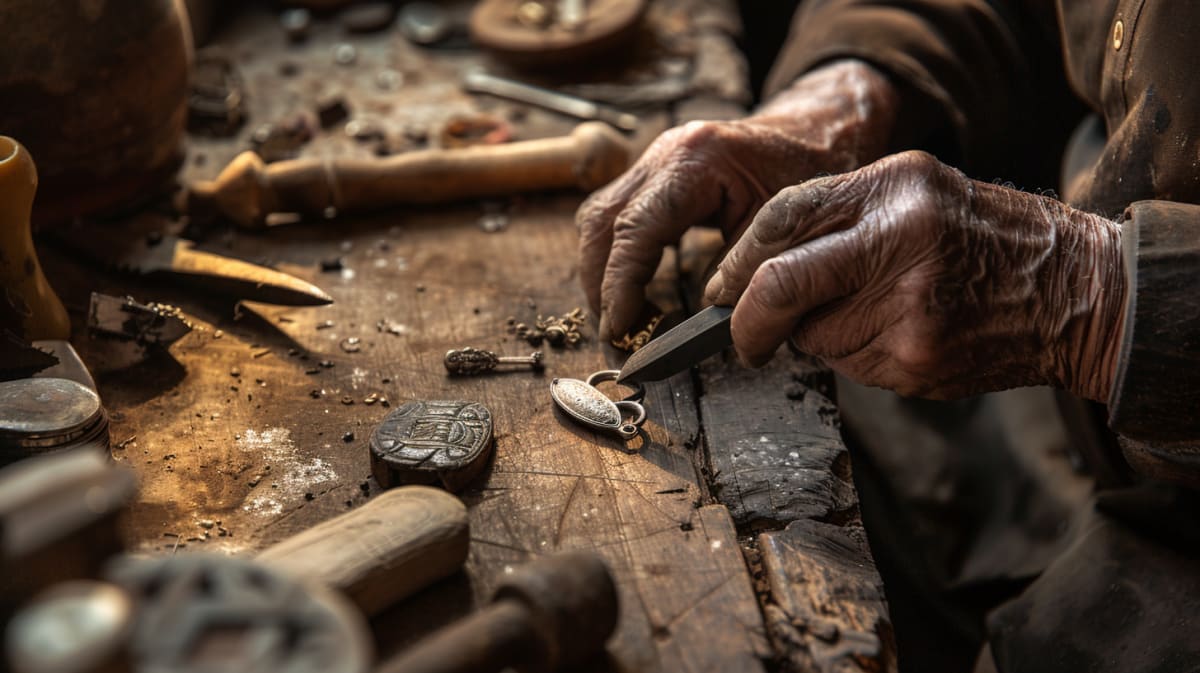
Tiznit's silversmiths have hammered jewellery for centuries and the sound reaches you before the souk does — a steady rhythm like rain on a tin roof, except the rain is deliberate and the roof is an anvil. The old mellah still rings with their work — fibulas the size of your palm, Tuareg crosses in designs that carry tribal identity like a passport that no border official ever questioned. Amber and coral set in bezels that a machine couldn't replicate, because a machine would not know which imperfection to leave. The medina sits behind crenellated walls, the workshops open to the street, silver dust catching the afternoon light like something holy. Beyond town, the Anti-Atlas rises and the Atlantic waits. Four days at the crossroads of mountain, desert, and sea, where the jewellery carries more history than the guidebook and the silver is still warm from the smith's hands.
Day 1
Tiznit
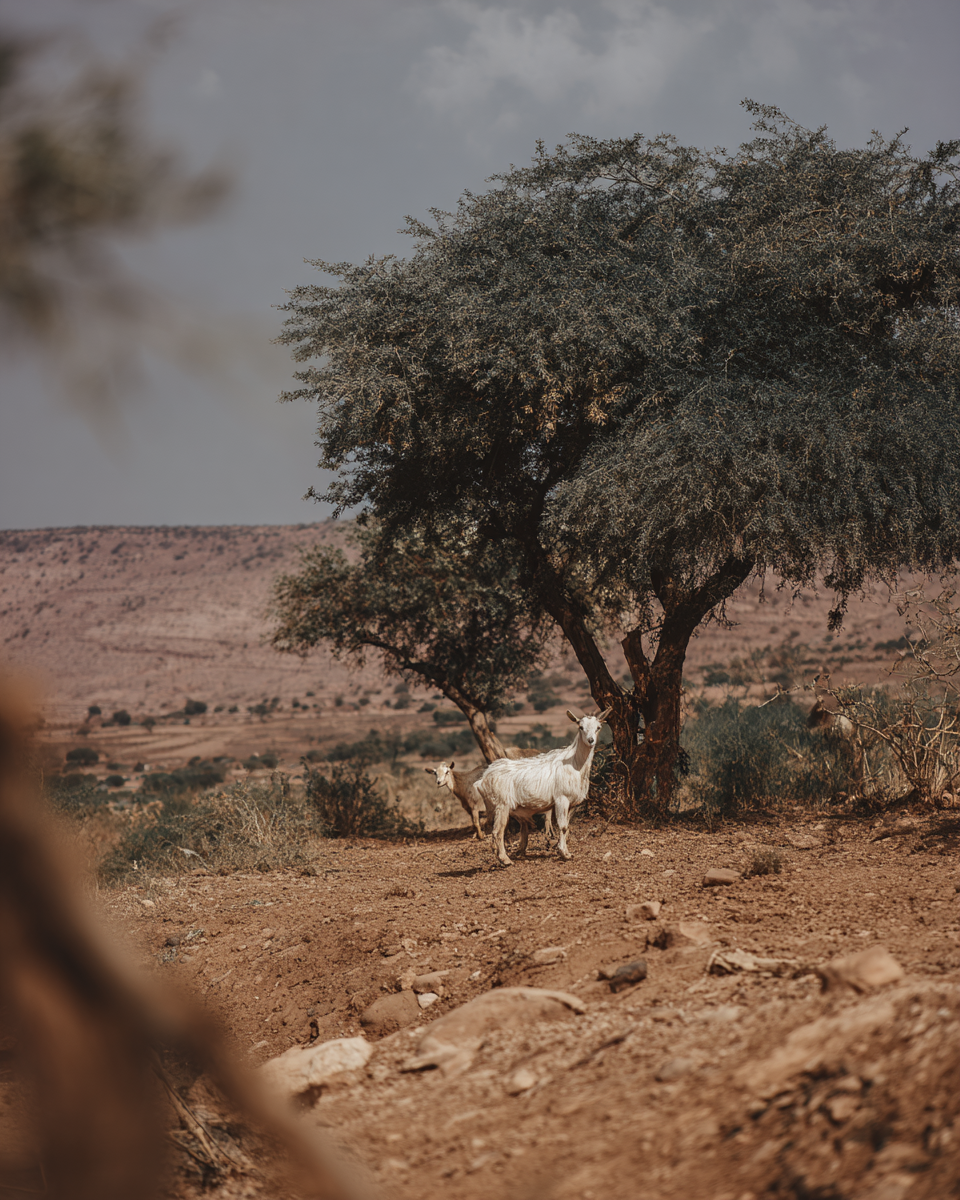
South through the Souss where argan trees twist like ancient hands reaching for something they lost centuries ago. The land dries and warms. Women sell amlou by the roadside — almond, argan oil, honey — the taste rich and earthy, clinging to the roof of your mouth. Tiznit appears behind crenellated walls, the centre of Amazigh silverwork, where the hammering in the workshops sounds like rain on a tin roof. Women here wear their lineage in silver and amber. The souk smells of heated metal and beeswax. Every fibula tells a story the silversmith won't translate for you. You have to wear it to understand.
Day 2
Mirleft
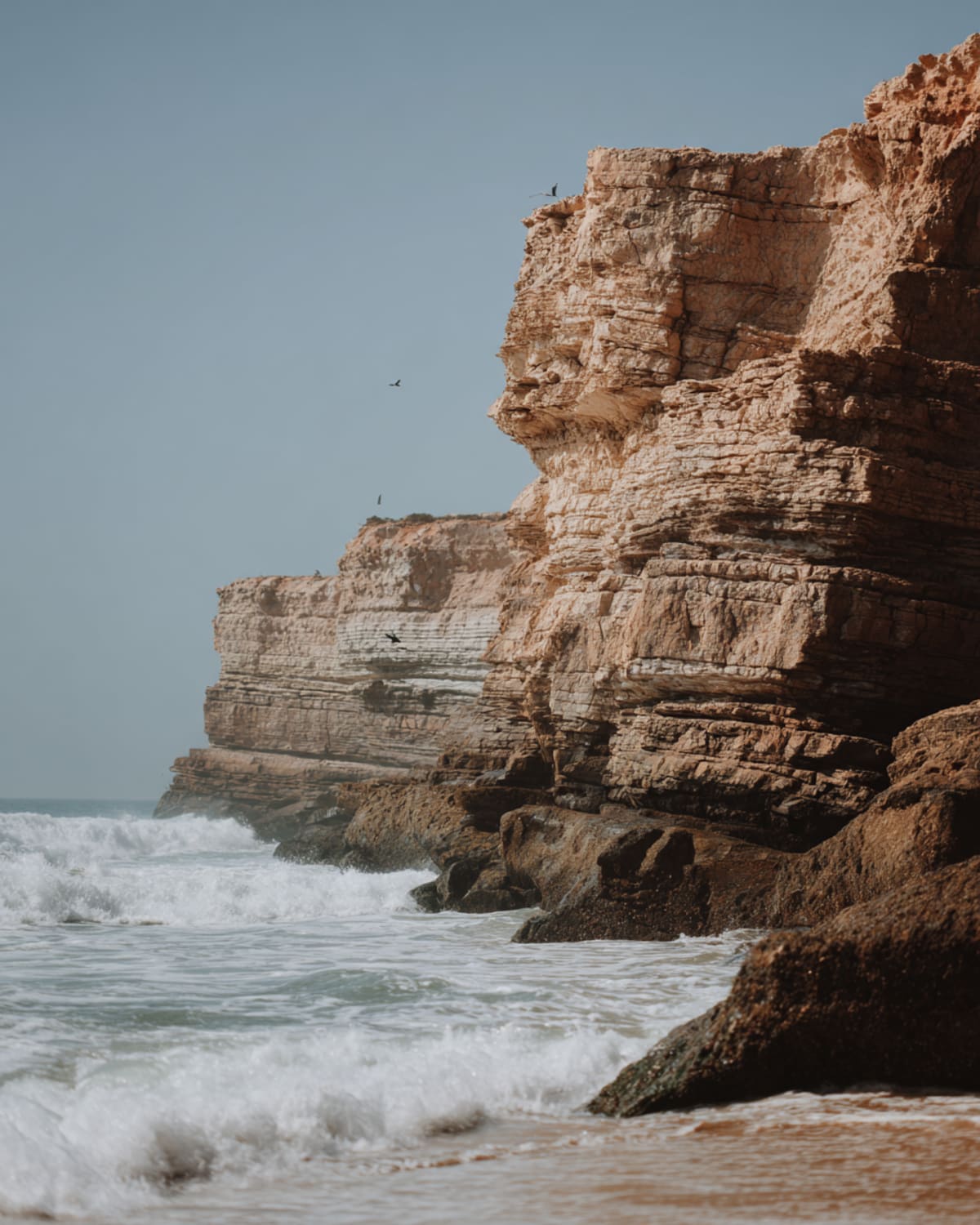
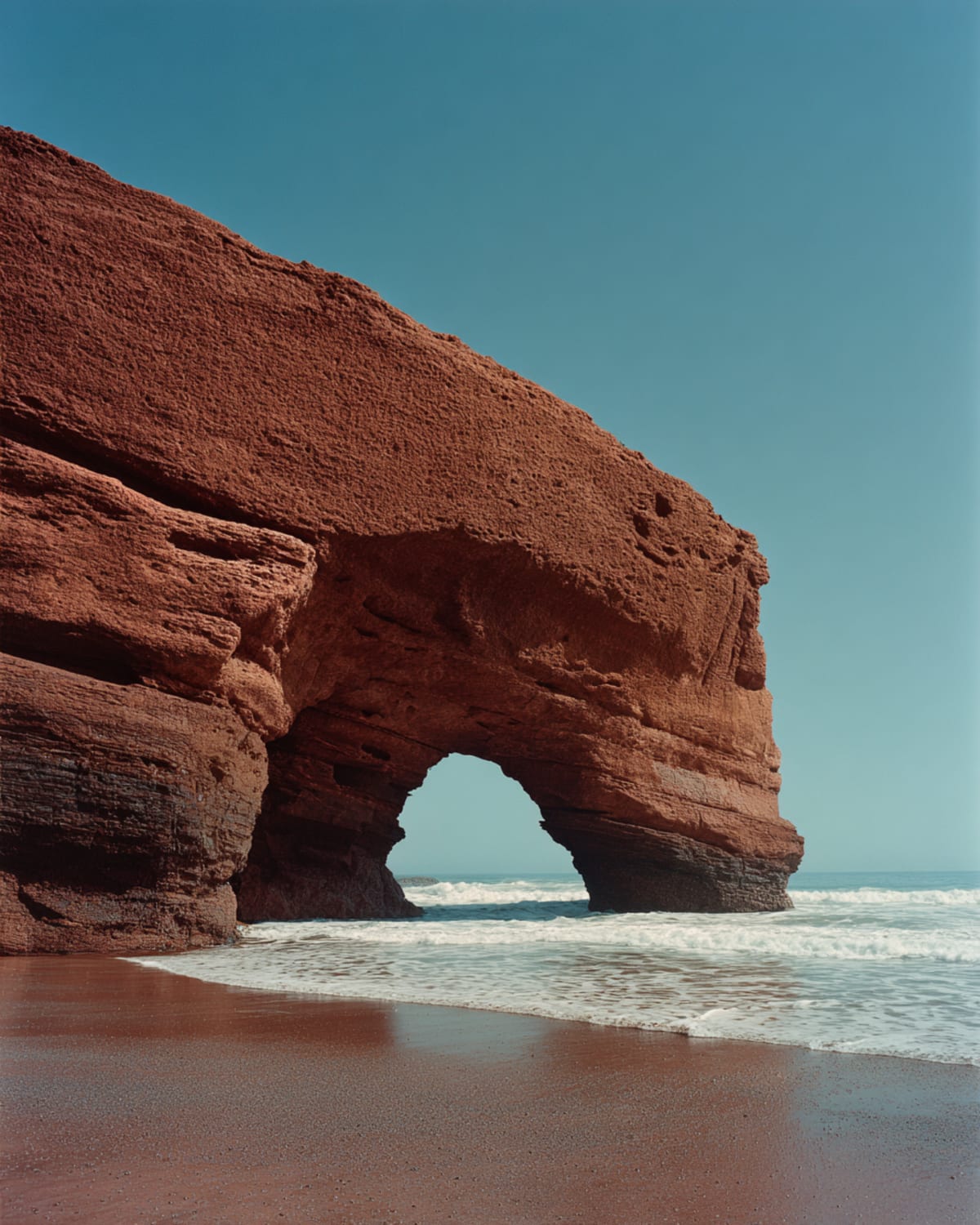
A coastal drive south from Tiznit to the beaches of Mirleft and Legzira.
Day 3
Tiznit
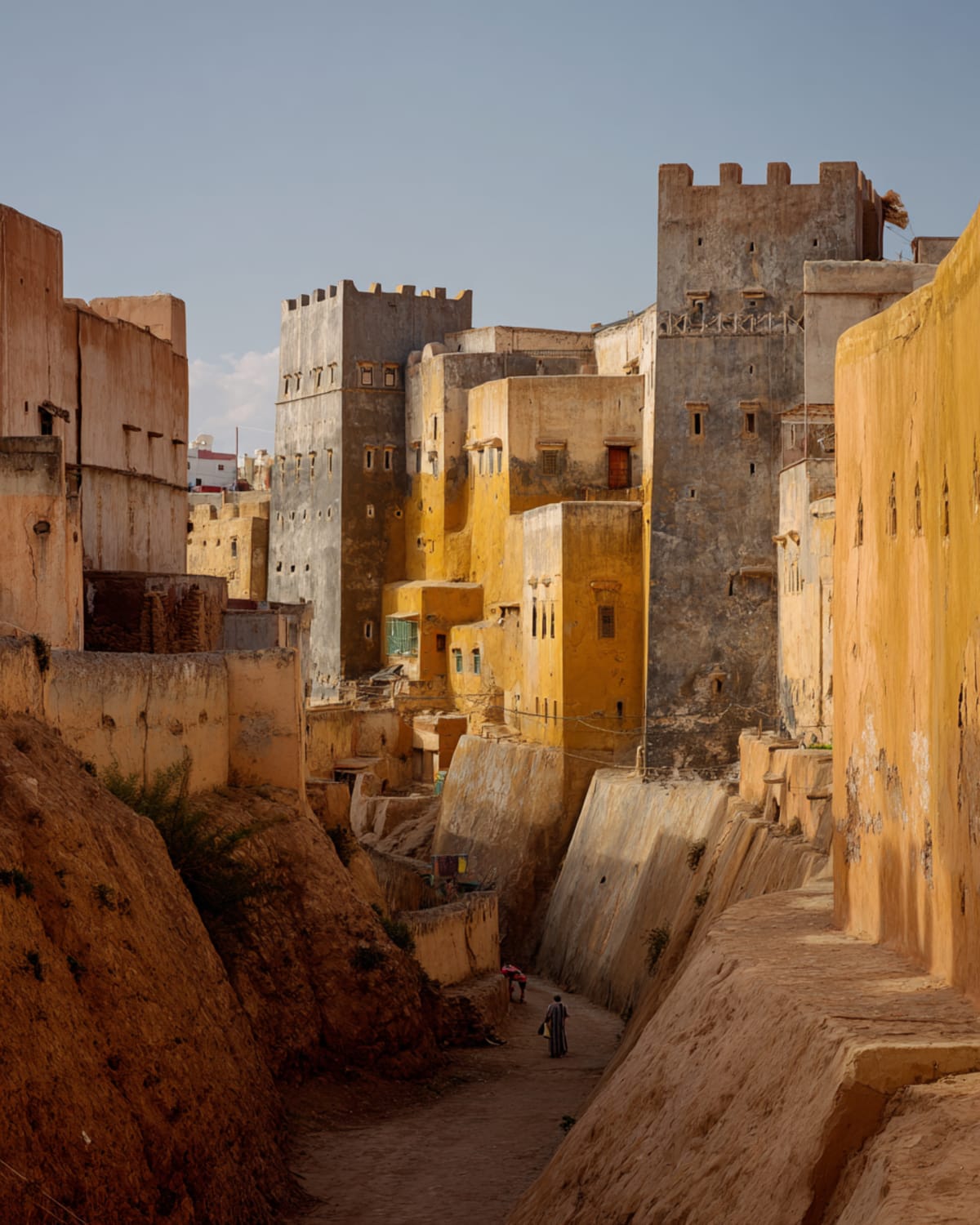
North from the red cliffs. Mirleft's surf breaks disappear around the headland and the road climbs through Anti-Atlas foothills — argan trees, dry stone walls, women carrying bundles of thyme that scent the air as you pass. Tiznit appears behind crenellated ramparts, a walled town where silversmiths have hammered Amazigh jewelry for generations. The old mellah still rings with their work — fibulas, bracelets, Tuareg crosses in designs that carry lineage like a language. The souk smells of amber and metal. Silver dust catches the light in the workshops like something holy.
Private Journeys
Plan this journey.
This route is private, and shaped around how you want to move through the country. Tell us what you're hoping to find — we'll design the trip around it.
There is more
This is just the shape of the route.
The full story — where the road changes, what the maps don't name, which detours are worth the dust — lives in the Slow Morocco letter. Written from the medina. Sent when it matters.
No frequency promises. Unsubscribe anytime.

Explore More
Other journeys across Morocco.


From the Archive