
Agadir Oufella Ruins
The ruins of the old kasbah of Agadir Oufella on the hill above the bay — all that survived the 1960 earthquake that killed 15,000 people in 15 seconds and erased the city below. The ruins are preserved as a memorial. The inscription on the gate, in Arabic, Amazigh, and Hebrew, reads: "If destiny is stronger than man, memory is stronger than destiny." The view of the bay from the ruins is the best in the city.
The ruins of the original Agadir, on the hilltop above the modern city. Before the 1960 earthquake, this was the city — a 16th-century kasbah built by the Saadians to defend the coast against Portuguese naval attacks. The walls are partially standing. The interior is a memorial zone.
The inscription above the gate is the most photographed text in the city: "Fear God and honour the King," carved in Arabic and Dutch (a reminder of the trading relationships that defined Agadir's pre-earthquake identity). The view from the ruins — the bay, the modern city grid, the Atlas Mountains inland — contextualises everything: you can see the old city that was, and the new city that replaced it.
The site is accessible by road or by a steep footpath from the base. The road winds up the hillside and there is parking at the top. Sunset from the ruins is the one thing in Agadir that has genuine atmosphere.
Visitor Information
Explore More
Related Stories
Discover the history and culture of Agadir
Explore More
Multi-day journeys featuring this place
Curated routes that pass through Agadir

4 Days
Tiznit Silver Trail
Morocco's silver capital — Berber jewelry, crenellated walls, and the hammering that sounds like rain.
4 Days
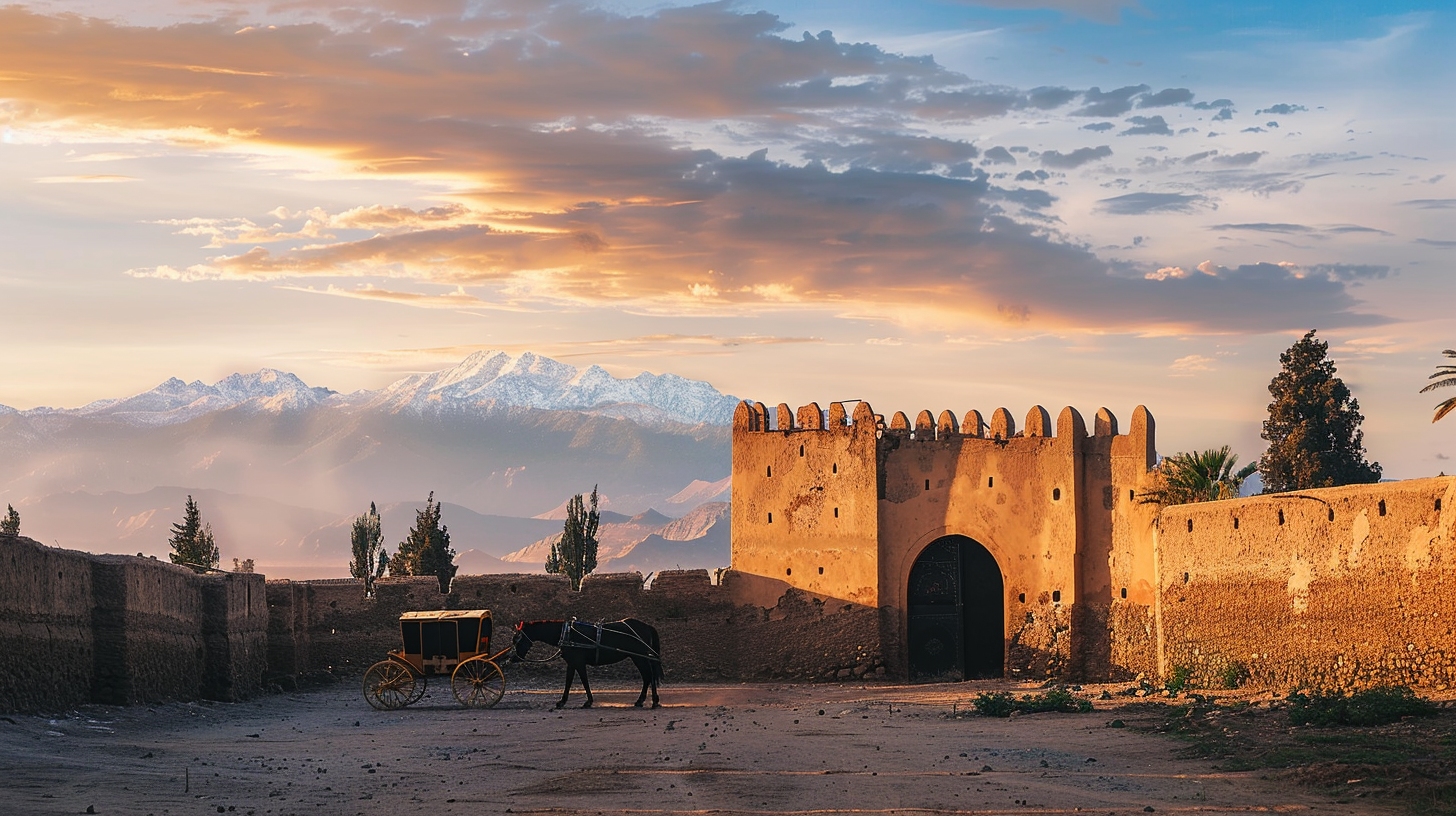
Taroudant & the Souss Valley
The little Marrakech — ochre walls, unhurried souks, and the Atlas rising behind like a standing ovation.

5 Days
Saffron & Honey Trail
Taliouine to Tafraoute — hiking through saffron fields and thyme hills where the honey is dark as molasses.


