5 Days
Contemporary Art Morocco
Morocco's contemporary art scene has exploded and nobody outside the country is paying attention yet. Casablanca's Villa des Arts in the Art Deco quarter. Marrakech's MACMA and the gallery district where converted riads show work that makes you stand still in doorways. Asilah's summer murals — an entire medina as canvas. Young Moroccan artists are rewriting their country's visual language, pulling from calligraphy and geometry and the Atlas light that attracted Delacroix and Matisse, but making something that belongs entirely to now. Five days in the galleries and studios and street corners where you see the future being painted, sculpted, projected onto walls that held centuries of other people's stories.
Day 1
Rabat
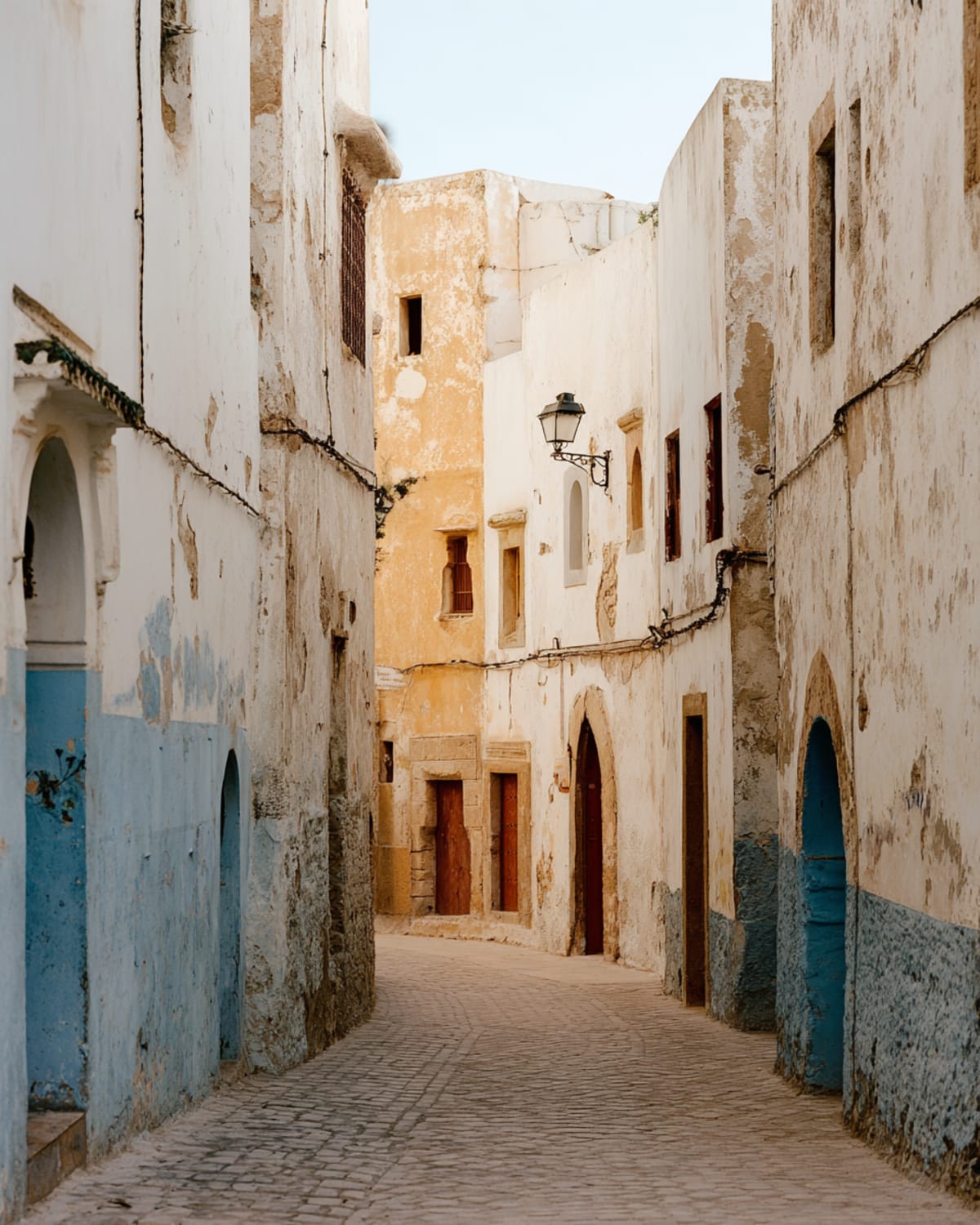
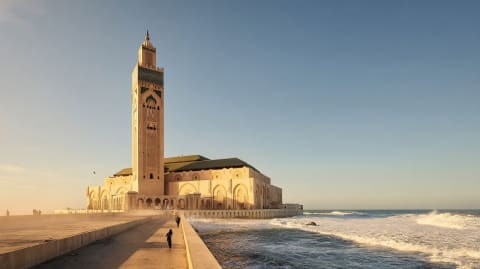
North along the Atlantic motorway — an hour between Morocco's two faces. Casablanca's commercial sprawl gives way to cork oak and eucalyptus. The ocean appears in glimpses. Rabat materialises white and composed on the Bou Regreg river, a capital that whispers where other cities shout. The kasbah overlooks the Atlantic. The medina is calm, carpeted, navigable. The diplomatic quarter smells of jasmine. After Casablanca's urgency, Rabat feels like exhaling.
Day 2
Marrakech
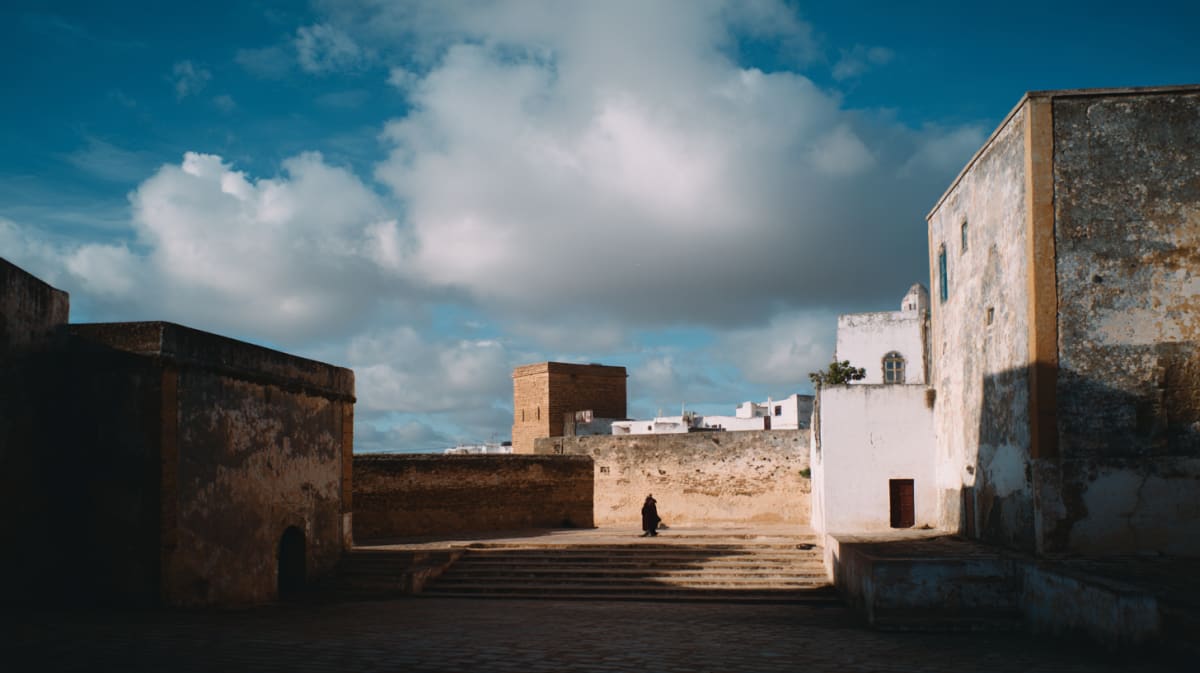
South along the Atlantic corridor. Casablanca passes in concrete and ambition — a city you could spend a week in but today you don't. The Haouz plain opens beyond it, flat and hot, the Atlas growing with each kilometre until the mountains fill the windshield. Snow on peaks. Red city below. Marrakech appears under the Atlas, drawing you in. The medina waits. The souks spiral inward. Jemaa el-Fna begins its evening transformation — smoke from grills, drums from the Gnawa circles, storytellers gathering crowds. The mountain air follows you into the square. The city swallows you whole.
Day 3
Essaouira
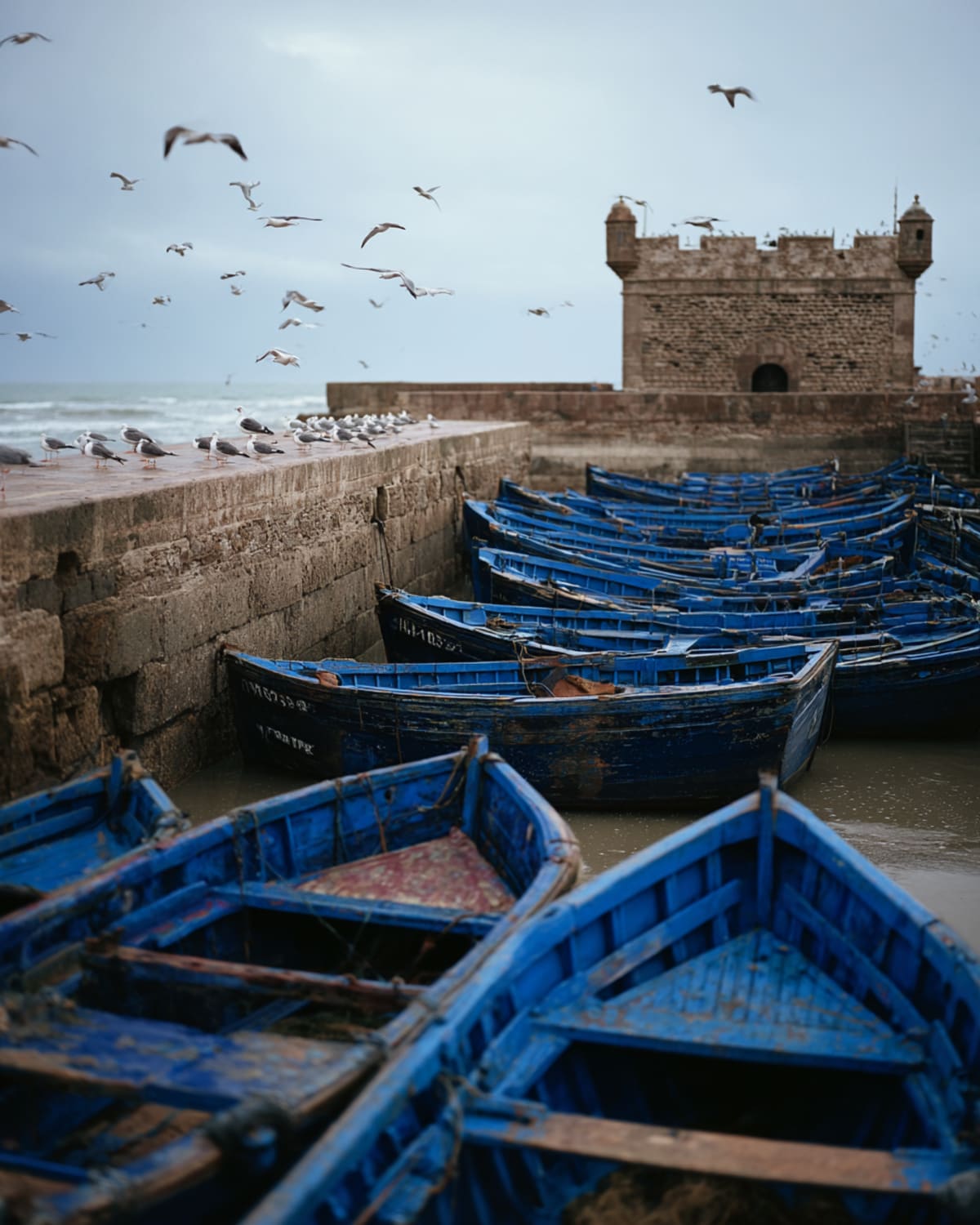
West toward water. The road flattens through argan groves where goats stand in the branches like punctuation marks against the sky. Women crack nuts at cooperatives, the oil tasting of earth and smoke when you dip bread into it. The air changes before you see the sea — salt, wind, something loosening in your shoulders you didn't know was tight. Essaouira appears white against blue. The port smells of fresh catch and rope and cedar shavings. Seagulls wheel. Shutters rattle in the alizé wind that hasn't stopped in recorded history. The city doesn't try to impress. She's busy being herself.
Private Journeys
Plan this journey.
This route is private, and shaped around how you want to move through the country. Tell us what you're hoping to find — we'll design the trip around it.
There is more
This is just the shape of the route.
The full story — where the road changes, what the maps don't name, which detours are worth the dust — lives in the Slow Morocco letter. Written from the medina. Sent when it matters.
No frequency promises. Unsubscribe anytime.



From the Archive