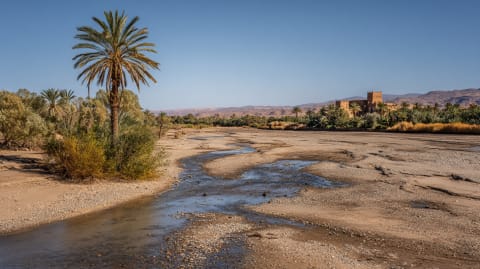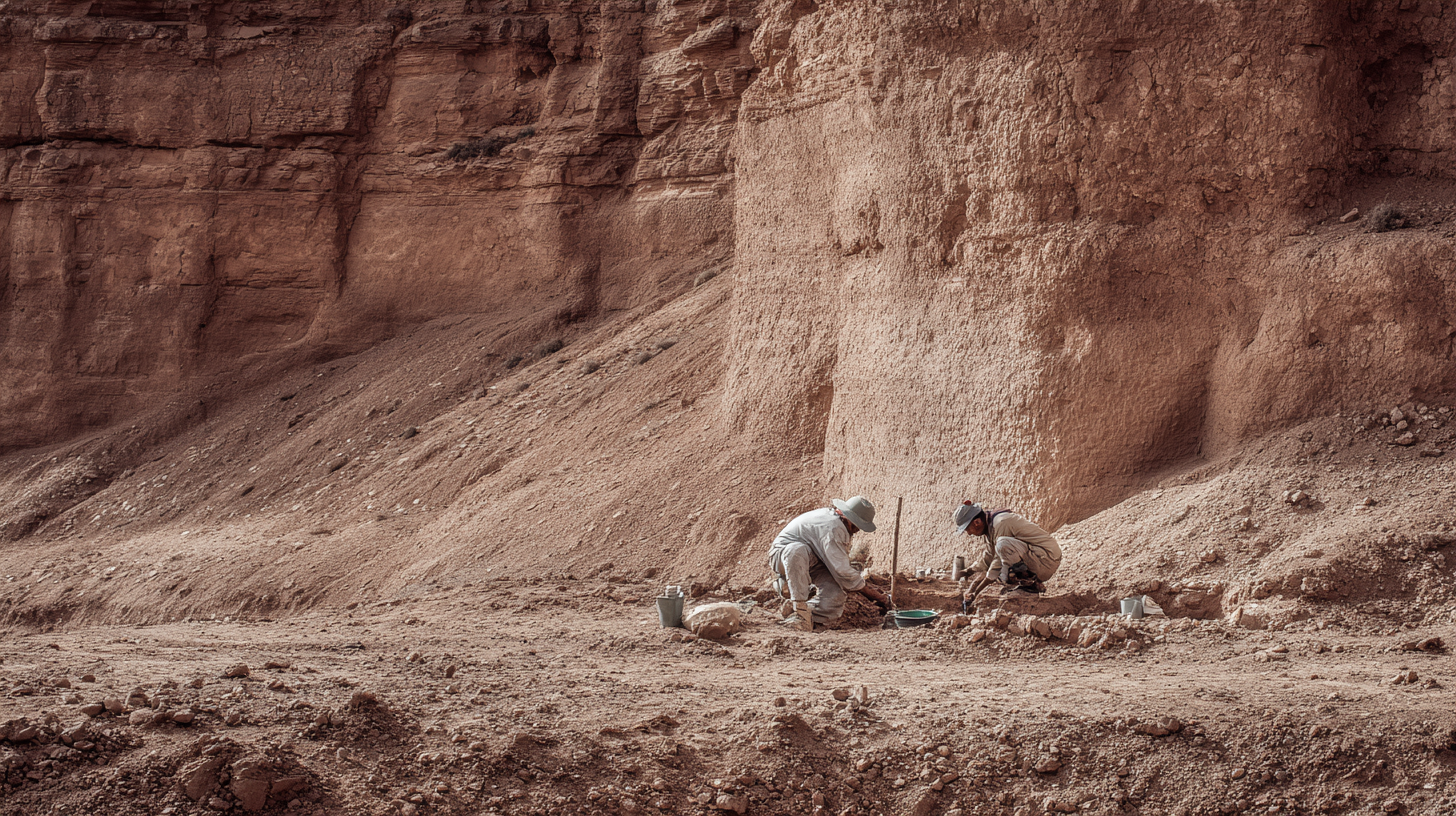
The skull lay in a barite mine a hundred kilometres west of Marrakech, waiting since the Pleistocene. It had been waiting for 315,000 years. It could afford to be patient.
In 1961, miners at Jebel Irhoud uncovered bones they assumed were Neanderthal. The dating said 40,000 years. The classification seemed to fit. For decades, the find gathered dust in scientific literature — a minor footnote in the long story of human origins that everyone assumed was an East African story with no significant chapters elsewhere.
Then Jean-Jacques Hublin of the Max Planck Institute returned with Abdelouahed Ben-Ncer of Morocco's National Institute of Archaeology. Between 2004 and 2017, they excavated 22 additional fossils from at least five individuals. The thermoluminescence dating gave a number that rewrote human history: 315,000 years.
Jebel Irhoud is the oldest securely dated Homo sapiens site on Earth — more than 100,000 years older than Ethiopia's Omo Kibish, which had held the record. The skulls were modern in the front — thin brow ridges, flattened cheekbones, faces you would recognise on a bus. The braincases were elongated, archaic, still evolving. The implication upended decades of orthodoxy: human origins were not a single East African event but a pan-African process. We did not emerge from one garden. We emerged from an entire continent.
Morocco — a country that most people associate with tagines and riads — contains the oldest evidence of our species. The skull that rewrites the human story was found by miners looking for something else entirely, in a hillside that nobody was studying, in a country that the paleoanthropology establishment had not thought to look. The most important archaeological site on earth was an accident. Which, come to think of it, is how most important things are found.
Jebel Irhoud is not open to visitors, but the story of the oldest Homo sapiens skull shapes how we talk about Morocco's deep time on every journey.
Tell us about your trip →The Facts
- —Jebel Irhoud: 100km west of Marrakesh
- —Discovered 1961 by miners in a barite mine
- —Originally misclassified as Neanderthal, dated 40,000 years
- —Jean-Jacques Hublin + Abdelouahed Ben-Ncer re-excavated 2004-2017
- —22 additional fossils from at least 5 individuals
- —Thermoluminescence dating: 315,000 years
- —Oldest securely dated Homo sapiens site on Earth
- —100,000+ years older than Ethiopia's Omo Kibish
Sources
- Hublin, Jean-Jacques et al. "New fossils from Jebel Irhoud, Morocco." Nature, 2017
- Richter, Daniel et al. "The age of the hominin fossils from Jebel Irhoud." Nature, 2017
- Stringer, Chris. "The origin and evolution of Homo sapiens." Philosophical Transactions of the Royal Society, 2016
Further Reading
Practical questions