
Kasbah of the Udayas
Hours
Always open
Entry
Free
Duration
120 minutes
Location
Mouth of Bou Regreg river
Rabat's original fortress, turned home by Andalusian refugees after 1609. Blue and white streets, flower pots on steps, cats in doorways — the palette came before Chefchaouen.
01
The Fortress Above the River
The Kasbah of the Udayas is Rabat's oldest neighbourhood — a 12th-century Almohad fortress perched above the mouth of the Bou Regreg river. Andalusian refugees from Spain settled here in the 17th century and brought their architecture with them: whitewashed walls, blue trim, narrow streets, flowering courtyards. The result is a village that looks like it was transplanted from southern Spain.
02
Blue and White
The monumental gate — Bab Oudaia — is Almohad and magnificent. Inside, the streets are Andalusian: white and blue, intimate, planted with bougainvillea. The Andalusian Garden within the kasbah walls is formal, shaded, tiled, and among the most peaceful public spaces in Morocco. The platform overlooking the river mouth and the ocean is the payoff — Salé across the water, the Atlantic beyond.
03
Visiting
Free access. Enter through Bab Oudaia. Wander the streets, visit the garden, stand on the platform. Allow 45 minutes. The Café Maure inside the kasbah serves mint tea with the river view — one of the better tea experiences in Morocco.
Best Time to Visit
Late afternoon for the light on the river. The Café Maure at sunset.
Getting There
In northwestern Rabat overlooking the Bou Regreg river. A 10-minute walk from the Rabat medina entrance.
Local Tip
The Andalusian Gardens inside are peaceful
Common Questions
Yes. The kasbah, garden, and viewpoints are all free.
Similar blue-and-white palette but different origin — these streets are Andalusian, brought by Spanish refugees. Smaller and quieter than Chefchaouen.
Walking Distance
Nearby
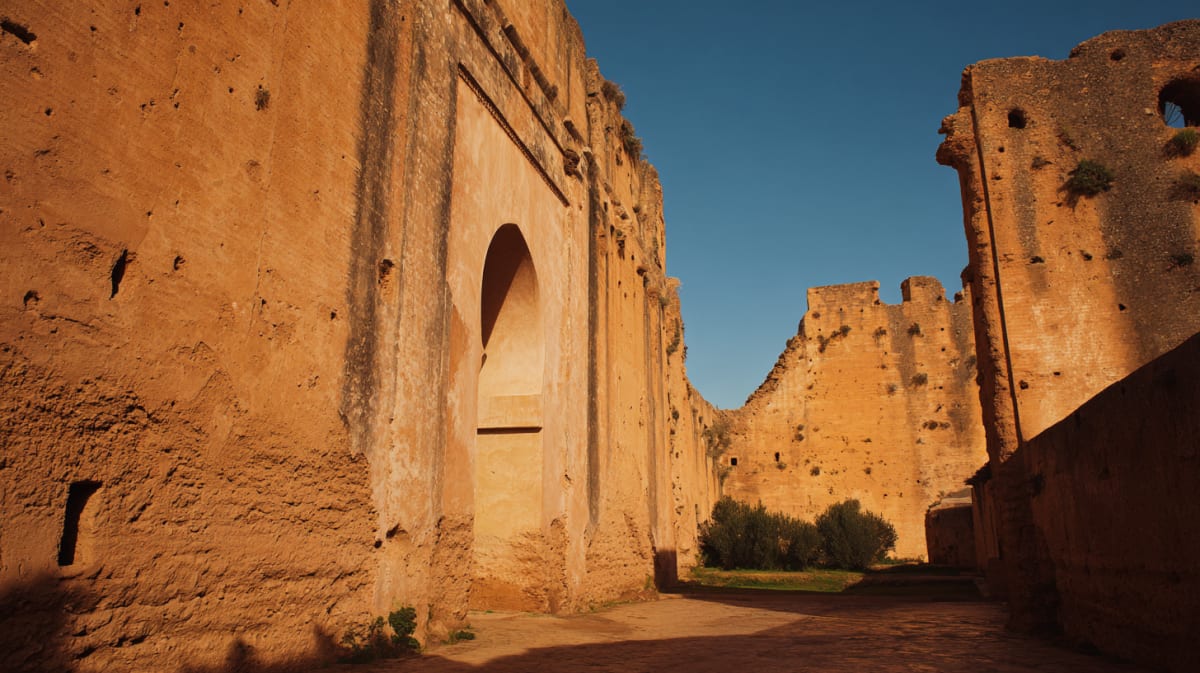
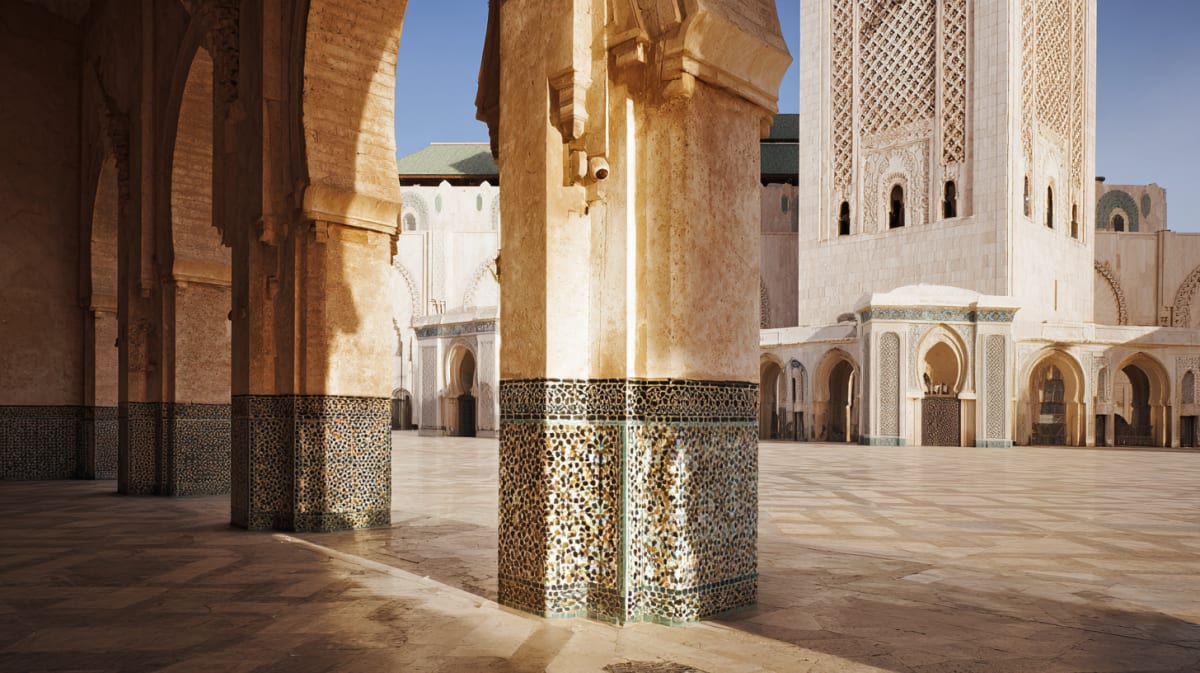
The Oudaias kasbah is a walk we start every Rabat visit with. The Andalusian garden inside the walls is the quietest public space in the capital.
Plan a private journey →Explore More
Related Stories
Discover the history and culture of Rabat



Explore More
Multi-day journeys featuring this place
Curated routes that pass through Rabat

5 Days
Contemporary Art Morocco
MACMA, whitewashed galleries, and the young Moroccan artists rewriting their country's visual language — while nobody outside is paying attention yet.

5 Days
Morocco Wine Trail
Meknes vineyards to Essaouira oysters — Morocco's terroir hiding in plain sight.
6 Days
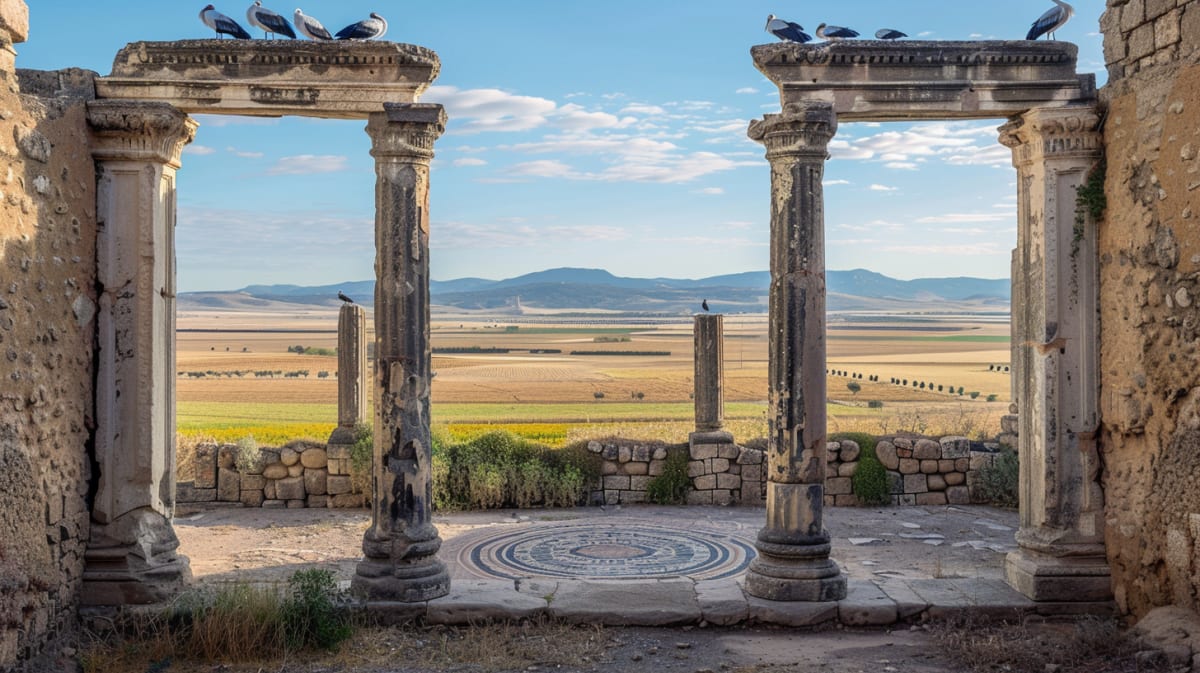
Roman Morocco
Volubilis, Chellah, Lixus — following Rome's African frontier through ruins most visitors never find.
Sources: UNESCO Rabat nomination file (2012);;Caillé J. (1949) La Ville de Rabat