10 Days
Morocco Relaxed Pace
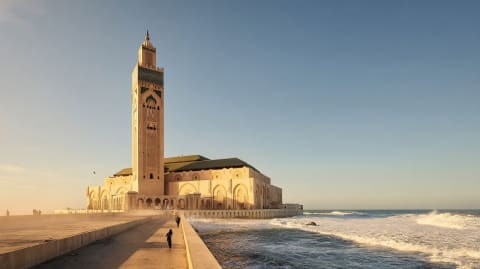
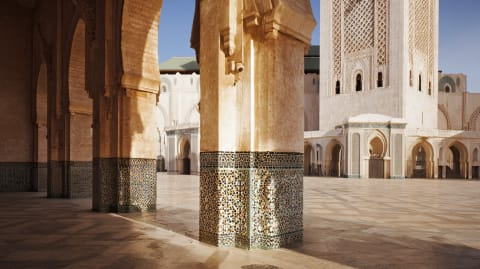
Not everyone wants adventure at speed. This Morocco moves gently — longer stays that let a city sink in, shorter drives, the kind of pace where you notice things. Comfort, culture, and time to sit with a mint tea while the world flows past. Casablanca is the start and it is not what people expect. The guidebooks have been dismissive of it for decades — "skip it, take the train to Marrakech" — which means the city has been left to Moroccans, who have been living in it quite happily without the opinion of guidebooks. The Hassan II Mosque is unmissable: built on the Atlantic, 210-metre minaret, retractable roof, 25,000 worshippers inside and 80,000 in the plaza. The Art Deco district around the old Medina — Maarif, Gauthier — was built between 1920 and 1960 and is one of the finest intact Art Deco neighbourhoods on the continent. Nobody talks about it. Rabat is an hour north by train. The capital is administrative and calm — easier than Marrakech, smaller than Casablanca, full of things the tourist infrastructure has not yet organised into queues. The Chellah necropolis outside the walls has Roman ruins, Merenid tombs, and nesting storks. In the afternoon, the Oudayas kasbah overlooks the estuary where the river meets the sea. Fes requires three days minimum and rewards four. The medina is the largest car-free urban area in the world — 9,000 streets, many of them too narrow for luggage and a person moving in opposite directions. The tanneries. The foundouks. Al-Qarawiyyin, founded 859 CE, the oldest continuously operating university in the world. Fes resists being done quickly. This journey does not try. Marrakech closes the route — not because it is the best of Morocco but because it is the most concentrated version of it. The medina in the morning before the souks fully open. The Saadian tombs. The Majorelle Garden. A dinner that starts at nine and ends when it ends. Ten days. Four cities. Morocco without the feeling of having missed something.
Day 1
Rabat
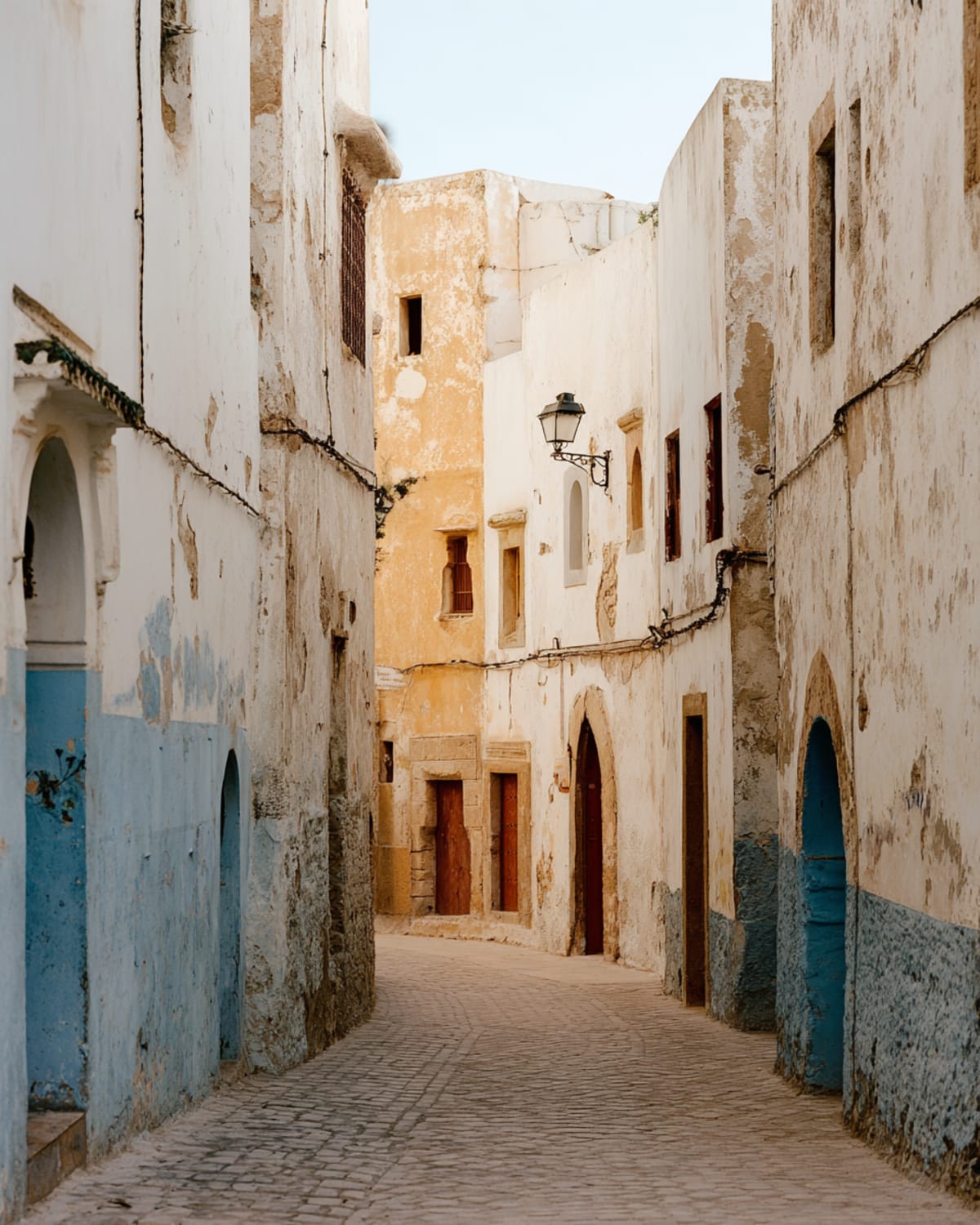
North along the Atlantic motorway — an hour between Morocco's two faces. Casablanca's commercial sprawl gives way to cork oak and eucalyptus. The ocean appears in glimpses. Rabat materialises white and composed on the Bou Regreg river, a capital that whispers where other cities shout. The kasbah overlooks the Atlantic. The medina is calm, carpeted, navigable. The diplomatic quarter smells of jasmine. After Casablanca's urgency, Rabat feels like exhaling.
Day 2
Fes
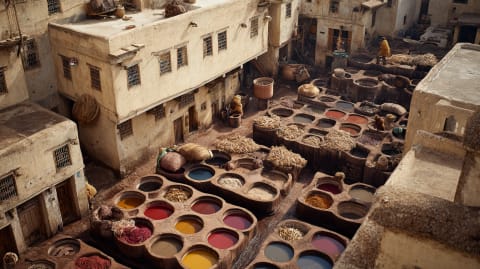
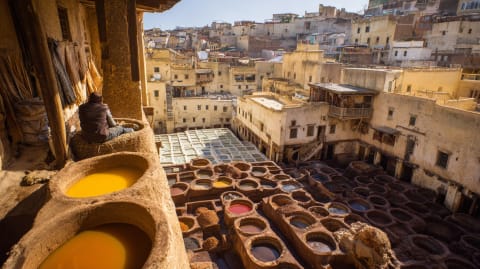
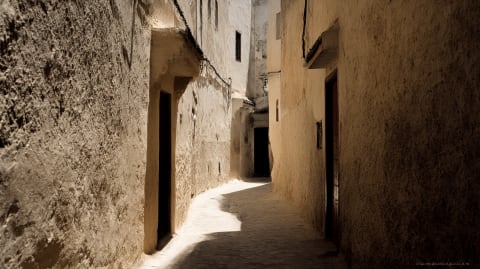
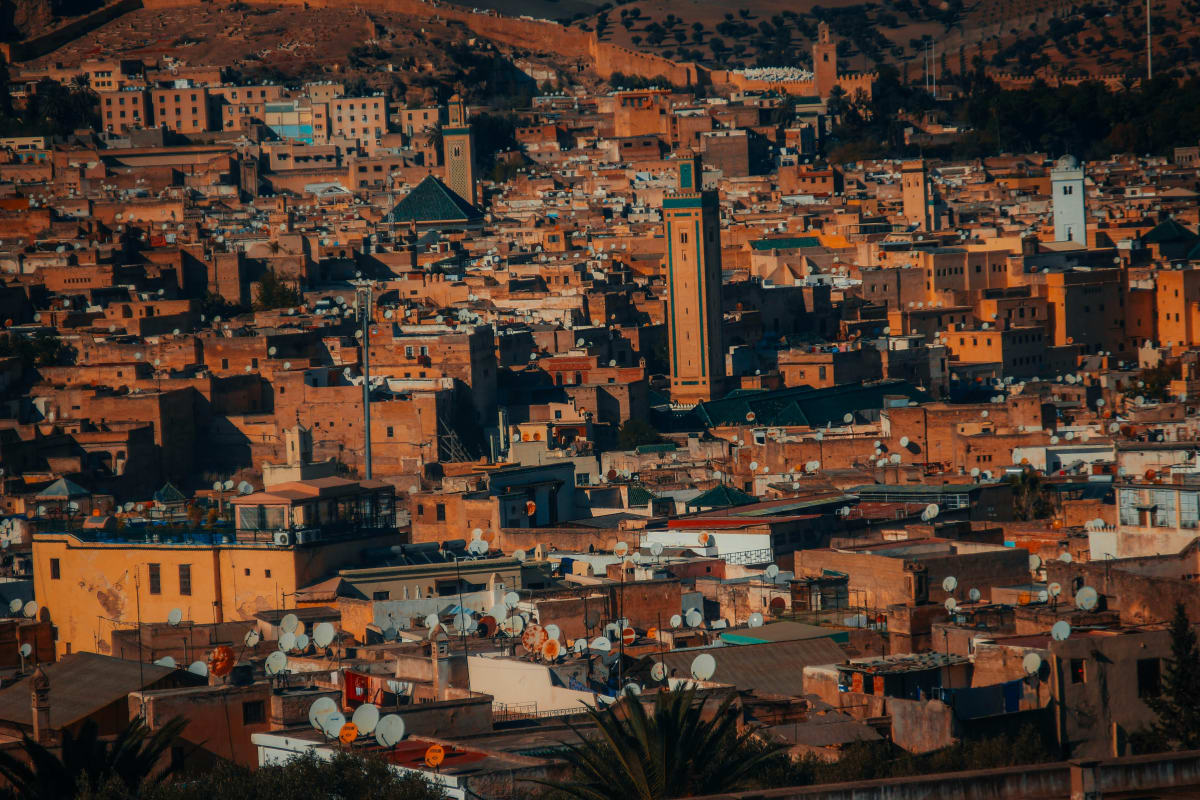
Nine thousand alleys. The medina hasn't changed in a thousand years—same crafts, same quarters, same calls echoing off the walls. The tanneries still use pigeon dung. The brass workers still hammer by hand. You get lost. Everyone does. A boy leads you out for a coin. By evening, you've stopped trying to map it. The labyrinth is the point.
Day 3
Fes
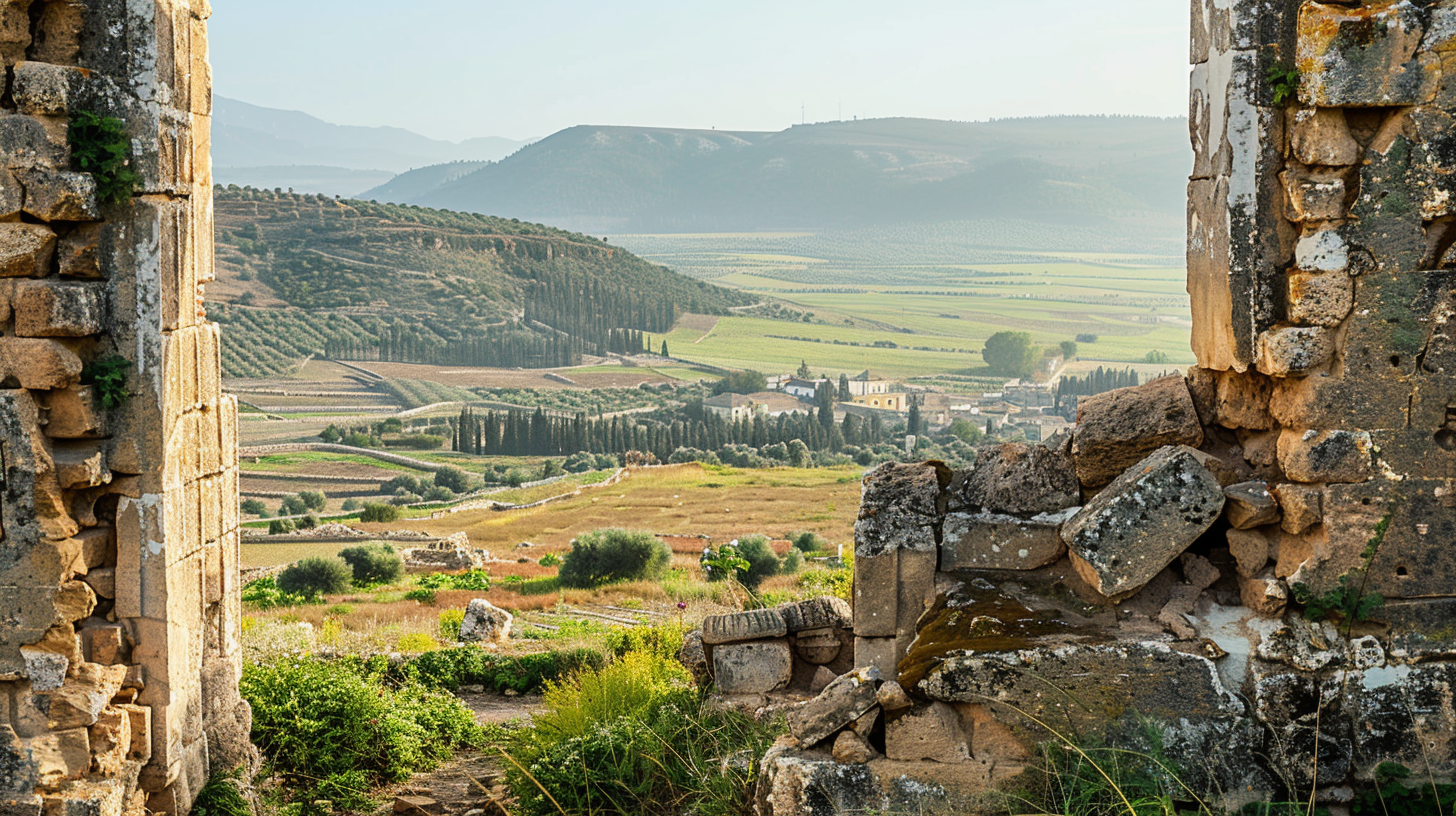
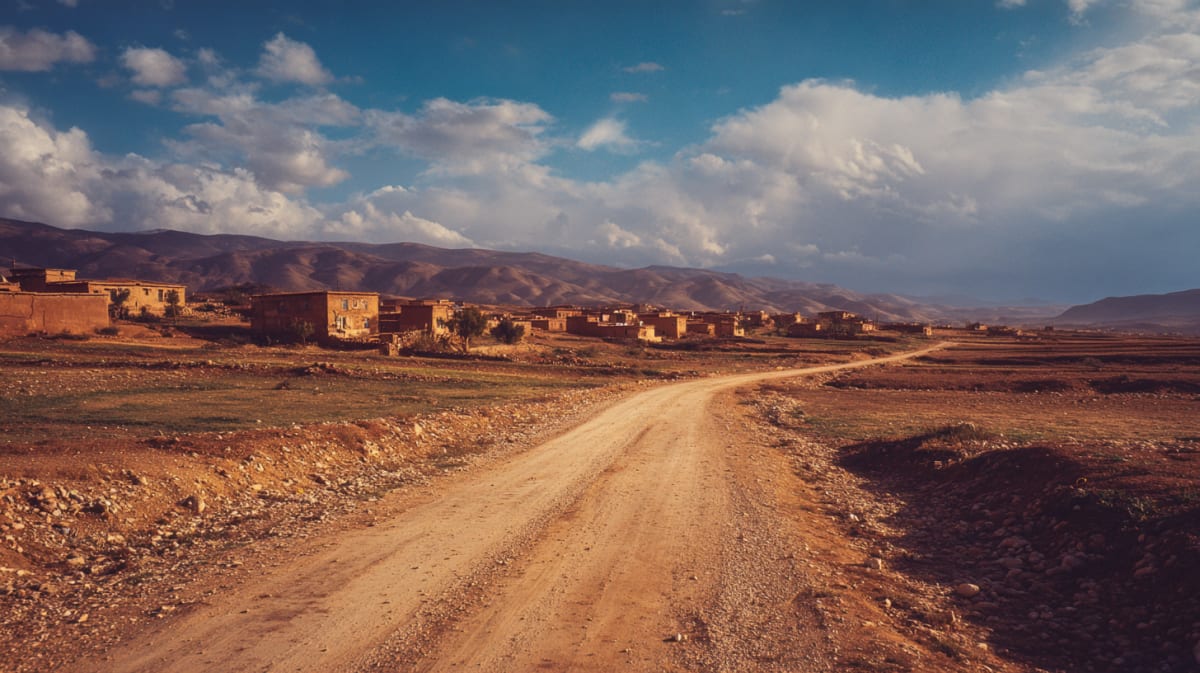
The imperial road east. Rabat's white composure fades into the Gharb plain — flat, agricultural, the kind of landscape that feeds cities but doesn't photograph well. Meknes appears first, Moulay Ismail's obsession, his granaries still standing. Volubilis if you stop — Roman columns rising from wheat fields, storks nesting on stone that held a civilization's weight. Mosaic floors lie open to the weather, still vivid. Then Fes. The medina doesn't introduce itself. You enter through a gate and the century changes. The smell of leather and cedar and something baking reaches you before you see the first souk.
Day 4
Fes
Nine thousand alleys. The medina hasn't changed in a thousand years—same crafts, same quarters, same calls echoing off the walls. The tanneries still use pigeon dung. The brass workers still hammer by hand. You get lost. Everyone does. A boy leads you out for a coin. By evening, you've stopped trying to map it. The labyrinth is the point.
Day 5
Fes
Nine thousand alleys. The medina hasn't changed in a thousand years—same crafts, same quarters, same calls echoing off the walls. The tanneries still use pigeon dung. The brass workers still hammer by hand. You get lost. Everyone does. A boy leads you out for a coin. By evening, you've stopped trying to map it. The labyrinth is the point.
Day 6
Marrakech
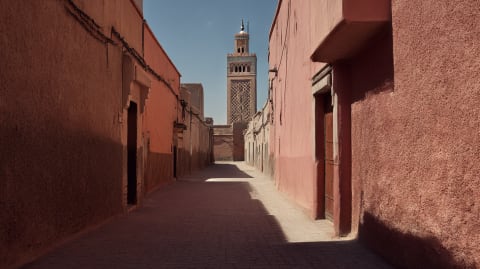
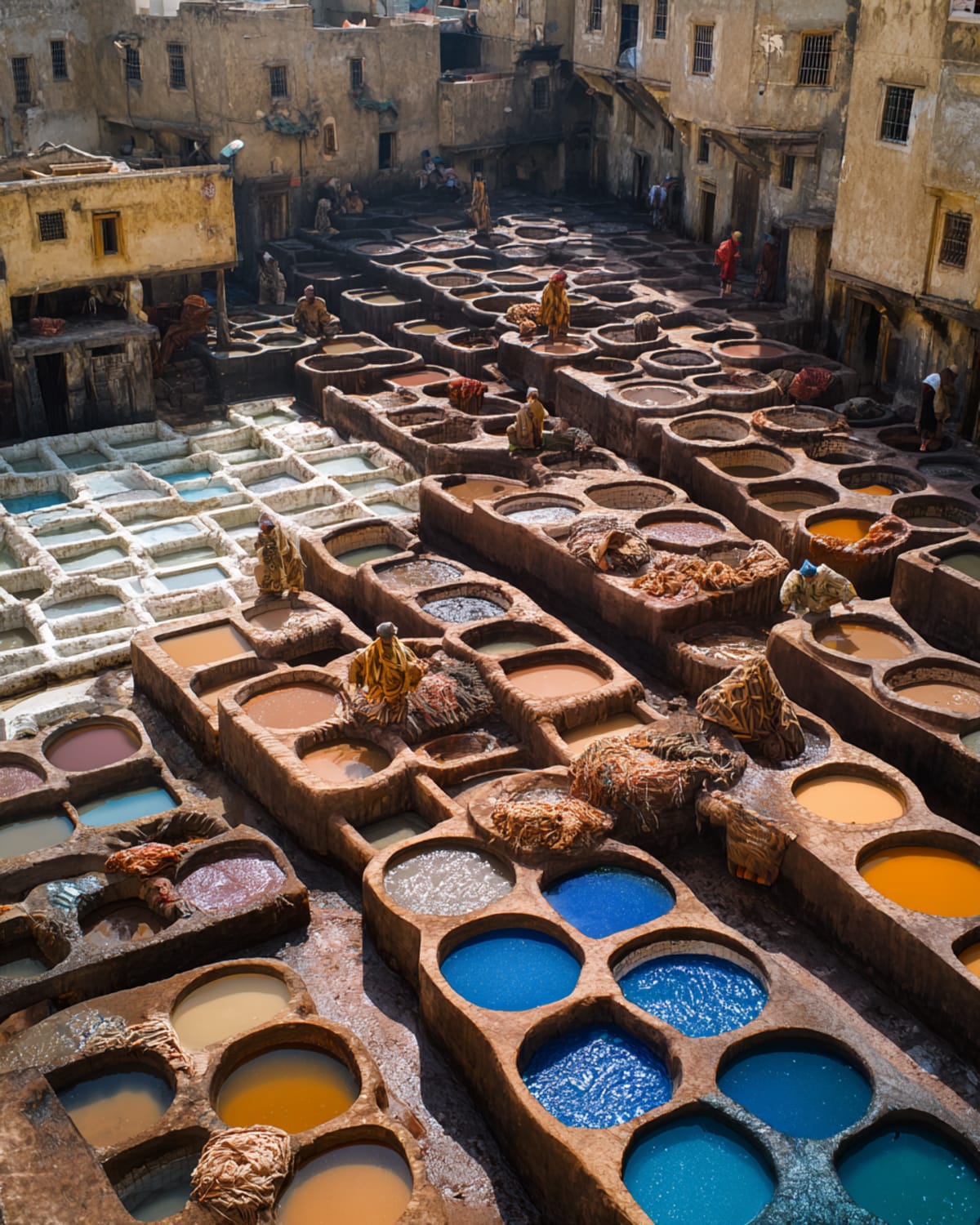
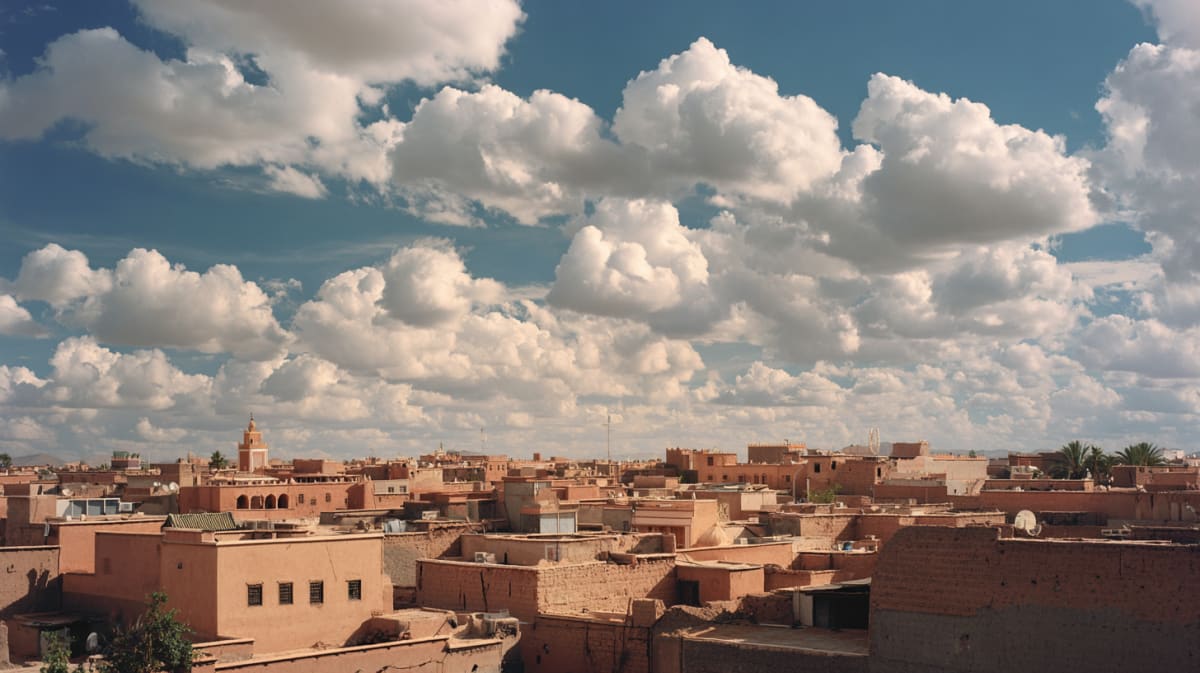
Six hours across the interior. The highway stitches together two cities that have competed for a thousand years — Fes the intellectual, Marrakech the merchant. Between them: the Saïss plain, then the Haouz, flat agricultural land where the sky is enormous and the road dissolves into heat shimmer. You cross the invisible line where the dialect shifts, where couscous changes shape, where the spice blend recalibrates. Marrakech appears under the Atlas — rose-pink walls, the Koutoubia minaret rising above the palms. The square begins to fill. A different city. A different argument about what Morocco is.
Day 7
Marrakech
The souks spiral inward by specialty—leather, brass, carpets, spices. Each turn narrows. Bahia Palace holds its painted ceilings in afternoon shadow. The hammam strips you down to quiet. By evening, Jemaa el-Fna transforms. Smoke rises from a hundred grills. Storytellers gather crowds. The square has done this for centuries. It doesn't need your permission.
Day 8
Marrakech
The souks spiral inward by specialty—leather, brass, carpets, spices. Each turn narrows. Bahia Palace holds its painted ceilings in afternoon shadow. The hammam strips you down to quiet. By evening, Jemaa el-Fna transforms. Smoke rises from a hundred grills. Storytellers gather crowds. The square has done this for centuries. It doesn't need your permission.
Day 9
Ourika Valley
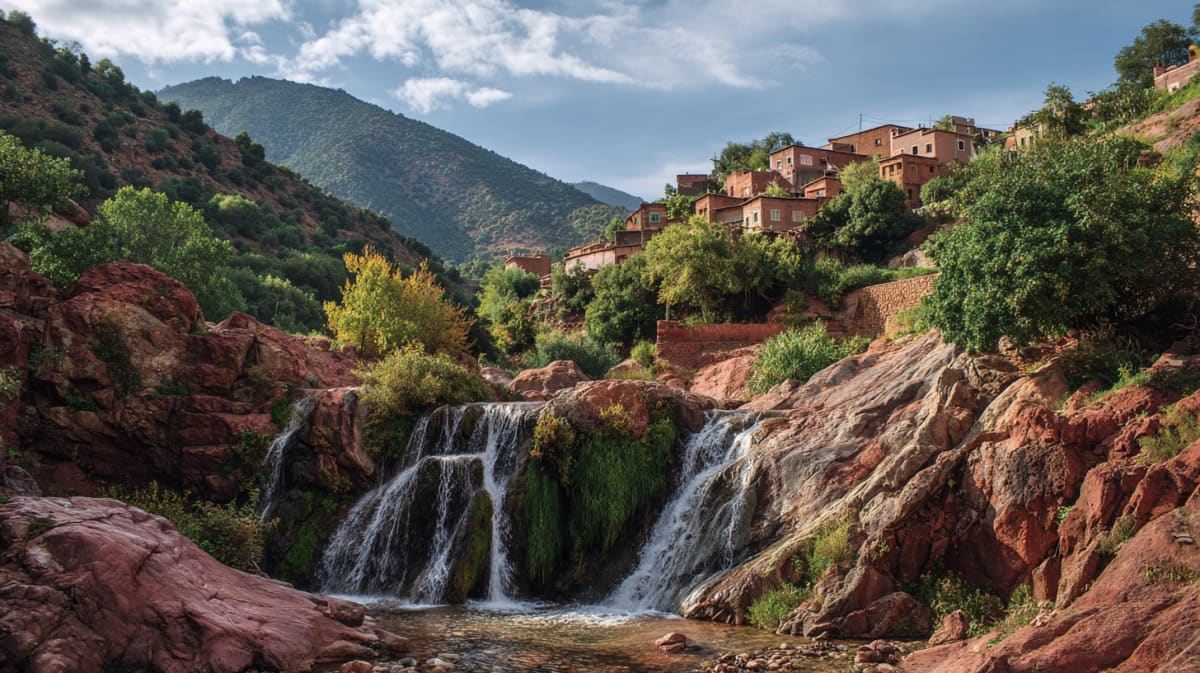
The road climbs south through the Haouz plain, red earth giving way to green as you enter the valley. The Ourika River runs year-round, fed by Atlas snowmelt, cutting through terraced gardens where Berber families grow mint and saffron. You stop at a village clinging to the hillside—stone houses, flat roofs for drying herbs, women washing wool in the river below. The air cools as you climb. A waterfall appears where the valley narrows, mist catching light. Lunch is tajine on a terrace overlooking the gorge, mint tea poured from height. By afternoon you're descending, the city emerging from haze, the call to prayer drifting up from a thousand minarets. Back in Marrakech for sunset. The mountains still visible, still pink, already somewhere you've been.
Day 10
Marrakech
The souks spiral inward by specialty—leather, brass, carpets, spices. Each turn narrows. Bahia Palace holds its painted ceilings in afternoon shadow. The hammam strips you down to quiet. By evening, Jemaa el-Fna transforms. Smoke rises from a hundred grills. Storytellers gather crowds. The square has done this for centuries. It doesn't need your permission.
Private Journeys
Plan this journey.
This route is private, and shaped around how you want to move through the country. Tell us what you're hoping to find — we'll design the trip around it.
There is more
This is just the shape of the route.
The full story — where the road changes, what the maps don't name, which detours are worth the dust — lives in the Slow Morocco letter. Written from the medina. Sent when it matters.
No frequency promises. Unsubscribe anytime.