The medina of Fes el-Bali is the largest car-free urban area on earth. Nine thousand alleys, three hundred thousand residents, eleven thousand buildings, and not a single motor vehicle. The transport is donkeys and handcarts. The navigation is memory. The width of some streets is less than the span of your arms. You will get lost. Everybody gets lost. The medina was designed — if designed is the right word — over twelve centuries by people who were not thinking about you.
This is the guide for getting lost properly.
The shape
Fes has three cities. Fes el-Bali is the old medina, founded in the 9th century by Moulay Idriss II. Fes el-Jdid — "new Fes" — was built by the Marinids in the 13th century and contains the Royal Palace and the mellah. The Ville Nouvelle was built by the French and contains the hotels, the train station, and the cafés where you will recover from the medina.
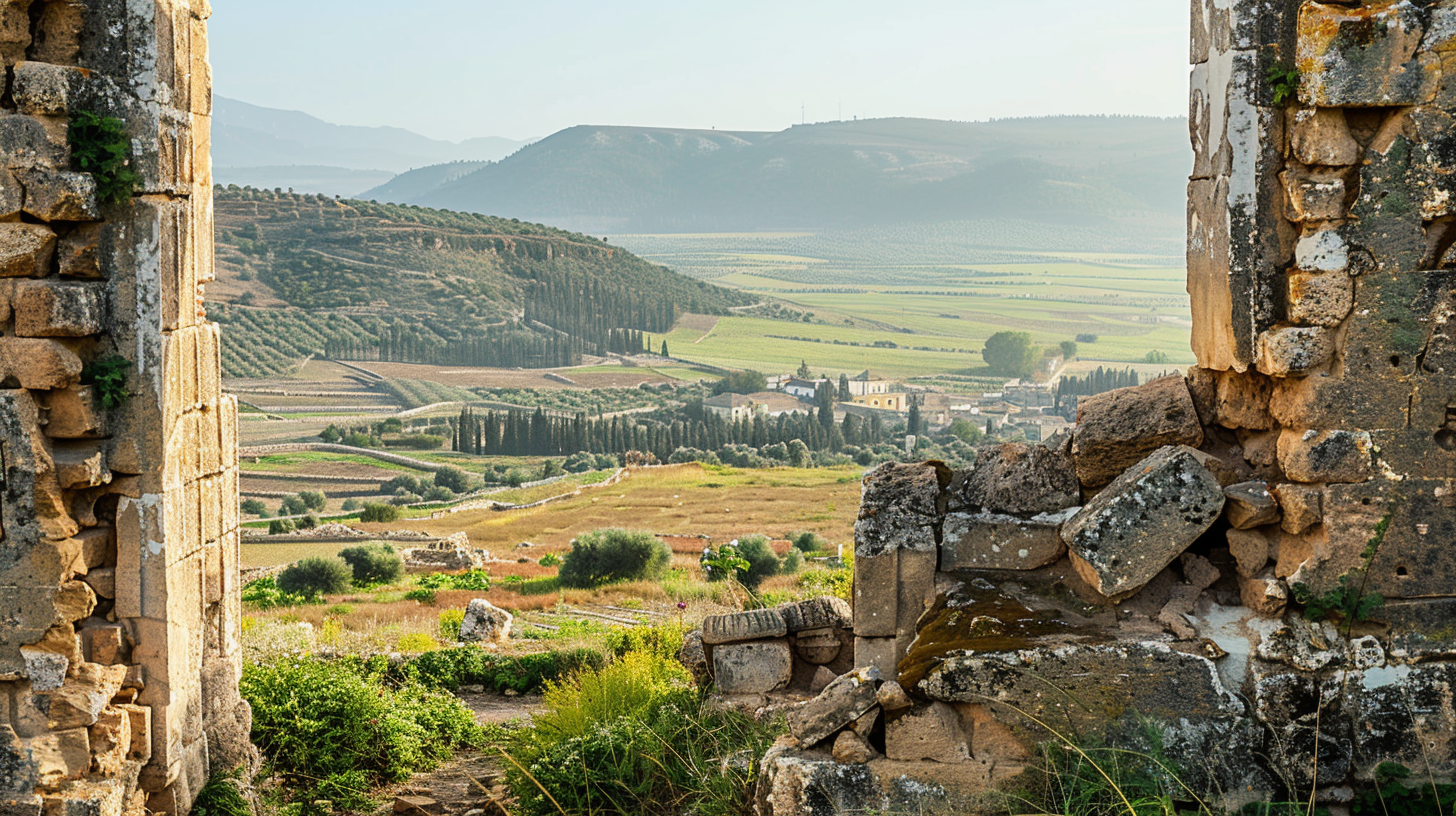
Fes el-Bali sits in a valley between two hills. The Fes River runs through it — or rather under it, channelled through the medina in a network of open and covered waterways that powered the city's industries for a thousand years. The tanneries need water. The dyeworks need water. The hammams need water. The fountains of the mosques need water. The river provided it all, and the medina was built around its path.
The main artery — Talaa Kebira — descends from the Bab Bou Jeloud gate to the Qarawiyyin Mosque at the bottom of the valley. This is the spine. Everything else branches from it into alleys that branch into alleys that branch into dead ends that are not dead ends but private entrances to houses that have been there since the Almohad dynasty.
The first walk
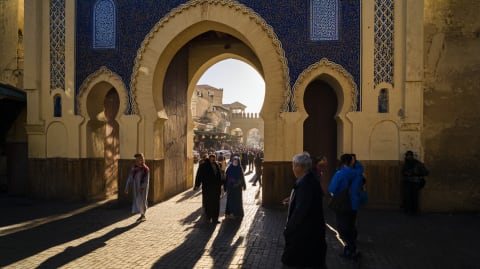
Enter at Bab Bou Jeloud — the blue-and-green tiled gate at the top of the medina. Walk downhill. Gravity is your compass. The Talaa Kebira takes you through the commercial heart of the city: copperware, spices, textiles, leather, woodwork, all organised by guild, just as they were in the 14th century.
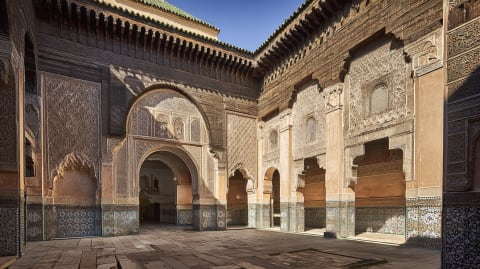
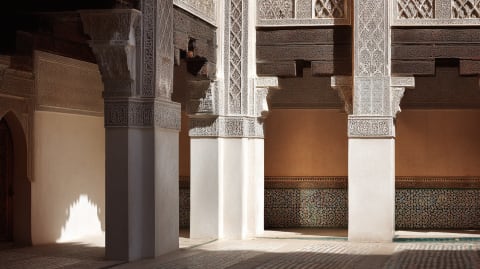
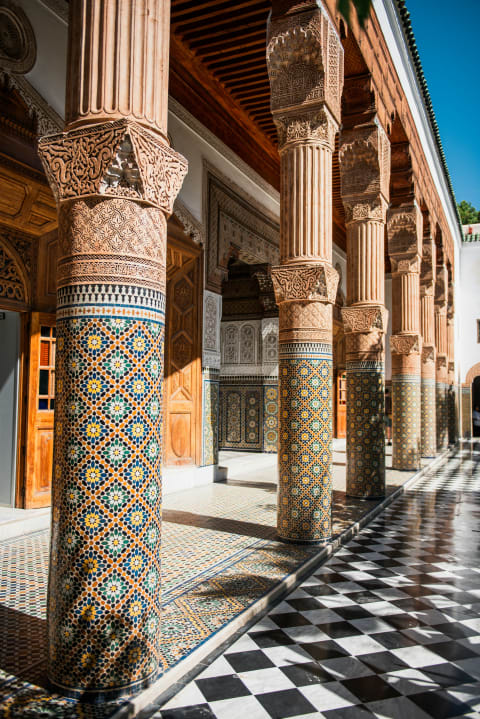
Halfway down, the Bou Inania Medersa opens on your left — a 14th-century theological school with the most intricate carved stucco, zellige, and cedarwork in Morocco. Non-Muslims can enter. Stand in the courtyard and look up. The geometry is so dense it appears to move.
Continue downhill to the Qarawiyyin Mosque — founded in 859 by Fatima al-Fihri, a woman from Tunisia whose family had emigrated to Fes. The mosque expanded into a university, and the university is recognised by UNESCO and Guinness as the oldest continuously operating degree-granting institution in the world. Non-Muslims cannot enter, but the doors are sometimes open enough to glimpse the forest of white columns inside.
The Qarawiyyin Library — restored and partially reopened — holds manuscripts that predate the printing press by centuries. A 9th-century Quran on calfskin. Treatises on astronomy, medicine, and law. The knowledge that Europe later called the Renaissance passed through this building first.
The tanneries
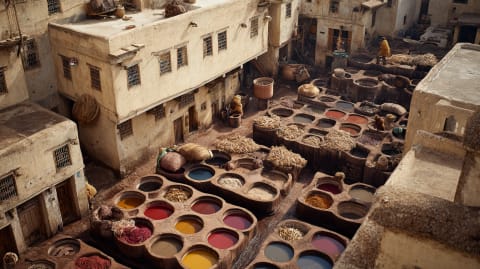
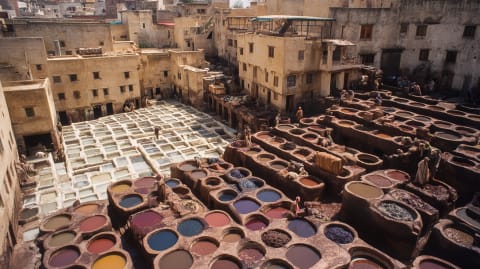
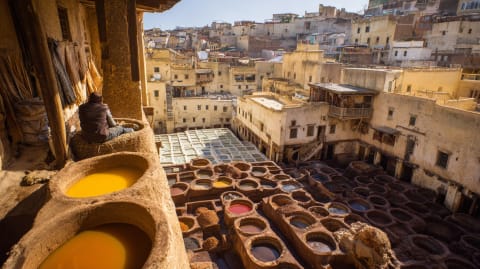
The Chouara tannery is the most visited site in Fes and the least understood. The circular stone vats — filled with pigeon excrement, quicklime, and vegetable dyes — are not a museum. They are a working tannery. The leather you buy in the souk was processed here, by hand, using methods that have not changed in nine hundred years.
You will be offered a sprig of mint for your nose. Take it. The smell is real. The men working waist-deep in the vats are real. The tour guides who lead you to the terrace overlooking the tannery and then steer you into their cousin's leather shop are also real, and they are very good at what they do.
The best time to see the tannery is mid-morning, when the light hits the vats and turns the dyes into a colour wheel — saffron yellow, poppy red, indigo blue, mint green. The vats are 11th century. The colours are older.
The invisible Fes
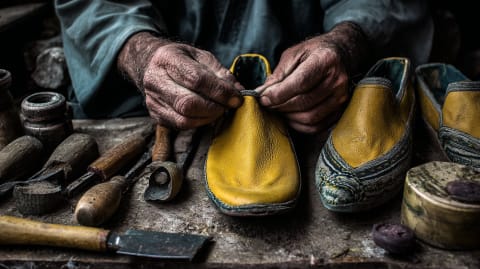
The foundouks are the secret. A foundouk is a medieval caravanserai — a courtyard building where travelling merchants stored their goods on the ground floor and slept on the upper floor. Fes has dozens. Most are now artisan workshops. The doors are open. You walk in and find a man carving cedarwood, or a woman embroidering silk, or a metalworker hammering brass in a room that has not changed since the Marinid dynasty. Nobody will stop you from watching. Nobody will charge you for looking.
The zawiyas — the shrines of the Sufi saints — are scattered through the medina. Non-Muslims cannot enter, but the decorated doorways and the sound of chanting from inside are part of the texture of the city. Fes is the spiritual capital of Morocco. The faith is not performed for visitors. It is the air the city breathes.
The mellah — the Jewish quarter — is in Fes el-Jdid. The Habarim Cemetery overlooks the medina from the hillside. The white tombs, packed tightly together, face Jerusalem. The synagogues are mostly closed, but the Ibn Danan Synagogue has been restored and is open to visitors. The Jewish community that once numbered tens of thousands is now a handful of families. The architecture remains.
What Fes requires
Time. Fes does not yield to a day trip. Two full days inside the medina is the minimum — one to be overwhelmed, one to begin understanding. Three days is better. The city reveals itself in layers: the first day you see the souks and the monuments, the second day you notice the fountain on the corner and the light in the alley and the sound of the coppersmith three streets away, and the third day you stop following the map and start following the sounds.
A guide is useful for the first day — not because you cannot navigate alone, but because a good Fassi guide will open foundouk doors, explain the guild system, and tell you which stucco was carved in the 14th century and which was carved last year. After the first day, go alone. The medina will teach you itself.
Fes is not Marrakech. There is no Jemaa el-Fna. There is no spectacle, no performance, no effort to impress. The city has been functioning since 809 and it will function after you leave. Your presence does not change it. That is either the problem or the point, depending on what kind of traveller you are.
Sources
- Le Tourneau, Roger. Fès avant le protectorat. IHEM, 1949
- UNESCO World Heritage. Medina of Fez, nomination file, 1981
- Parker, Richard. A Practical Guide to Islamic Monuments in Morocco. Baraka Press, 1981
Practical questions