On the first day of Ramadan, a woman in Fes refused to eat. She also refused to drink from any water source other than the one she had dug at the construction site. The construction site was hers. The fortune funding it was hers — inherited from her father, a merchant who had migrated from Qayrawan in Tunisia. The plan was hers too. She had walked into the governor's office and announced she was building a mosque. Not a small one. The largest in North Africa. The governor said yes. He was wise enough to recognise that a woman with a fortune and a plan is not asking permission. She is informing you.
Her name was Fatima al-Fihri. The year was 859 CE.
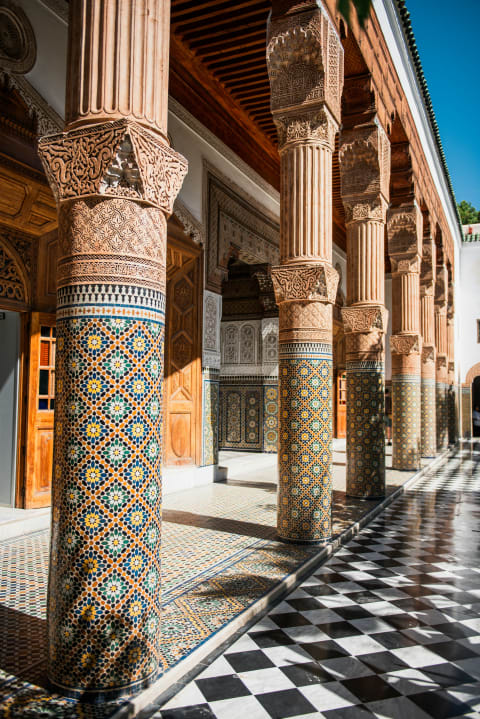
The mosque she built was named al-Qarawiyyin, for her hometown, and it started as a place of worship. What it became is the reason you have heard of it. Students arrived from across the Islamic world and stayed. The curriculum expanded from theology to grammar, rhetoric, logic, medicine, mathematics, astronomy, chemistry, history, and geography. A library was added — by the 10th century one of the most significant in the world, holding manuscripts from Baghdad, Córdoba, and Damascus. Somewhere in the slow accretion of students, teachers, courtyards, and books, al-Qarawiyyin became the first university. UNESCO and Guinness both recognise it as the oldest continuously operating degree-granting university in the world. Bologna, founded in 1088, is 229 years younger. Oxford is younger still.
Maimonides studied there. So did al-Idrisi, who drew the most accurate world map of the medieval period. Pope Sylvester II — the man who introduced Arabic numerals to Europe — is said to have studied there, though the evidence is debated with the enthusiasm that academics reserve for claims they cannot definitively prove or disprove.
The distinction matters because it reframes a narrative. The institution that most shaped Western civilisation — the university itself — was invented in Morocco, by a woman, with her own money, in a century that most Western histories file under dark age. The fast was kept. The mosque was finished. The library, restored in 2016 after years of meticulous conservation, holds manuscripts that predate the building. Students still study in the courtyards. Fatima's name is on the founding inscription. Twelve centuries later, it has not been removed. It has not needed to be.
Fatima's courtyard is still there. The fountain still runs. Three days in Fes to stand where the world's first university began.
Tell us about your trip →The Facts
- —Walked into the governor's office with her father's fortune
- —Fasted every day of construction, beginning first of Ramadan
- —Drank only from the water source dug at the site
- —Mosque named for Qayrawan, her father's hometown in Tunisia
- —Library predates the rest of the building
- —Maimonides among the students
- —Al-Idrisi drew his world map after studying here
- —Pope Sylvester II credited with bringing Arabic numerals to Europe — and possibly with studying here
- —UNESCO and Guinness recognise it as the oldest continuously operating university
- —Bologna is 229 years younger
- —Founding inscription still bears her name
Sources
- Lulat, Y.G.-M. A History of African Higher Education from Antiquity to the Present. Praeger, 2005
- Dodge, Bayard. Muslim Education in Medieval Times. Middle East Institute, 1962
- UNESCO World Heritage. Medina of Fez, nomination file, 1981
Practical questions