The taifa kings sent the message in 1086. Alfonso VI of Castile was conquering the Muslim kingdoms of Spain one by one, and the divided princes of al-Andalus needed help they could not provide themselves. The help was across the strait, wearing veils and riding camels.
Yusuf ibn Tashfin crossed with an army of Saharan Berbers — men who had never seen snow, entering a European war. At the Battle of Sagrajas on October 23, 1086, he destroyed Alfonso's army so completely that the Christian advance stopped for a generation. The Sahara, it turned out, produced soldiers that Castile could not handle. This was not in Castile's plans.
Then Yusuf looked at the taifa kings who had invited him and decided they were part of the problem. Within a decade, he had absorbed their kingdoms into his own empire. The Almoravid state now stretched from Senegal to Zaragoza — the largest empire in the western Islamic world, built by nomads from the desert who had been asked to help and decided to stay.
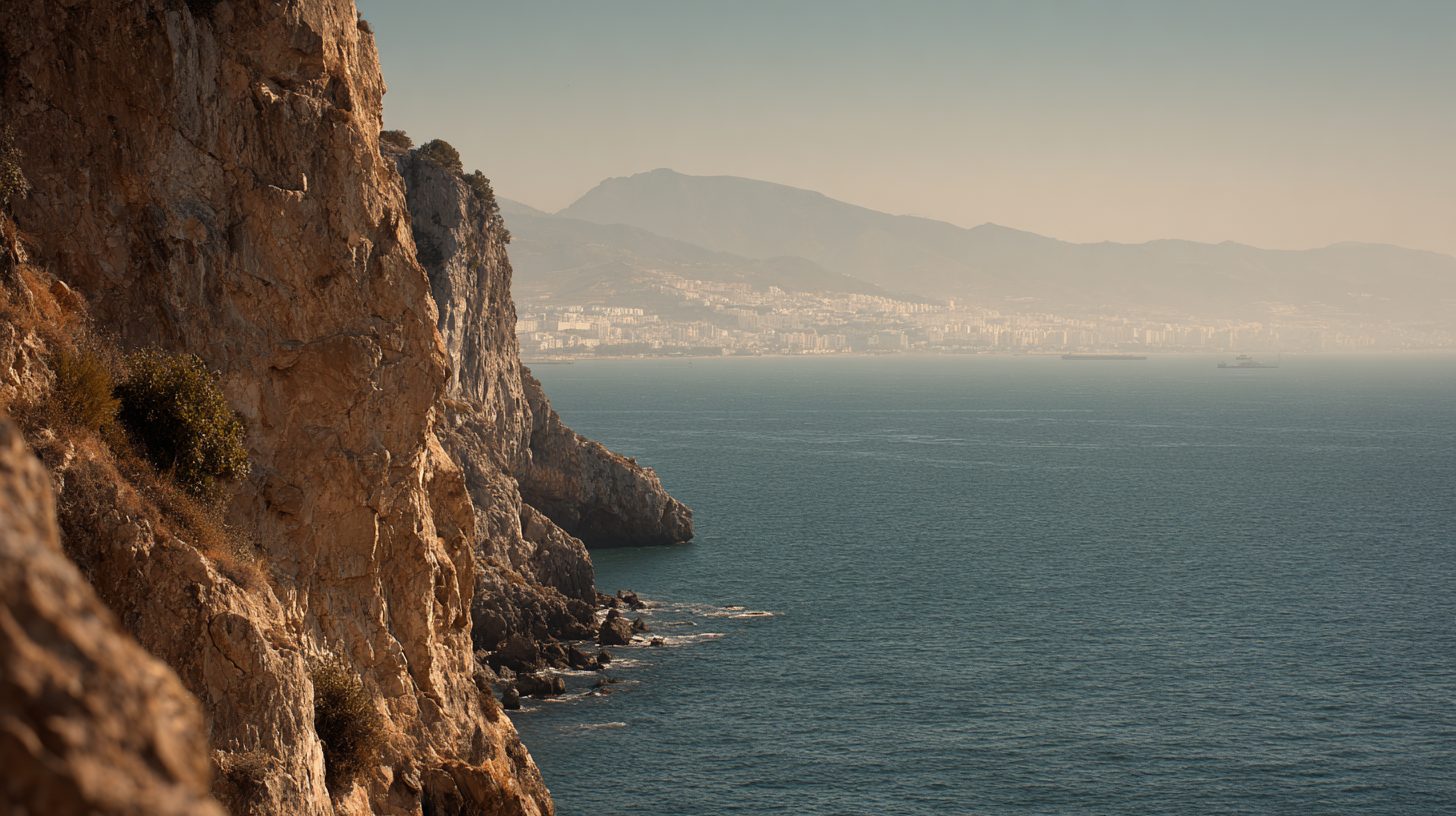
The Almohads did the same thing fifty years later, but bigger. Under Abd al-Mu'min, they conquered Morocco and crossed the strait to take all of Muslim Spain. Their capital alternated between Marrakech and Seville. The Giralda and the Koutoubia were built by the same architect, in the same decade, as twin symbols of a single empire that treated 14 kilometres of water as a commute rather than a border.
For the people living in this empire, that is exactly what it was. Scholars moved between Fes and Córdoba. Merchants shipped Moroccan leather to Barcelona and Spanish silk to Marrakech. The architecture was the same on both sides. The language was mutually intelligible. The strait was a bridge, not a barrier.
The Reconquista closed the crossing. By 1492, Muslim Spain was finished. The traffic reversed — refugees flowing south instead of armies flowing north. But the architecture, the music, the food, the memory of an empire that treated two continents as one country — these did not need a bridge. They had already crossed.
The Almoravids built Marrakech. The Almohads built Rabat. The empire that crossed the strait left its signature in every imperial city.
Tell us about your trip →The Facts
- —Battle of Sagrajas 1086 — Yusuf ibn Tashfin destroyed Alfonso VI's army
- —Almoravid Empire: Senegal to Zaragoza
- —Almohad Empire: largest in western Islamic world
- —Giralda (Seville) and Koutoubia (Marrakech) built by same architect
- —Capital alternated between Marrakech and Seville
- —Battle of Las Navas de Tolosa 1212 — empire fractured
- —Only Granada remained Muslim in Spain after 1250
- —Spanish flamenco carries North African rhythms
- —Seville's orange trees planted by Almohads
Sources
- Kennedy, Hugh. Muslim Spain and Portugal. Longman, 1996
- Abun-Nasr, Jamil. A History of the Maghrib in the Islamic Period. Cambridge University Press, 1987
- Terrasse, Henri. Histoire du Maroc. Atlantides, 1949
Practical questions