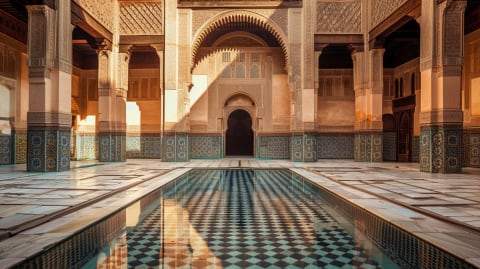
Morocco has played ancient Rome twice in a quarter century, and both times it won the Oscar. This is a career that most countries would envy and that Morocco treats with the pragmatism of a professional actor: show up, hit the mark, collect the cheque, move on to the next role.
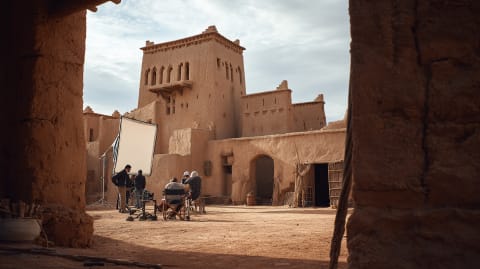
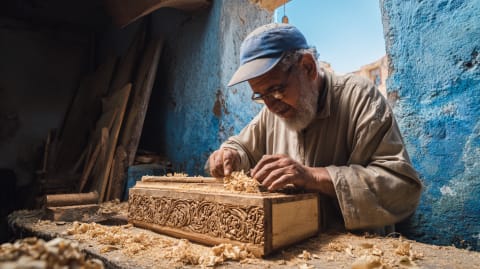
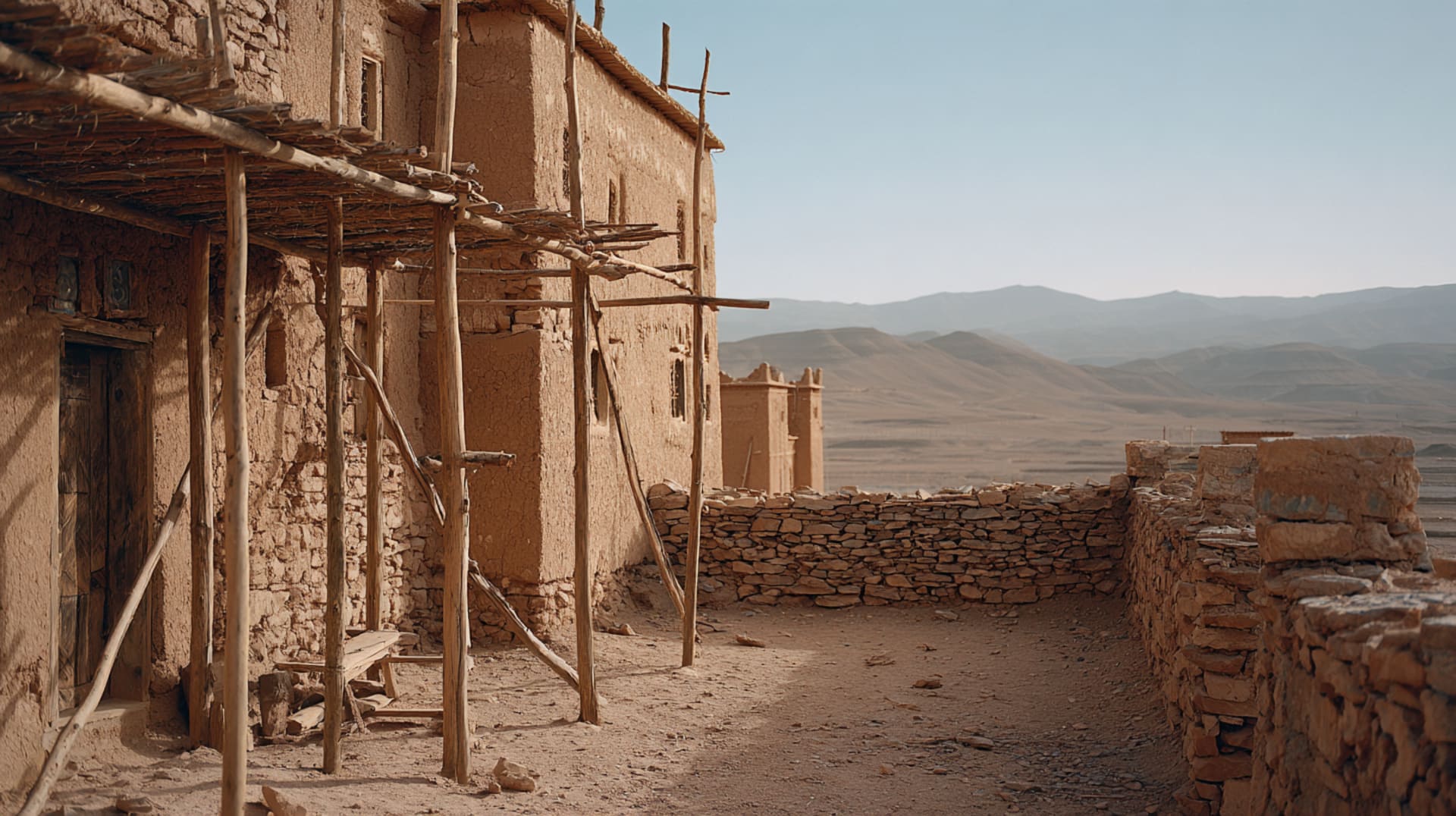
Ridley Scott filmed the original Gladiator at Atlas Studios in Ouarzazate in 1999. The gladiator school. The provincial arena. The amphitheatre was built with 30,000 adobe bricks made by local craftsmen using the same techniques as the kasbahs around them. Twenty-four years later, Scott returned for Gladiator II, extending the Kingdom of Heaven set to create the coastal city of Numidia. Different century, same desert, same light, same artisans who know how to build a Roman city out of the same earth their grandfathers used to build Moroccan ones.
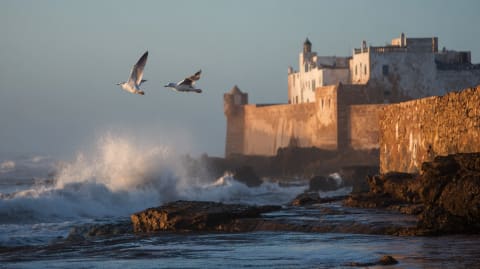
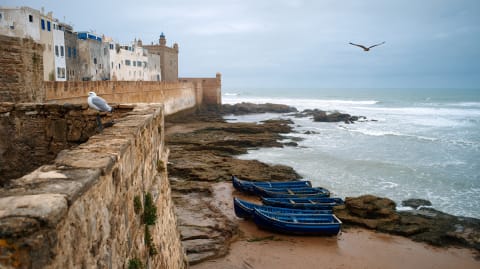
Between the two Gladiators, Morocco played a continent's worth of fictional cities. Game of Thrones filmed across three locations: Aït Benhaddou became Yunkai, where Daenerys liberates the slaves. Essaouira's ramparts became Astapor. Atlas Studios became Pentos. The ksar that UNESCO lists as heritage played a slave city for HBO, which is typecasting of a kind.
The list continues: Lawrence of Arabia. The Mummy. Babel. The Bourne Ultimatum. Inception. John Wick 3. Spectre. Each production brings hundreds of jobs, millions of dirhams, and the spectacle of Moroccan landscapes pretending to be somewhere else for an audience that does not know the difference and does not need to. Ouarzazate — a town of 80,000 in one of Morocco's poorest regions — has become a global film hub through the simple advantage of having the right light, the right landscape, and a workforce that can build a Roman forum in three weeks.
Atlas Studios covers 30 hectares. The sets accumulate — ancient Egypt beside biblical Jerusalem beside a Tibetan monastery beside a Martian landscape. They crumble between productions, returning slowly to the desert, which is patient and does not distinguish between a real ruin and a fake one. The sand treats them equally.
Morocco's advantage is geological: clear skies 300 days a year, diverse landscapes within a few hours' drive, and construction costs that Hollywood considers miraculous. The human advantage is just as important — a film industry infrastructure that includes crews, fixers, extras, and artisans who have been building imaginary cities for so long that the skill is now hereditary. The stand-in has become a professional. The professional is still available. The light, as always, is perfect.
Morocco has played ancient Rome, biblical Jerusalem, and fictional Westeros. Seven days visits the sets that are still standing.
Tell us about your trip →The Facts
- —Atlas Studios, Ouarzazate: largest film studio in Africa
- —Gladiator (1999): gladiator school built with 30,000 adobe bricks
- —Local craftsmen used same techniques as kasbah builders
- —Gladiator II (2024): same studios, extended Kingdom of Heaven set
- —Game of Thrones: 3 Moroccan locations
- —Ait Benhaddou: UNESCO-listed ksar
- —Morocco has played ancient Rome twice — both won Oscars
Sources
- Shafik, Viola. Arab Cinema: History and Cultural Identity. American University in Cairo Press, 1998
- Hillauer, Rebecca. Encyclopedia of Arab Women Filmmakers. American University in Cairo Press, 2005
- Carter, Sandra Gayle. What Moroccan Cinema? A Historical and Critical Study 1956–2006. Lexington Books, 2009
- Dwyer, Kevin. Beyond Casablanca: M.A. Tazi and the Adventure of Moroccan Cinema. Indiana University Press, 2004.
Further Reading
Practical questions