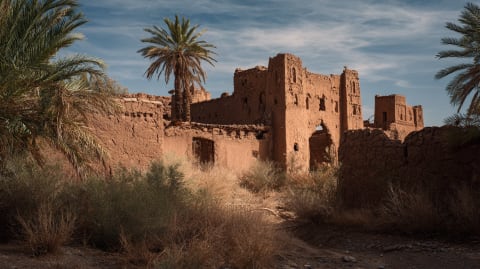
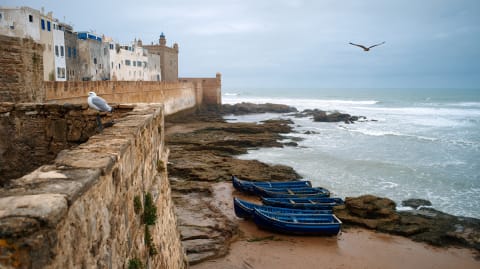
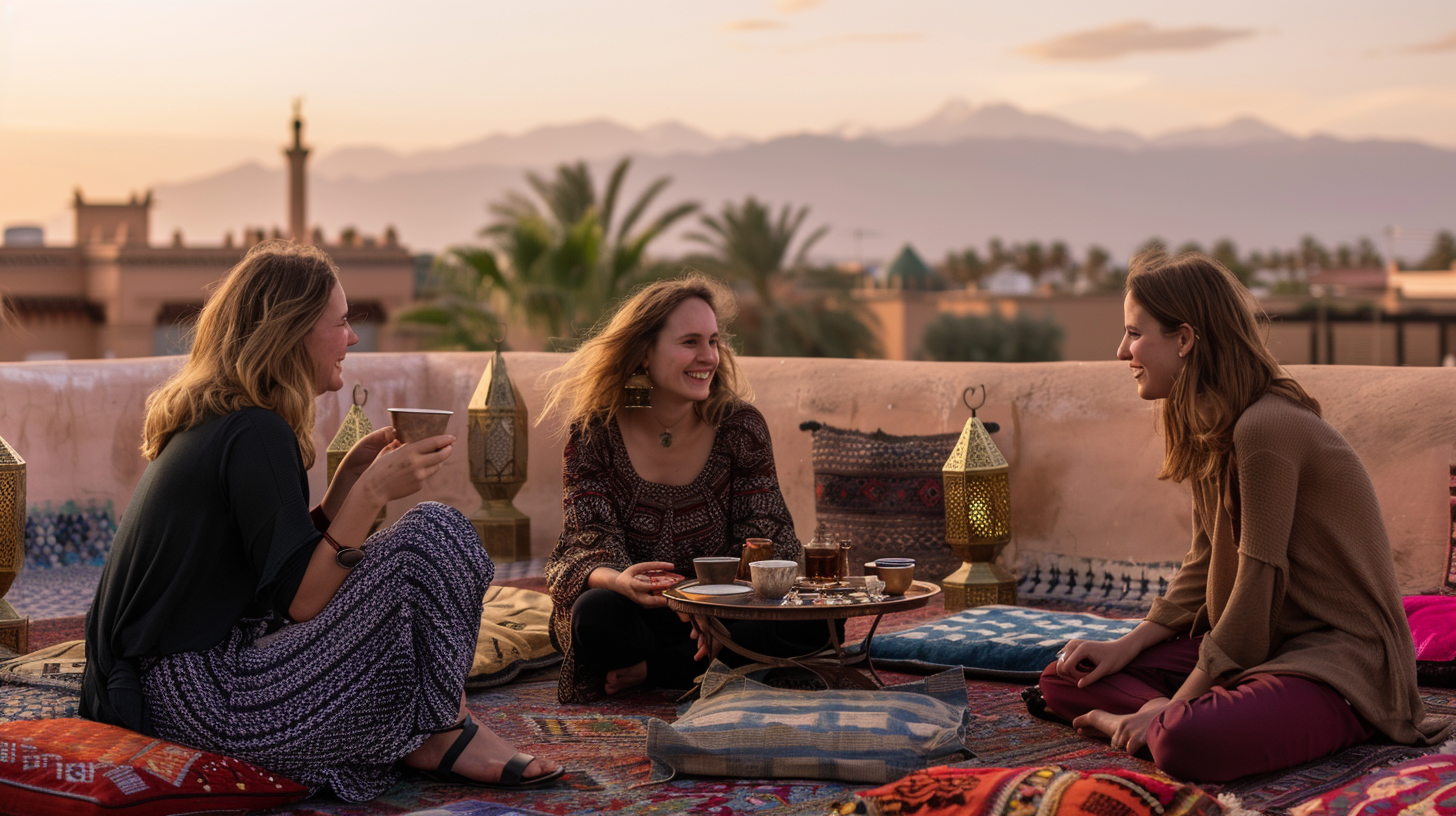
In the Gnawa ceremonies of Essaouira, musicians enter a trance state called jedba. The bass notes of the guembri drive the rhythm. Dancers wear coloured cloths: black for Sidi Mimoun, blue for Sidi Moussa, white for Lalla Mira. Each colour summons a different spirit.
In the Vodou ceremonies of Haiti, participants enter a trance state called possession. Three consecrated drums drive the rhythm. Practitioners wear coloured scarves: white for Damballa, blue for Agwé, red and black for Petro spirits. Each colour invokes a different lwa.
The parallels are not coincidental. They are the echo of a shared origin, separated by an ocean and four centuries of silence.
The Gnawa trace their ancestry to sub-Saharan Africans brought to Morocco as slaves, beginning in the 16th century and intensifying after Ahmad al-Mansur's conquest of Timbuktu in 1591. They came from the Sahel — the Hausa and Bambara peoples — and they brought their spiritual practices with them. The practices changed. The core survived.
The Haitian Vodou tradition traces to the same region — the Fon and Ewe peoples of Dahomey, the Yoruba of Nigeria. When the Atlantic slave trade carried them to Saint-Domingue, they brought their spirits with them. The practices changed. The core survived.
Both traditions fused West African beliefs with the religion of their captors — Islam in Morocco, Catholicism in Haiti. Both use music to induce trance. Both organise spirits by colour. Both believe that the spirits demand recognition and that ignoring them causes illness. Both use sacrifice, dance, and all-night ceremonies to negotiate between the human and the invisible. The vocabulary differs. The grammar is the same.
The trans-Saharan slave trade and the Atlantic slave trade dispersed the same spiritual traditions in two directions — north across the desert and west across the ocean. What arrived in Essaouira and what arrived in Port-au-Prince left from the same place and carried the same understanding: that the spirits cross with the people, and the people do not cross alone. The ocean is wider than the desert. The music, on both sides, sounds like it remembers this.
Gnawa, jazz, blues, gospel — same root, different branches. The road traces where the music split and where it reunites.
Tell us about your trip →The Facts
- —Gnawa trace to sub-Saharan slaves from 16th century
- —Timbuktu conquest 1591 intensified slave trade
- —Spirits called mlouks in Morocco, lwa in Haiti
- —Same colors invoke corresponding spirits
- —Pentatonic scales shared
- —Gnawa Festival in Essaouira annually
- —Both traditions fused African beliefs with captors' religion
Sources
- Kapchan, Deborah. Traveling Spirit Masters: Moroccan Gnawa Trance and Music in the Global Marketplace. Wesleyan University Press, 2007
- Schuyler, Philip D. "A Folk Revival in Morocco." In Everyday Life in the Muslim Middle East, eds. Donna Lee Bowen and Evelyn A. Early. Indiana University Press, 1993
- Davila, Carl. The Andalusian Music of Morocco. Wesleyan University Press, 2013.