Nineteen gates pierce the walls of Marrakech. Each one had a specific purpose. Military, commercial, ceremonial, or secret. Some led to the souks. Some led to the cemeteries. Some were designed so that an invading army would have to make three right turns in total darkness before reaching the city inside.
The walls themselves are made of something most architects would dismiss as temporary. They have lasted nine centuries. The story of the gates is also the story of that material, and why it outlasted the empire that built it.
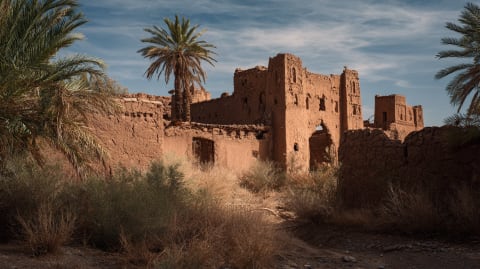
Bab Agnaou is the only stone gate in Marrakech. Everything else — every other gate, every metre of the twelve kilometres of ramparts — is rammed earth. Pisé. Mud and straw pounded between wooden forms, layer by layer, until the wall stands ten metres high and two metres thick. The Almohads built them in the 12th century under Yaqub al-Mansur. Nine centuries later, they are still standing, which is more than can be said for most things built in the 12th century, including the Almohads themselves.
Bab Agnaou is decorated with Kufic calligraphy and a palmette frieze. The name may come from the Amazigh word agnaw — deaf, or mute — meaning impenetrable. It is eight minutes on foot from Riad di Siena, a fact that has made it the most familiar gate in Marrakech for anyone who has stayed with us long enough to develop opinions about gates.
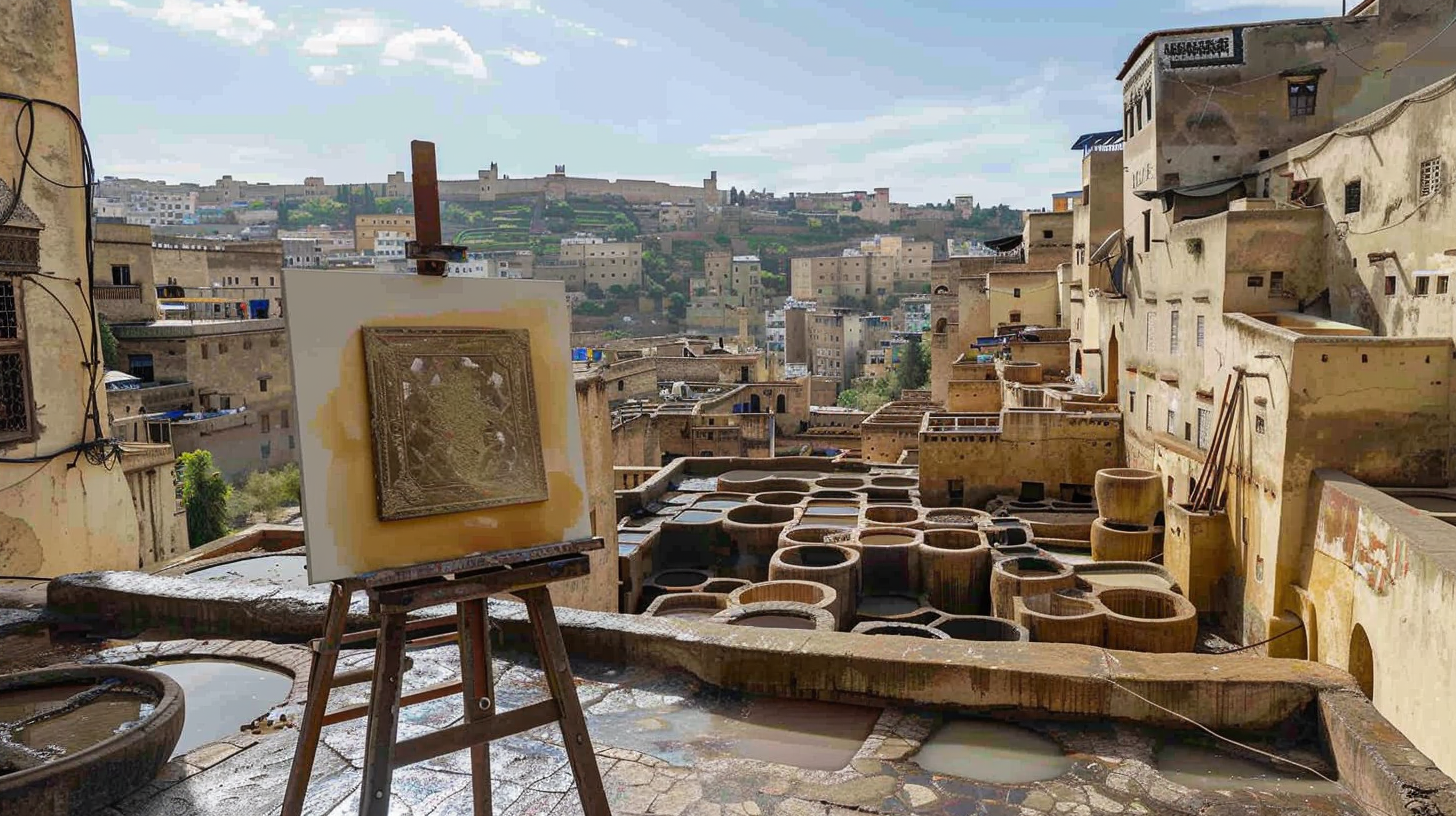
Marrakech has nineteen historic gates. Some are Almohad originals — Bab Agnaou, Bab er-Robb, Bab Doukkala, Bab el-Khemis. Others are later additions or reconstructions. Bab Debbagh leads to the tanneries; the name means "gate of the tanners," and your nose will confirm this before your eyes do. Bab Aylen opens toward the eastern cemeteries. Bab Ighli faces the Agdal gardens. Each gate names its neighbourhood, its trade, or its direction. The gates are not decoration. They are the city's filing system.
The logic is military. Almohad gates use a bent entrance — a sharp turn inside the passage that forces attackers to slow down and prevents a direct cavalry charge. You enter, you turn ninety degrees, you enter again. A defender behind the second door has time to react, draw a sword, call for help, or simply wait for the attacker to lose momentum on the turn. It is a very effective piece of architecture. It is also why tourists carrying suitcases curse under their breath at 11pm.
The French, when they built Bab Bou Jeloud in Fes in 1913, abandoned this principle entirely. They made a straight triple-arched entrance, wide enough to march through. The locks face outward. The gate was not built to keep enemies out. It was built to control the people inside. The architecture tells you everything about the relationship if you know how to read it.
Fes has fewer gates than Marrakech but they are older and more layered. The walls of Fes el-Bali were rebuilt by the Almohads in 1204 after they demolished the earlier Almoravid fortifications. The gates reflect the city's split personality: Fes el-Bali and Fes el-Jdid, the old city and the new city, each with its own circuit of walls, its own gates, and its own conviction that it is the real Fes.
At sunset, the ramparts of both cities glow — the pisé turns the same warm terracotta as the sky behind it. For a few minutes the walls and the light are the same colour, and the city looks as though it is dissolving into the evening. Then the floodlights come on, and the 21st century reasserts itself, and the gates that were built to close at nightfall stand permanently open, which is either progress or loss depending on how you feel about the century you live in.
Bab Agnaou is eight minutes on foot from Riad di Siena. Nineteen gates. Twelve kilometres of ramparts. Three days to walk the circuit.
Tell us about your trip →The Facts
- —Bab Agnaou: only stone gate in Marrakech
- —Everything else is rammed earth (pisé)
- —12km of ramparts built by Almohads under Yaqub al-Mansur, 12th century
- —Walls: 10m high, 2m thick, still standing after 9 centuries
- —Bab Agnaou: Kufic calligraphy + palmette frieze
- —"Agnaw" may mean deaf/mute (impenetrable) in Amazigh
- —8 minutes on foot from Riad di Siena
- —19 historic gates in Marrakech
- —Bab Debbagh leads to tanneries
Sources
- Deverdun, Gaston. Marrakech: Des origines à 1912. Éditions Techniques Nord-Africaines, 1959
- Le Tourneau, Roger. Fès avant le protectorat. Société Marocaine de Librairie et d'Édition, 1949
- Parker, Richard. A Practical Guide to Islamic Monuments in Morocco. Baraka Press, 1981
- UNESCO. Medina of Fez — Outstanding Universal Value. World Heritage List, 1981.
Practical questions