The Almohads did not build the Menara Gardens for beauty. They built them for water.
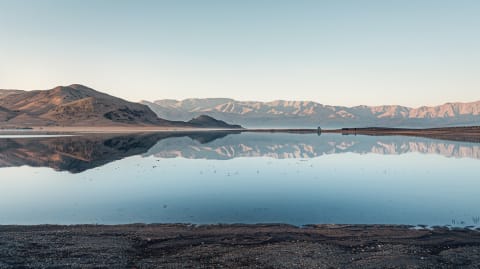
The basin at the centre — 200 metres long, 150 metres wide — was an artificial reservoir, dug in the 12th century to collect snowmelt from the Atlas Mountains delivered through an underground khettara system. It irrigated the orchards that surrounded it: olive trees, palms, fruit trees planted in rows that extended across what was then agricultural land on the western edge of Marrakech.
The pavilion that everyone photographs — the green-roofed structure reflected in the water with the Atlas peaks behind it — was built much later, in the 19th century, by Sultan Abd er-Rahman. The image is now one of the most reproduced in Moroccan tourism. It appears on postcards, posters, and airline advertisements. It is the image most people carry in their heads before they arrive.
What the image does not tell you is that the basin is not decorative. It is infrastructure. The Almohads understood that a city on the edge of the desert survives on its ability to store water. The Menara basin, the Agdal basin to the south, and the network of khettaras beneath the city together formed a hydraulic system that kept Marrakech alive for eight hundred years.
Today the gardens are public. Families come on Fridays. Couples sit along the edge of the basin at sunset. The olive trees — some of them centuries old — still stand. The Atlas Mountains still frame the view. The water is calm.
The basin still works.
The Facts
- —The basin at the centre — 200 metres long, 150 metres wide — was an artificial reservoir, dug in the 12th century to collect
- —The pavilion that everyone photographs — the green-roofed structure reflected in the water with the Atlas peaks behind it — was
Sources
- Wilbaux, Quentin. La médina de Marrakech: formation des espaces urbains. L'Harmattan, 2001
- Deverdun, Gaston. Marrakech: des origines à 1912. Éditions Techniques Nord-Africaines, 1959
- Parker, Richard. A Practical Guide to Islamic Monuments in Morocco. Baraka Press, 1981
Practical questions