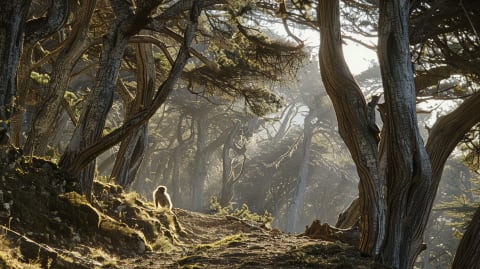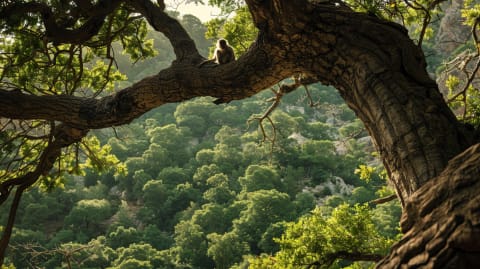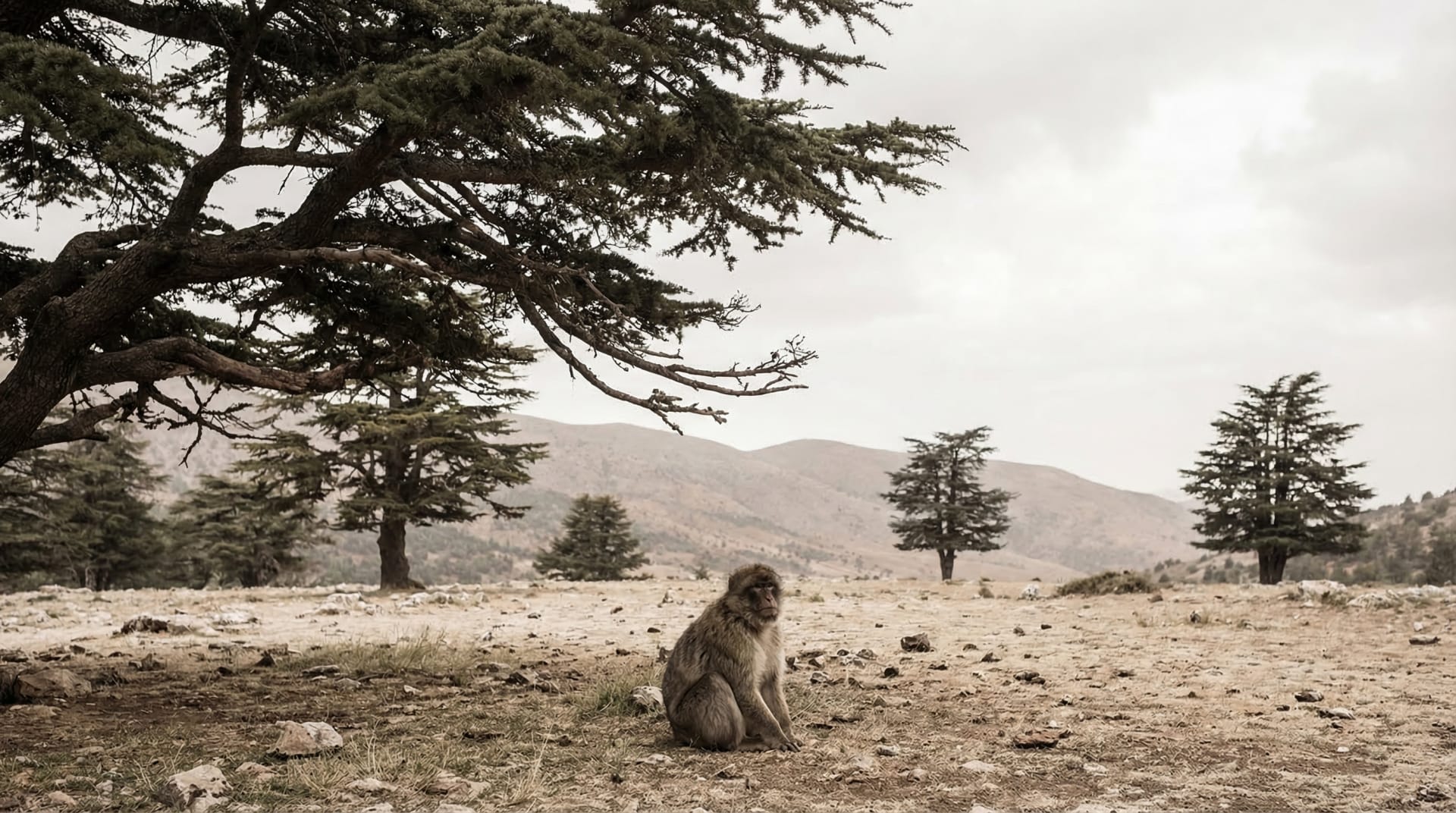
The cedar forest south of Azrou is one of the last places in the world where Barbary macaques live wild among trees older than the dynasties that ruled Morocco.
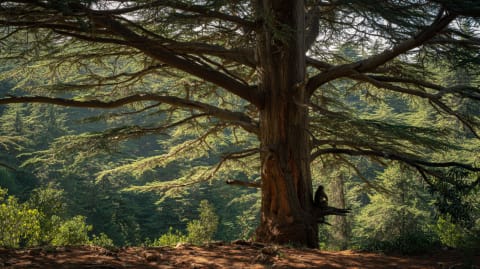
The Middle Atlas cedar forests — Cèdre de l'Atlas, Cedrus atlantica — stretch across the highlands between Azrou and Ifrane, covering slopes that rise to 2,000 metres. Some of the individual trees are 800 years old, with trunks wide enough that three people cannot link arms around them. The forest is not dense in the European sense — the trees are spaced apart, with clearings and meadows between them, and in winter the ground is covered in snow.
The macaques are the draw. Barbary macaques are the only primates native to Africa that live north of the Sahara, and the only macaque species found outside Asia. Their range once covered all of North Africa. Today, fragmented populations survive in Morocco and Algeria, with a small introduced colony on Gibraltar. The IUCN lists them as endangered. The Middle Atlas population is the largest remaining.
The monkeys in the Azrou forest are habituated to humans. They approach cars. They accept food from tourists, which biologists discourage because it changes their foraging behaviour and nutritional intake. The babies cling to their mothers and stare with the unblinking focus of primates evaluating whether you are a threat or a source of peanuts.
The forest itself is under pressure. Logging — legal and illegal — has reduced the canopy. Climate change is shifting the rainfall patterns the cedars depend on. Overgrazing by livestock strips the undergrowth. The Moroccan government has designated parts of the forest as protected, but enforcement is uneven.
Azrou is a small Amazigh town at the edge of the forest. The name means "the rock" in Tamazight. There is a large rock in the centre of town. The town does not pretend to be more than it is.
The Facts
- —The Middle Atlas cedar forests — Cèdre de l'Atlas, Cedrus atlantica — stretch across the highlands between Azrou and Ifrane,
- —Some of the individual trees are 800 years old, with trunks wide enough that three people cannot link arms around them.
Sources
- van Lavieren, Els. "The Barbary Macaque: A Case Study for Conservation." Primate Conservation
- Moroccan Haut-Commissariat aux Eaux et Forêts. Cedar forest and primate surveys
- IUCN Red List. Macaca sylvanus assessment
Practical questions