The dye doesn't stain — it inhabits. Indigo bonds with fibre at the molecular level, becoming part of the cloth rather than sitting on its surface. Wash it a hundred times and the blue remains, deepening with age, becoming more itself. It is the most committed colour in nature.
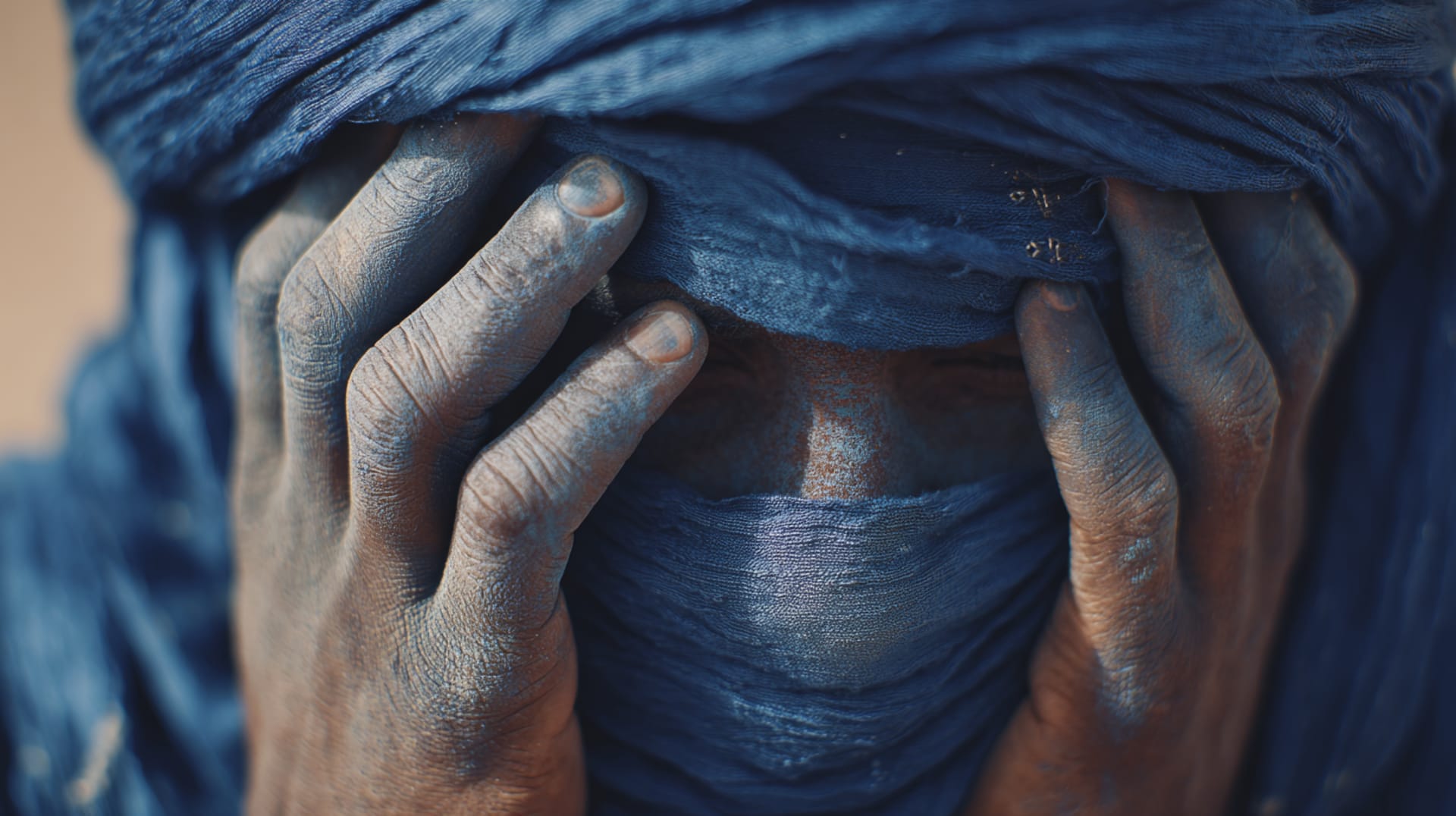
The Tuareg understood this better than anyone. They called themselves the Blue People — not because they wore indigo, but because the colour had entered their skin. The heavily dyed cotton of their robes, beaten with wooden mallets to seal the dye, transferred indigo to flesh through years of wear. Their faces, hands, and necks took on a permanent blue-grey cast. The dye had become them. Most people put on clothes. The Tuareg were absorbed by theirs.
This wasn't accident. It was intention. In the Sahara, where the sun blinds and the wind strips skin, indigo served as protection. The dense cloth blocked ultraviolet rays. The dye itself — derived from the indigofera plant through a fermentation process involving urine, ash, and a patience that modern chemistry does not require — contained antibacterial properties. The colour that marked the Tuareg as a people apart also kept them alive. Fashion and function were the same garment.
But indigo carried meaning beyond the practical. Blue was the colour of the void — infinite sky, endless desert, the space between stars. To wear indigo was to wrap yourself in infinity. The deeper the blue, the more desert you had crossed, the more you had proven that a human being can survive where survival is not expected. The colour was a credential.
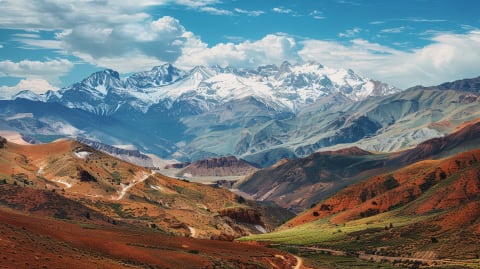
The trail of indigo through Morocco follows the old caravan routes. The plant grew in sub-Saharan Africa. The dye was processed in cities along the trade corridors — Timbuktu, Kano, and the oases of the Sahara. It arrived in Morocco through Sijilmassa and the Draa Valley, where it entered the souks and the wardrobes of a country that knew exactly what blue was worth.
In the medina of Fes, the dyers' quarter still operates — though the vats have shrunk and the methods have changed. Synthetic indigo, developed in Germany in 1897, replaced the plant extract almost entirely. The chemistry is identical. The romance is not. But in the Sahara, some Tuareg still wear the old cloth, beaten and sealed, the blue transferring to skin in the old way. They carry a tradition in their bodies that most people carry only in their wardrobes. The colour remembers, even when the wearer forgets. The indigo trail is still blue.
The indigo road runs from the Draa to the deep Sahara. We follow the dye route on our longest southern journeys.
Tell us about your trip →The Facts
- —Indigo bonds with fiber at the molecular level
- —Tuareg called "Blue People" — dye entered their skin
- —Cotton robes beaten with wooden mallets to seal color
- —Indigo served as sun/sand protection in Sahara
- —Dye produced from Indigofera tinctoria plant
- —Pounding (not boiling) saves water and stains skin
- —Tafraoute and southern Morocco — traditional indigo regions
Sources
- Balfour-Paul, Jenny. Indigo. British Museum Press, 1998
- Spring, Christopher. North African Textiles. British Museum Press, 1995
- Kriger, Colleen. Cloth in West African History. AltaMira Press, 2006
Further Reading
Practical questions