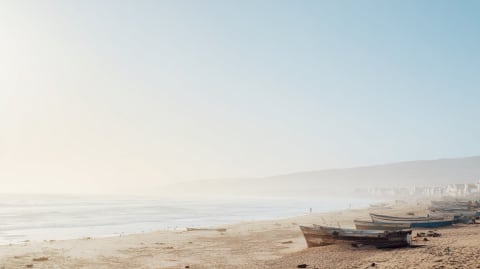
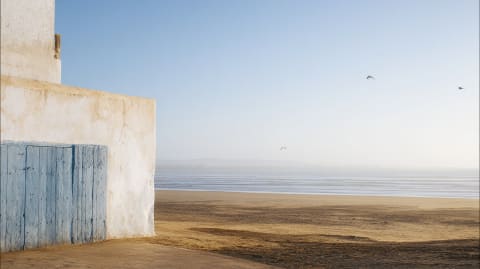
The geometry is perfect. Morocco faces west into the open Atlantic. North Atlantic storm systems generate swells that travel thousands of kilometres and arrive at the Moroccan coast with power and consistency that rivals Hawaii and Portugal. The continental shelf is narrow, which means the swells hit the coast with minimal energy loss.
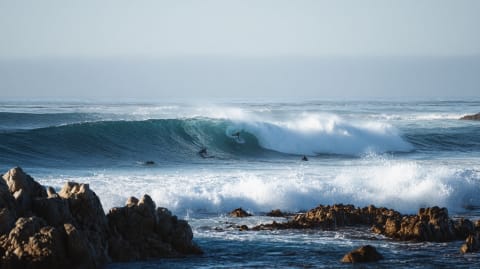
Taghazout is the centre. A fishing village 20 kilometres north of Agadir, it became a surf destination in the 1970s when European surfers discovered the point breaks along the coast. Anchor Point — a long, peeling right-hander that breaks over a rocky shelf — is the flagship. Killer Point, Boilers, Hash Point (renamed from the original) — each offers a different wave character within a few kilometres.
The season runs from September to April, with the biggest swells from November to February. Summer is flat on the southern coast but the northern coast around Mehdia and Kenitra can still produce waves. The water temperature ranges from 16°C in winter to 22°C in summer. A 3/2mm wetsuit covers most of the year.
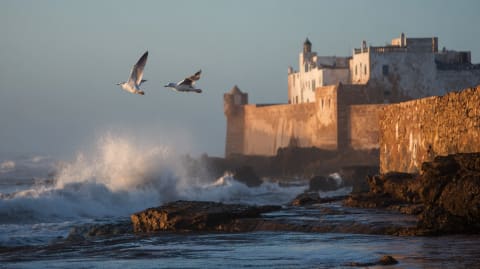
Essaouira is the wind capital. The alizé trade winds blow consistently from March to September, making it one of the world's top kitesurfing and windsurfing destinations. The surf is smaller and choppier than Taghazout, but the wind sports are world-class.
Dakhla, in the far south, is the emerging star. A peninsula jutting into a lagoon on the edge of the Sahara, it offers flat-water lagoon conditions for kite and foil alongside open ocean waves. The wind blows 300 days a year. The infrastructure is minimal but growing. International kite competitions have put Dakhla on the map.
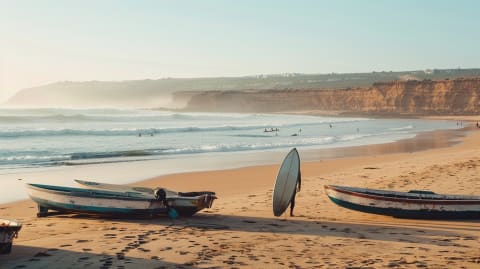
Sidi Kaouki, Imsouane, Mirleft — smaller towns along the coast each have their own character. Imsouane claims the longest wave in Morocco — a slow, forgiving bay break that peels for hundreds of metres. It is the beginner's paradise.
The surf coast runs from Taghazout to Imsouane. Seven days catches the Atlantic swell and the slow villages in between.
Tell us about your trip →Data and visualisation by Dancing with Lions
The Facts
- —Atlantic coast: 3,000+ km
- —Taghazout: Morocco's surf capital
- —Anchor Point: world-class right-hand point break
- —Imsouane: longest wave in Africa (800m+ rides)
- —Sidi Kaouki: windsurfing/kitesurfing
- —Best season: September-April
- —Water temperature: 16-22°C
- —Essaouira: consistent wind year-round
Sources
- Moroccan Ministry of Tourism. Surf tourism development reports
- World Surf League. Morocco competition records
- Moroccan National Tourist Office. Coastal activity data
Further Reading
Practical questions