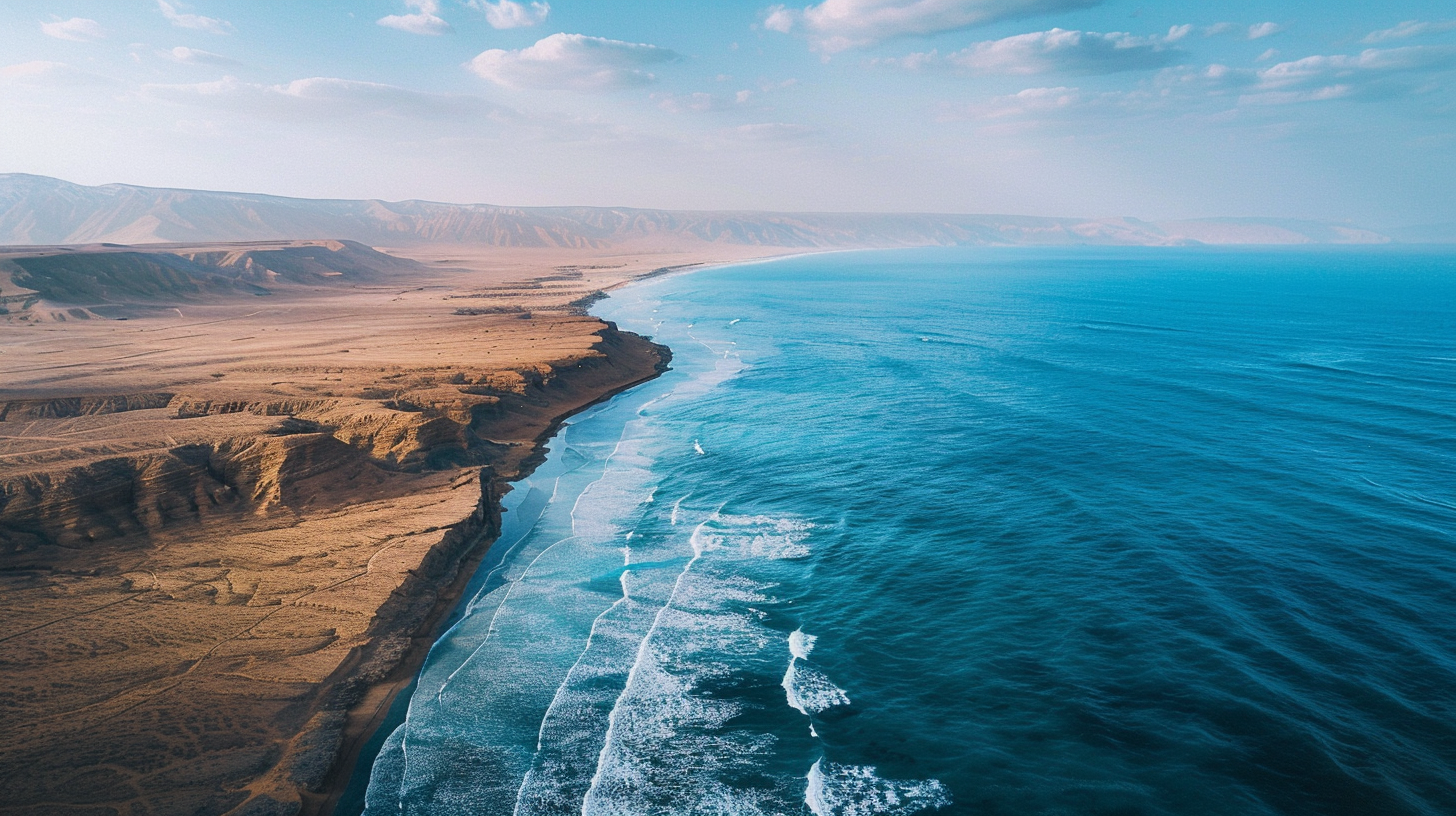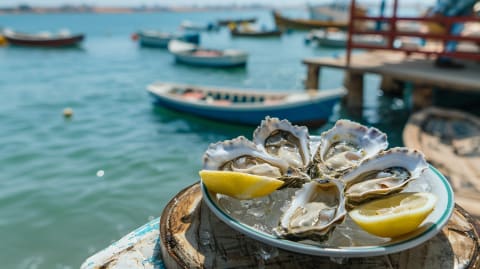
The coast begins at Cap Spartel, where the Mediterranean meets the Atlantic northwest of Tangier. The water changes colour at the junction — blue Mediterranean giving way to grey-green Atlantic. The temperature drops. The swells arrive. From here south, the coastline faces the open ocean, and the ocean faces back with the indifference of something that has been doing this since before the land settled on its current shape.
Rabat and Casablanca anchor the urban coast. Together they hold over 10 million people — nearly a quarter of Morocco's population concentrated on a strip of Atlantic frontage. Casablanca's port handles over 50% of the country's maritime trade. The Ain Diab corniche is the social centre of the economic capital. Rabat, the political capital, faces the ocean from the Kasbah des Oudayas bluffs with the composed dignity of a city that knows it is in charge but prefers not to make a fuss about it.
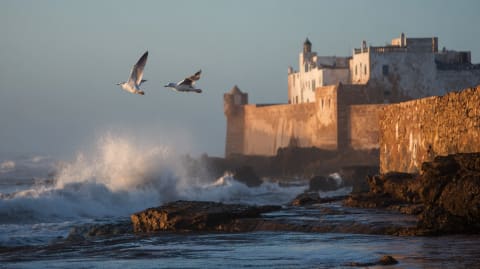
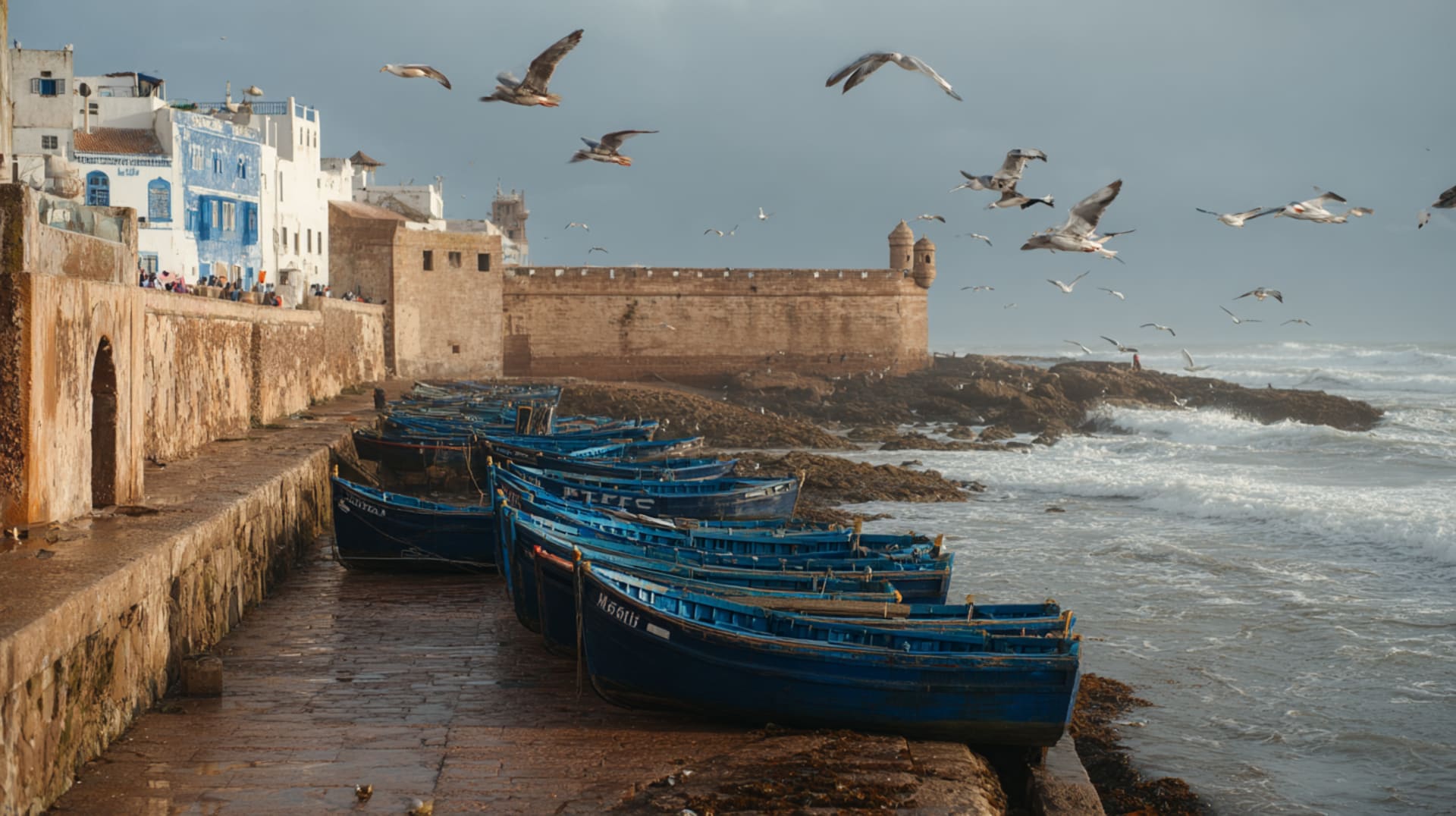
Essaouira is the wind city. Built by Sultan Mohammed III in the 18th century as a trading port, its fortified medina faces directly into the Atlantic trade winds. The alizé blows from the north-northeast for six months, making Essaouira one of the world's great wind sport destinations and one of the world's worst places to hold a napkin. The Portuguese-designed ramparts and French-planned medina are UNESCO-listed.
Between Essaouira and Agadir, the coast is rugged — cliffs, argan forests reaching to the shore, fishing villages accessible only by dirt track. Taghazout and the surf coast occupy this stretch, attracting surfers who discovered the waves in the 1970s and have been unable to leave since, a pattern that Morocco applies to most people who visit the coast for more than a weekend.
South of Agadir, the Souss-Massa coast flattens into long sandy beaches. The Souss-Massa National Park protects the Northern Bald Ibis — one of the rarest birds in the world, nesting on coastal cliffs with the improbable stubbornness of a species that has decided Morocco is home and extinction is not an option.
The Saharan coast beyond Tan-Tan is empty, beautiful, and contested. The Western Sahara shoreline is some of the richest fishing water in the Atlantic, its cold upwelling currents supporting sardine stocks that feed half of West Africa. The politics are unresolved. The fish do not care.
The Atlantic coast from Essaouira to Dakhla is a journey we build for people who need wind and space. Every stop faces west.
Tell us about your trip →Data and visualisation by Dancing with Lions
The Facts
- —Atlantic coast: 3,000+ km
- —Essaouira: trade wind capital
- —Casablanca: largest city, economic hub
- —Rabat-Salé: political capital
- —Agadir: rebuilt after 1960 earthquake
- —Oualidia: oyster lagoons
- —Dakhla: kitesurfing, desert meets ocean
- —Sardines: Morocco is world's largest exporter
Sources
- Thévenot, Michel et al. The Birds of Morocco. British Ornithologists' Union, 2003
- Moroccan Ministry of Equipment and Transport. Coastal management reports
- UNESCO Biosphere Reserve documentation
Further Reading
Practical questions