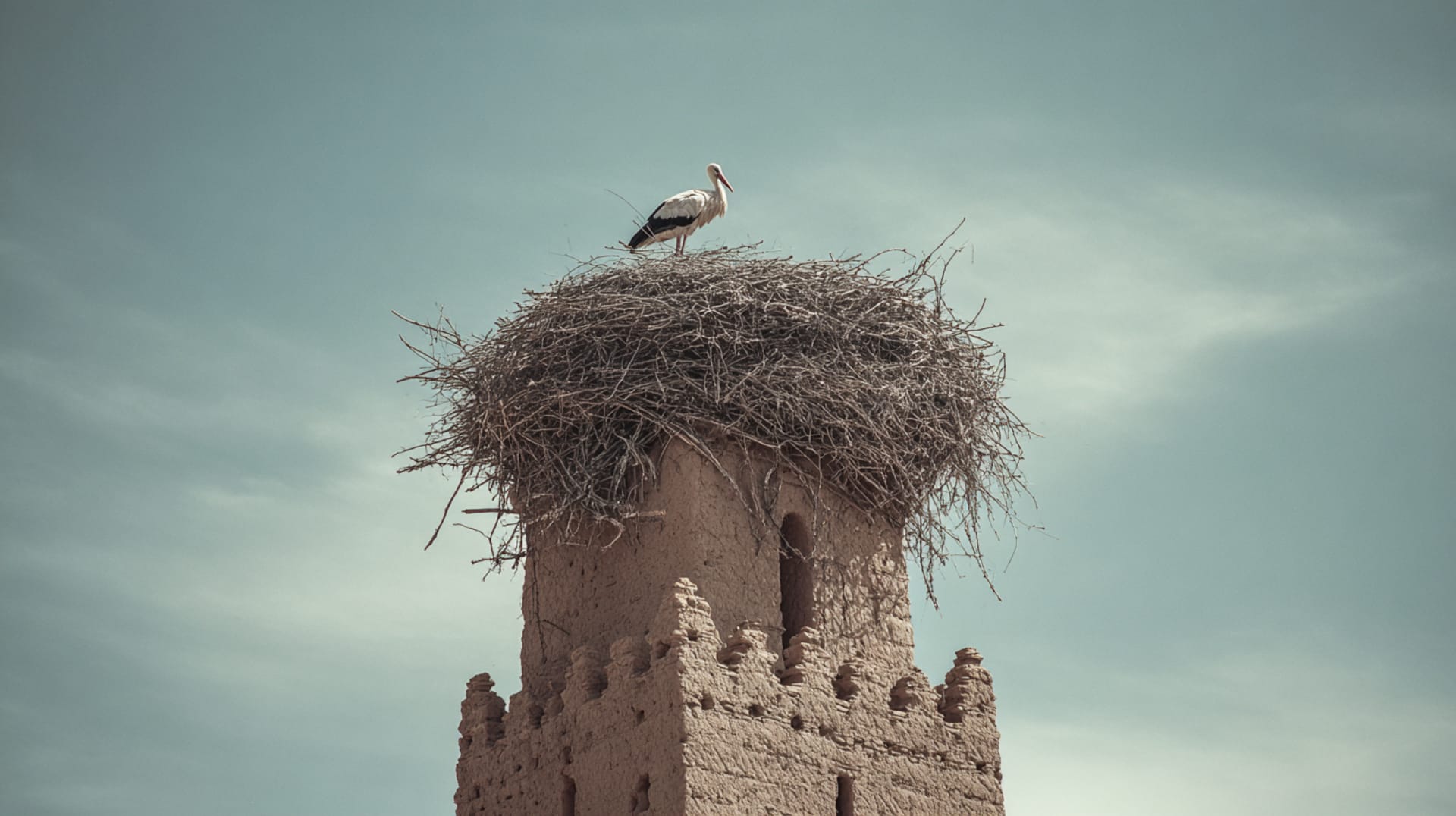
The white stork (Ciconia ciconia) is Morocco's most visible wild bird. Enormous nests — some over two metres wide and weighing hundreds of kilograms — sit on minarets, palace walls, ruined kasbahs, city gates, and electricity pylons across the country. The birds arrive from Europe in late February and depart in August, though a growing resident population stays year-round.
Morocco hosts one of the largest breeding populations of white storks in the world — an estimated 10,000 to 15,000 pairs. The birds favour the warm, insect-rich lowlands of the Haouz plain, the Gharb, and the Souss. Marrakech is a stork city — nests crown the ramparts, the Badi Palace ruins, and the royal granaries.
The stork is baraka — blessed. Islamic tradition holds that the stork makes a pilgrimage to Mecca, which grants it sacred status. Harming a stork or disturbing its nest is considered extremely bad luck. This cultural protection is more effective than any conservation law. The birds nest undisturbed on active mosques because the community would not permit their removal.
The nests are engineering. Built from sticks, reeds, and whatever material the birds can find (plastic bags, rope, wire are now common), they are added to year after year. A mature nest can weigh over 500 kilograms. Some nests on Moroccan monuments have been occupied continuously for decades. The structural load on historic buildings is a genuine conservation concern — the Chellah necropolis in Rabat has nests that challenge the integrity of the Marinid ruins.
The relationship between storks and humans is symbiotic. The birds eat insects, rodents, and small reptiles in agricultural fields — natural pest control. The farmers tolerate the nests on their buildings. The mosques tolerate the nests on their minarets. The tourists photograph them. The storks, for their part, appear entirely indifferent to all of it.
We time our spring journeys through the Haouz Plain to catch the storks rebuilding. The minarets are never more alive than in March.
Tell us about your trip →Data and visualisation by Dancing with Lions
The Facts
- —White stork (Ciconia ciconia): iconic Moroccan bird
- —Nests on minarets, ruins, utility poles
- —Morocco: largest breeding population in Africa
- —Migration: Europe ↔ Africa via Strait of Gibraltar
- —Northern Bald Ibis: critically endangered, Souss-Massa colony
- —Stork = good luck in Moroccan tradition
- —Spring arrival: February-March
- —Chellah ruins (Rabat): famous stork colony
Sources
- Thévenot, Michel et al. The Birds of Morocco. British Ornithologists' Union, 2003
- BirdLife International. White stork migration and nesting data
- Moroccan Haut-Commissariat aux Eaux et Forêts. Wildlife census
Further Reading
Practical questions