He left home at twenty-one for a trip that should have taken a few months. He came back nearly three decades later, having covered more of the known world than any person alive.
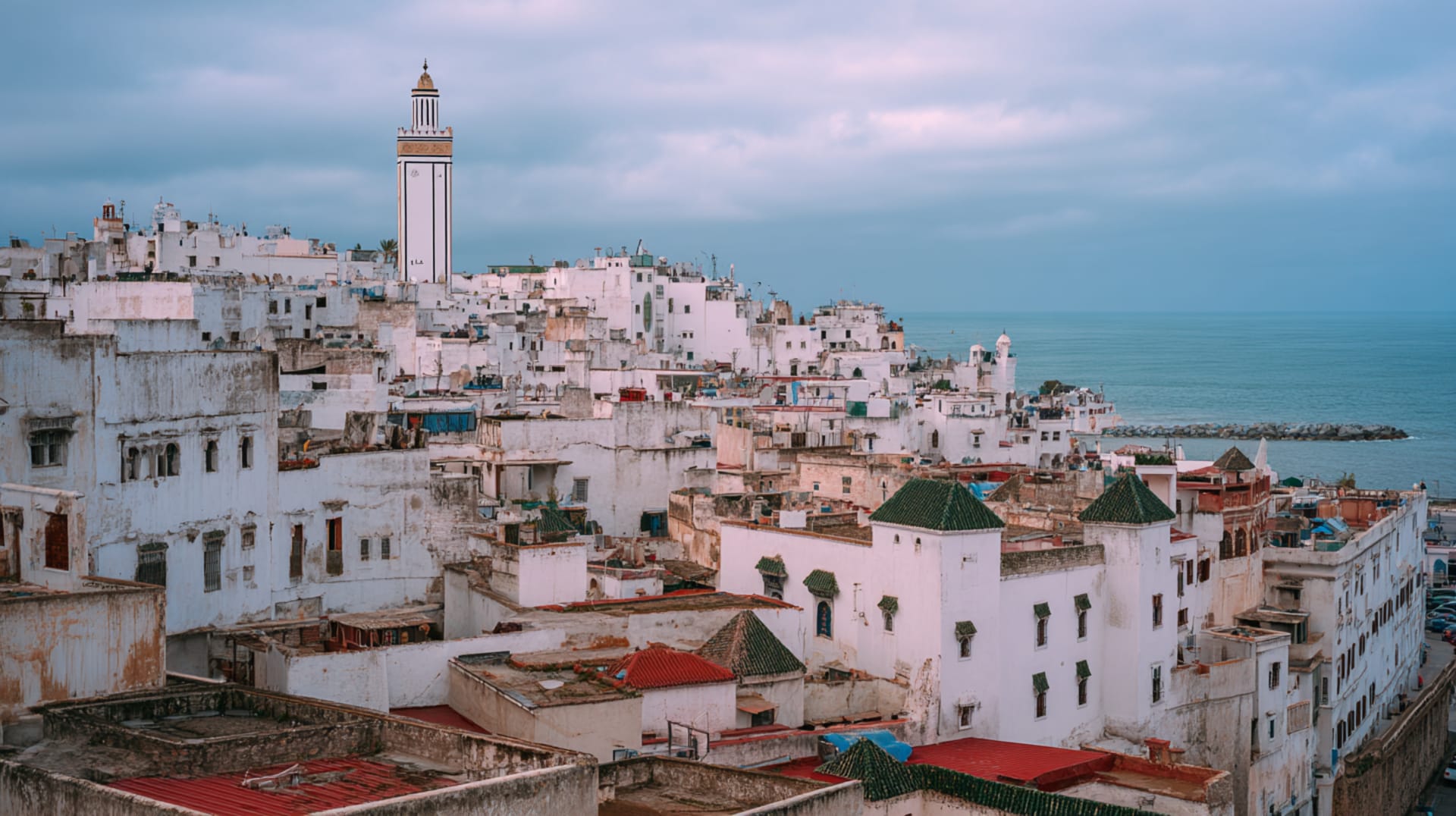
The journey that followed is the most extraordinary travel story of the medieval period. And it started from a city on the northern tip of Morocco that most people today pass through on the way to somewhere else.
In June 1325, a twenty-one-year-old judge's son left Tangier for Mecca. He did not intend to be gone for twenty-nine years. But then, nobody who leaves home at twenty-one intends to become the greatest traveller in medieval history. These things happen to you, and you only understand them afterwards.
The journey from Tangier to Mecca is roughly 3,000 miles. Ibn Battuta covered that distance — and then kept going, apparently unable to stop. By the time he returned to Morocco in 1354, he had travelled approximately 75,000 miles. Marco Polo, the most famous traveller of the medieval world, covered about 24,000 in his lifetime. Ibn Battuta tripled him. The Venetian gets the brand recognition. The Tangérois gets the mileage.
The itinerary reads like a fever dream written by someone with access to unlimited airline miles and no return ticket. From Mecca he went north to Baghdad, then south to the Horn of Africa. He visited Mogadishu and the coast of Kenya. He crossed the Black Sea to the territory of the Golden Horde, then accompanied one of the Khan's wives to Constantinople. From there to Central Asia, across the Hindu Kush into India, and eight years in Delhi as a judge — a career detour that would look bizarre on a modern CV but made perfect sense in the 14th century, when a well-educated Muslim from Morocco was welcome in any court that operated under Islamic law.
The sultan of Delhi sent him as ambassador to China — a voyage that included a shipwreck in the Maldives, a stint as a judge there (he tried and failed to enforce the veil, which tells you everything about the Maldives), and finally a passage to what he claimed was Beijing. Modern scholars are sceptical about China. The descriptions, dictated years later, contain errors that suggest he may have borrowed from other travellers' accounts. But even if you subtract China, the documented journeys are staggering: Persia, Iraq, East Africa, Anatolia, the Crimea, India, Sri Lanka, the Maldives, Bangladesh, Southeast Asia.
He returned to Morocco in 1349 to find both his parents dead — his mother from the plague, his father years earlier. He didn't stay long. You wouldn't either, with that particular combination of grief and restlessness. He crossed to Spain, visited Granada, then returned to Morocco and set off across the Sahara to the Mali Empire. He reached Timbuktu in 1352 and was unimpressed, which is the kind of review that only a man who has seen Constantinople and Delhi and the Maldives can credibly deliver.
In 1354, the Sultan of Morocco ordered him to dictate his travels. The result was the Rihla — formally titled "A Gift to Those Who Contemplate the Wonders of Cities and the Marvels of Travelling," which is a title that earns its length. It remains one of the most important travel documents of the pre-modern world.
The greatest traveller of the medieval world was not a Venetian merchant with a ghost writer. He was a judge from Tangier who left for Mecca at twenty-one, kept walking for three decades, and came home to find that home had moved on without him. The statue in Tangier shows him mid-stride. It would have to.
Ibn Battuta left Fes at twenty-one and walked 120,000 kilometres. His house is still in the medina.
Tell us about your trip →The Facts
- —75,000 miles traveled over 29 years
- —Left Tangier 1325, returned 1354
- —Marco Polo traveled ~24,000 miles
- —Met over 60 sultans and 2,000 notable figures
- —8 years as judge in Delhi
- —Rihla rediscovered in Algeria 19th century
- —Museum in Tangier, mall in Dubai
- —Visited ~50 modern countries
Sources
- Dunn, Ross. The Adventures of Ibn Battuta: A Muslim Traveler of the Fourteenth Century. University of California Press, 2012
- Ibn Battuta. The Travels of Ibn Battuta. (Gibb translation), Cambridge University Press
- Mackintosh-Smith, Tim. Travels with a Tangerine. John Murray, 2001
Further Reading
Practical questions