Heri es-Souani
Hours
Daily 9am-6pm
Entry
10 MAD
Duration
45 minutes
Location
South of medina
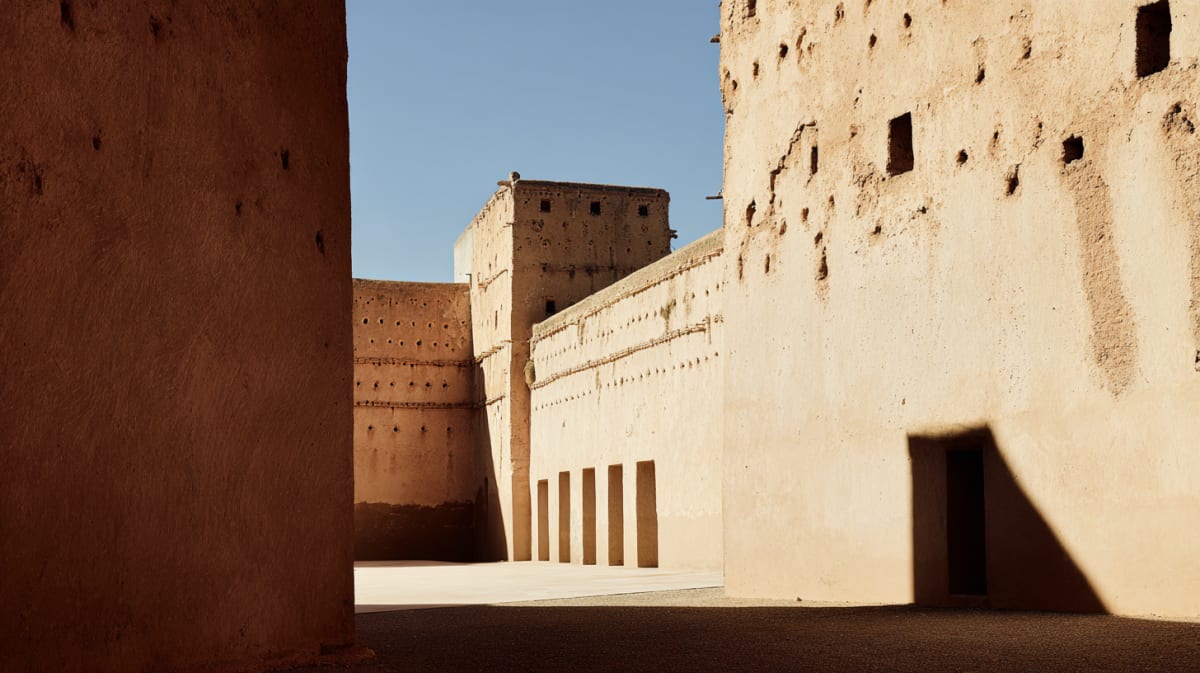
Moulay Ismail kept 12,000 horses. This was their stable — designed by a Christian slave architect. The 1755 earthquake left only suggestions of scale.
01
Feeding an Army That Never Stopped
Moulay Ismail kept a standing army of 150,000 soldiers. That number required a logistics operation that rivalled any European power of the 17th century, and this building was its engine. The Heri es-Souani — the name means roughly "the royal granaries" — stored grain, olives, and fodder enough to feed Ismail's troops and the 12,000 horses in his cavalry for months.
The scale makes sense only when you understand that Ismail ruled for 55 years (1672–1727) and spent most of them either at war or preparing for it. He needed supply lines that did not depend on seasonal harvests or fragile trade routes. The granaries were his insurance policy.
The complex originally extended much further than what survives. The 1755 earthquake — the same one that destroyed Lisbon — collapsed large sections. What remains is still enormous: rows of vaulted chambers stretching into the distance, the thick walls keeping the interior cool even in Meknes summers. The engineering was simple and effective. Walls over a metre thick for insulation. Channels in the floor connected to a system of underground waterways fed by a nearby lake, creating a kind of passive air conditioning centuries before the concept had a name.
02
The Vaults
The surviving structure is a series of parallel barrel-vaulted halls, open at one end where the roof has collapsed and closed at the other where it holds. The effect is accidental and beautiful — alternating bands of light and shadow, the open bays letting in sky and vegetation while the closed bays stay cool and dark.
The walls are rammed earth and stone. The arches are simple — round, not pointed — and massively thick. There is no decoration. This was a functional building, not a ceremonial one. Moulay Ismail spent his artistic budget on Bab Mansour and his mausoleum. The granaries got engineered competence.
Behind the granaries sits the Bassin de l'Agdal, an enormous artificial lake that supplied water to both the granaries and the royal stables. The lake is still there. On weekends, Meknessis walk along its edges. The scale of Ismail's hydraulic infrastructure — lake, channels, granaries, stables — only becomes clear when you see all the pieces together.
03
Visiting
The granaries are one of the least-crowded major monuments in Morocco. Tour buses go to Bab Mansour and the mausoleum. The Heri es-Souani gets the independent travellers and the people who read beyond the first paragraph.
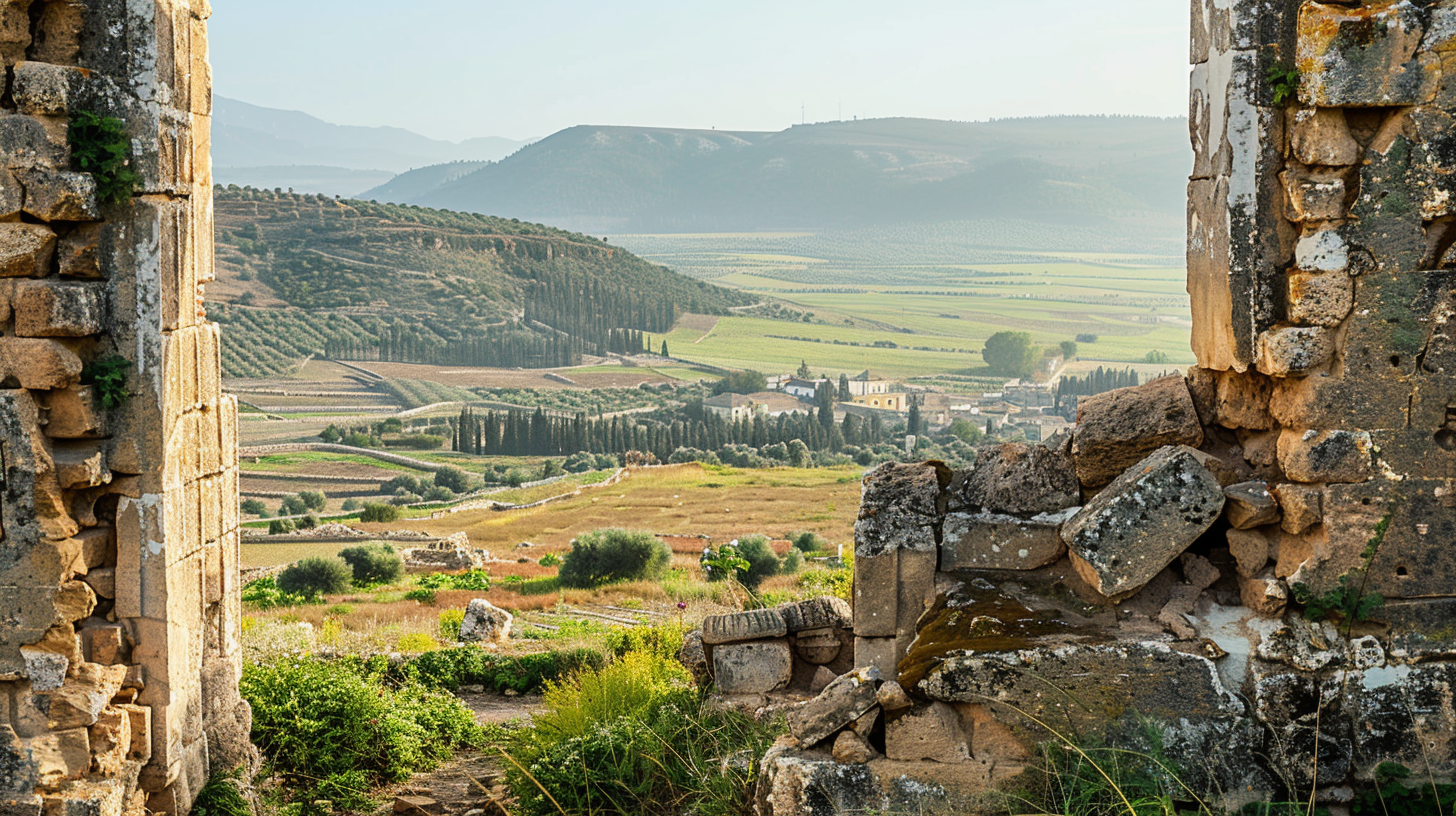
The open-roofed sections are the most photogenic — the combination of ancient walls, collapsed vaults, and trees growing through the ruins has a quality that Meknes's other monuments lack. It feels like discovering something rather than being shown something.
From the granaries, walk behind the complex to the Bassin de l'Agdal. The lake puts the whole operation in perspective. Then walk 10 minutes north to the Moulay Ismail Mausoleum and Bab Mansour. Together, the three sites take a half-day and give you the full picture of what Ismail was building.
Best Time to Visit
Morning for the best light through the open vaults. The granaries face south — midday sun fills the open sections dramatically. Quiet on weekday mornings.
Getting There
A 15-minute walk south from Bab Mansour through the imperial city. From the Meknes medina, follow the road past the Moulay Ismail Mausoleum and continue south. Signposted.
Local Tip
Combine with Agdal Basin next door
Common Questions
Storing grain, olives, and animal fodder for Moulay Ismail's army and cavalry. The thick walls and underground water channels kept the interior cool — a passive cold storage system.
The 1755 earthquake that destroyed Lisbon also damaged Meknes. Several sections of the granary roof collapsed and were never rebuilt. The ruin is part of the atmosphere.
Rarely. Most tour groups skip the granaries in favour of Bab Mansour and the mausoleum. Mornings are quietest.
Yes. Bab Mansour, the Moulay Ismail Mausoleum, and the granaries are all within a 20-minute walk of each other. A half-day covers all three.
Walking Distance
Nearby
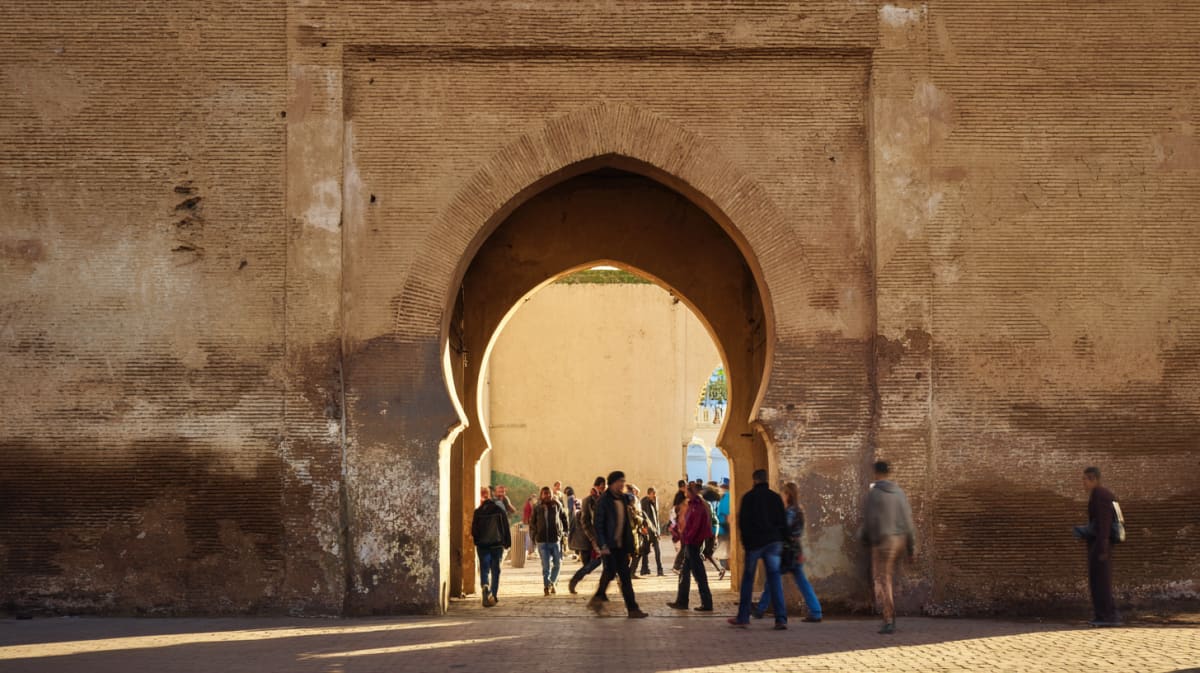
The royal granaries are the building that changes how people think about Moulay Ismail. We walk the vaulted halls in silence — the scale speaks for itself.
Plan a private journey →Explore More
Related Stories
Discover the history and culture of Meknes
Explore More
Multi-day journeys featuring this place
Curated routes that pass through Meknes
3 Days
Volubilis & the Holy City
Roman columns and Morocco's holiest shrine, an hour apart.

3 Days
Fes, Meknes & Wine Country
Imperial cities, Roman mosaics, and a vineyard lunch that quietly dismantles everything you assumed about North African soil.

5 Days
Morocco Wine Trail
Meknes vineyards to Essaouira oysters — Morocco's terroir hiding in plain sight.
Sources: UNESCO Meknes nomination file (1996);;Meakin B. (1901) The Moorish Empire