Bab Mansour
Hours
Exterior only
Entry
Free
Duration
30 minutes
Location
Place el-Hedim
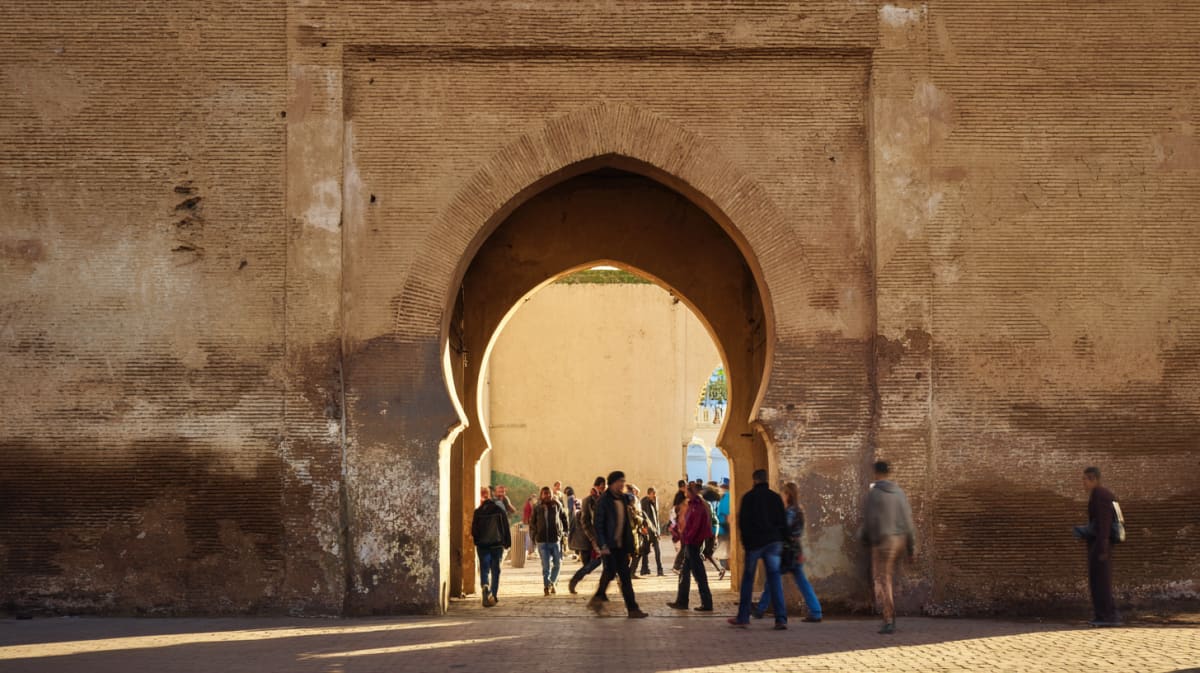
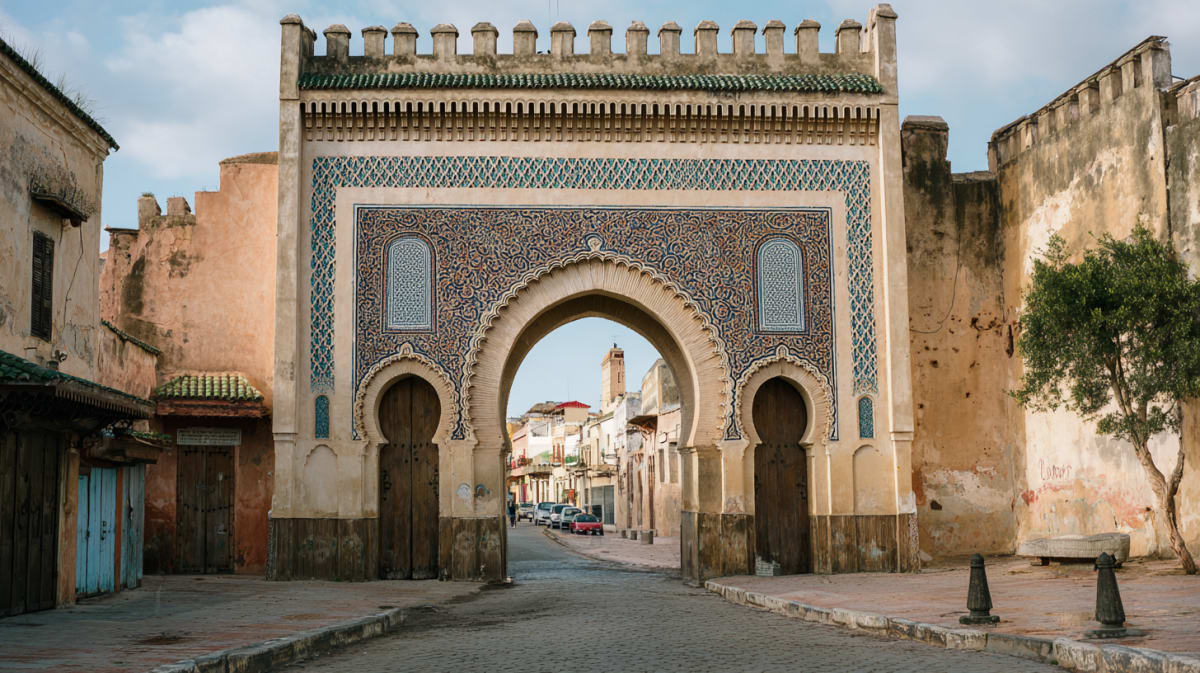
The grandest gate in Morocco, built to announce the power of a sultan who spent fifty years making Meknes rival Versailles. Named for the Christian slave who designed it.
01
The Gate That Took Twelve Years
Moulay Ismail wanted a capital that would humiliate Versailles. He chose Meknes, a provincial town with no particular distinction, and spent fifty years rebuilding it. The centrepiece was this gate, started in 1720 and finished in 1732 — three years after Ismail himself died. His son Moulay Abdallah completed it, though the credit still goes to the father.
The gate is named after the architect, a Christian convert named Mansour el-Aleuj — "Mansour the Renegade." The story goes that when Ismail saw the finished gate, he asked Mansour if he could have done better. Mansour said yes. Ismail had him executed. The story is probably apocryphal — it follows a pattern that appears in Islamic architectural legend from Granada to Isfahan — but it is told in Meknes as fact.
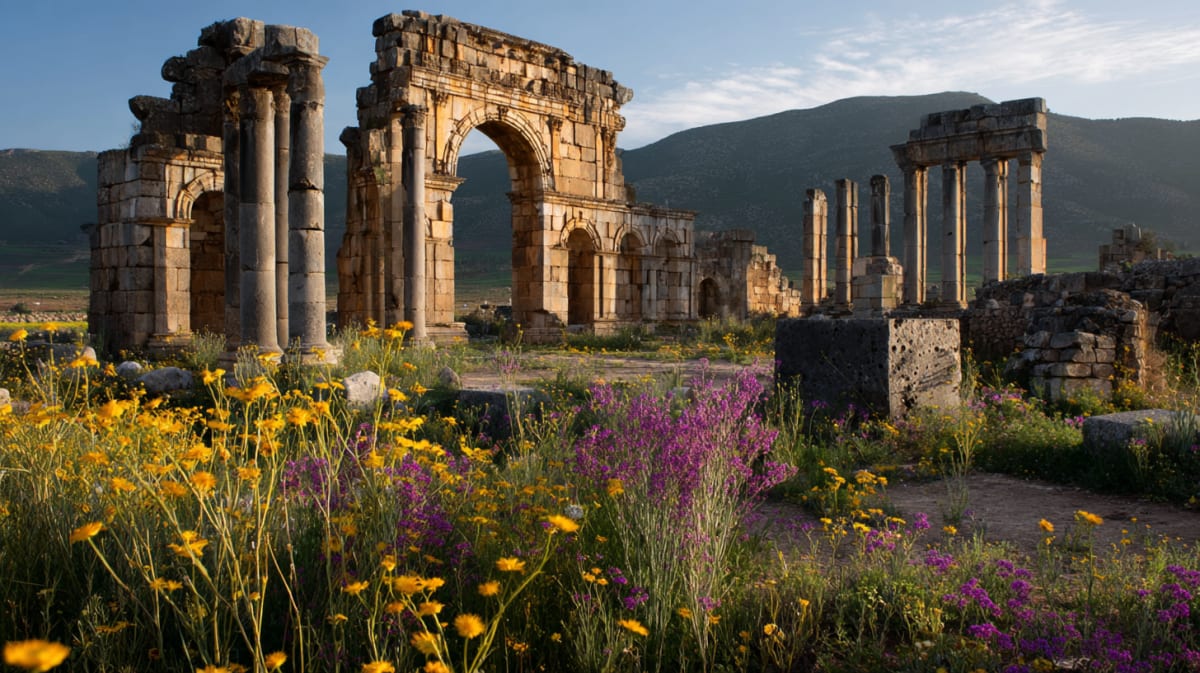
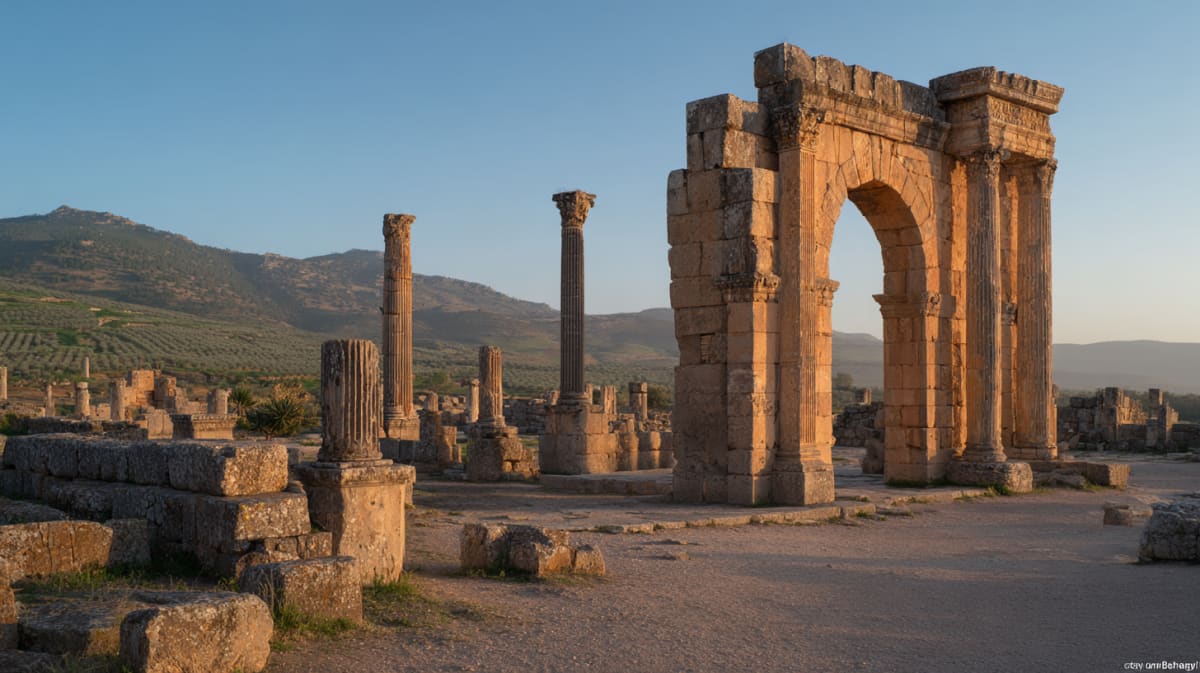
The marble columns flanking the gate were taken from the Roman ruins at Volubilis, 30 kilometres north. Moulay Ismail treated Volubilis as a quarry for his building projects. The Italian marble came from other plundered sources. Recycling imperial ruins into new imperial statements was a deliberate political act, not laziness.
02
The Geometry
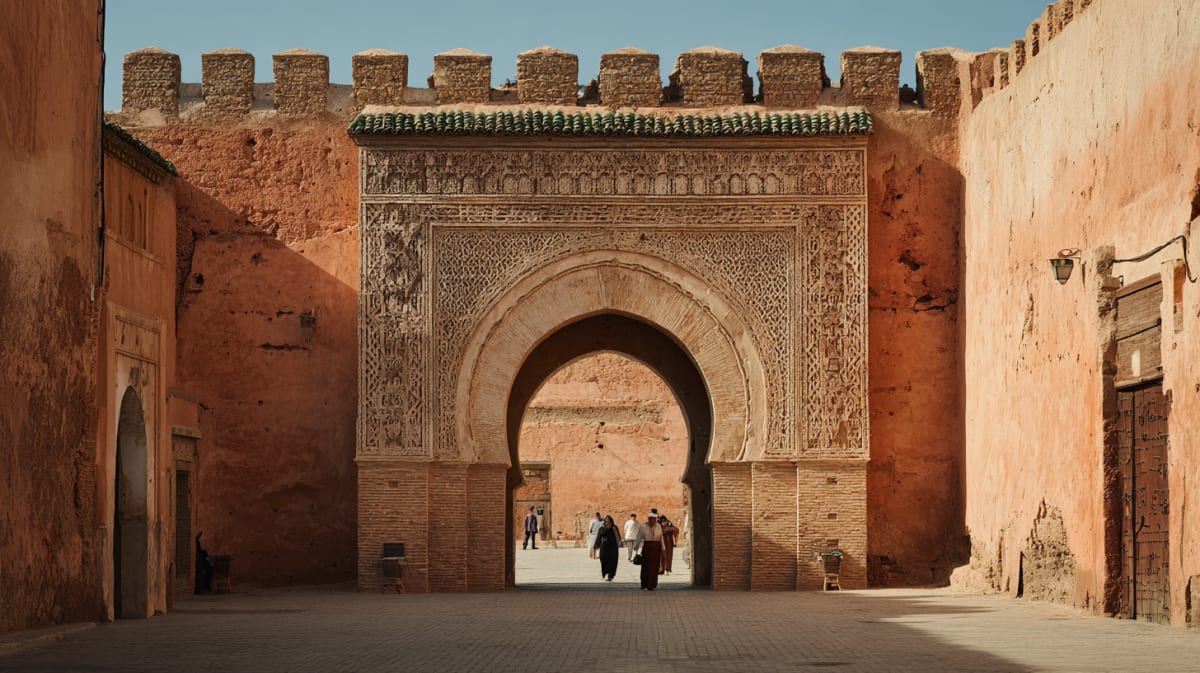
The gate is about 16 metres high and 13 metres wide. The surface is covered entirely in zellige mosaic and carved stucco — no blank space. The green tile rosettes against the buff-coloured stone are the signature visual. Green is the colour of Islam, but it is also the colour Moulay Ismail used to brand his capital, the way Marrakech uses red.
The horseshoe arch is flanked by two bastions. The columns embedded in the bastions are the Volubilis marble — Roman stone repurposed into an Islamic triumphal arch. Above the arch, panels of darj-wa-ktaf (a geometric pattern of interlocking arches) run in horizontal bands. The craftsmanship is Marinid in technique but Alaouite in scale — bigger, louder, more assertive.
Bab Mansour does not lead anywhere particularly important anymore. It opens onto Place el-Hedim, a large square that functions as Meknes's social centre. The gate is ceremonial, not functional. It was always about the statement.
03
Visiting
Bab Mansour faces Place el-Hedim, Meknes's main square. You see it the moment you arrive — it dominates the south side of the plaza. There is no entry fee to see the gate itself. The interior is sometimes used for temporary exhibitions.
Place el-Hedim is a good place to sit with a coffee and study the tilework at leisure. The morning light is better for photography — in the afternoon the gate is in shadow. The square itself fills with food stalls and vendors in the evening.
From Bab Mansour, you can walk south into the imperial city — Moulay Ismail's mausoleum, the Heri es-Souani granaries, and the Bassin de l'Agdal are all within a 20-minute walk.
Best Time to Visit
Morning for photography — the gate faces north and catches clean morning light. Evenings on Place el-Hedim have atmosphere but the gate is in shadow.
Getting There
Bab Mansour faces Place el-Hedim in the centre of Meknes. From the Meknes train station, a petit taxi costs about 15 MAD. From Fes, Meknes is a 45-minute train ride or 1-hour drive.
Local Tip
Best photographed in morning light
Common Questions
It is generally considered the most ornate and best preserved. Whether it is the largest depends on how you measure — Bab Agnaou in Marrakech is older, Bab el-Khemis in Meknes is wider — but Bab Mansour is the one that stops you in your tracks.
The gate interior is used for occasional art exhibitions and cultural events. When open, entry is free or minimal. The exterior is the main attraction.
Volubilis, the Roman ruins 30 km north of Meknes. Sultan Moulay Ismail stripped the site for building materials throughout his reign.
The gate itself is a 10-minute stop. Combine it with Place el-Hedim, the Moulay Ismail Mausoleum, and Heri es-Souani for a half-day in Meknes.
Walking Distance
Nearby
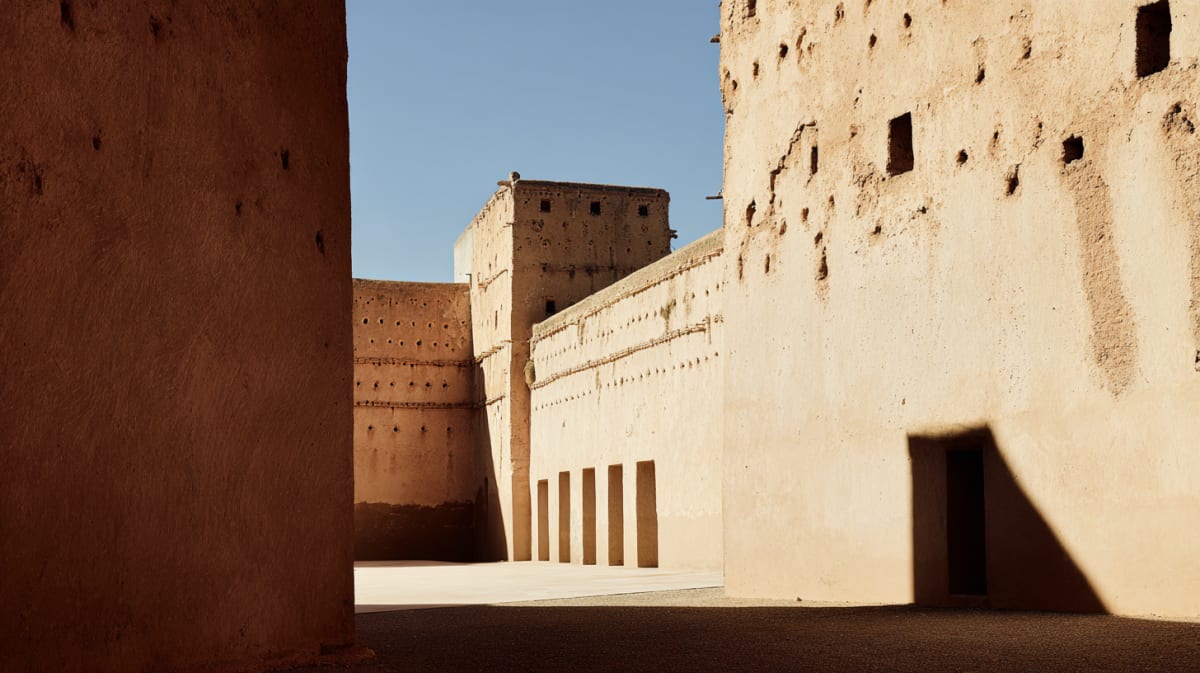
Bab Mansour is the gate that stopped us the first time we drove into Meknes. We stop every time since — the zellige catches different light every hour.
Plan a private journey →Explore More
Related Stories
Discover the history and culture of Meknes
Explore More
Multi-day journeys featuring this place
Curated routes that pass through Meknes
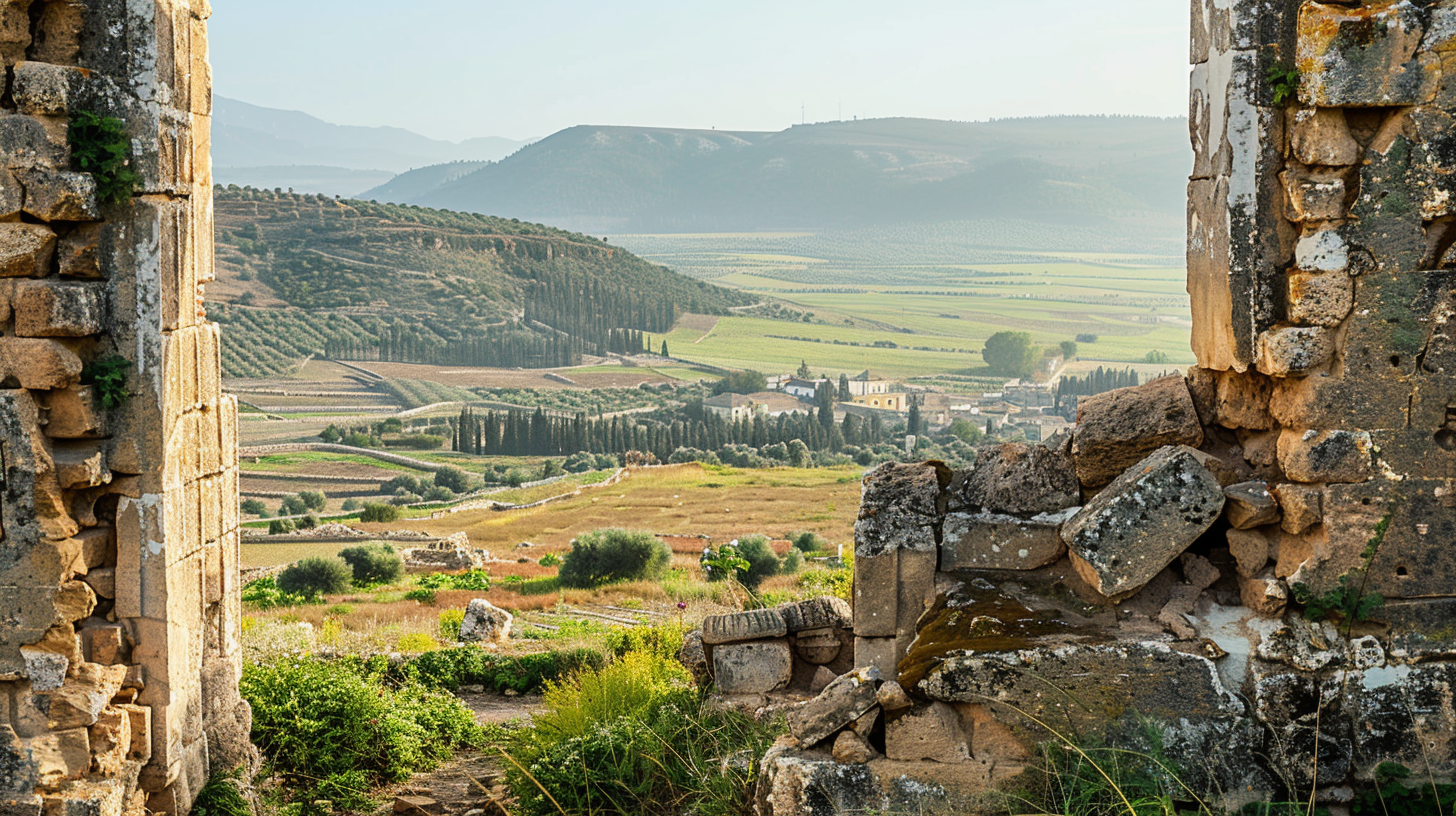
3 Days
Volubilis & the Holy City
Roman columns and Morocco's holiest shrine, an hour apart.

3 Days
Fes, Meknes & Wine Country
Imperial cities, Roman mosaics, and a vineyard lunch that quietly dismantles everything you assumed about North African soil.

5 Days
Morocco Wine Trail
Meknes vineyards to Essaouira oysters — Morocco's terroir hiding in plain sight.
Sources: UNESCO Meknes nomination file (1996);;Le Tourneau R. (1949) Fès avant le Protectorat