The Musical Traditions
Andalusi, Gnawa, Amazigh, Chaabi, Rai — Morocco's five musical bloodlines
Andalusi is the classical tradition. Brought from Spain after the Reconquista, it survives in the imperial cities — Fes, Tetouan, Oujda, Rabat. The music is orchestral, modal, and long-form. A single nouba — a suite of movements in one mode — can last four hours. Eleven noubat survive of an original twenty-four. The instruments are oud, rabab, tar, and violin adapted to Arabic tuning. It is court music, refined and mathematical.
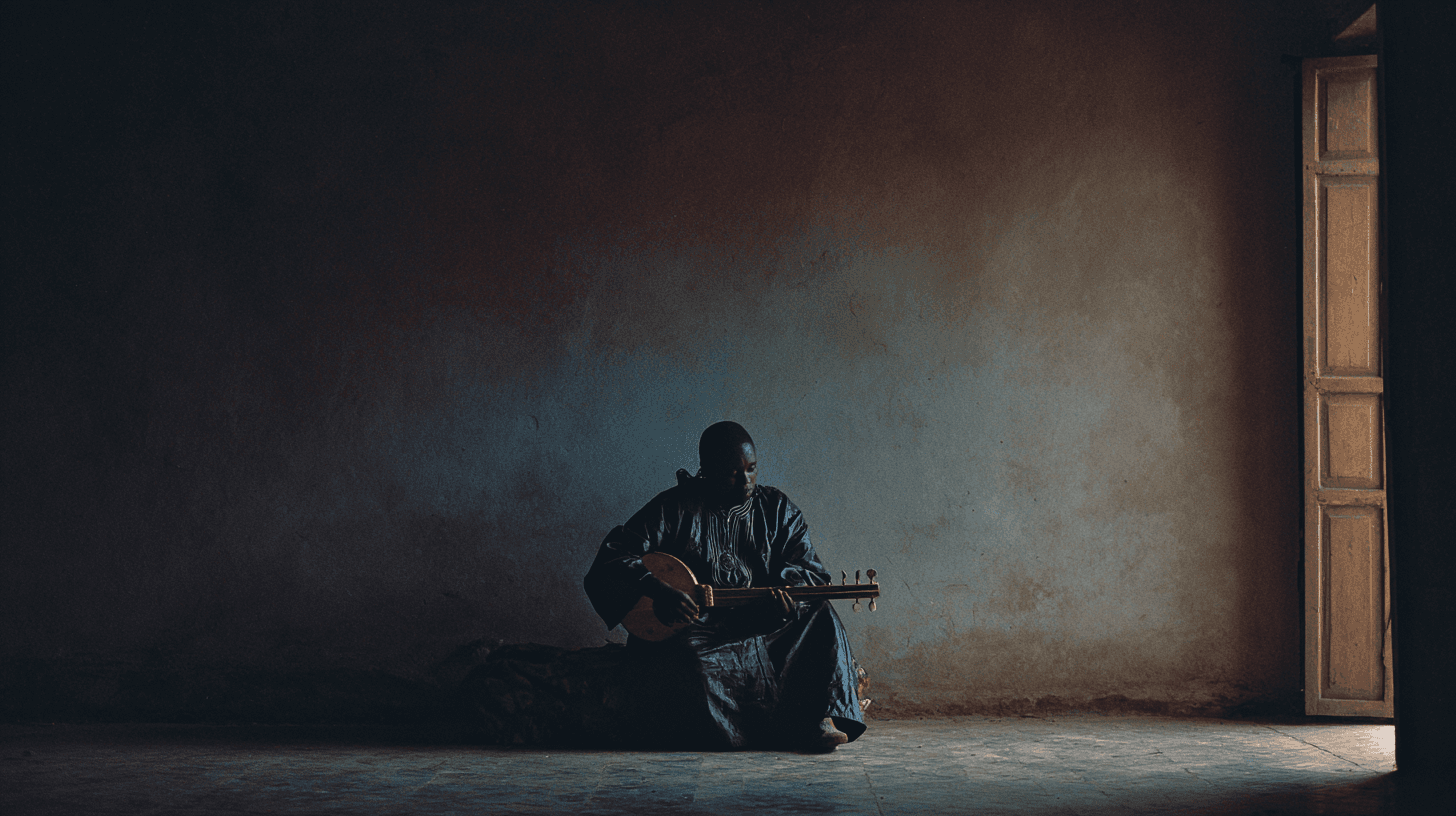
Gnawa is the spiritual tradition. Rooted in the trans-Saharan slave trade, it fuses sub-Saharan African rhythms with Islamic Sufi mysticism. The guembri — a three-stringed bass lute made from camel skin — drives the music. The qraqeb — iron castanets — lock the rhythm. A lila ceremony lasts all night, invoking seven families of spirits through seven colours of music. Essaouira's Gnawa Festival has brought global recognition.
Amazigh music splits by region. The Rif produces reggada — a stomping, percussive dance music performed at weddings. The Middle Atlas has ahidous — communal circle singing with bendir drums. The Souss has ahwash — call-and-response poetry set to music, performed outdoors by entire villages. Each tradition is in its own Amazigh language.
Chaabi is the people's music. Urban, electric, amplified. It emerged from the working-class neighbourhoods of Casablanca in the mid-20th century and is the soundtrack of every Moroccan wedding and celebration. The darbouka drum, the banjo (adopted into Moroccan music), and the electric keyboard are its core instruments. It is loud, joyful, and relentless.
Rai crossed from Algeria but has deep roots in eastern Morocco. Oujda is the centre. The music blends traditional Bedouin poetry with synthesizers and Western pop structures. It is the music of rebellion, love, and the margins — the name itself means "opinion" or "point of view."
Explore the full interactive module — with audio samples, regional maps, and the instrument inventory of Morocco's five musical traditions — at Dancing with Lions: https://www.dancingwiththelions.com/data/musical-traditions
Interactive Module
Data and visualisation by Dancing with Lions