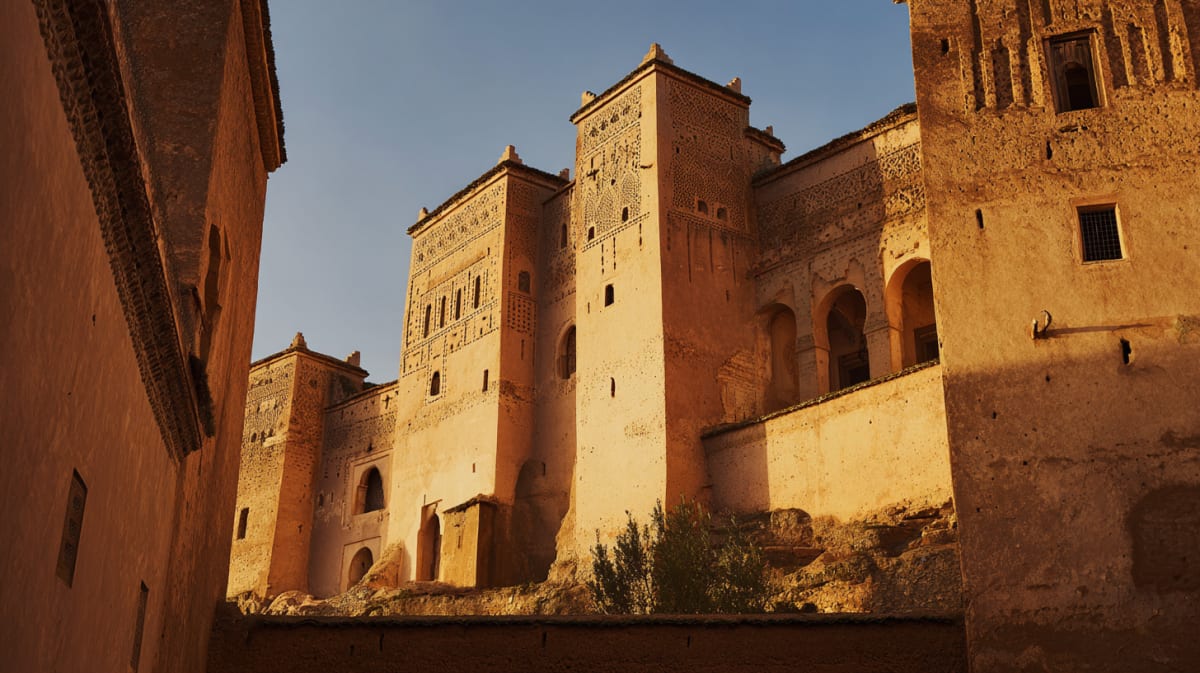
Glaoui Kasbah, Telouet
Hours
Daily 8am-6pm
Entry
20 MAD
Duration
60 minutes
Location
Telouet village
One of the most ornate kasbahs in Morocco. Zellige floors and painted ceilings by master artisans from Fes -- hidden in a High Atlas village.
01
The Collaborator's Palace
Thami el-Glaoui made a deal. When the French arrived in 1912, the Pasha of Marrakech offered them his allegiance, his soldiers, and his knowledge of the tribal landscape. In return, the French gave him effectively unlimited power over southern Morocco. For 44 years he ruled as a feudal lord — hosting Churchill, bedding Josephine Baker, crushing dissent with a brutality that even the French found excessive.
Telouet was his stronghold. The kasbah sits at 1,800 metres on the old caravan route over the Tizi n'Tichka pass, controlling the only viable road between Marrakech and the south. Whoever held Telouet held the pass. The Glaoui family had held it since the 19th century, but Thami rebuilt the kasbah into something that announced his wealth and ambition: reception halls with painted ceilings, zellige floors, carved stucco worthy of a Fes medina palace, all at high altitude in a mountain village with no electricity.
When Morocco won independence in 1956, Thami's world collapsed in weeks. He publicly apologised to Sultan Mohammed V, then died three months later. The family was stripped of its properties. Telouet was abandoned. No one has maintained it since.
02
Collapsing Beauty
The kasbah is enormous and largely ruined. The pisé walls — rammed earth, exposed to 70 years of mountain weather without maintenance — are dissolving. Entire wings have collapsed into rubble. Stairways lead to open sky.
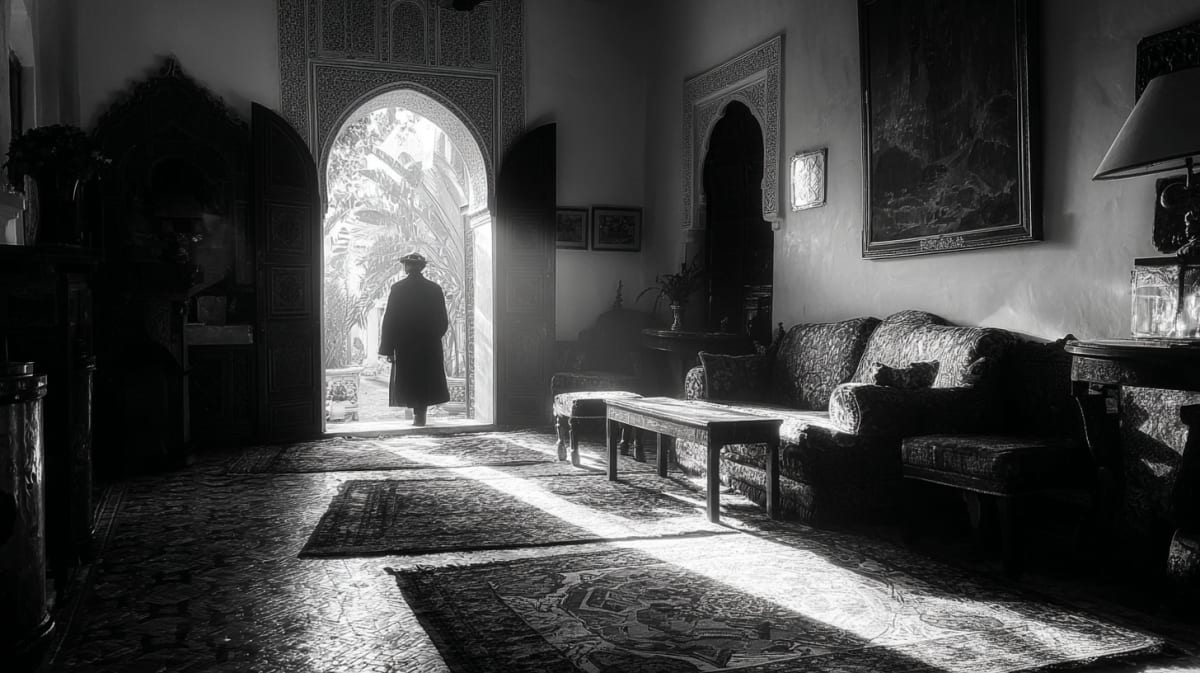
But the reception rooms survive. The painted cedarwood ceilings, the zellige floors, the carved stucco panels — they are intact because the rooms were sealed, and the craftsmanship was exquisite. The contrast between the crumbling exterior and the preserved interior is the most dramatic thing about Telouet. You walk through rooms where the roof is gone and rain has washed the walls to bare earth, then step into a reception hall where every surface is still ornamented and the light comes through stained glass.
The craftsmen came from Fes. The Glaoui brought them across the Atlas to build something that belonged in an imperial city, not a mountain pass. The ambition is visible. So is the hubris.
03
Visiting
Telouet is a 20-minute detour off the N9 Marrakech-Ouarzazate road, turning east at the Tizi n'Tichka pass. The road to Telouet is paved but narrow. The village is small and the kasbah is visible from the road.
A local guardian opens the door and walks you through. The tour is informal — there is no signage, no audio guide. The guardian works on tips (50–100 MAD is fair). He will show you the collapsing sections and the surviving reception halls, and the view from the upper terrace over the valley.
The kasbah is not weatherproofed or stabilised. It is actively disintegrating. This is part of what makes it compelling and also means it may not last. See it while it stands.
Best Time to Visit
Morning for the best light through the stained glass in the reception halls. Spring and autumn are most comfortable at this altitude (1,800m). Winter brings snow and the road may be difficult.
Getting There
Turn east off the N9 Marrakech-Ouarzazate road near the Tizi n'Tichka pass. The detour to Telouet is about 20 km on a paved but narrow road. From Marrakech, it is about 2.5 hours total.
Local Tip
Interiors remarkably ornate despite exterior weathering. A guardian gives tours.
Common Questions
The Glaoui family was stripped of its properties after Moroccan independence in 1956. Thami el-Glaoui had collaborated with the French Protectorate. No one has maintained the building since.
The open sections are accessible and a local guardian guides visitors through stable areas. Use common sense — some sections are genuinely ruined. The reception halls are intact.
There is no formal ticket. A local guardian opens the kasbah and guides you. A tip of 50–100 MAD is expected and fair.
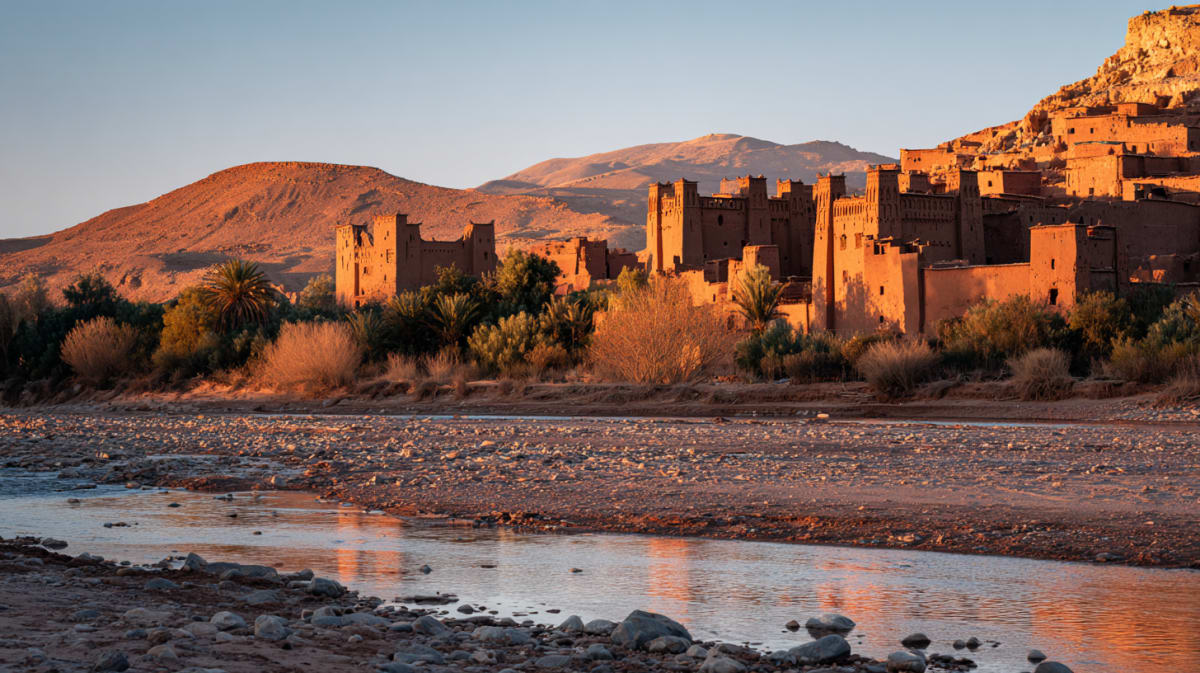
Yes. The old caravan road from Telouet to Aït Benhaddou through the Ounila Valley is one of Morocco's most beautiful drives — about 35 km of mountain road. Not all of it is paved. Check conditions locally.
Walking Distance
Nearby
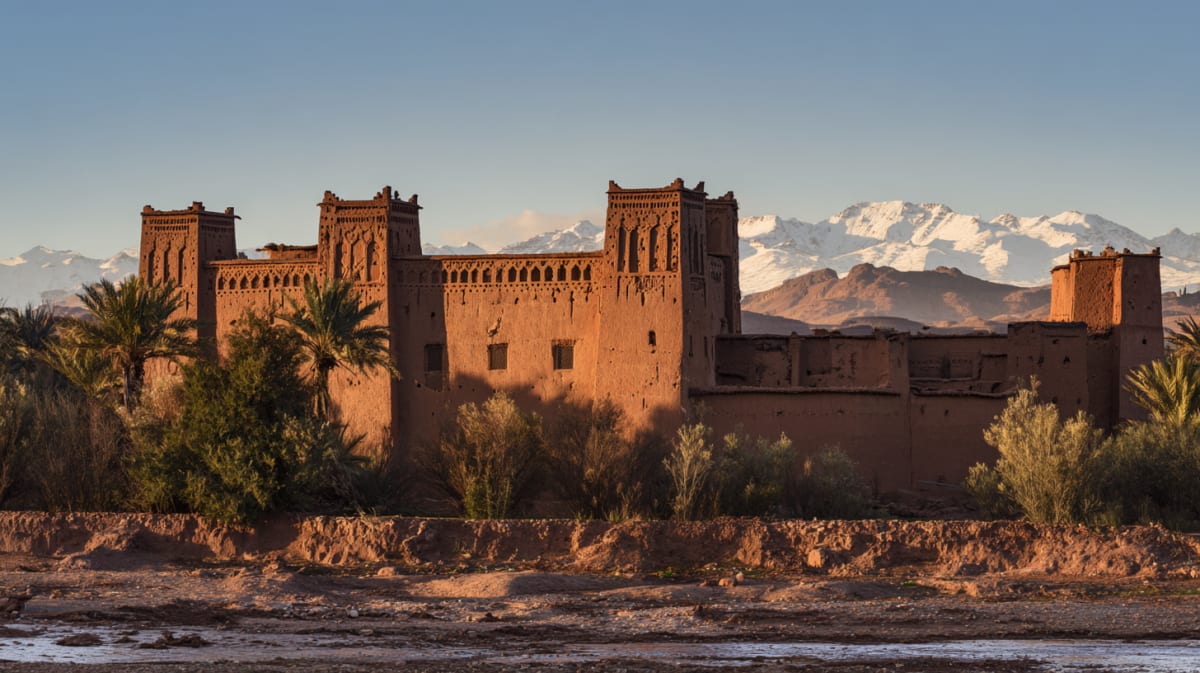
Telouet is the Glaoui palace the guidebooks can't decide whether to include. We go because the painted ceilings are collapsing — see them before they're gone.
Plan a private journey →Explore More
Related Stories
Discover the history and culture of Telouet
Sources: Maxwell G. (1966) Lords of the Atlas;;Naji S. (2001) Art et architectures berbères du Maroc