The Carpet Atlas
Beni Ourain, Azilal, Boucherouite, Kilim, Hanbel — regional rug traditions mapped
The Beni Ourain is the carpet the world knows — thick ivory wool with sparse black geometric lines. It became famous when Le Corbusier, Alvar Aalto, and Charles and Ray Eames placed them in modernist interiors in the 1950s and 60s. What they saw as minimalism was actually a tribal tradition from the Middle Atlas, where the deep pile served as insulation against mountain winters that drop below zero.
The Azilal comes from the High Atlas. Unlike the Beni Ourain's restraint, Azilal carpets explode with colour — pinks, yellows, oranges — and abstract geometric motifs that Western collectors often compare to Paul Klee or Kandinsky. The comparison misses the point. These are not abstract art. They are a visual vocabulary: diamonds for protection, zigzags for water, crosses for the four cardinal directions.
The Boucherouite is the carpet of necessity. Made from recycled fabric strips — old clothing, plastic bags, industrial scraps — it emerged when rural women could no longer afford wool. What began as poverty became, accidentally, the most contemporary-looking textile tradition in Morocco. No two Boucherouite are alike.
Kilims are flatweaves — no pile, no knots. They are lighter than knotted carpets and often used as wall hangings, floor coverings in warm months, or donkey blankets. The Rif and Middle Atlas produce the finest, with tight geometric patterns in strong reds and blacks.
The Hanbel is the everyday carpet — found in virtually every Moroccan home. Flatwoven, usually in stripes of natural wool colours, it is the workhorse textile. Not collected. Not celebrated. But ubiquitous.
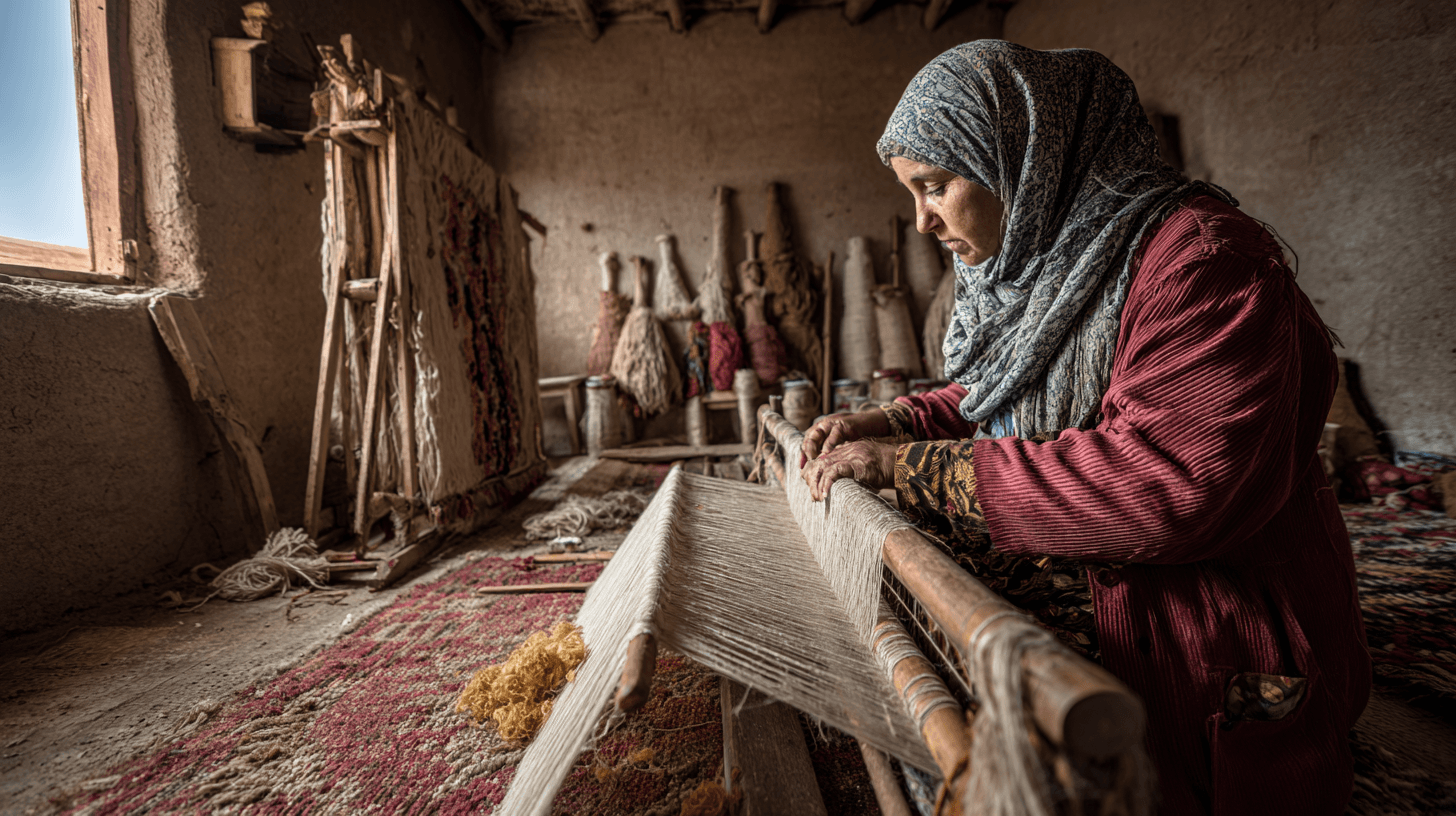
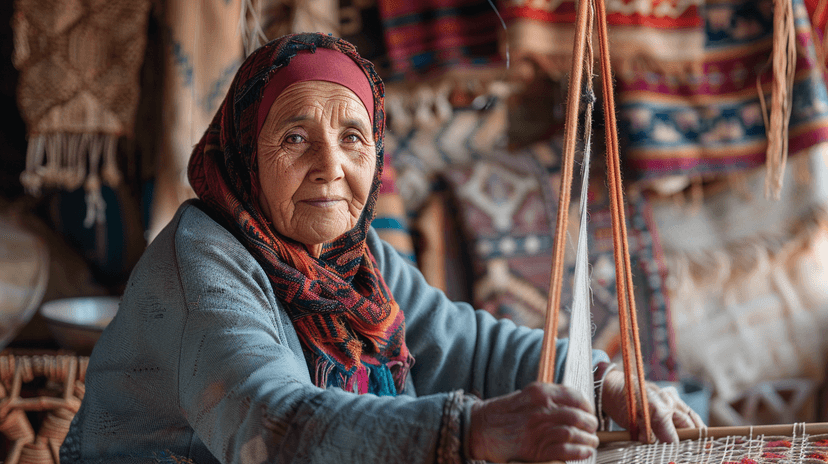
Every carpet-producing region has its own vocabulary. The weavers are almost exclusively women. The loom is vertical, set up in the home or courtyard. A carpet can take weeks to months depending on size and knot density. The woman who weaves it does not follow a pattern — she composes as she goes, drawing from a visual language learned from her mother and grandmother.
Explore the full interactive module — with tribal traditions mapped, motif dictionaries, and weaving techniques compared — at Dancing with Lions: https://www.dancingwiththelions.com/data/carpet-atlas
Interactive Module
Data and visualisation by Dancing with Lions