The Medina Atlas
Gates, fondouks, mosques, hammams, souks — Morocco's historic medinas mapped
Morocco has nine historic medinas. Fes el-Bali is the largest car-free urban area in the world. Marrakech is the most visited. Essaouira is the most photogenic. Tetouan is the most Andalusian. Each is a distinct city with its own character, but all share the same underlying structure.
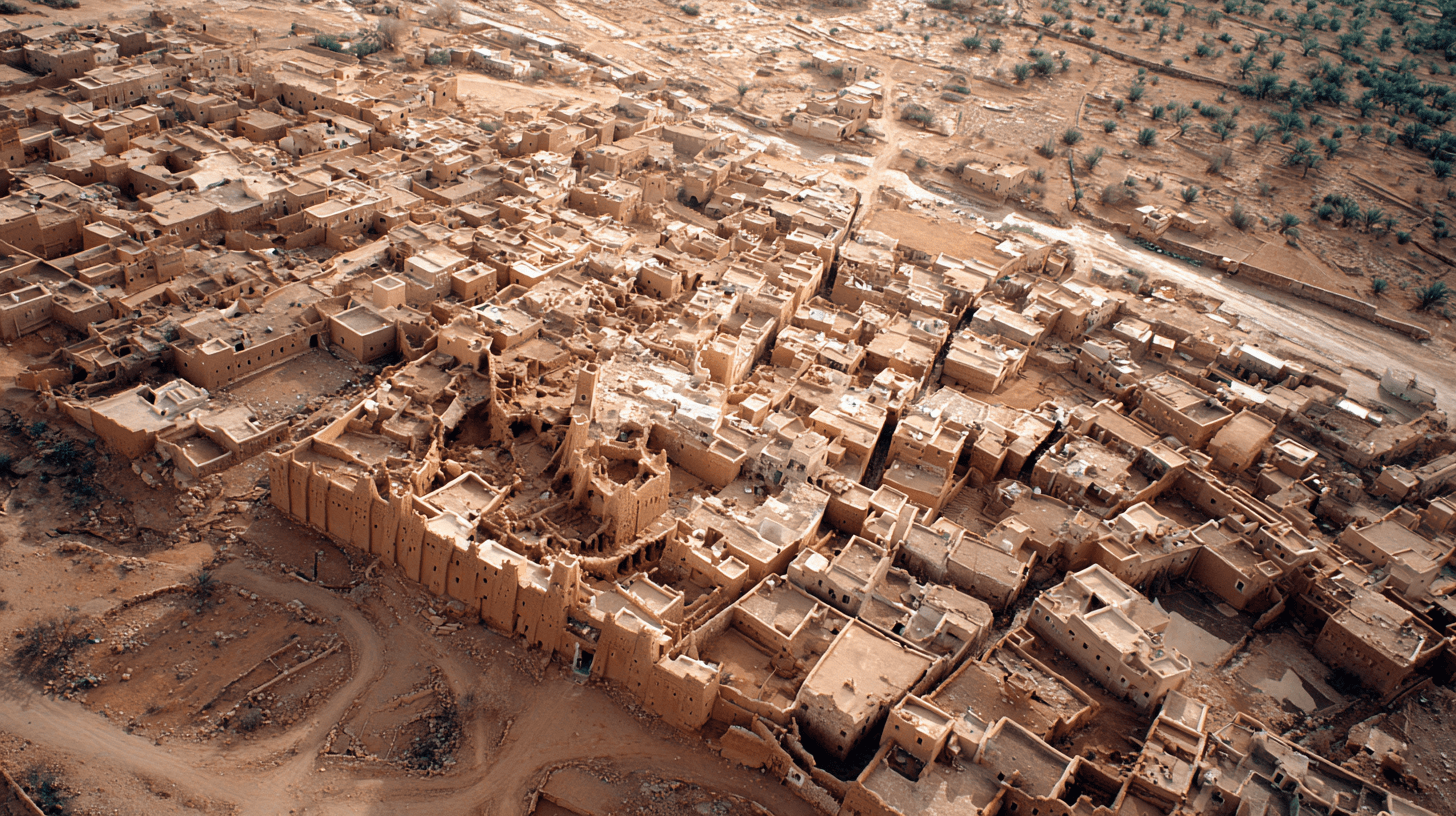
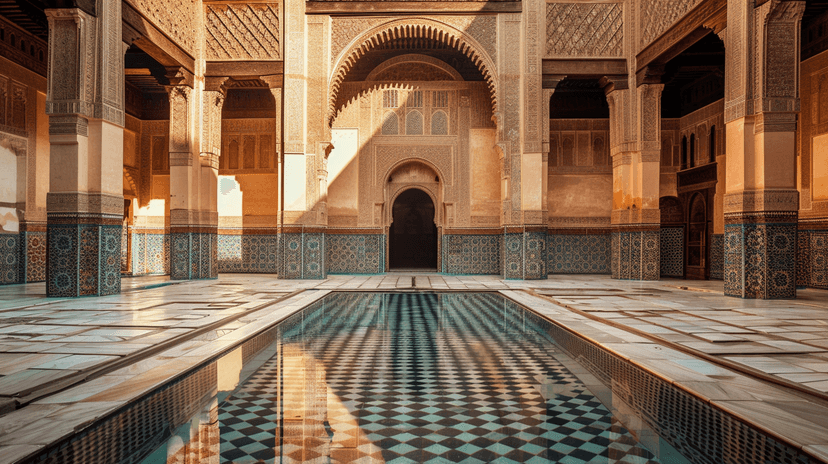
The mosque is the centre. From it, the main commercial streets radiate outward like arteries. These are the widest passages — wide enough for a loaded donkey. The souks line these arteries, organised by guild and trade. Secondary streets branch off into residential quarters. Tertiary passages — derbs — dead-end at clusters of houses. The deeper you go, the narrower the passage, the more private the space.
This is not random organic growth. It is a planned hierarchy of public to private, commercial to domestic, sacred to profane. The mosque anchors the public sphere. The derb anchors the private. Between them, a gradient.
The gates — babs — control entry. Marrakech has 19, each with a name and a history. Fes has 14. The gates were locked at night until the French protectorate. They defined the boundary between medina and outside, between city and bled — the countryside.
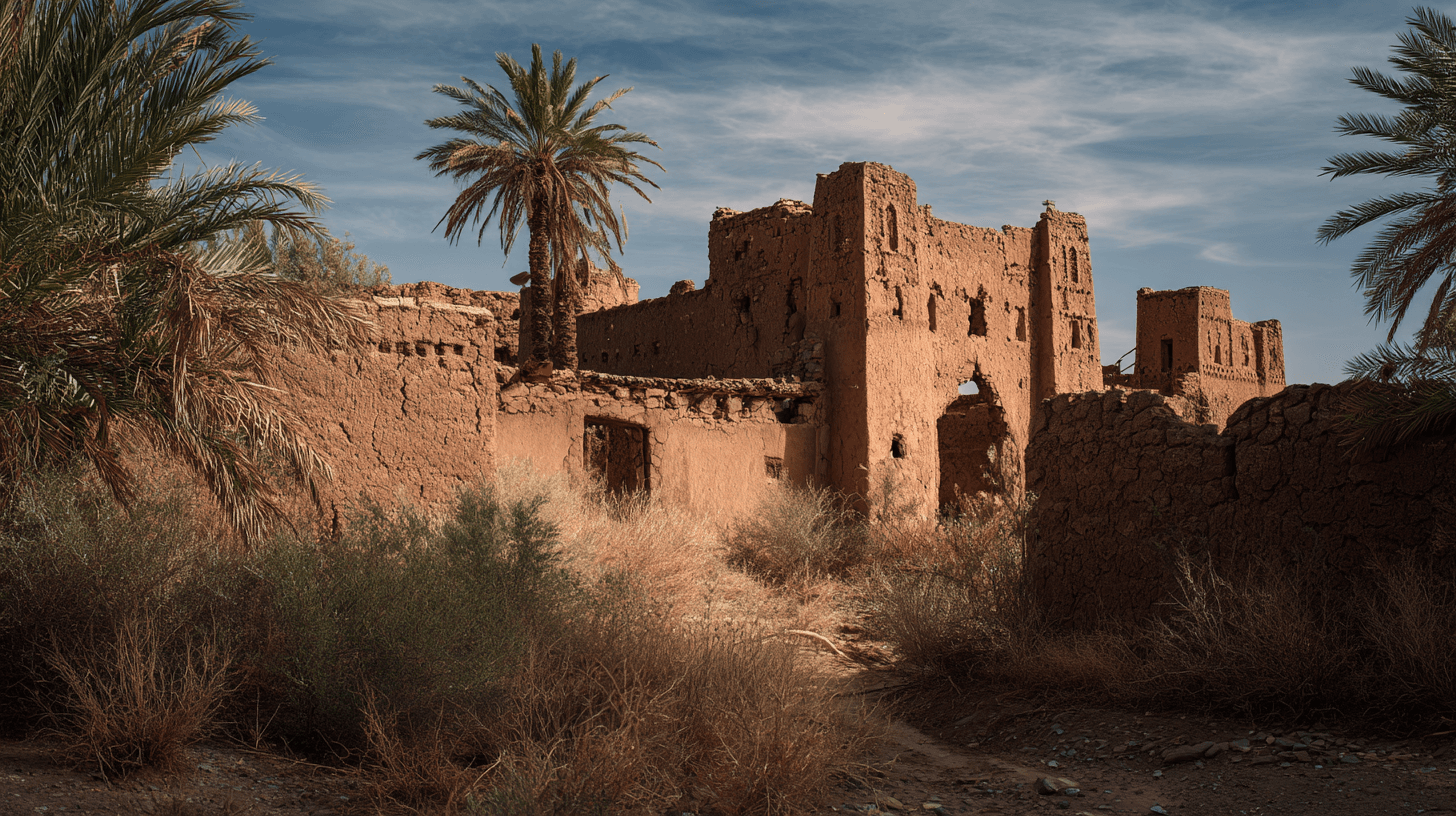
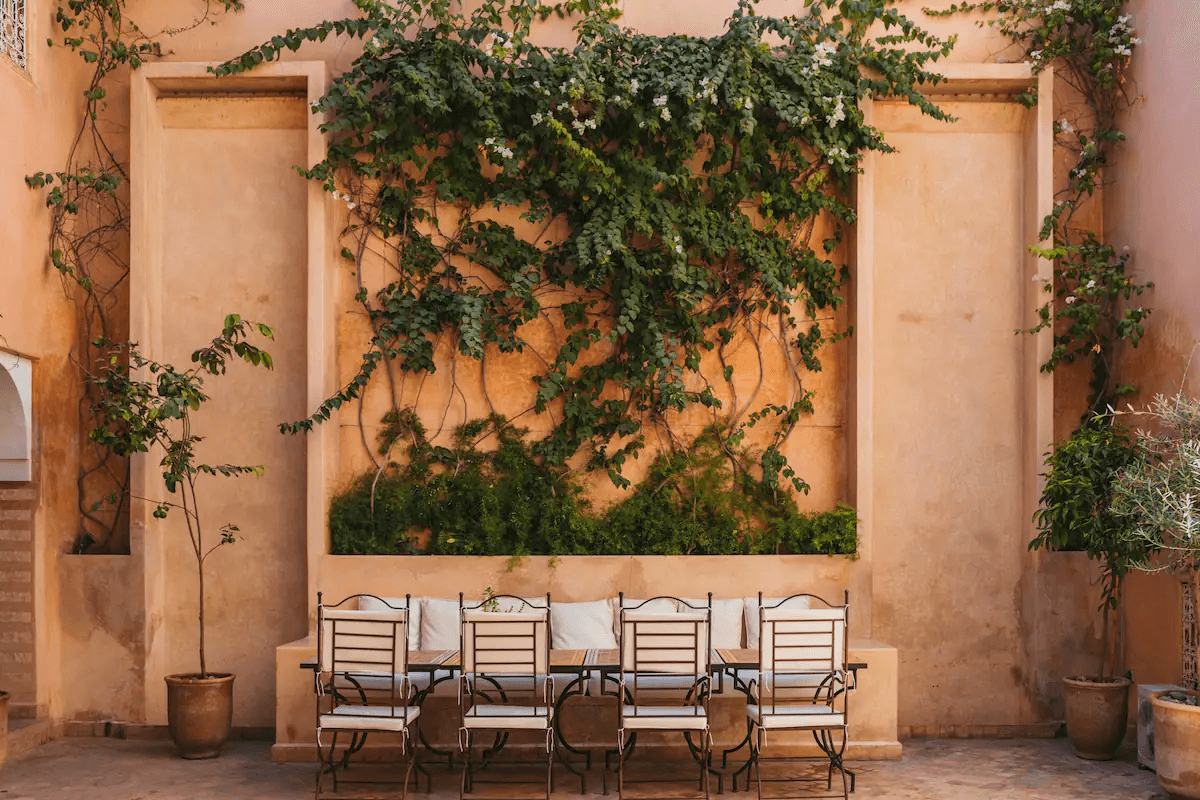
The ramparts are not just defensive walls. They are a thermal boundary. The mass of packed earth and stone absorbs heat during the day and releases it at night, moderating temperature inside the medina. The narrow streets create shade. The courtyard houses create convection. The entire medina functions as a passive cooling system.
Fondouks provided accommodation and storage for merchants arriving by caravan. Hammams provided bathing. Communal ovens baked bread. Fountains distributed water. The medina was designed to provide every necessity within walking distance — a concept that modern urban planners now call the 15-minute city. Morocco built it a thousand years ago.
Explore the full interactive module — with Mapbox satellite maps, gate histories, and the spatial data of Morocco's nine historic medinas — at Dancing with Lions: https://www.dancingwiththelions.com/data/medina-atlas
Interactive Module
Data and visualisation by Dancing with Lions