The Tanneries
900 years of leather — 1,200 basins, pigeon dung, natural dyes, and the 86 that became 3
Fes once had 86 tanning workshops. The Almohads counted them. The Marinids counted 100. Today three survive — Chouara, Sidi Moussa, and Ain Azliten — operating as cooperatives in the oldest part of Fes el-Bali.
The process begins with raw hides — cow, goat, sheep, camel. They arrive stiff with salt from the abattoir. The first basin is quicklime and water. The hides soak for three days. The lime loosens the hair and fat. Workers stand barefoot in the pits and scrape each hide by hand with a curved blade called a sherka.
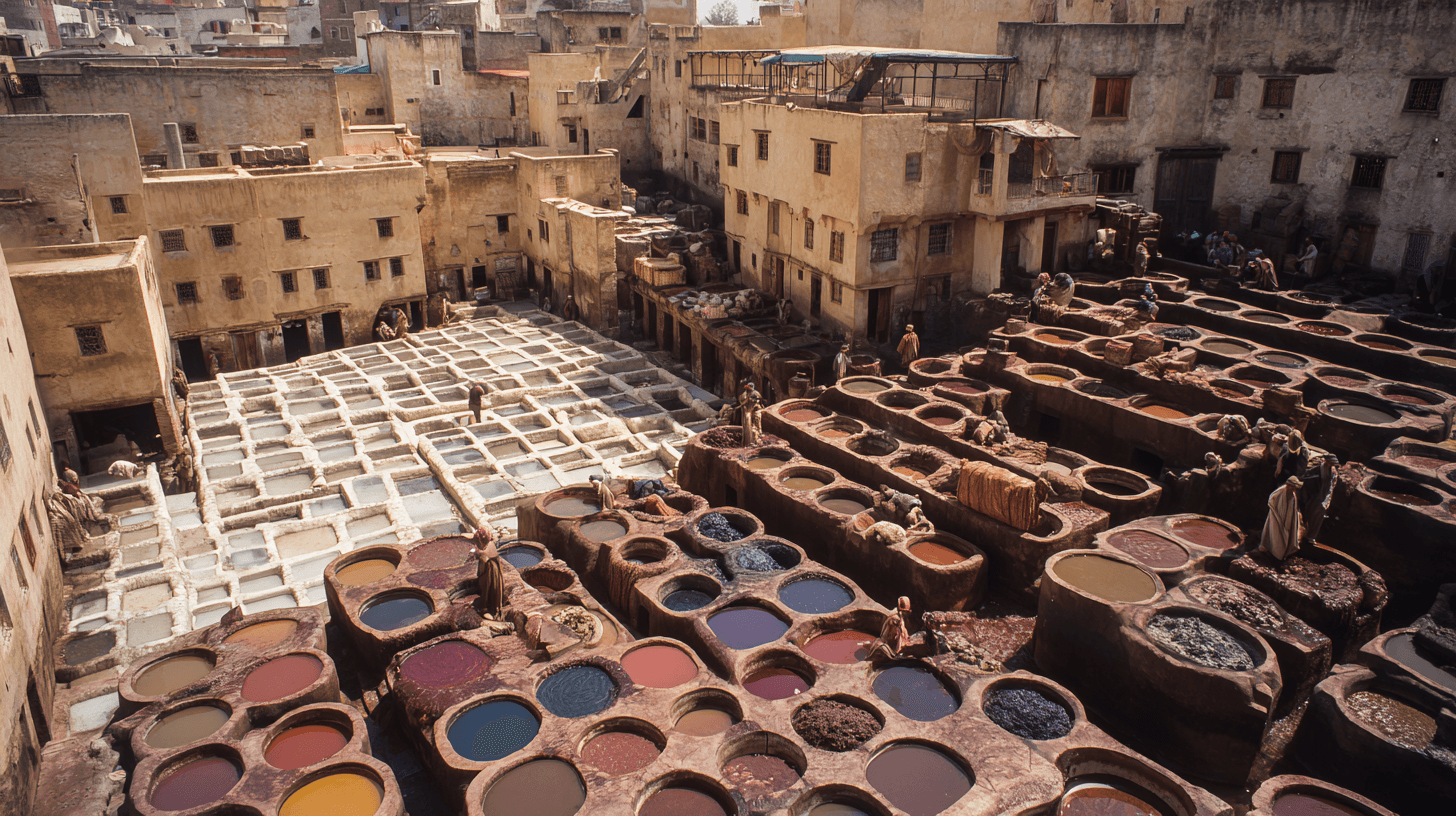
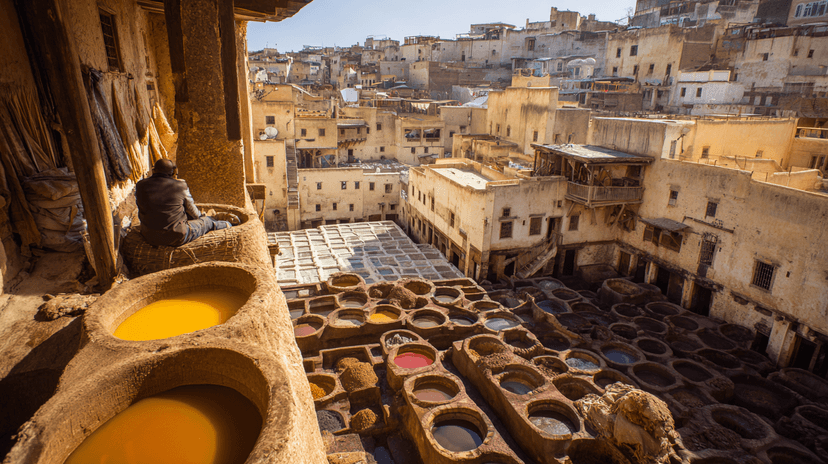
The second stage is the one tourists photograph from the terraces above. The round stone basins — honeycombed across the courtyard like a painter's palette — contain pigeon dung mixed with water. This is not decorative. The ammonia in the dung softens the leather and prepares it to absorb dye. The hides soak for up to three weeks. Workers turn them daily.
The dyes are vegetal. Saffron for yellow. Poppy for red. Indigo for blue. Mint for green. Cedar bark for brown. Antimony for black. Each colour requires a different soak time and technique. Red is the most difficult — it requires multiple baths and precise timing.
A single hide takes 20 to 30 days from raw skin to finished leather. The workers earn by the piece, not by the hour. The most experienced tanners — the maalems — can identify leather quality by touch and know exactly how long each basin stage should last.
The smell is ammonia, lime, and dung — intense in summer, bearable in winter. The mint sprigs offered to tourists at the tannery viewpoints are not tradition. They are commerce. But the tanneries themselves are the real article — the last working medieval industrial site in Morocco.
Explore the full interactive module — with process diagrams, natural dye chemistry, and the three surviving tanneries mapped — at Dancing with Lions: https://www.dancingwiththelions.com/data/tanneries
Interactive Module
Data and visualisation by Dancing with Lions