The Spice Map
27 essential spices — origins, uses, health properties, and where to buy them in the souk
Cumin (kamoun) is the foundation. Present in almost every savoury dish, it sits on every Moroccan table alongside salt. The seeds are used whole in bread and ground in tagines, soups, and kefta. Morocco grows its own cumin — the Haouz plain around Marrakech is a primary production area. The flavour is warm, earthy, and slightly bitter.
Paprika (tahmira) colours everything. Sweet rather than hot in its Moroccan form, it gives tagines, chermoula, and grilled meats their characteristic red-orange hue. The spice arrived from the Americas via Spain after the 16th century and integrated so completely that most Moroccans consider it indigenous.
Ginger (skinjbir) is used both fresh and dried. Fresh ginger appears in tagines and marinades. Dried ground ginger is a component of most spice blends. The combination of ginger, turmeric, and black pepper — the Moroccan warming trio — appears in winter soups and stews.
Turmeric (kharqoum) provides the yellow base note. Less prominent than in South Asian cooking but consistently present, it colours rice, soups, and the preserved lemon paste used in tagines. Its anti-inflammatory properties are recognised in both traditional medicine and modern research.
Cinnamon (qarfa) bridges sweet and savoury. It appears in pastilla alongside pigeon and almonds, in tagines with prunes and lamb, and in desserts with orange blossom water. Moroccan cinnamon is typically cassia rather than true Ceylon cinnamon — stronger, darker, and more robust.
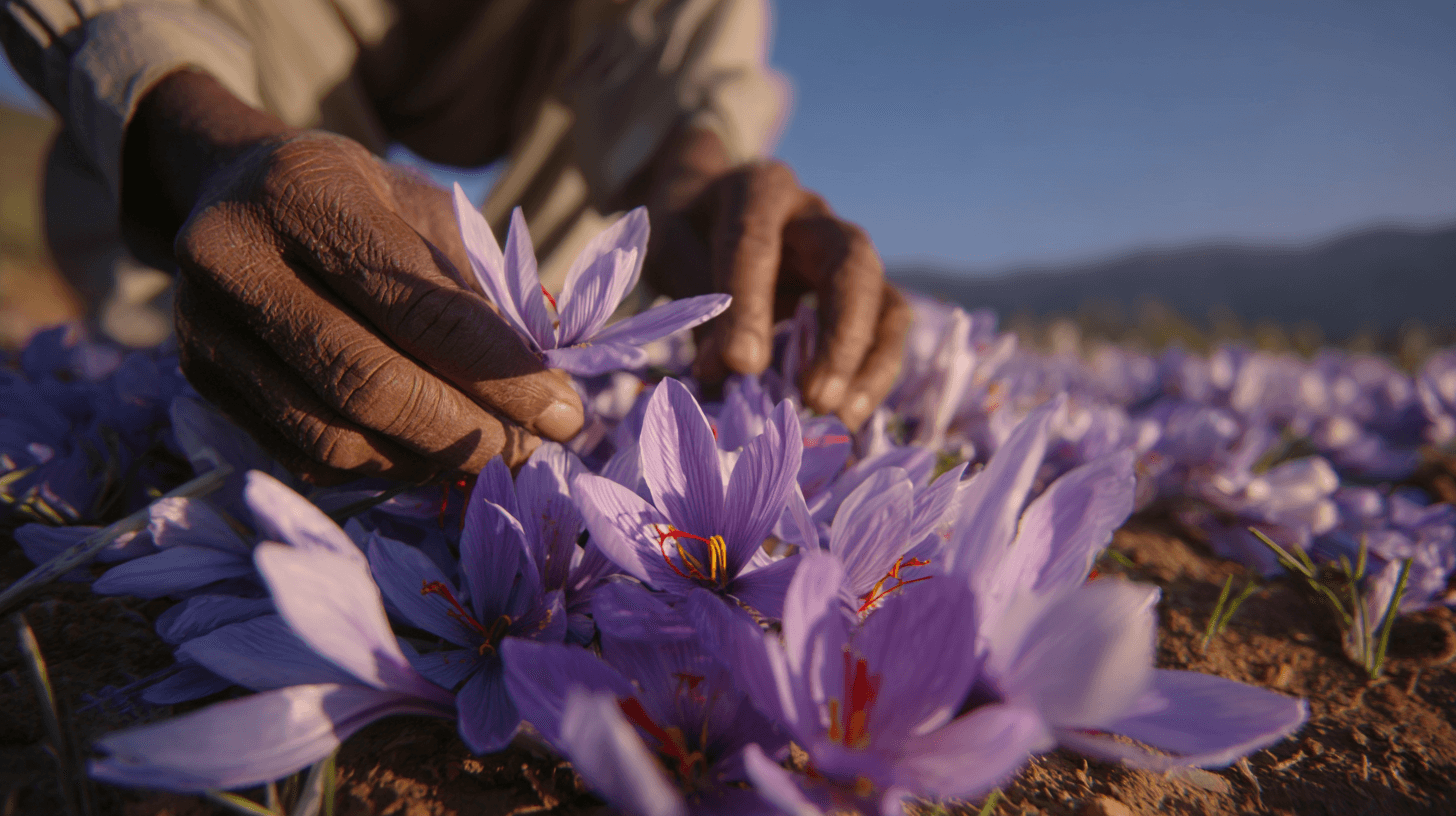
Saffron (zaafrane) is the luxury. Harvested in Taliouine, it colours and perfumes special-occasion dishes — saffron rice, saffron chicken, rfissa. A pinch is enough. The cost — $10,000 or more per kilogram for genuine filaments — makes it the world's most expensive spice. Adulteration is common in tourist souks; buying directly from Taliouine cooperatives ensures authenticity.
Ras el hanout — literally the head of the shop — is the master blend. Each spice merchant composes their own version from 15 to 30 or more ingredients. It is reputation made physical — the merchant's skill expressed through combination.
Explore the full interactive module — with the full 27-spice inventory, flavour profiles, and the souk buying guide — at Dancing with Lions: https://www.dancingwiththelions.com/data/spice-map
Interactive Module
Data and visualisation by Dancing with Lions