The Spice Routes
Taliouine saffron, Saharan trade routes, spice souks — how flavour travels
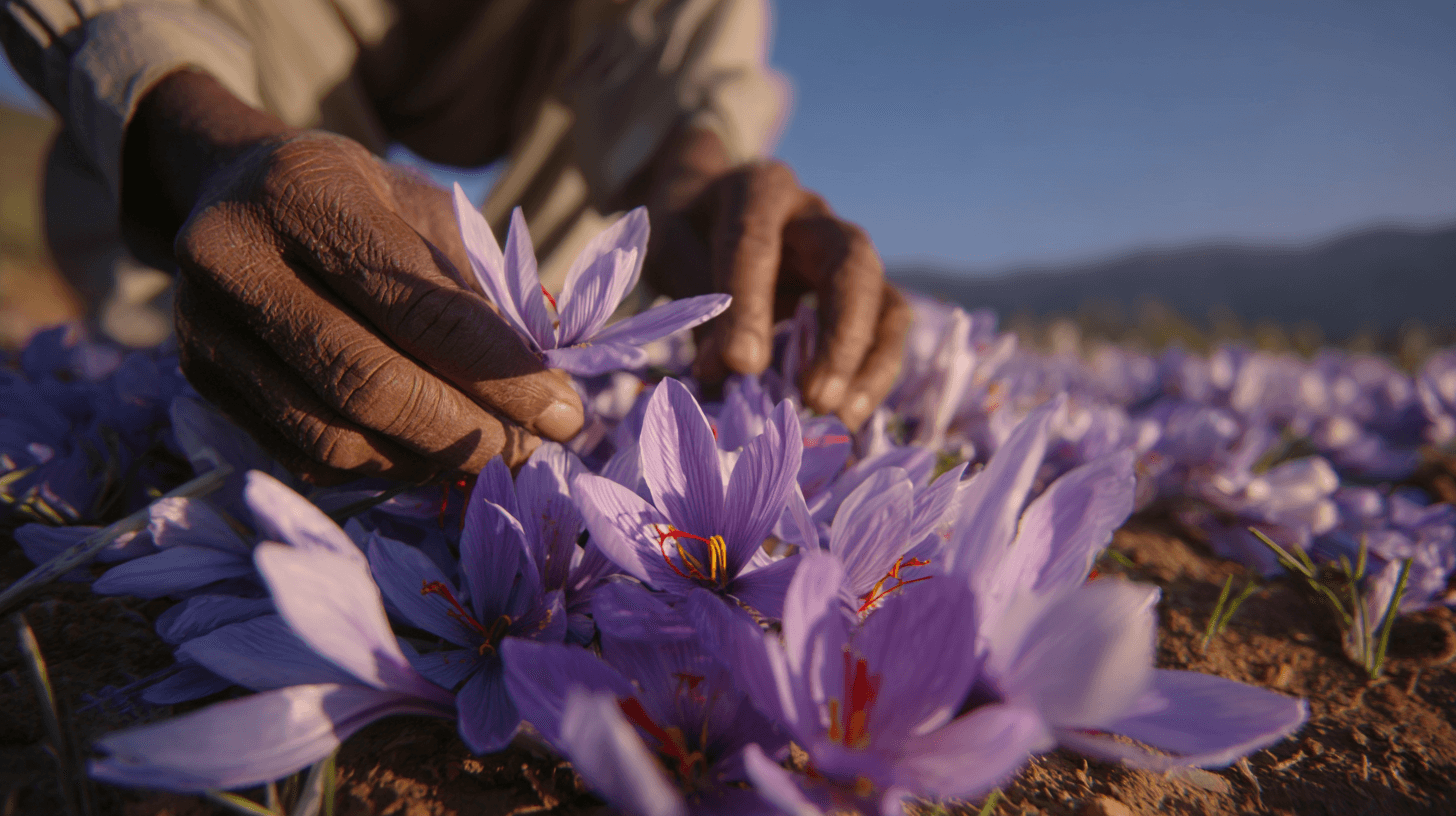
Saffron arrives from Taliouine. A small town in the Anti-Atlas between Taroudant and Ouarzazate, Taliouine produces over 90% of Morocco's saffron — approximately 6 tonnes per year. The harvest lasts three weeks in late October and November. Each crocus flower yields three stigmas. It takes 150,000 flowers to produce one kilogram of saffron. The work is done entirely by hand, mostly by women, in the early morning before the flowers open fully.
Cumin comes from the Haouz plain around Marrakech. Morocco is one of the world's significant cumin producers. The seed is used whole or ground in virtually every savoury Moroccan dish. Cumin, salt, and paprika — the trinity of Moroccan seasoning — sit on every table alongside bread.
Paprika arrived from the Americas via Spain after the 16th century. It adapted so thoroughly that most Moroccans consider it indigenous. The Tadla region produces most of the crop. Moroccan paprika tends toward the sweet rather than the hot — it colours tagines more than it heats them.
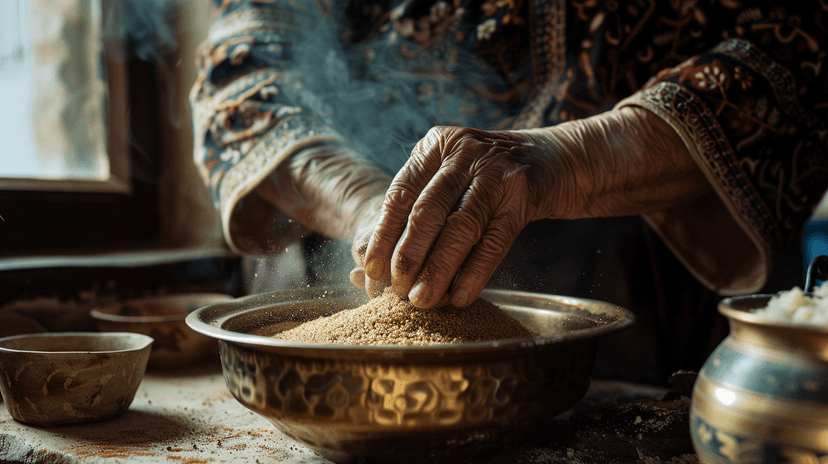
Ras el hanout — the head of the shop — is Morocco's signature spice blend. There is no fixed recipe. Each spice merchant composes their own. Traditional blends can contain 30 or more ingredients: cardamom, mace, nutmeg, long pepper, cubeb, grains of paradise, orris root, dried rosebuds, monk's pepper. The blend is a signature — the merchant's identity expressed through flavour.
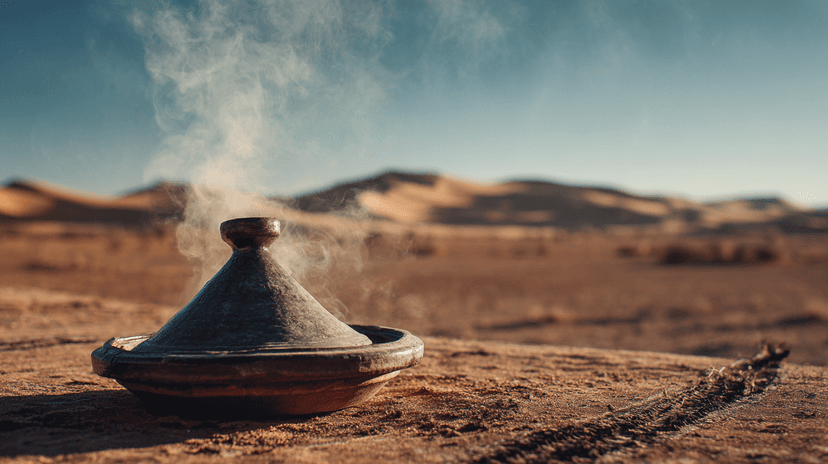
The trans-Saharan trade routes brought spices north for centuries — grains of paradise (melegueta pepper) from West Africa, cloves and ginger from the East African coast via Timbuktu and the desert caravans. These routes also carried gold, salt, and enslaved people. The spice souk is the last surviving node of a trade network that once stretched from the Gulf of Guinea to the Mediterranean.
Explore the full interactive module — with trade route maps, saffron harvest data, and the full ras el hanout ingredient inventory — at Dancing with Lions: https://www.dancingwiththelions.com/data/spice-routes
Interactive Module
Data and visualisation by Dancing with Lions