This is taqkhir. It happens every Friday in most Moroccan homes, and it has been happening for longer than anyone can date. The practice is pre-Islamic — rooted in Amazigh purification rituals that predate the arrival of the Arabs by centuries — but Islam absorbed it completely. Friday is the sacred day. The incense is the threshold between the domestic and the divine. You clean the house, you clean the air, you invite baraka. The blessing enters through the smoke.
The bkhour table
What sits on a Moroccan bkhour table is a map of the ancient world. The resins and plants come from four continents, carried to Morocco along trade routes that have been running for millennia. A grandmother in the medina may not know the geography. She knows what each one does.
Louban — frankincense — is the foundation. Boswellia sacra, harvested by cutting the bark and letting the resin bleed and harden in the sun. The trees grow in Oman, Yemen, Somalia, and Eritrea. The trade is at least five thousand years old. Rome, at its peak in the second century, imported three thousand tons a year. Every temple in the ancient world required it. Egypt burned it for the dead. Israel burned it before the Ark of the Covenant. The Nabataeans built a civilisation on controlling the overland route. When the resin reaches a Moroccan mejmar, it has already crossed half the world. On the charcoal, it becomes the purest purification — clean, penetrating, unmistakable. It drives out what should not be there.
Fassoukh is the local one. A wild plant of the Maghreb, endemic, difficult to cultivate. The name comes from its ability to faskh — to decipher, to unravel. Specifically, to unravel sorcery. White fassoukh, which is actually dark brown, is used for general household cleansing. Black fassoukh is stronger, deployed for deeper work — when something has gone wrong in the house, when illness lingers, when the energy will not shift. It smells musky and dense, nothing like the clean transparency of frankincense. It is medicine, not perfume.
Jawi — benzoin — arrives from the other direction. Styrax trees in Southeast Asia, the resin shipped across the Indian Ocean. Black and red varieties, sweet and long-lasting. It heals. It softens. Where frankincense clears, jawi fills the space with something warm.
Harmel — Peganum harmala, also called wild rue — grows across the Maghreb and is burned specifically against the evil eye. The seeds crackle and pop on the charcoal, releasing a sharp, acrid smoke. It is not pleasant. It is not meant to be pleasant. It is meant to work. In the Rif, in the Atlas, in the Saharan oases, harmel is the first defence against ain — the gaze that damages. A new baby, a new bride, a new house: harmel first, questions later.
Myrrh — Commiphora resin, from the Horn of Africa and Arabia — is deep, bitter, protective. It complements frankincense the way shadow complements light. Burned together, they cover both registers: one ascends, the other grounds.
And then there is oud. Agarwood. Aquilaria trees from Southeast Asia, infected by a particular mould that transforms the heartwood into one of the most expensive raw materials on earth. Oud is status, elevation, spiritual luxury. A chip of real oud on a coal fills a room for hours. In Morocco, it appears at weddings, at the homes of the wealthy, at moments when ordinary incense is not enough. The bride at her henna night, wrapped in the smoke of oud, is being marked as precious. The cost says so. The scent confirms it.
The rules nobody writes down
The knowledge passes from mother to daughter, and the rules are precise even when they are never formalised. Frankincense on Friday — always. Fassoukh when someone is ill or when the house feels heavy. Jawi for comfort and healing. Harmel for protection at thresholds: births, marriages, moving house, the arrival of guests. Oud for occasions that matter. Myrrh in combination, never alone.
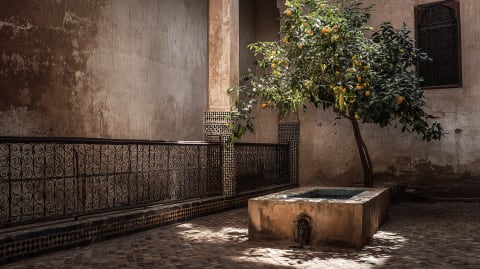
The mejmar is carried through the house in a specific direction — front to back, public spaces to private. The smoke must reach every corner, every room. Doors are left open so the smoke can travel. Windows are opened afterward so what has been dislodged can leave. The ritual is physical and spatial — it treats the house as a body that needs cleansing the same way a person does.
Women gather to prepare blends. The recipes are family knowledge, passed across generations in the same way that a Fassi grandmother passes down her chicken with preserved lemons — with complete confidence that her version is the correct one and mild pity for anyone who does it differently. The blending is an occasion: women sit together, grind resins, mix proportions, share opinions about whose blend works best and whose house always smells strange. These circles are schools disguised as gossip sessions.
The seven incenses
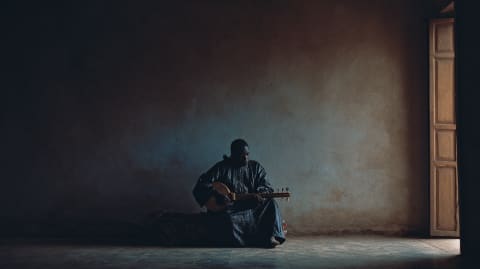
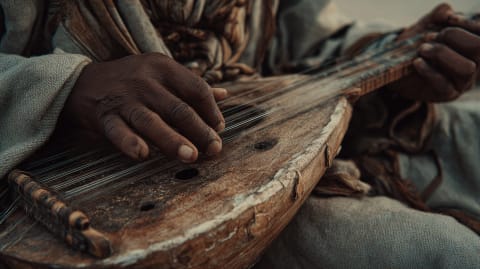
In the Gnawa lila ceremony — the all-night healing ritual that runs from sunset to sunrise — incense is not atmosphere. It is technology. Each of the seven families of spirits has its own incense, its own colour, its own suite of music. When the maalem strikes the guembri and the moqaddema reads the room, the incense changes with the spirits being called. White for purity. Blue for the sea. Red for courage and heat. Green for growth. Black for the earth. The smoke tells the spirits which door to enter through.
The moqaddema — the ritual's female guide — controls the incense. She decides when to change it, how much to burn, how to adjust the atmosphere as the ceremony deepens. If a participant is breathing too fast, if a trance is running too hot, the incense shifts. It is clinical in the truest sense — a reading of symptoms, a calibration of environment. The incense, like the music, like the coloured cloths draped over the possessed, is a precision instrument being wielded by someone who has spent decades learning how to use it.
Professor Deborah Kapchan, who studied Gnawa ceremonies for years, observed that incense — like music, like tears — crosses the threshold between inside and outside, between the body and the world. You cannot keep incense out. It enters you whether you consent or not. In a ceremony designed to negotiate with spirits that permanently inhabit the body, this quality is not incidental. It is the point. The smoke goes where the music goes. The spirits follow both.
The trade that built empires
None of this is small. The incense that sits on a Moroccan bkhour table arrived along routes that shaped civilisations. Frankincense built the kingdoms of Saba and Hadramaut. The Nabataean city of Petra grew rich controlling the overland route from Arabia to the Mediterranean. The Romans spent so lavishly on incense that Pliny complained about the drain on the treasury. Nero, at a single funeral, burned an entire year's harvest of Arabian frankincense — a gesture of grief so extravagant it bordered on economic warfare against his own empire.
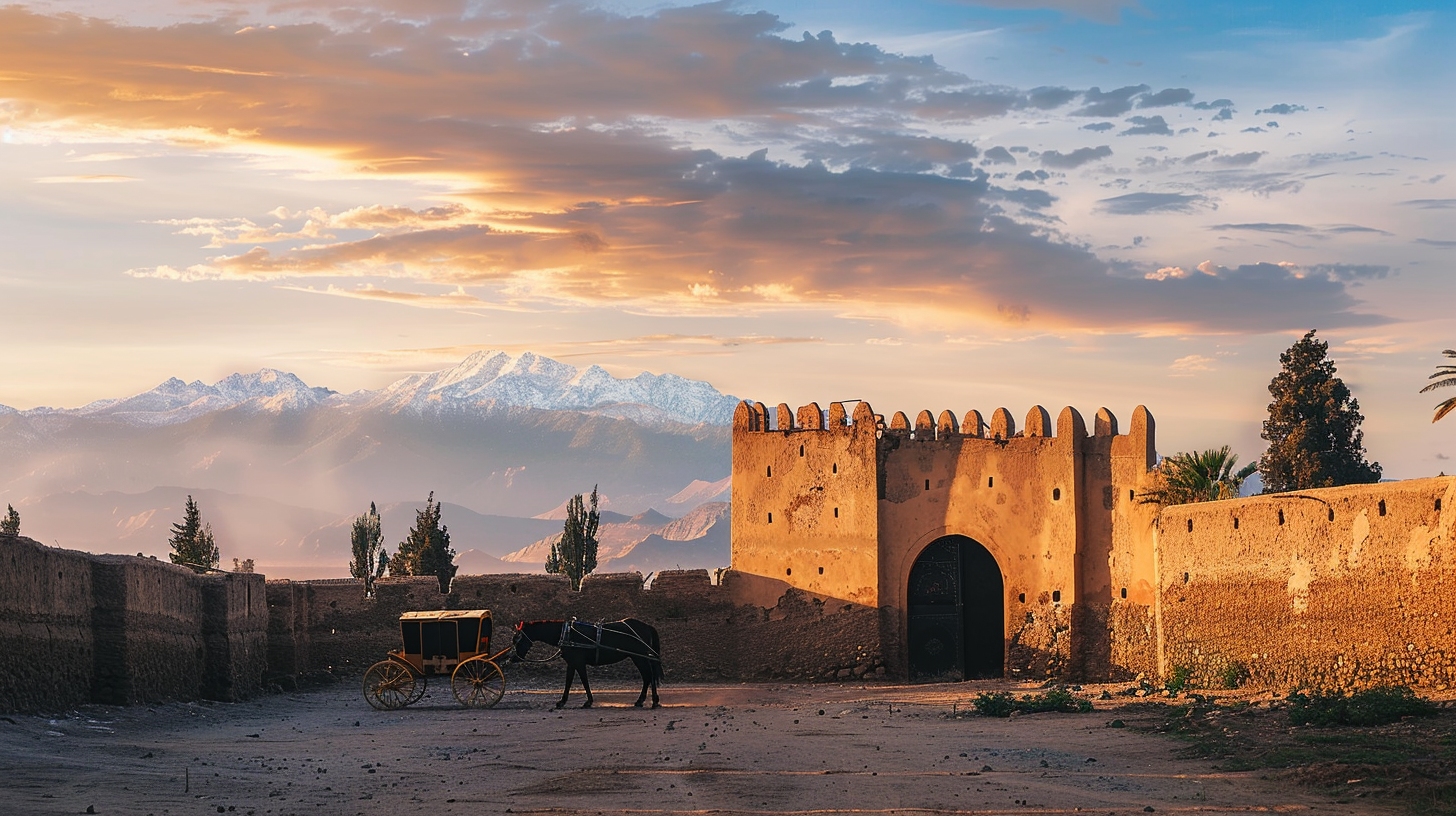
The trans-Saharan routes that brought gold and salt to Morocco also carried resins. The Indian Ocean dhow trade that connected East Africa to the Arabian Peninsula to India to Southeast Asia delivered benzoin and oud to the Maghreb. Every pinch of jawi on a Marrakech mejmar is the end point of a supply chain that crosses the Indian Ocean, rounds the Cape or transits the Red Sea, and arrives at a port — Essaouira, Tangier, Casablanca — before making its way into the souk and then into the small terracotta bowl where the charcoal waits.
In the souks of Marrakech and Fes, the incense sellers sit among the spice merchants — which makes sense, because for most of human history, spice and incense were the same trade, carried on the same ships, taxed at the same ports, and valued by the same empires. The stall is small. The selection is not. Frankincense in pale yellow tears. Myrrh in dark resinous chunks. Fassoukh in rough brown lumps. Oud in thin, fragrant chips that cost more per gram than saffron. Sandalwood powder. Rose-scented blends wrapped in paper. Pre-mixed bkhour for people who trust the vendor more than their own recipe. The seller knows what each customer needs because the seller has been watching the neighbourhood for thirty years.
The smoke keeps rising
Colonial authorities, modernisers, and religious reformers have all, at various points, dismissed the bkhour tradition as superstition. It has outlasted every one of them. The taqkhir happens every Friday in apartments in Casablanca the same way it happens in village houses in the Atlas. Young women who would never describe themselves as traditional still burn fassoukh when they move into a new flat. The global incense market — worth over six billion dollars in 2020 and growing — reflects a worldwide return to practices that the twentieth century tried to retire.
In Morocco, the practice never left. The mejmar sits in its corner. The charcoal is lit. The pinch of resin — frankincense from Oman, fassoukh from the hillside, jawi from across the Indian Ocean — meets the heat. The smoke rises. The house changes. Whatever needs to leave, leaves. Whatever needs to stay, stays.
The sacred smoke of benzoin and sandalwood opens the lila ceremony. The Gnawa Road follows the incense trail.
Tell us about your trip →Data and visualisation by Dancing with Lions
The Facts
- —Taqkhir: Friday incense ritual performed in most Moroccan homes
- —Louban (frankincense): Boswellia sacra resin from Oman and Somalia — purest purification
- —Fassoukh: wild Maghreb plant, name means "the one that deciphers sorcery" — white for general cleansing, black for deep ritual
- —Jawi (benzoin): Styrax tree resin from Southeast Asia — sweet, long-lasting, healing
- —Harmel (Peganum harmala): burned across the Maghreb against the evil eye
- —Oud (agarwood): Aquilaria from Southeast Asia — among the most expensive raw materials on earth
- —Gnawa lila uses seven different incenses, one per spirit family, each with its own colour
- —Incense trade route: 5,000+ years of continuous frankincense trade
- —Rome imported 3,000 tons of frankincense per year at peak (2nd century CE)
- —Global incense market: $6.5B in 2020, growing 5.3% annually
- —Moroccan bkhour table maps ancient trade routes — Arabia, Horn of Africa, Southeast Asia, the Maghreb itself
Sources
- Kapchan, Deborah. Traveling Spirit Masters: Moroccan Gnawa Trance and Music in the Global Marketplace. Wesleyan University Press, 2007
- Eickelman, Dale F. Moroccan Islam: Tradition and Society in a Pilgrimage Center. University of Texas Press, 1976
- Pâques, Viviana. La religion des esclaves: recherches sur la confrérie marocaine des Gnawa. Istituto Italo-Africano, 1991
- UNESCO Intangible Cultural Heritage: Gnawa, 2019 inscription
- Esentiara. "Encens marocain: purification et spiritualité." 2025
- Grand View Research. Global Incense Market Report, 2020
- Lapham's Quarterly / Pearlstine. "A Brief History of Frankincense"
Further Reading
Practical questions