
Tafraout→marrakech→taroudant→taliouine
5dInterest
Saffron & Honey Trail
Taliouine to Tafraoute — hiking through saffron fields and thyme hills where the honey is dark as molasses.
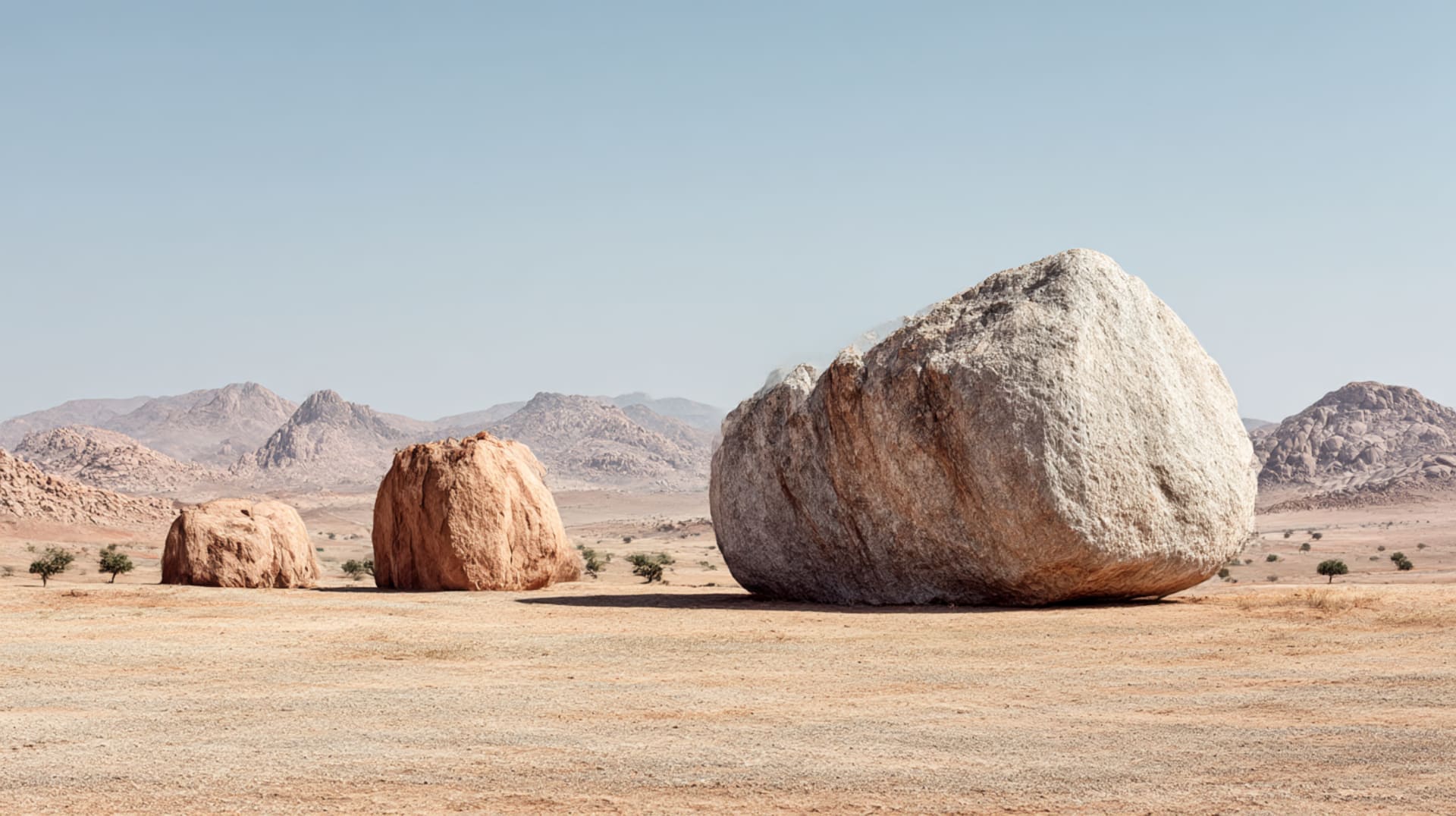
Tafraout sits in a valley of pink granite in the Anti-Atlas, surrounded by enormous boulders that the Belgian artist Jean Vérame painted blue, red, and purple in 1984. The paint has mostly faded. The granite has not.
The valley is the heartland of the Ammeln tribe — Amazigh people whose villages cling to the cliff faces above Tafraout in defiance of gravity and common sense. The almond trees bloom in February, turning the valley white and pink for two weeks. The almond blossom festival draws visitors from across Morocco.
Tafraout is a market town — clean, quiet, and unhurried. The shops sell argan oil, amlou (an argan and almond paste), and the embroidered leather babouches for which the region is known. The Thursday souk is lively.
The rock formations around Tafraout — Napoleon's Hat, the painted boulders, the Chapeau de Napoleon — are the main attraction for day visitors. But the real draw is the light. The pink granite absorbs the sunset and holds it. For half an hour every evening, the valley looks like it is on fire.
Places
Nature
The Ameln Valley around Tafraout — a bowl of pink granite boulders, almond orchards, and Amazigh villages in the Anti-Atlas mountains. In February, when the almond trees bloom, the valley turns white and pink against the pink rock. The light at this altitude and latitude is unlike anywhere else in Morocco: clear, dry, and warm even in winter.
Culture
In 1984, Belgian artist Jean Vérame painted 18 tonnes of enormous granite boulders in the desert outside Tafraout in vivid blues, purples, and reds. The colours have faded but the rocks are still painted, still strange, and still entirely out of place in the Anti-Atlas landscape. The project was either a remarkable piece of land art or an act of vandalism, depending on who you ask.
Architecture
The ancient agadir — a collective grain store — of the Ida Ou Gnidif tribe in the Ameln Valley above Tafraout. The agadir is the architectural form specific to the Anti-Atlas: a fortified communal granary where each family kept their season's reserves, governed by a committee and defended collectively. This one is still partially used. The carved cedar lock mechanisms are original.
You might also consider
Journeys that pass through Tafraout
Taliouine to Tafraoute — hiking through saffron fields and thyme hills where the honey is dark as molasses.
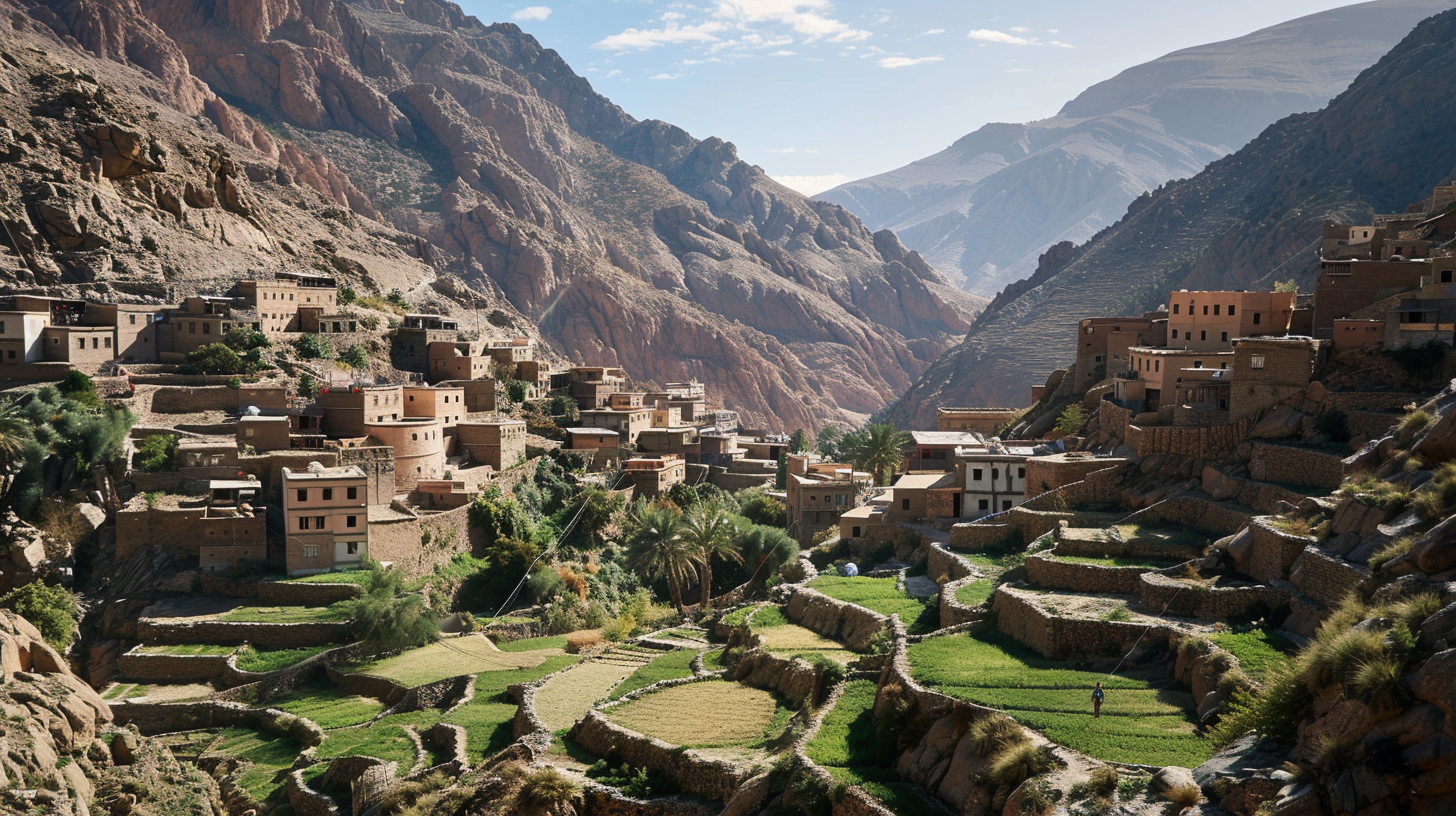
Twenty-six villages beneath pink cliffs — the Anti-Atlas's best-kept secret.

February in the Anti-Atlas — pink and white blossoms against red granite, the air sweet enough to taste.
Plan your visit
Every journey we design includes private guiding, accommodation chosen for character rather than category, and the kind of access that takes years in Morocco to arrange.
Plan Your TripWritten from the medina. Sent when it matters.