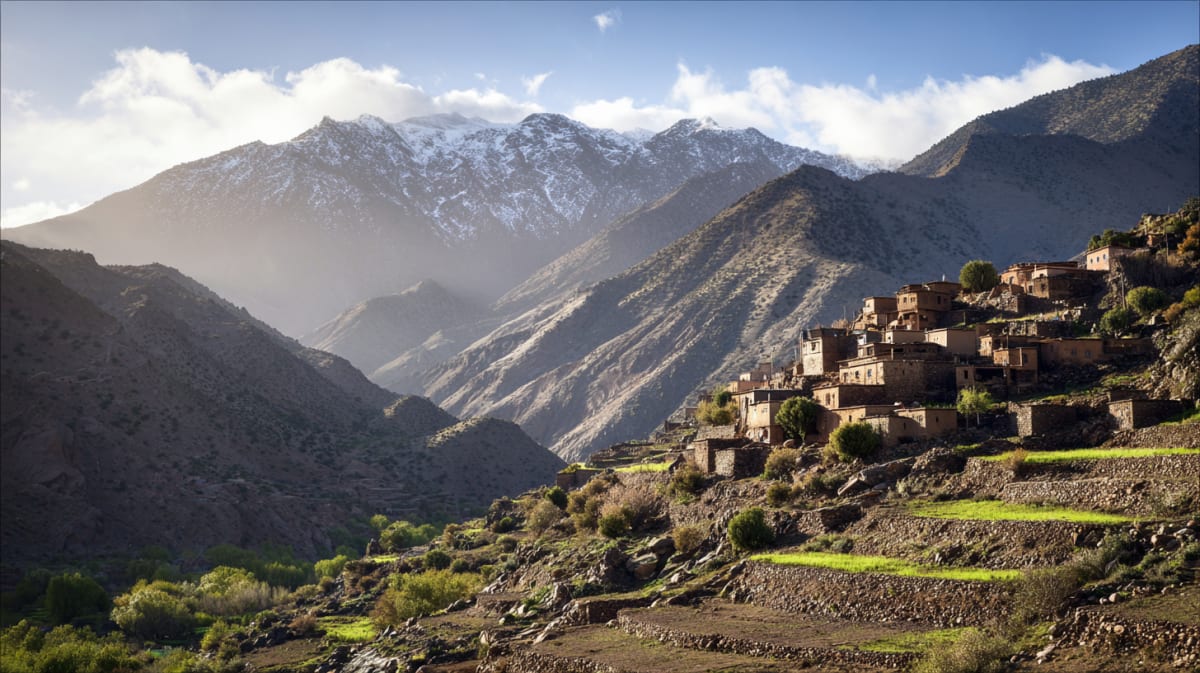
High Atlas Amazigh Villages
The Amazigh villages of the High Atlas — built from the same stone as the mountains they cling to, terraced into south-facing slopes to catch the winter sun, surrounded by walnut, almond, and apple orchards. The architecture is functional: thick walls for insulation, small windows against the cold, flat roofs for drying grain. The communities inside them have farmed these slopes for over a thousand years.
The villages of the High Atlas are Amazigh settlements built into the mountainside at altitudes of 1,500–2,500 metres. Stone and earth construction, terraced fields irrigated by snowmelt channels, walnut and cherry orchards on the valley floors. The villages look ancient and many are — the same sites have been inhabited for centuries, rebuilt in the same materials and the same positions.
The architecture is functional: flat-roofed houses (the roofs are used for drying crops), ground-floor stabling for animals, upper floors for family life. The walls are stone and pisé, the roofs are timber and packed earth. In winter, the villages are cold — snow sits on the peaks from November to April, and some passes close entirely.
The villages accessible from Marrakech — Imlil, Aroumd, Armed, Setti Fatma — are the most visited. The Toubkal trail starts from Imlil. The Ourika Valley villages are a day trip from Marrakech. Deeper in — the Ait Bougmez Valley, the Mgoun Massif, the Zat Valley — the villages are less visited and the traditional way of life is more intact.
The hospitality is genuine. Mint tea in a village home is not a tourist performance — it is the Amazigh social protocol for receiving a stranger. The correct response is to accept, drink slowly, and ask about the family.
Visitor Information
Explore More
Related Stories
Discover the history and culture of Atlas-mountains
Walking Distance